Scientists have unveiled a groundbreaking forecasting technique that promises to reveal the strength of the Sun’s next activity cycle as many as seven years before it reaches its maximum. This innovative approach centers on the number of sunspots present at a newly identified "switch-off" stage in the solar cycle, a pivotal moment when the Sun’s most severe space weather appears to end abruptly. Researchers have already leveraged this method to produce an early, albeit preliminary, estimate for Solar Cycle 26, suggesting a moderate intensity comparable to or weaker than the current Solar Cycle 25. While this initial projection indicates a sunspot number between 100 and 120, scientists emphasize that a more precise forecast will not be available for approximately two years, during which time both stronger and weaker outcomes remain theoretically possible.
The findings, presented this week at the Royal Astronomical Society’s National Astronomy Meeting in Birmingham, represent a significant leap forward in our ability to anticipate and prepare for the Sun’s unpredictable behavior. This new understanding challenges long-held assumptions about how the Sun transitions between periods of high and low activity, offering a more precise "solar clock" for predicting future space weather events.
The Sun’s Dramatic "Switch-Off" Moment
Professor Sandra Chapman, a leading figure in space physics and Director of the Centre for Fusion, Space and Astrophysics at the University of Warwick, explained the core of the discovery. "The Sun doesn’t gently go to sleep and then gently wake up again," she stated. "Instead, we’ve discovered that the most extreme space weather switches off quite suddenly at a specific point in every solar cycle. By identifying that point, we’ve found a new way to predict how active the next solar cycle is likely to be."
This "switch-off" phenomenon is a critical insight. Historically, solar cycle forecasting has relied on observing the Sun’s minimum activity period, solar minimum, to predict the subsequent peak. However, this new method allows for predictions much earlier in the cycle by pinpointing this abrupt cessation of extreme space weather.
Professor Chapman anticipates that the forecast for Solar Cycle 26 will become significantly more accurate in about two years. This refinement will occur once Solar Cycle 25 reaches the newly identified "switch-off" point. At that juncture, scientists will be able to base their calculations on direct observational data rather than relying solely on projections, thereby enhancing predictive precision.
A New Solar Clock for Enhanced Forecasting
The development of this new forecasting technique builds upon Professor Chapman’s earlier work on a conceptual "sunclock." This system aimed to standardize the Sun’s inherently irregular cycles, demonstrating that extreme space weather does not fade gradually as a cycle concludes. Instead, it ceases at a clearly defined and observable stage.
Professor Chapman and her research team discovered a direct correlation between the number of sunspots visible at this "switch-off" stage and the peak sunspot count expected during the subsequent solar cycle. This crucial relationship offers a novel method for estimating the strength of an upcoming solar cycle approximately six to seven years before it reaches its zenith. This represents a substantial improvement over existing forecasting methods, which typically provide less advance notice due to the necessity of waiting for solar minimum.
Implications for Understanding the Solar Dynamo
Beyond forecasting cycle strength, the technique also identifies a particular phase when the magnetic field responsible for initiating the next solar cycle is expected to become established. This temporal insight holds the potential to deepen our understanding of the solar dynamo, the complex physical process responsible for generating and sustaining the Sun’s magnetic field. A more robust grasp of the solar dynamo could lead to more accurate predictions of solar activity, which has profound implications for our technological infrastructure and even human space exploration.
"We’re about two years away from the switch-off point for the current Solar Cycle 25," Professor Chapman reiterated. "At the moment, we have to estimate where that point will be, but once we reach it we can use observations alone to make a much more precise prediction for Solar Cycle 26. That will still give us around seven years’ warning of how strong the cycle is likely to be."
Historical Context: The Sun’s 11-Year Cycle and Space Weather Impacts
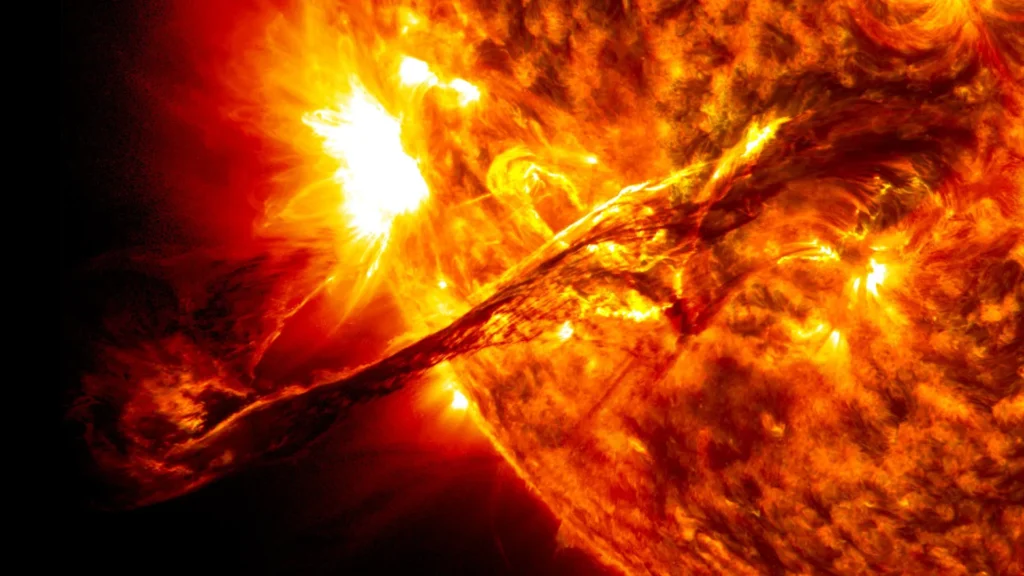
The Sun operates on an approximately 11-year cycle, during which its magnetic field reverses polarity. This cycle is characterized by fluctuations in the number of visible sunspots, which increase and then decline. Sunspots are not mere blemishes on the Sun’s surface; they are highly active magnetic regions that can unleash powerful solar flares and coronal mass ejections (CMEs). These energetic events propel vast amounts of energy and charged particles into space, creating what is known as "space weather."
The impacts of space weather on Earth are far-reaching and increasingly significant in our technologically dependent society. These events can disrupt or damage satellites, interfere with global communication networks, compromise navigation systems like GPS, and even overload electrical power grids, leading to widespread blackouts.
Astronomers have meticulously tracked sunspots for centuries, but predicting the intensity of each solar cycle has remained a persistent challenge. Variations in cycle length and strength have made it difficult to establish reliable forecasting models, underscoring the importance of the new approach.
The "Butterfly Pattern" and the Physics of the Switch-Off
The newly identified "switch-off" point is intrinsically linked to the physical processes occurring on the Sun’s surface, specifically related to the movement of active sunspot regions and the Sun’s differential rotation. Sunspots typically emerge at higher solar latitudes and gradually migrate towards the solar equator as a cycle progresses, a phenomenon known as the "butterfly pattern."
The Sun’s differential rotation means that different latitudes spin at varying speeds. However, below approximately 15 degrees of solar latitude, this difference in rotational speed diminishes. This region around the solar equator is characterized by a more uniform rotation, often referred to as the solar ‘jet stream.’
Professor Chapman’s research suggests that the most powerful CMEs, the drivers of extreme space weather, are fueled by differential rotation. As the Sun’s surface twists and contorts due to these varying rotational speeds, magnetic field lines are stretched and coiled, accumulating immense energy. Once active sunspot regions move into the less differentially rotating region within about 15 degrees of the equator, this energetic twisting mechanism weakens, effectively switching off the primary engine of extreme space weather.
To validate this hypothesis, Professor Chapman analyzed the 27-day (the average solar rotation period) correlation in the aa index, a measure of geomagnetic activity at Earth, and compared it with recorded space weather events. Her findings indicated that after the identified switch-off point, geomagnetic storms became less extreme and began to exhibit a more consistent 27-day pattern. This observation supports the theory that post-switch-off geomagnetic activity is likely driven by co-rotating streams of particles rather than the more violent CMEs.
Previous Forecasting Success and Future Implications
The efficacy of this new forecasting method was demonstrated with its earlier prediction for Solar Cycle 25. The technique accurately indicated that Cycle 25 would be more active than many existing forecasts had suggested. This heightened activity was indeed observed, contributing to the spectacular auroral displays witnessed in recent years.
The UK, for instance, experienced several historically significant solar storms in 2024 as Solar Cycle 25 approached its peak activity, known as "solar maximum." The most notable events occurred between May 10 and 13, 2024. A cluster of exceptionally large sunspots near the solar maximum triggered some of the strongest geomagnetic storms to impact Earth in over two decades. These events resulted in exceptionally bright and widespread auroras across the UK, with the northern lights being visible as far south as Devon and Cornwall, captivating the public and prompting scientific interest.
Professor Chapman’s pioneering research in this field was recognized in 2022 when she was awarded the Royal Astronomical Society’s Chapman Medal. This prestigious award acknowledged her significant contributions to understanding the behavior of planetary magnetic fields and their role in generating space weather.
The development of this advanced forecasting tool comes at a critical time. As humanity’s reliance on space-based technology grows, so too does our vulnerability to space weather. The ability to predict the intensity of future solar cycles with greater lead time will be invaluable for:
- Satellite Operations: Satellite operators can implement protective measures or schedule critical operations during periods of anticipated lower solar activity.
- Power Grid Management: Utility companies can prepare for potential disruptions by reinforcing infrastructure or adjusting load management strategies.
- Aviation and Navigation: Airlines and navigation system providers can make informed decisions regarding flight paths and operational adjustments.
- Space Exploration: Astronauts and mission planners can better assess risks and plan for the safety of crewed missions beyond Earth’s protective atmosphere.
The scientific community is actively engaged in further validating and refining this forecasting technique. The coming years, as Solar Cycle 25 progresses towards its predicted switch-off point, will be crucial for solidifying this new understanding of solar dynamics and its predictive power. This research not only enhances our preparedness for space weather but also deepens our fundamental knowledge of the Sun, a celestial body that profoundly influences life on our planet.