BIRMINGHAM, Mich. – SpaceX and Tesla have jointly unveiled plans for an initial $16.8 billion investment to construct a colossal semiconductor manufacturing complex in Texas. Dubbed "Terafab," this ambitious facility is poised to become a critical hub for producing advanced artificial intelligence (AI) chips, essential components for a diverse range of applications, from Tesla’s forthcoming humanoid robots and autonomous vehicles to SpaceX’s pioneering space-based data centers. This strategic move underscores a significant push towards vertical integration and technological independence for both companies, aiming to secure a vital supply chain in an era of escalating AI computational demands.
The Strategic Imperative: Securing the AI Supply Chain
The decision to embark on such a massive undertaking is rooted in a confluence of strategic imperatives. The global semiconductor industry has experienced unprecedented volatility in recent years, highlighted by the severe chip shortages that plagued numerous sectors from 2020 to 2022. This crisis exposed vulnerabilities in global supply chains, particularly for advanced chips, and underscored the geopolitical significance of domestic manufacturing capabilities. For companies like Tesla and SpaceX, whose future growth is inextricably linked to cutting-edge AI and high-performance computing, reliance on external foundries presents both supply risk and potential limitations on innovation velocity.
Vertical integration, where a company controls multiple stages of its production process, offers several compelling advantages. It grants greater control over design, manufacturing, and quality assurance, potentially leading to optimized performance for proprietary applications. More crucially, it mitigates supply chain disruptions and insulates against geopolitical pressures that can affect chip availability. The escalating "AI race" among tech giants and nations alike further amplifies the need for specialized, high-performance AI hardware. As AI models grow in complexity and data processing requirements, the demand for custom-designed chips that can execute billions of operations per second efficiently becomes paramount. This investment signals a clear intent by Elon Musk’s ventures to not merely consume advanced chips but to dictate their production, tailoring them precisely to their unique, ambitious ecosystems.
The United States government, recognizing the national security and economic implications of semiconductor leadership, enacted the CHIPS and Science Act in 2022. This legislation provides over $52 billion in subsidies for domestic semiconductor manufacturing and research. While the Terafab announcement predates any explicit mention of CHIPS Act funding, the timing and scale of the investment align perfectly with the nation’s broader strategy to reshore critical technology production and bolster its competitive edge against global rivals, particularly in Asia. This broader context likely provides a favorable environment for such a large-scale domestic investment.
Terafab: A New Paradigm in Semiconductor Production
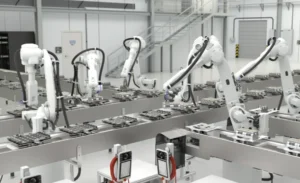
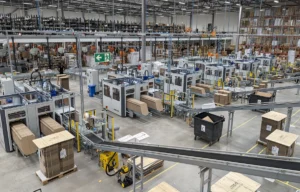
The Terafab facility, planned for Grimes County, Texas, represents a novel approach to semiconductor manufacturing by integrating the entire production lifecycle under one roof. Unlike traditional models where wafer fabrication, packaging, and testing often occur at geographically dispersed locations, Terafab will handle manufacturing, packaging, and testing of advanced logic and memory chips within a single, highly synchronized complex. This consolidation is designed to streamline processes, reduce lead times, minimize transportation costs, and enhance overall efficiency and security.
The advanced logic chips produced at Terafab will be tailored for neural network processing, machine learning acceleration, and complex data computations critical for AI algorithms. Memory chips, essential for storing and quickly retrieving the vast datasets that AI systems process, will also be optimized for high-bandwidth, low-latency performance. This integrated approach ensures that the chips are optimized from silicon to final product for the specific demands of Tesla’s and SpaceX’s AI workloads.
SpaceX has indicated that the plant is expected to employ at least 3,000 individuals initially, with substantial future expansion phases anticipated to significantly increase the total investment and workforce. This initial employment figure, while significant, is typical for such advanced manufacturing facilities, which require a highly skilled workforce ranging from materials scientists and electrical engineers to process technicians and automation specialists. The long-term vision for Terafab includes not just meeting current demands but anticipating and scaling for the exponential growth of AI computing. SpaceX projects that the two companies will require more than 1 terawatt of computing power in the coming years. To put this into perspective, 1 terawatt is equivalent to one trillion watts. Current global data center power consumption is estimated to be around 200-300 terawatt-hours per year, indicating that 1 terawatt of continuous computing power would represent an immense, unprecedented concentration of processing capability, far exceeding typical enterprise needs and pointing towards truly revolutionary applications.
Fueling the Future: Applications Across Terrestrial and Celestial Realms
The chips emanating from Terafab are slated to power the core technological innovations driving both Tesla’s terrestrial ventures and SpaceX’s extraterrestrial ambitions.
For Tesla, the primary beneficiaries will be its cutting-edge AI-driven products. The Optimus humanoid robots, currently under intensive development, are designed to perform repetitive or dangerous tasks in various environments, from factories to homes. These robots require highly sophisticated AI chips capable of real-time perception, decision-making, motor control, and complex task execution. The chips will enable Optimus to process sensor data, understand its surroundings, learn from interactions, and navigate dynamic environments autonomously. Similarly, the Cybercab autonomous vehicles, Tesla’s vision for a fully self-driving robotaxi network, demand immense computational power for processing vast streams of sensor data (cameras, radar, lidar), running intricate prediction models, and making instantaneous driving decisions without human intervention. The ability to design and produce custom chips for these applications will allow Tesla to fine-tune performance, energy efficiency, and security in ways that off-the-shelf solutions cannot match.
SpaceX’s ambitions extend beyond Earth’s atmosphere. The Terafab chips will be crucial for powering high-performance processors within SpaceX’s planned space-based data centers. These orbital data centers are envisioned as a critical component of a future where distributed computing exists beyond Earth’s surface, potentially supporting lunar bases, Mars missions, and an increasingly interconnected Starlink constellation. Such data centers would require extreme reliability, radiation hardening, and immense processing capabilities for tasks like real-time satellite data analysis, complex orbital mechanics calculations, and facilitating ultra-low-latency communication across vast distances. The inherent challenges of operating electronics in space necessitate chips specifically designed for resilience and performance in harsh environments, a level of customization that Terafab is uniquely positioned to provide. The synergy between Tesla’s and SpaceX’s AI needs highlights a shared architectural philosophy and a desire to control the fundamental building blocks of their respective futuristic technologies.
Texas: The Epicenter of Innovation and Manufacturing
The choice of Texas as the location for Terafab is not coincidental but rather a continuation of a broader strategy by both Tesla and SpaceX to consolidate their manufacturing and operational footprints within the state. Texas has emerged as a crucial hub for Elon Musk’s enterprises, offering a business-friendly environment, a growing tech talent pool, and strategic geographical advantages.

Tesla’s Giga Texas campus near Austin, already a massive manufacturing facility for vehicles like the Cybertruck and Model Y, saw the groundbreaking of a new research facility earlier this year. This research arm is expected to collaborate closely with the Terafab project, fostering a synergistic ecosystem of design, development, and production. SpaceX’s Starbase in Boca Chica, on the Gulf Coast, is the primary development and testing site for its Starship rocket, representing another colossal manufacturing and innovation center within the state. This growing presence creates a powerful magnet for talent and investment, transforming parts of Texas into a leading region for advanced technology and aerospace.
Grimes County’s selection specifically offers logistical benefits, potential for future expansion, and access to a workforce that can be trained and integrated into the highly specialized semiconductor industry. The economic impact on Texas is expected to be profound, extending beyond the direct creation of 3,000+ high-paying jobs. The presence of such a significant advanced manufacturing facility will likely stimulate growth in ancillary industries, including raw material suppliers, equipment manufacturers, logistics providers, and various service sectors. It will also attract further investment in education and workforce development programs, preparing the local population for the demands of a high-tech economy.
A Timeline of Technological Independence
The Terafab announcement marks a significant milestone in a longer timeline of both Tesla’s and SpaceX’s pursuit of technological independence and vertical integration. Tesla has, for instance, progressively moved towards in-house battery cell production and developing its own AI hardware for autonomous driving, such as the Dojo supercomputer and its custom FSD (Full Self-Driving) chip. Similarly, SpaceX has always emphasized controlling core technologies, from rocket engines to spacecraft components, to achieve its ambitious goals of reusable spaceflight and interplanetary colonization.
The semiconductor industry itself has seen a gradual shift from general-purpose computing to highly specialized architectures, particularly with the advent of AI. Early AI efforts relied on general-purpose CPUs and later GPUs, but the immense computational requirements of deep learning have necessitated custom ASICs (Application-Specific Integrated Circuits). Companies like Google (TPUs) and Amazon (Inferentia/Trainium) have already invested heavily in designing their own AI chips. Tesla and SpaceX’s move into direct manufacturing represents the next logical step in this evolution, ensuring that their cutting-edge AI models are powered by hardware designed from the ground up to maximize their unique performance requirements. This aggressive verticalization positions them at the forefront of the hardware-software co-design paradigm, where chip architecture is optimized hand-in-hand with AI algorithms.
Economic and Geopolitical Implications
The Terafab project holds substantial economic and geopolitical implications. For the United States, it represents a significant step towards regaining semiconductor manufacturing prowess, especially in the advanced AI chip sector. This contributes to national security by reducing reliance on overseas manufacturing, particularly from regions with geopolitical sensitivities. The global semiconductor market, valued at over $600 billion in 2023 and projected to grow substantially, is fiercely competitive. While Terafab will primarily serve internal needs, its sheer scale and advanced capabilities could indirectly influence the broader market by fostering innovation and attracting talent.
The move also intensifies competition with established chipmakers like TSMC, Intel, and Samsung. While these giants operate at a much larger scale, Tesla and SpaceX’s highly specialized approach could carve out a unique niche, demonstrating the viability of internal, application-specific chip development and manufacturing. It could also spur other major tech companies to consider similar vertical integration strategies for their most critical AI hardware needs.
Moreover, the investment will catalyze the development of a highly skilled workforce in Texas, requiring collaboration between industry, academia, and government to establish robust talent pipelines. This includes educational programs focusing on semiconductor manufacturing, AI engineering, and advanced materials science, further cementing Texas’s reputation as a tech and manufacturing powerhouse.
Industry Reactions and Expert Analysis
While specific official statements were not immediately available, the announcement is expected to be met with considerable enthusiasm from Texas state and local economic development officials, who view such large-scale investments as transformative for regional economies. Industry analysts are likely to interpret this move as a bold, yet necessary, strategic play by Tesla and SpaceX. Many would highlight the immense capital intensity and technical challenges of entering semiconductor manufacturing, a field historically dominated by a few highly specialized companies. However, they would also acknowledge the strategic benefits of supply chain control and performance optimization for mission-critical AI applications.
Challenges for the Terafab project will undoubtedly include attracting and retaining top-tier talent in a competitive market, navigating the complexities of advanced semiconductor process technology, and managing the significant capital expenditures over time. The long lead times associated with fab construction and ramp-up mean that the full impact of Terafab will only be realized over several years, requiring sustained commitment and execution excellence.
Looking Ahead: The Road to Production and Beyond
Construction of Terafab is anticipated to commence swiftly, following necessary regulatory approvals. The project’s phased expansion plans suggest a modular approach, allowing for iterative growth in capacity and capabilities as demand for AI computing within Tesla and SpaceX continues to surge. This flexible strategy is crucial in a rapidly evolving technological landscape.
The long-term vision extends beyond simply producing chips. It encompasses creating a fully integrated AI ecosystem where hardware, software, and real-world applications are meticulously intertwined and optimized. From the neural networks powering Optimus’s delicate movements to the complex algorithms guiding autonomous vehicles and the robust processors managing space-based data centers, Terafab represents the foundational silicon upon which the future ambitions of SpaceX and Tesla will be built. This commitment to self-sufficiency in the most critical component of their advanced technologies underscores a deep strategic foresight and a relentless drive towards innovation and control over their destiny in an increasingly AI-driven world.