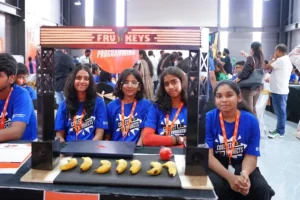
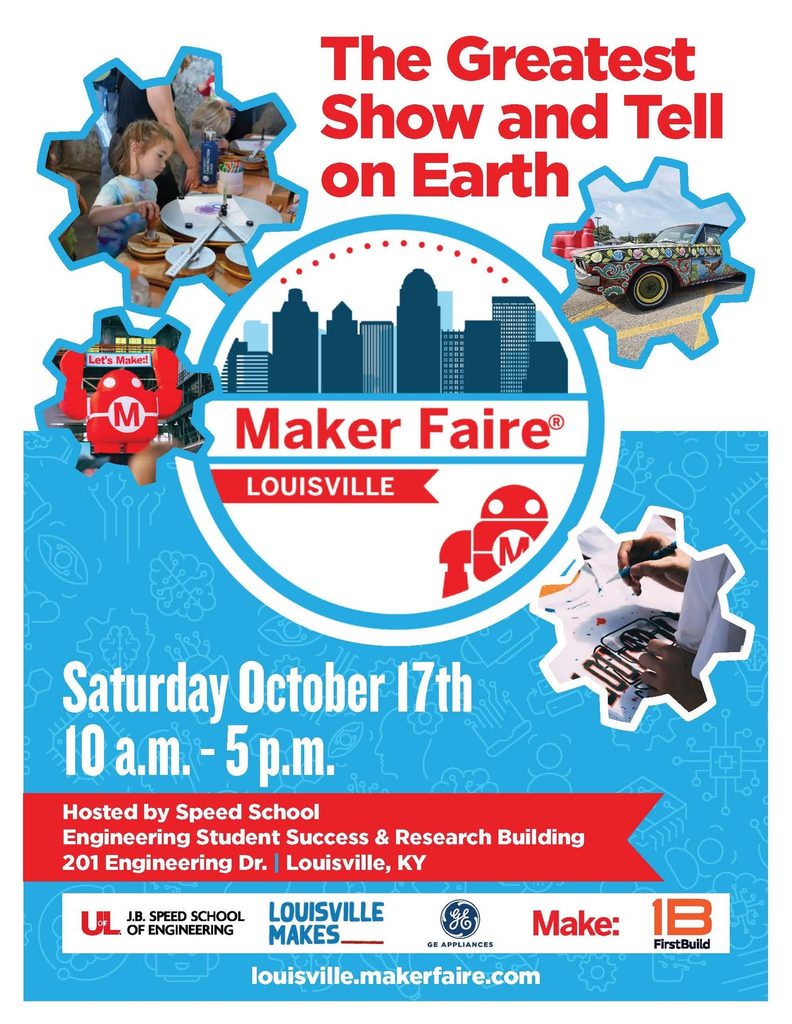
The University of Louisville’s Engineering Student Success & Research Building will transform into a hub of ingenuity and collaborative spirit on Saturday, October 17, 2026, as it hosts the latest iteration of Maker Faire Louisville. Scheduled to run from 10 a.m. to 5 p.m., the event serves as a premier gathering for the region’s diverse community of inventors, artists, engineers, and hobbyists. This family-friendly festival of invention and creativity is free to the public, requiring no tickets or advance registration, ensuring that the barriers to entry for scientific and artistic exploration remain as low as possible for the residents of Kentucky and the surrounding areas.
Presented by Louisville Makes and hosted by the University of Louisville’s J.B. Speed School of Engineering, Maker Faire Louisville 2026 is designed to foster a "hands-on" environment where visitors can engage directly with the creators behind complex projects. The event is set to occupy both the interior and exterior spaces of the Engineering Student Success & Research Building at 201 Engineering Drive, providing a sprawling canvas for demonstrations ranging from high-tech robotics to traditional artisanal crafts.
Strategic Partnerships and Community Support
The 2026 event continues a long-standing tradition of corporate and academic synergy. GE Appliances, a Haier company, serves as a primary sponsor, reinforcing its commitment to the Louisville metropolitan area where its headquarters are located. As a company whose products are integrated into approximately half of all American households, GE Appliances has a vested interest in the cultivation of local technical talent and creative problem-solving.
This support is perhaps most visible through FirstBuild, a global co-creation community and micro-factory located on the University of Louisville campus. FirstBuild provides a space where makers can bring their ideas to life using professional-grade equipment, effectively bridging the gap between hobbyist tinkering and industrial manufacturing. The presence of such institutions underscores Louisville’s growing reputation as a center for the "maker movement," a global subculture that emphasizes learning-through-doing and the democratization of manufacturing technology.
High-Octane Engineering: Power Tool Drag Racing
One of the most anticipated highlights of the 2026 circuit is the return of LVL1 Power Tool Drag Racing. LVL1, Louisville’s prominent non-profit hackerspace, brings a unique blend of kinetic theater and "vernacular engineering" to the faire. Unlike traditional motorsports, this competition features modified power tools—such as belt sanders, circular saws, and angle grinders—racing down a custom-built wooden track.

The technical sophistication of these races often belies their humorous presentation. The track utilizes Arduino-controlled systems for sound effects and a precision-timed "Christmas tree" light sequence for starts. At the finish line, an electronic "Win-Dicator" flag system determines the victor. Attendees are encouraged to participate using "house racers," which are often belt sanders adorned with mascots, while periodic exhibition runs feature custom builds that push the limits of power-tool torque and stability. This segment of the event serves as a practical demonstration of mechanical engineering principles, electronics, and creative recycling.
Bridging Art and Technology: The Mehxel Project
In the realm of digital interaction, Mike Cotterman, a veteran software developer and robotics enthusiast, will present "Mehxel." This project exemplifies the intersection of art, electronics, and software programming. Mehxel allows visitors to design custom pixel art using a physical interface of arcade joysticks and buttons, which is then displayed on a 16×16 NeoPixel matrix.
The project incorporates modern connectivity by generating QR codes for every creation, allowing users to view and share their digital artwork online. The centerpiece of the exhibit is a massive 64×64 pixel display composed of 4,096 individually addressable NeoPixel LEDs, powered by Raspberry Pi architecture. Cotterman’s exhibit highlights how complex programming and hardware integration can be translated into accessible, interactive experiences for children and adults alike, fostering an early interest in STEM (Science, Technology, Engineering, and Mathematics) fields.

Academic Inquiry and Scientific Modeling
Maker Faire Louisville 2026 also provides a platform for academic research that examines the very nature of how we learn and create. Emma Drake, a graduate student at the University of Louisville, will present her study titled "Investigating the Contextual Nature of Organic Chemistry Students’ Modeling Knowledge."
Drake’s research delves into "epistemic modeling knowledge"—the understanding of what makes a scientific model effective and the criteria for revising those models. By engaging with Maker Faire attendees, Drake aims to demonstrate how students’ theoretical ideas about modeling often differ from their practical application during laboratory work. This inclusion of pedagogical research signifies the Faire’s evolution from a simple exhibition of "things" to a sophisticated dialogue on the processes of scientific inquiry and education.
Traditional Crafts and Industrial Processes
While high-tech exhibits often dominate the headlines, the 2026 Faire places a significant emphasis on traditional and industrial making techniques. Robert Day, a maker affiliated with LVL1, will host demonstrations on electroplating and electroforming. These processes involve the deposition of metal—such as copper, zinc, or nickel—onto various objects using electrolytic cells. Day’s work shows how everyday items can be preserved or decorated with metal coatings, making industrial chemistry accessible for home-based projects.

Complementing this is the work of Angela Cooper, described as an "Old Louisville Renaissance Woman." Cooper will lead a workshop on sandcasting, an ancient metalworking technique used to create tools and jewelry from molten metal. This hands-on demonstration allows participants to create their own molds, providing a rare opportunity for the public to engage with the tactile and high-temperature reality of metal casting. Cooper’s diverse skill set—ranging from silversmithing to woodworking—represents the holistic "maker" ethos that values both historical techniques and modern innovation.
Visual Arts and Animation
The creative spectrum of the event is rounded out by live art and media production. Illustrators Phil Back and Steven Beezer of SuperKick74 will perform live drawing and painting sessions. Their exhibit provides a window into the professional world of comic books and digital art, offering insights into the tools and techniques used by contemporary illustrators.
Additionally, teaching artist John Akre will manage the "Sloppy Films Animation Station." This interactive exhibit teaches the fundamentals of stop-motion animation using simple paper shapes. By allowing visitors to create their own animated sequences, Akre demystifies the process of filmmaking and highlights the persistence of vision, the biological phenomenon that makes animation possible.

Logistics and Accessibility
The University of Louisville has ensured that the event remains accessible to all members of the community. Maker Faire Louisville 2026 is a "rain or shine" event, with activities distributed both inside the climate-controlled Engineering Student Success & Research Building and in the adjacent outdoor areas.
Free parking is designated in lots surrounding the engineering campus, and the venue is fully ADA-compliant. The organizers have structured the day to accommodate a flow of visitors throughout the seven-hour window, with various demonstrations scheduled at intervals to ensure that those arriving later in the day do not miss the marquee events like the power tool races.
The Broader Impact: The Maker Movement in Kentucky
The significance of Maker Faire Louisville extends beyond a single day of entertainment. In a broader economic context, such events are vital for fostering a "culture of innovation" that can drive regional growth. By bringing together the J.B. Speed School of Engineering, local makerspaces like LVL1, and industrial giants like GE Appliances, the Faire creates a unique ecosystem where networking occurs organically between students, professional engineers, and independent inventors.

For the University of Louisville, hosting the Faire is an opportunity to showcase its facilities and recruit the next generation of engineering talent. For the city of Louisville, it reinforces a commitment to STEAM education and local manufacturing. As automation and digital fabrication continue to reshape the global economy, the skills highlighted at the Faire—coding, rapid prototyping, metalworking, and creative problem-solving—are becoming increasingly essential.
The "maker" philosophy also promotes sustainability through its emphasis on repair, repurposing, and "upcycling." This is evident in exhibits like the power tool drag racing, where discarded or inexpensive tools are given a second life as high-performance racing machines. This mindset of resourcefulness is a key takeaway that organizers hope visitors will carry back to their homes and workplaces.
Conclusion
Maker Faire Louisville 2026 stands as a testament to the enduring human desire to understand, manipulate, and improve the world through physical and digital creation. By providing a stage for a diverse array of projects—from Emma Drake’s chemical modeling to Angela Cooper’s sandcasting—the event celebrates the full spectrum of human ingenuity. As the doors open on October 17, the University of Louisville will once again become a laboratory of the imagination, proving that anyone, regardless of age or background, can be a maker.