Reaching another star within a practical amount of time will require something far more capable than chemical rockets. Humanity’s enduring ambition to explore beyond our solar system has long been constrained by the fundamental limitations of conventional propulsion systems, which rely on the expulsion of mass to generate thrust. While these systems have been instrumental in our robotic and crewed exploration of Earth’s immediate cosmic neighborhood, the vast distances separating stars render them impractical for interstellar voyages. A journey to even the nearest star, Proxima Centauri, using current rocket technology would take tens of thousands of years – a timeframe far exceeding any conceivable human lifespan or mission duration.
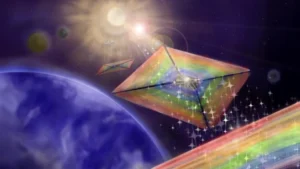
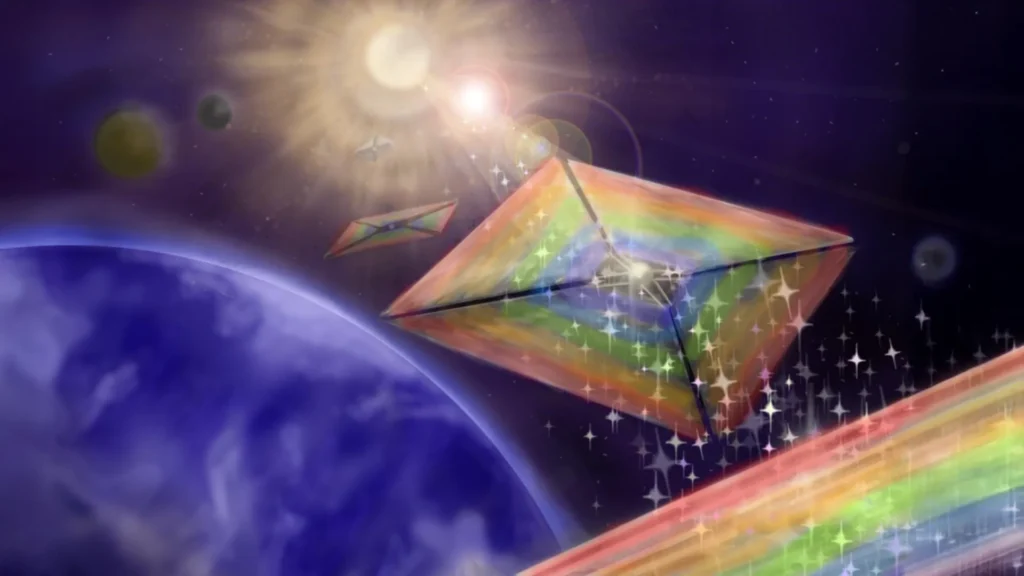
One of the leading ideas to overcome this colossal challenge is the solar sail, a concept that harnesses the subtle but persistent pressure exerted by light itself. Envisioned as a large, ultra-thin, highly reflective structure, a solar sail is designed to be pushed by photons, much like a sailing ship is pushed by wind. If extremely powerful lasers, strategically positioned in space or on Earth, are aimed at such a sail, they could accelerate it to speeds well beyond what current propulsion systems can achieve, potentially reaching a significant fraction of the speed of light. This tantalizing prospect forms the bedrock of ambitious projects like Breakthrough Starshot, which aims to send a fleet of nanocraft to Alpha Centauri within a few decades.
The Enduring Quest for Interstellar Travel
The dream of interstellar travel is not new; it has captivated scientists, engineers, and dreamers for centuries, featuring prominently in science fiction long before it became a serious subject of scientific inquiry. Early theoretical pioneers like Konstantin Tsiolkovsky and Friedrich Tsander in the early 20th century explored various propulsion methods, laying some groundwork for future concepts. However, it was truly in the latter half of the 20th century that solar sailing gained serious scientific traction. Carl Sagan, the renowned astronomer and science communicator, popularized the idea of "starwisp" probes propelled by microwaves in the 1970s, showcasing the elegance of light-based propulsion. Robert Forward further refined these concepts, meticulously detailing the physics of laser-driven sails.
The principle behind a solar sail is deceptively simple: light, though massless, carries momentum. When photons strike a reflective surface, they impart a tiny push. While this force is negligible on Earth, in the vacuum of space, over vast distances and without atmospheric drag, this continuous push can accelerate a spacecraft to immense velocities. Unlike rockets, solar sails do not require onboard fuel, making them theoretically capable of indefinite acceleration as long as they are illuminated by a light source. This "fuel-less" nature is a game-changer for long-duration missions, eliminating the massive structural weight and complexity associated with carrying propellant.
From Concept to Reality: Early Solar Sail Missions
While laser-driven sails to other stars remain largely theoretical, passive solar sails powered by sunlight have already made their mark in space history. The Japanese Aerospace Exploration Agency (JAXA) launched IKAROS (Interplanetary Kite-craft Accelerated by Radiation Of the Sun) in 2010, marking the first successful deployment and propulsion of a solar sail in interplanetary space. IKAROS demonstrated the feasibility of attitude control and propulsion using solar radiation pressure, a critical step in validating the underlying physics.
More recently, The Planetary Society’s LightSail 1 and LightSail 2 missions have further advanced the technology. LightSail 1, launched in 2015, successfully deployed its Mylar sail, paving the way for LightSail 2, which launched in 2019. LightSail 2 not only deployed its sail but actively demonstrated controlled orbit raising solely through solar radiation pressure, proving the technology’s potential for sustained maneuvering and propulsion in Earth orbit. These missions, while not reaching relativistic speeds, have provided invaluable engineering data and proven the fundamental principles of solar sailing, bolstering confidence in the eventual development of more advanced, laser-driven variants.
Unveiling a Relativistic Roadblock: A New Scientific Paper
Despite these promising developments, the journey to interstellar flight is fraught with complex theoretical and engineering challenges. Now, new research suggests an unexpected problem once a lightsail begins traveling at a significant fraction of the speed of light. According to a new paper published on arXiv by Chao Shen and Jiaze Li of the Harbin Institute of Technology, the very light used to propel the sail could, paradoxically, eventually produce a drag effect, hindering its acceleration and potentially limiting its maximum achievable velocity. This finding introduces a critical new consideration for the design and operation of future interstellar probes.
The researchers’ work delves into the nuanced physics of light-matter interaction at relativistic speeds, a domain where classical mechanics gives way to the more profound implications of Einstein’s theory of special relativity. Their model meticulously separates the forces produced by photons striking a solar sail into three distinct categories, each contributing differently to the overall propulsion dynamics:
- Incident Light: This is the strongest contribution, representing the raw momentum imparted by photons directly striking the sail surface. As photons hit the sail, their momentum is transferred, pushing the sail forward.
- Specular Reflection: This refers to the momentum imparted when photons bounce perfectly, or "specularly," off the sail’s highly reflective surface. For an ideal mirror, the angle of incidence equals the angle of reflection, and the momentum transfer is maximized, providing additional thrust.
- Diffuse Scattering: This is the weakest contribution, arising from photons that are absorbed by the sail material and then re-emitted in random directions due to thermalization or other processes. Even though it’s a weaker effect, it still contributes to forward momentum at lower speeds.
At relatively low speeds – well below relativistic velocities – these three effects collectively contribute to pushing the sail forward, as one would intuitively expect. The laser beam acts as a constant source of momentum, continuously accelerating the spacecraft. However, the situation becomes much more complicated and counter-intuitive once the spacecraft begins to reach relativistic velocities, demanding a re-evaluation of how light interacts with matter under such extreme conditions.
The Doppler Effect’s Diminishing Push
One of the first relativistic effects to become prominent as a lightsail accelerates is the Doppler effect. Just as the pitch of a siren changes as an ambulance moves towards or away from an observer, the frequency and wavelength of light change when the source or observer is in relative motion. As the sail races away from the laser source at ever-increasing speeds, the light reaching it undergoes an increasingly strong redshift. This means the frequency of the incoming light decreases, and consequently, the energy of individual photons (E=hν, where h is Planck’s constant and ν is frequency) also decreases.
This reduction in photon energy directly translates to a reduction in the momentum each photon carries. Therefore, the amount of thrust produced by all three components – incident light, specular reflection, and diffuse scattering – progressively diminishes. As a result, continued acceleration becomes progressively less efficient. The faster the sail travels, the harder it becomes for the laser to keep increasing its speed, not because the laser itself weakens, but because the light it emits appears less energetic from the perspective of the rapidly receding sail. This is a fundamental relativistic limitation that engineers must account for when planning the total energy budget and acceleration profile of an interstellar mission.
Relativistic Aberration and the Onset of Drag
The situation changes even more dramatically once the lightsail reaches approximately 75% of the speed of light (0.75c). At this extreme velocity, another critical relativistic phenomenon, known as relativistic light aberration, becomes significantly important. Light aberration is the apparent change in the direction of light from a distant source due to the observer’s motion. A classic analogy is how rain appears to fall at an angle to a moving car, even if it’s falling straight down relative to the ground. For light at relativistic speeds, this effect is far more pronounced and fundamentally alters how the sail "sees" and interacts with its own scattered light.
From the viewpoint of a stationary observer on Earth, diffusely scattered light would typically spread out in various directions, including backwards. However, from the perspective of the rapidly moving lightsail, and considering the principles of relativistic aberration, the light that is diffusely scattered forward (relative to the sail’s instantaneous rest frame) begins to be "bent" or directed even more acutely towards the direction in which the sail is traveling, when viewed from a stationary frame.
The crucial implication here is Newton’s third law: for every action, there is an equal and opposite reaction. When the diffusely scattered light is directed predominantly forward, it means the sail itself is experiencing a recoil force in the opposite direction. This effectively means that diffuse scattering, which previously contributed to forward thrust at lower speeds, begins acting as a drag force once the sail passes roughly 75% of the speed of light. While diffuse scattering is admittedly the weakest of the three forces considered by Shen and Li, its transformation into a drag component means that the overall efficiency of the propulsion system drops substantially. The laser is still pushing the sail forward overall, so the total force does not become negative, but the net acceleration decreases more rapidly than previously anticipated.
Broader Implications for Lightsail Design and Missions
This new theoretical finding has significant implications for the engineering and mission planning of future interstellar probes. It highlights the intricate and often counter-intuitive physics that governs ultra-high-speed travel and underscores the need for rigorous theoretical modeling before embarking on such ambitious endeavors.
Beyond Radiative Dynamics: Other Interstellar Challenges
The study by Shen and Li focuses specifically on radiative dynamics – the interaction of light with the sail. However, real solar sails traveling across interstellar distances would face an array of additional, non-radiative challenges that were outside the scope of this paper:
- Interstellar Medium Drag: Collisions with interstellar gas (primarily hydrogen and helium atoms) and microscopic dust particles would produce a form of physical drag, gradually slowing the spacecraft. Even the extremely sparse interstellar medium can exert a significant cumulative effect over light-year distances and at relativistic speeds.
- Thermal Limits: A sail exposed to an extremely powerful laser beam, especially one designed to accelerate it to 0.75c, would absorb a fraction of that energy as heat. Real sail materials have finite thermal limits and could potentially overheat, warp, or even melt if not properly designed to dissipate immense amounts of heat. This necessitates materials with extremely high reflectivity and emissivity, capable of enduring extreme thermal loads.
- Material Degradation: Over decades-long journeys, interstellar radiation (cosmic rays, high-energy particles) could degrade the sail material, reducing its reflectivity and structural integrity.
- Spacetime Curvature: For simplicity, the researchers modeled spacetime as flat, which is a reasonable approximation for many scenarios. However, over interstellar distances, particularly near massive objects, the curvature of spacetime as described by general relativity could introduce subtle but important trajectory deviations.
- Navigation and Targeting: Precisely aiming a powerful laser beam over millions or billions of kilometers, and ensuring the sail remains centered within it, presents an enormous control challenge. Furthermore, navigating a small probe at relativistic speeds towards a distant exoplanet, accounting for its motion and potential obscuration, would require unprecedented autonomy and precision.
The Role of Advanced Materials and Engineering
For simplicity, the researchers modeled the lightsail as an idealized mirror. In reality, spacecraft would likely use much more sophisticated materials. This new research provides a strong impetus for continued innovation in materials science. Engineers are already investigating advanced metamaterials and photonic crystals designed for specific laser wavelengths. These materials can be engineered at the nanoscale to manipulate light in unprecedented ways, potentially offering solutions to the newly identified drag effect.
In principle, such advanced materials might even be designed to actively take advantage of the aberration effects described in the study. For instance, a sail could be engineered with properties that minimize diffuse scattering at relativistic speeds or even redirect it in a way that contributes to forward thrust rather than drag. They could also help a lightsail automatically correct its orientation and stabilize its trajectory, ensuring it remains centered within the laser beam, a critical aspect for maintaining continuous acceleration.
Expert Perspectives and the Path Forward
While Shen and Li’s paper identifies a new theoretical challenge, it is important to contextualize it within the broader scientific endeavor of interstellar propulsion. Experts in the field, while acknowledging the validity and importance of such findings, often view them as necessary steps in the long process of scientific discovery and engineering refinement.
"This is precisely the kind of fundamental theoretical work we need to be doing now," might be an inferred statement from a lead scientist involved in the Breakthrough Starshot initiative. "Understanding these relativistic effects is crucial. It doesn’t invalidate the concept of laser-driven lightsails, but rather informs us about the constraints and challenges we must overcome. It pushes us to innovate further in materials science and beam steering."
Another inferred reaction from a physicist specializing in relativistic dynamics might emphasize: "The universe at relativistic speeds behaves in ways that defy our everyday intuition. Papers like this highlight the subtle complexities that emerge when you push the boundaries of technology to a fraction of light speed. It’s a testament to the scientific method that we are identifying these issues long before we build the hardware."
The implication is clear: the discovery of relativistic drag from diffuse scattering is not a death knell for interstellar travel, but rather a vital piece of information that will guide future research and development. It underscores that the path to the stars is an iterative process of theoretical prediction, experimental validation, and engineering innovation.
The Long-Term Vision for Interstellar Exploration
A fully operational interstellar solar sail capable of reaching another star within a human lifetime is still far from becoming a reality. The challenges are immense, spanning physics, materials science, engineering, and even international collaboration on an unprecedented scale. However, understanding these high-speed effects, even seemingly minor ones like relativistic drag from diffuse scattering, is an absolutely critical part of determining how such spacecraft might eventually work.
The scientific community’s rigorous approach, constantly scrutinizing theoretical models and pushing the boundaries of what is known, is what ultimately drives progress. If humanity someday sends a probe to another star – a monumental achievement that would redefine our place in the cosmos – engineers will need a detailed understanding of every force, every interaction, and every relativistic effect that could influence its epic journey. The work by Shen and Li is a significant contribution to this collective knowledge, illuminating one more facet of the profound physics that governs the ultimate voyage to the stars.