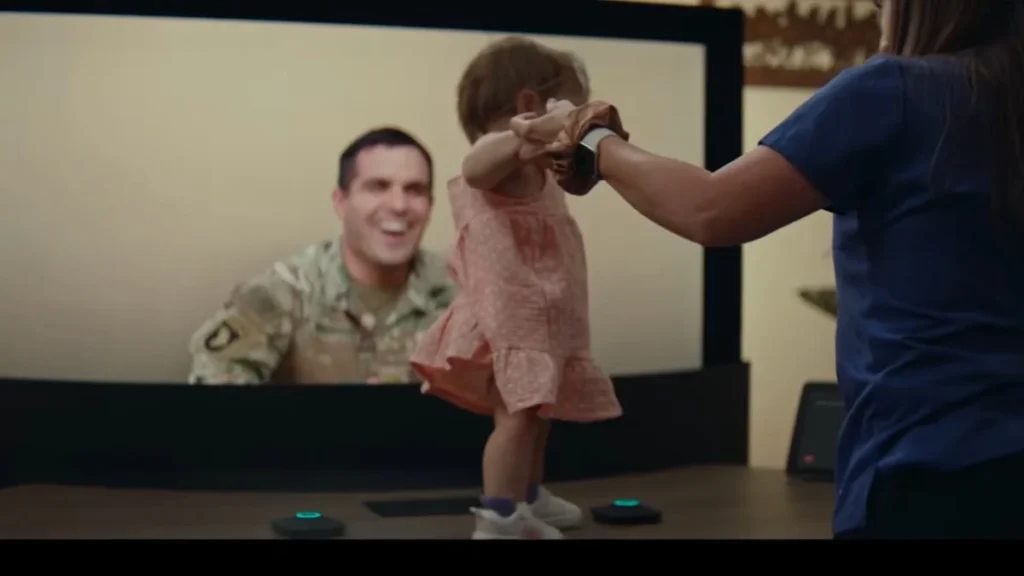
Google has announced a significant expansion of its partnership with the United Service Organizations (USO), bringing its groundbreaking Google Beam 3D video communication technology to 20 USO locations across the globe. This initiative aims to bridge the vast distances separating deployed service members from their loved ones, allowing them to experience critical family moments with an unprecedented sense of presence and realism. The rollout leverages HP Dimension systems integrated with Google Beam, creating lifelike, immersive conversations that remarkably do not require special glasses or headsets, a stark departure from traditional virtual reality solutions.
The initial pilot phase of this ambitious program successfully connected service members stationed in Trzebież, Poland, with their families at Fort Bliss, Texas. Building on the profound positive feedback from this early deployment, the program is now scaling rapidly, with immediate expansions planned for Grafenwöhr, Germany, and Fort Hood, Texas. This strategic geographical spread addresses critical deployment hubs and large military communities, maximizing the program’s reach and impact. Alongside the technological rollout, Google has also released a compelling docuseries. Directed by military veteran and acclaimed filmmaker Kyle Hausmann-Stokes, the series intimately follows four soldiers from the 2nd Battalion, 37th Armored Regiment during their deployment in Poland, chronicling their emotional experiences as they utilized Beam to reconnect with loved ones back home. The docuseries serves not only as a powerful testament to the technology’s human impact but also as a public awareness campaign highlighting the unique challenges faced by military families.
Bridging the Divide: The Enduring Challenge of Military Separation
For generations, military families have grappled with the profound emotional and logistical challenges of separation due. Deployments, often lasting months or even years, create immense strain, impacting spousal relationships, children’s development, and the overall well-being of the family unit. Historically, communication methods evolved from letters and telegrams to costly international phone calls, and eventually to video conferencing. While modern video calls offer visual connection, they often fall short in conveying the nuanced nonverbal cues, shared physical space, and genuine intimacy that are fundamental to human connection. The flat, two-dimensional nature of screens can exacerbate feelings of distance, making it difficult for families to feel truly "together" during critical life events.
According to a 2021 study by the Department of Defense, over 1.3 million active-duty service members are stationed worldwide, with a significant portion experiencing deployments away from their primary residences and families. The emotional toll of these separations is well-documented, contributing to increased stress, anxiety, and loneliness among both service members and their families. Children, in particular, can struggle with a parent’s absence, missing milestones and everyday interactions that shape their development. The USO, since its inception in 1941, has been a cornerstone in supporting service members and their families, offering a wide array of programs designed to boost morale, provide comfort, and maintain vital connections. Their enduring mission makes them an ideal partner for Google’s innovative communication solution, directly addressing one of the most persistent challenges faced by military personnel.
Google Beam: A New Dimension in Video Communication
Originally conceived and developed under the codename "Project Starline," Google Beam represents a significant leap forward in video communication technology. It moves beyond conventional video calls by leveraging advanced artificial intelligence and specialized display technology to imbue remote conversations with an unprecedented sense of physical presence. The core innovation lies in its ability to create a three-dimensional representation of the participant in real-time, allowing for eye contact, natural gestures, and spatial audio that make it feel as if the person is sitting directly across the table.
The HP Dimension system, which houses the Google Beam technology, features a large 65-inch light field display. Crucially, the system incorporates six high-resolution cameras strategically built into its frame. These cameras work in concert, capturing the participant from multiple angles simultaneously. An advanced AI model then processes this rich, multi-perspective visual data to construct a highly detailed, volumetric (3D) representation of the individual. This 3D model is then projected onto the specialized display.
The display technology itself is pivotal. Unlike traditional screens, the light field display sends slightly different images to each of the viewer’s eyes. This parallax effect is what creates the illusion of depth without the need for cumbersome wearable equipment like 3D glasses or VR headsets. Furthermore, sophisticated head-tracking technology continuously monitors the participant’s head movements, dynamically adjusting the perspective of the 3D rendering. This means that as a person shifts their gaze or leans in, the virtual representation of their loved one also subtly shifts, maintaining the illusion of a shared physical space. Complementing the visual fidelity, spatial audio technology is integrated, ensuring that voices are positioned precisely where the person appears on the screen, further enhancing the immersive and natural feel of the conversation. Together, these technological features are meticulously designed to preserve the subtle yet crucial nonverbal cues—such as eye contact, facial expressions, and body language—that are essential for natural, empathetic, and meaningful human communication.
A Chronology of Connection: From Concept to Global Rollout
The journey of Google Beam, from an experimental project to a vital tool for military families, reflects a rapid pace of innovation and strategic partnership:
- 2021 (Estimated): Google’s internal development of "Project Starline" begins, with early demonstrations showcasing the potential of volumetric video conferencing. The initial concept focused on enhancing remote work and interpersonal communication through a more immersive experience.
- Early 2023: Google announces the commercialization and rebranding of Project Starline as "Google Beam," signaling its readiness for broader application. Initial partnerships and deployment strategies are explored.
- Late 2023 – Early 2024: A crucial pilot program is launched, connecting deployed service members at a USO location in Trzebież, Poland, with their families residing at Fort Bliss, Texas. This pilot serves as a real-world testbed for the technology’s effectiveness in a high-stakes, emotionally charged environment. The success of this pilot, validated by deeply moving testimonials from participating families, underscores the technology’s profound potential.
- Mid-2024: Based on the overwhelming positive outcomes of the pilot, Google and the USO announce a significant expansion. The program is slated to extend to additional key military installations, including Grafenwöhr, Germany, and Fort Hood, Texas, marking the initial phase of a broader global rollout.
- Concurrently with Expansion: Google releases a poignant docuseries, directed by Kyle Hausmann-Stokes, detailing the experiences of soldiers and their families during the Poland-Texas pilot. The docuseries offers an intimate look at the emotional impact of Beam technology, solidifying its humanitarian value.
- Ongoing through 2024-2025: The partnership targets the deployment of Google Beam systems to a total of 20 USO locations worldwide. This phased rollout will strategically cover major deployment zones and military family support centers, ensuring widespread access to this transformative communication tool.
This timeline showcases a deliberate and iterative approach, moving from conceptualization to rigorous testing, and finally to a broad, impactful deployment, all driven by a clear understanding of the unique needs of military families.
Voices from the Frontline and Homefront: Sharing Milestones Across Continents
The impact of Google Beam is most powerfully illustrated through the personal stories of the service members and their families who have experienced its transformative capabilities. These anecdotes highlight how the technology helps bridge emotional as well as geographical distances, allowing families to participate in everyday life and celebrate significant milestones that would otherwise be missed.
Sergeant Amoy Brown, deployed in Poland, faced an eight-hour time difference that complicated opportunities to connect meaningfully with his wife, aviation logistics specialist Tiyanna Orane, and their young son, Azeal. During their Beam session, the technology allowed Brown to celebrate Orane’s military promotion, offering a sense of shared presence that a traditional video call could not. He could see her expressions of pride and interact with Azeal in a way that felt natural, almost as if he were physically in the room. This ability to witness and share in such moments is invaluable for maintaining family cohesion and morale.
Army Chaplain Roland Kassales, whose first two years of service included a challenging 15-month deployment, also experienced the profound difference Beam made. He listened intently as his daughter, Blythe, read stories she had written, her gestures and expressions conveying the full depth of her creativity and excitement. Chaplain Kassales articulated the program’s core value, stating, “Being able to incorporate feeling and body language – all those things that make communication meaningful – will go a long way towards overall well-being for soldiers.” His comments underscore that true communication transcends mere words, encompassing the full spectrum of human expression. The Beam sessions provided participants with opportunities to engage in seemingly mundane yet deeply significant everyday activities, alongside major life milestones, fostering a sense of continuity in family life despite the physical separation.
Sergeant First Class Matthew Jennings, another participant, used Beam to marvel at how much his newborn daughter, Lilly, had grown since his deployment. He also had the precious opportunity to watch one of his sisters play guitar, sharing a moment of familial joy and normalcy. His wife, Mayra, manages a blended household of seven children while working demanding 12-hour shifts, making these moments of connection even more crucial for her and the children’s emotional resilience.
Similarly, Major Michael Rodriguez, an armor battalion operations officer with 12 years of dedicated service, found immense solace and joy in the Beam connection. He was able to virtually "be there" to watch his one-year-old daughter, Kathryn, practice taking her first tentative steps – a quintessential milestone that many deployed parents heartbreakingly miss. His wife, Jessica, who works as a pediatric physical therapist while caring for their four young children, also benefited from the ability to share these moments, feeling more connected and supported despite her husband’s absence. The expansion to 20 USO locations will undoubtedly extend these deeply personal and vital connections far beyond the initial Poland-Texas corridor, allowing countless more military families to share in life’s precious moments.
The Integral Role of the USO: A Legacy of Support
The United Service Organizations (USO) has been a steadfast pillar of support for American service members and their families for over eight decades. Founded in 1941, the USO’s mission is to strengthen America’s military service members by keeping them connected to family, home, and country throughout their service to the nation. With centers worldwide, the USO provides a "home away from home" for deployed personnel, offering comfort, recreation, and essential services.
The partnership with Google Beam aligns perfectly with the USO’s long-standing commitment to enhancing military family well-being. By hosting the Beam systems, the USO facilitates access to cutting-edge technology in a familiar, supportive environment. This collaboration represents a natural evolution of their services, moving beyond traditional communication methods to embrace innovative solutions that address the contemporary challenges of military life. The USO’s extensive network of facilities, coupled with its deep understanding of military culture and needs, makes it an indispensable partner in deploying a program of this magnitude. Their involvement ensures that the technology is not just available, but is integrated into a broader ecosystem of support for service members.
The Docuseries: A Visual Narrative of Resilience and Connection
The accompanying docuseries, directed by military veteran and filmmaker Kyle Hausmann-Stokes, plays a crucial role in bringing the human stories behind the Google Beam initiative to a wider audience. Hausmann-Stokes, with his intimate understanding of military life, brings an authentic perspective to the narratives of the four soldiers from the 2nd Battalion, 37th Armored Regiment deployed in Poland. The series goes beyond simply showcasing technology; it delves into the emotional landscapes of military families, highlighting their resilience, sacrifices, and the profound longing for connection.
By visually documenting the soldiers’ experiences with Beam, the docuseries provides compelling evidence of the technology’s emotional impact. It shows not just how the calls happen, but what those calls allow families to share – the laughter, the tears, the everyday moments that knit families together. This storytelling approach is vital for raising awareness about the challenges of military separation and demonstrating how technological innovation, when applied thoughtfully, can provide tangible relief and support. The docuseries serves as both an educational tool and an inspiring testament to the power of connection in the face of adversity.
Broader Implications and Future Outlook
The Google Beam partnership with the USO carries significant implications extending beyond immediate family connections. For military morale and retention, the ability to maintain such lifelike connections can be a powerful factor. Service members who feel more connected to their families are likely to experience higher levels of job satisfaction, reduced stress, and improved mental well-being, potentially leading to increased retention rates across the armed forces. Furthermore, it strengthens the support system for families back home, mitigating some of the unique stressors associated with military life.
From a technological perspective, the deployment of Google Beam represents a real-world application of cutting-edge AI and display technology, proving its viability and impact in a demanding environment. The insights gained from this large-scale deployment will undoubtedly inform future developments in immersive communication, potentially paving the way for broader consumer and enterprise applications of volumetric video conferencing. This initiative showcases how public-private partnerships can harness advanced technology for significant social good, addressing critical societal needs with innovative solutions.
Looking ahead, the successful rollout to 20 USO locations will serve as a foundational step. Future considerations might include expanding the network to even more remote bases, integrating additional features (such as shared digital experiences), and exploring how this technology could be adapted for other communities facing similar challenges of distance and separation, such as healthcare or international business. While challenges such as bandwidth requirements, system maintenance, and ensuring equitable access across all military communities will need continuous attention, the Google Beam program marks a pivotal moment. It offers a tangible vision for a future where technology doesn’t just connect us, but truly brings us together, preserving the invaluable human elements of communication across any distance. The partnership between Google and the USO is not merely deploying technology; it is cultivating resilience, strengthening family bonds, and ultimately, enhancing the well-being of those who serve.