The persistent demand for faster, more efficient, and higher-capacity digital storage has led a team of engineers at the University of California San Diego to a significant breakthrough in the field of spintronics and optical physics. By successfully manipulating magnetism using specialized laser light, the researchers have demonstrated a method that could revolutionize how data is recorded, potentially outperforming current hard drive technologies by a factor of 1,000. The study, published in the journal Nature Communications, represents a departure from traditional magnetic recording methods, overcoming long-standing physical barriers that have previously relegated optical switching to the realm of theoretical or highly limited experimental applications.
The Mechanics of Modern Data Storage and Its Limitations
To appreciate the scale of this breakthrough, one must understand the current state of digital memory. Modern computing relies heavily on magnetic storage, such as Hard Disk Drives (HDDs) and Magnetic Random Access Memory (MRAM). These systems function by encoding information into tiny magnetic regions on a disk or chip. Each region represents a binary digit—a 1 or a 0—based on its magnetic orientation (north or south).
Currently, changing these states requires the application of an external magnetic field or a spin-polarized electric current. While effective, these methods are reaching their physical limits. Generating magnetic fields at the nanosecond scale requires significant energy, much of which is dissipated as heat. This heat generation is a primary reason why massive data centers require complex and expensive cooling systems. Furthermore, the speed at which a magnetic field can be toggled is fundamentally limited, creating a bottleneck in the processing and storage of the massive datasets required for modern artificial intelligence, cloud computing, and high-resolution media.
The Rise of Optical Switching
For years, scientists have looked toward "all-optical switching" (AOS) as the holy grail of data storage. The concept involves using ultra-short laser pulses to flip the magnetic state of a material. Because light can be delivered in femtosecond bursts (one quadrillionth of a second), the theoretical speed of data recording could be increased by several orders of magnitude.
However, AOS has historically been plagued by two major constraints. First, it typically only worked on extremely thin materials—specifically, magnetic films no more than two or three atomic layers thick. If the material was any thicker, the optical effect was suppressed, making the stored data "volatile" or prone to accidental erasure over time. Second, the process was highly dependent on the polarization of the light. The electromagnetic waves of the laser had to be oriented in a specific way to trigger the switch, adding layers of complexity to any potential hardware design.
Engineering the Light: A New Approach
The UC San Diego team, led by Professor Abdoulaye Ndao of the Department of Electrical and Computer Engineering, took a different approach. Rather than attempting to engineer a new, exotic magnetic material, they focused on "engineering the light" itself.
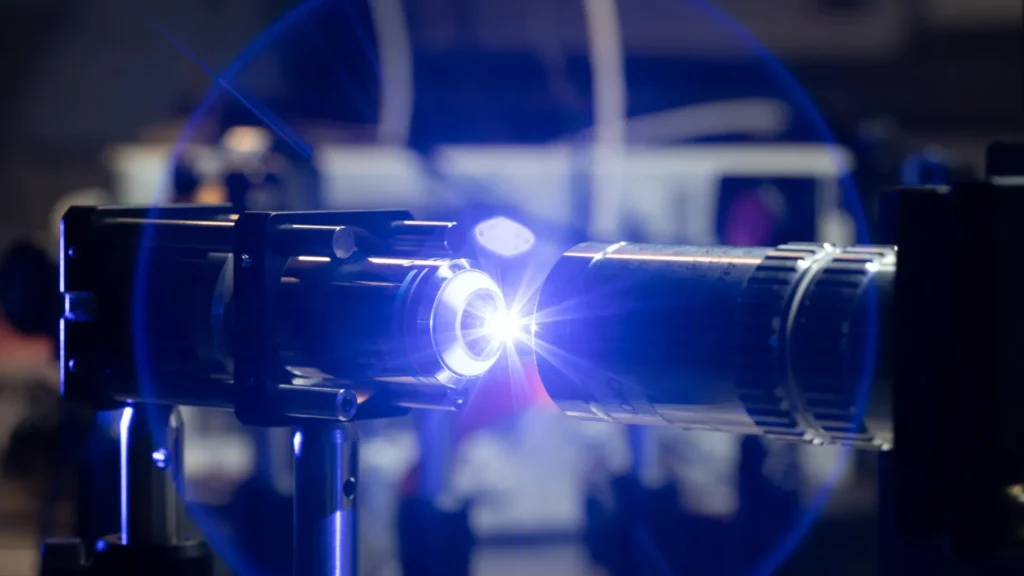
By utilizing a specialized ultrafast laser and meticulously modifying the shape and size of the beam, the researchers managed to shrink the laser’s focal point far beyond what was previously considered standard for such experiments. The team described a reduction in the beam’s effective area by tens of orders of magnitude. This concentrated energy allowed them to interact with the magnetic material at a much deeper physical level.
"The smaller the size of the beam, the smaller and more dense the optical memory," explained Professor Ndao. This precision is what allowed the team to bypass the "three-layer limit." In their experiments, they successfully demonstrated optical switching in a structure containing nine alternating layers of platinum and cobalt. This increased thickness is crucial for the long-term stability of data, as thicker magnetic regions are more resistant to the thermal fluctuations that can flip a magnetic bit spontaneously.
Overcoming Polarization and Material Barriers
The breakthrough also addressed the issue of light polarization. The UC San Diego experiments proved that with a sufficiently engineered beam, the specific orientation of the light waves was no longer a requirement for switching. This simplifies the potential integration of such technology into consumer electronics, as it removes the need for complex polarizers that would take up valuable space on a microchip.
Muhammad Waleed Khalid, the study’s first author and a Ph.D. student in Ndao’s research group, noted that the technique relies on a sequence of ultrafast pulses. The first pulses in the sequence heat a localized area of the cobalt-platinum stack just enough to destabilize the existing magnetic orientation. Subsequent pulses then "nudge" the region into its new state. By controlling the shape of the beam, the researchers could ensure that this process was stable and repeatable.
"Working with a specialized laser allowed us to optically engineer the beam to have a certain shape and size," Khalid said. "That gave us the room to explore more fundamental physics, which cannot be done with conventional beam lasers."
Scientific Skepticism and Rigorous Validation
The results were so unexpected that the research team initially faced skepticism within the scientific community. The prevailing consensus was that the physics of light-matter interaction would not allow for such deep penetration and control in multi-layered magnetic stacks without specific polarization.
Khalid described a period of intense verification: "The effects we were seeing were so new and unusual that we had a difficult time convincing others in the field that our discovery was not a one-time fluke. We spent a lot of time and effort repeating and verifying our experiments to substantiate our work to the optics community."
This validation was made possible through a cross-disciplinary collaboration. Ndao’s expertise in optics was paired with the magnetism expertise of Eric Fullerton, a renowned professor at the UC San Diego Jacobs School of Engineering and the Endowed Chair of the Center for Memory and Recording Research (CMRR). By merging the two fields, the team was able to view the problem of magnetic storage through a dual lens of photonic engineering and materials science.
Broader Implications for the Tech Industry
The implications of this research extend far beyond the laboratory. As the world moves toward an era of "Big Data," the energy consumption of the internet is becoming a global concern. Data centers currently consume an estimated 1% to 1.5% of global electricity use, a figure that is projected to rise as AI training models become more complex.
If optical switching can be commercialized, it would offer a "Green IT" solution. Because the laser pulses are so short, the total energy required to write a bit of data is significantly lower than that required by current magnetic field-based systems. Additionally, the ability to store more data in smaller, thicker layers means that the physical footprint of storage arrays could shrink, leading to higher-density server farms that require less cooling.
The Path to Commercialization and Remaining Challenges
Despite the excitement surrounding the Nature Communications paper, the researchers are quick to point out that several engineering hurdles remain. The primary obstacle is the laser itself. The ultrafast lasers used in the laboratory are currently too large and expensive to be integrated into a standard laptop or smartphone.
"Current versions are not easily incorporated into computer chips," the researchers noted. The next phase of the project involves two parallel tracks: identifying magnetic materials that are even more sensitive to light (potentially allowing for smaller, lower-power lasers) and developing optical structures—such as plasmonic antennas—that can concentrate light from smaller, chip-integrated lasers into the required nanometer-scale regions.
The team’s current goal is to reduce the laser beam’s size to just a few hundred nanometers. If they can achieve this while maintaining the ability to switch magnetism in multi-layered materials, the path to a new generation of "photonic hard drives" will be clear.
A Timeline of Magnetic Innovation
This discovery is part of a long chronology of innovation at UC San Diego’s Center for Memory and Recording Research. Over the decades, the center has been at the forefront of transitions from longitudinal recording to perpendicular recording, and more recently, toward Heat-Assisted Magnetic Recording (HAMR).
While HAMR uses a laser to heat the disk before a magnetic field writes the data, the UC San Diego team’s new method goes a step further by removing the magnetic field entirely from the writing process. This "all-optical" approach represents the theoretical limit of recording speed, moving from the nanosecond scale of current electronics to the picosecond or femtosecond scale of photonics.
As the tech industry hits the "memory wall"—where processor speeds outpace the ability of memory to provide data—technologies like optical switching will be essential. The work of Ndao, Khalid, and Fullerton provides a blueprint for a future where light and magnetism work in tandem to sustain the digital age’s insatiable appetite for data.