Tokyo, Japan – October 1, 2026 – Honda has unveiled updates for its highly acclaimed 2027 Civic Type R, focusing on refined performance, enhanced comfort, and updated technology. While the core of the Type R’s lauded driving dynamics remains untouched, these incremental improvements aim to solidify its position as a benchmark in the hot hatch segment and address minor criticisms from enthusiasts and everyday drivers alike. The manufacturer is positioning these changes as a means to further elevate an already exceptional performance vehicle, even if some modifications are nuanced.
Refined Aerodynamics and Handling Dynamics
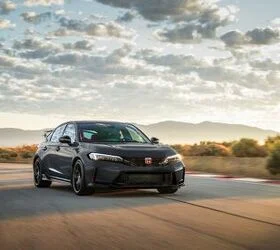
Visually, the alterations to the 2027 Civic Type R are discreet, a testament to the already aggressive and functional design of the outgoing model. Honda states that the front fascia has been subtly revised to optimize airflow. The grille has been enlarged, a change intended to improve engine cooling under demanding conditions, while an updated front splitter is designed to generate additional downforce, enhancing stability at higher speeds. These aerodynamic tweaks, while perhaps imperceptible to the casual observer, are part of Honda’s continuous pursuit of performance refinement.
The significance of these aerodynamic adjustments may be most keenly felt on a racetrack or during spirited driving on open roads. While enthusiasts often debate the minutiae of such enhancements, their cumulative effect can contribute to improved tire grip and thermal management, crucial factors for sustained high-performance driving. The subtle improvements in downforce and cooling could translate to more consistent lap times and a more forgiving experience when pushing the car to its limits.
Perhaps the most significant mechanical update for the 2027 model year addresses one of the recurring critiques of the previous generation: the ride quality in its most aggressive R+ suspension mode. The previous iteration of R+ was optimized for pristine racetrack surfaces, often resulting in a noticeably harsh and bouncy ride on public roads, deterring some drivers from utilizing its full potential. Honda claims to have recalibrated the dampers for the 2027 model, rendering the R+ setting more compliant. This adjustment is expected to make the Type R more approachable and enjoyable on less-than-perfect road surfaces, without compromising its track-focused capabilities. This theoretical improvement should allow drivers to more confidently tackle winding backroads in the most aggressive setting, although it’s worth noting that the Civic Type R has always offered a competent and engaging experience in its softer drive modes.
Further enhancing the driving experience, the 2027 Type R benefits from an updated rev-matching system. This technology now more precisely and rapidly matches engine RPMs during downshifts, contributing to smoother gear changes and a more seamless power delivery when decelerating or preparing for corner entry. Brake feel has also been a focus for improvement. Honda has incorporated a yoke spring into the brake pedal mechanism. This design aims to minimize pedal play and enhance feedback, providing the driver with a more direct and communicative connection to the braking system. This refinement is crucial for confidence-inspiring braking, especially during demanding driving scenarios.
Interior Upgrades and Technology Integration
In contrast to the subtle exterior modifications, the interior of the 2027 Honda Civic Type R features more readily apparent changes. The front seats have undergone a revision to their perforation pattern, designed to enhance occupant hold and reduce sliding during spirited cornering. This upgrade is expected to complement the already substantial bolstering of the seats, providing a more secure and supportive environment for the driver and front passenger.
A significant addition for the 2027 model year is the availability of heated front seats, a first for the Civic Type R. This creature comfort feature broadens the car’s appeal, making it a more practical and enjoyable proposition for year-round driving in a wider range of climates.
Honda has also introduced Ultrasuede to the instrument panel and upper door panels. While often employed for its aesthetic appeal in performance vehicles, the primary intention of Ultrasuede (or similar materials like Alcantara) in this application is to mitigate windshield glare. Honda’s implementation is noteworthy in its strategic placement atop the dashboard, where it is most effective at reducing distracting reflections, a thoughtful approach prioritizing function over mere decoration. However, the use of such materials does come with considerations. Ultrasuede can be more prone to accumulating dust and requires specific cleaning methods. It may also be less resistant to degradation from prolonged UV exposure compared to traditional polymer dashboards. Nevertheless, these are minor trade-offs that are unlikely to deter the target demographic for the Type R.
Complementing these material upgrades, the interior’s aesthetic has been subtly refined through a reduction in shine. Elements such as the door handles, air vent surrounds, and HVAC controls, which were previously finished in silver, are now rendered in black for 2027. This darker theme extends to the aluminum shift knob, which adopts a more subdued, darker gray hue. These de-chromed accents contribute to a more cohesive and sophisticated cabin ambiance.
Technological enhancements for the 2027 Civic Type R include the standard inclusion of an auto-dimming rearview mirror and the addition of USB-C ports, catering to modern connectivity needs. The infotainment system sees a significant upgrade with the integration of the Alexa digital assistant and the latest versions of Google Gemini, Google Maps, and Google Play. This integration offers enhanced voice control capabilities and seamless access to navigation and entertainment services, appealing to drivers who value advanced digital integration.
Furthermore, the 2027 Civic Type R will feature the latest iteration of Honda’s Sensing suite of safety and driver-assistive technologies. A notable addition to this suite is a post-collision braking system. This advanced safety feature is designed to automatically apply the brakes after an initial collision is detected, helping to mitigate the severity of secondary impacts and potentially prevent multi-car pileups in the event of a serious accident. While the inclusion of advanced safety systems is generally welcomed, it’s an ongoing trend across the automotive industry, with certain features now mandated by regulatory bodies. The typical Type R driver, prioritizing engagement and control, may find some of these assistive systems intrusive, though their presence reflects the evolving landscape of automotive safety.
Performance Figures and Pricing Adjustments
Beyond these revisions, the fundamental performance of the 2027 Honda Civic Type R remains unchanged. The potent 2.0-liter turbocharged four-cylinder engine continues to deliver an output of 315 horsepower and 310 lb-ft of torque, enabling the car to accelerate from 0 to 60 mph in approximately five seconds. The car’s renowned handling dynamics, particularly its prowess as a front-wheel-drive automobile, are expected to remain a benchmark in its class.
The exterior color palette welcomes a new addition with the introduction of Meteorite Gray Metallic. This joins the existing range of available colors, offering buyers a fresh aesthetic option.
However, these updates and the ongoing demand for the Type R come with a price adjustment. Honda has increased the Manufacturer’s Suggested Retail Price (MSRP) for the updated 2027 Honda Civic Type R, with the model now starting at $49,990. This represents a $1,300 increase over the 2026 model year.
While the inclusion of additional standard equipment and the refined features certainly add value, the proposition of a nearly $50,000 price tag for a vehicle based on a mainstream economy car platform might be perceived as steep by some consumers, particularly in the current economic climate. The Type R has consistently distanced itself in price from its base Civic counterpart since its introduction to the North American market in 2017. This widening price gap is likely attributable to a combination of factors, including international trade tariffs, Honda’s strategic pricing power, and the inherent costs associated with developing and producing a specialized, high-performance variant.
The increasing MSRP also places the Civic Type R in a more competitive space, facing alternatives that offer a substantial portion of its driving fun for considerably less money. For instance, Honda’s own Civic Si, positioned as a more accessible performance variant, starts at $32,290. This price disparity highlights the premium that enthusiasts are willing to pay for the ultimate iteration of the Civic formula. The Type R’s trajectory suggests a continued evolution from its roots as a widely accessible performance bargain to a more exclusive, albeit highly capable, enthusiast machine.
Images: Honda