Published: August 19th, 2026
Mercedes-Benz has officially unveiled the refreshed 2027 C-Class Sedan, a significant update that places a strong emphasis on visual alignment with its larger S-Class sibling and the brand’s newly introduced electrified variants. While powertrain enhancements have been incorporated, the most striking changes are undeniably aesthetic, focusing on an illuminated exterior and an upgraded digital experience designed to immerse occupants in the latest Mercedes-Benz technological advancements. This refresh signals Mercedes-Benz’s continued commitment to a design language that prioritizes brand recognition and a distinct luxury signature, even as the automotive landscape navigates the complexities of electrification and software-defined vehicles.
A Luminous Identity: Exterior Design and Branding
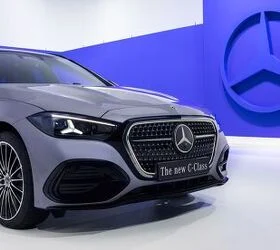
The most prominent visual evolution of the 2027 C-Class lies in its meticulously redesigned exterior lighting. Headlights, taillights, and the iconic grille have all been subtly re-engineered to present a more cohesive and sophisticated appearance. Central to this update is the enhanced integration of the illuminated Mercedes-Benz logo, a feature now present in a multitude of locations across the vehicle. This deliberate design choice aims to elevate the perceived luxury and exclusivity of the C-Class, ensuring immediate brand identification.
Adding a touch of theatricality, the side mirrors now incorporate LED projectors that cast the Mercedes-Benz emblem onto the pavement adjacent to the vehicle when the doors are opened. This "welcome" illumination, while not adding functional utility, serves as a clear statement of the car’s premium pedigree, designed to impress both the driver and onlookers. This pervasive use of lighting underscores a broader trend within the luxury automotive sector, where automakers are increasingly leveraging sophisticated illumination schemes to signify opulence and technological prowess. Mercedes-Benz, a long-standing leader in automotive innovation, appears to be at the vanguard of this illuminated design philosophy.
While the overt display of branding through extensive lighting might be perceived by some as excessive, Mercedes-Benz acknowledges the desire for personalization. Select lighting elements can indeed be customized, offering a degree of control to owners who wish to tailor the visual signature of their vehicle. However, the illuminated grille, adorned with a multitude of tiny Mercedes-Benz logos alongside the prominent central emblem, and the branded daytime running lights, remain signature elements of the refreshed model. This approach reflects a delicate balance between brand reinforcement and individual expression, a challenge many luxury manufacturers are currently grappling with.
Differentiating the Fleet: Electric vs. Gasoline Variants
The visual distinctions between the gasoline-powered C-Class and its recently debuted electrified counterpart, while subtle, are significant enough to impart a unique character to each. The electrified C-Class features distinctive "heckblende" taillights, a design element that incorporates roundels housing smaller LED emblems. This contrasts with the gasoline model, where a seamless connection exists between the headlights and grille, whereas the electric variant presents a noticeable gap. These nuanced design cues allow for a more sophisticated differentiation within the C-Class family, catering to distinct buyer preferences and signaling the technological advancements of the electrified option.
Beyond lighting, the 2027 C-Class introduces a selection of fresh wheel designs. The AMG variants, in particular, receive novel wheel options that are one inch larger than the standard offerings, contributing to a more aggressive and performance-oriented stance. The exterior palette is further enhanced with two new metallic paint options: Miami Silver Metallic, a classic silver hue, and Moody Sky Grey Metallic, offering a more contemporary and sophisticated finish. These updates collectively contribute to a more dynamic and visually appealing presence for the entire C-Class lineup.
A Refined Sanctuary: Interior Enhancements
Interior modifications for the 2027 C-Class are comparatively understated, focusing on subtle refinements that enhance both ergonomics and aesthetic appeal. A notable improvement is the redesigned steering wheel, which now features a physical scroll wheel for more intuitive and tactile volume control. This ergonomic adjustment addresses a common critique of touchscreen-centric interfaces, offering a more direct and less distracting way to manage audio settings.
Mercedes-Benz is also introducing an AMG Line Plus package, which elevates the interior’s sportiness with the inclusion of striking red seatbelts and contrast stitching on the upholstery. This package is expected to be offered in conjunction with specific interior trim and upholstery options, though details regarding its compatibility with new color choices such as Beech Brown and Cherry Red remain to be fully elucidated. Similarly, the availability of novel trim options, including High-Gloss Silver Metallic and Natural Grain Birch Wood, will likely be tied to specific configurations, offering buyers a broader spectrum of personalization.
The most significant interior advancements, however, lie within the vehicle’s updated operating system, a testament to Mercedes-Benz’s commitment to a digitally integrated driving experience.
The Digital Heartbeat: MB.OS and the MBUX Evolution
At the core of the 2027 C-Class’s technological evolution is the new Mercedes-Benz Operating System (MB.OS). This sophisticated, AI-powered supercomputer is designed to manage all vehicle domains and facilitate over-the-air (OTA) updates, ensuring the C-Class remains current with the latest software enhancements and features throughout its lifecycle. This move towards a continuously evolving digital platform signifies a paradigm shift in automotive ownership, where vehicles are no longer static products but dynamic, software-defined entities.
The latest generation of the Mercedes-Benz User Experience (MBUX) infotainment system introduces an advanced AI-based MBUX Virtual Assistant to the C-Class. This intelligent assistant is engineered to engage in complex conversations and possesses short-term memory, enabling it to respond in a manner akin to a well-informed companion. Mercedes-Benz claims that in the C-Class, this assistant will provide comprehensive and relevant answers to everyday queries, transforming the interaction between driver and vehicle into a more intuitive and helpful dialogue.
Navigation has also been significantly enhanced, leveraging Google’s technological expertise in conjunction with MBUX Surround Navigation. This integrated system promises clear route guidance, even in the most complex traffic scenarios. Furthermore, thanks to Google Cloud’s Automotive AI Agent, the MBUX Virtual Assistant is endowed with extensive knowledge, capable of delivering personalized responses to inquiries about points of interest, enriching the driving experience with contextually relevant information.
This deep integration of AI and cloud-based services represents a significant leap forward in in-car digital assistance. While virtual assistants in vehicles have historically faced challenges with accuracy and responsiveness, Mercedes-Benz appears to be making substantial strides. The emphasis on conversational capabilities and contextual understanding suggests a move towards a more natural and less intrusive interaction, aiming to enhance convenience and reduce driver distraction.
Performance Dynamics: Enhanced Agility and Electrified Assistance
Mercedes-Benz asserts that the new C-Class boasts a decidedly more agile driving experience, achieved through a meticulously optimized suspension system. The engineers have focused on enhancing dynamic handling without compromising the high level of long-distance comfort for which the C-Class is renowned. This suggests a recalibration of damping characteristics, likely resulting in a slightly firmer ride that translates to improved roadholding and a more engaging driving feel.
For the North American market, the 2027 C-Class will feature an updated version of the turbocharged 2.0-liter four-cylinder engine, now integrated with a 48-volt mild-hybrid system. The core of this hybrid system is the integrated starter-generator, which is designed to make the auto start-stop function virtually imperceptible to the driver. More significantly, this system provides a temporary boost in performance at lower engine speeds, delivering up to an additional 23 horsepower and 151 lb-ft of torque. This electric assistance aims to improve responsiveness and reduce turbo lag, contributing to a smoother and more potent acceleration.
A notable addition to the powertrain is a newly developed electric auxiliary compressor. This component works in tandem with the turbocharger, providing an initial surge of boost before the turbocharger can spool up effectively. While this innovation enhances the engine’s response, it does not appear to alter the peak power output of the C-Class. The M 254 EVO engine continues to deliver 255 horsepower and 295 lb-ft of torque, identical to its predecessor. However, a new overboost function has been introduced, which can temporarily unlock an additional 27 horsepower under specific conditions, offering a brief but noticeable surge of power.
The strategic implementation of these hybrid and electric auxiliary systems underscores Mercedes-Benz’s focus on optimizing drivability and efficiency. While outright power figures may remain consistent, the manner in which that power is delivered is significantly refined. The ability to generate torque earlier in the rev range offers tangible real-world advantages, such as more effortless merging onto highways and quicker acceleration from a standstill. The true impact of these enhancements will become clearer following extensive public testing and road assessments.
Market Entry and Pricing Projections
Further details regarding the 2027 C-Class, including specific AMG model configurations and pricing, are anticipated closer to its North American launch, which is currently slated for the first half of 2027. It is widely expected that the highly sought-after wagon variant, popular among European consumers, will not be offered in the North American market, aligning with previous market strategies.
Industry analysts and prognostication suggest that the Manufacturer’s Suggested Retail Price (MSRP) for the new C-Class is unlikely to fall below the $52,000 mark. This projection reflects the ongoing trend of increasing vehicle prices, driven by advanced technology, rising production costs, and the inherent premium associated with the Mercedes-Benz brand. As the automotive industry continues its rapid evolution, the 2027 C-Class stands as a significant marker, embodying the brand’s vision for a luxurious, technologically advanced, and increasingly integrated future of mobility.