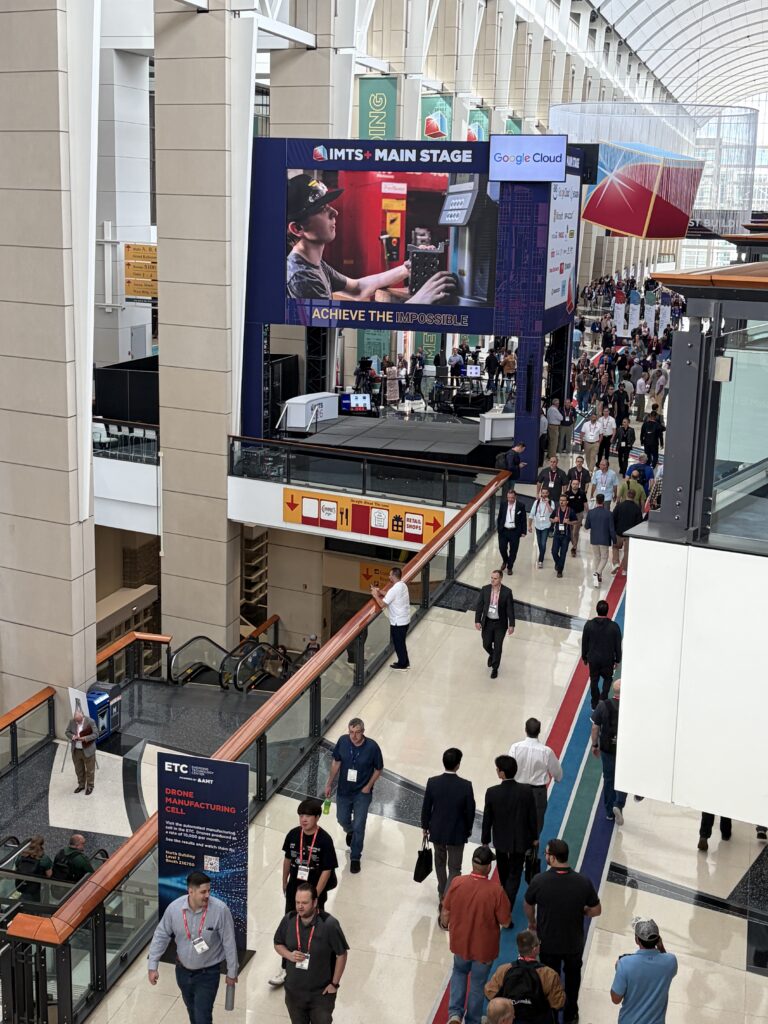
The sprawling halls of McCormick Place in Chicago recently buzzed with the energy of over 90,000 industry professionals, all converging for the International Manufacturing Technology Show (IMTS) 2026. Spanning an impressive 1.17 million square feet of exhibit space and featuring more than 1,700 exhibitors, IMTS once again solidified its position as a premier global event for showcasing the latest advancements in manufacturing technology. Attendees navigated the vast exhibition, a testament to the industry’s scale and complexity, with many finding humor in the shared experience of weary feet after days spent exploring the "jungle" of innovation.
This year’s IMTS saw a strategic distribution of technological sectors, with the East Building focusing on quality assurance, 3D scanning, and software solutions. The South Building played host to the burgeoning field of additive manufacturing (AM), while the North Building highlighted advancements in automation, robotics, and artificial intelligence (AI). The placement of additive manufacturing companies within the South Building, adjacent to the metal removal area, was particularly noteworthy. This proximity underscored a significant industry shift: AM is increasingly recognized not as a standalone niche technology, but as an integral component of the broader manufacturing workflow. This integration signals a maturation of the AM sector, moving beyond its early perception of producing novelties to becoming a foundational element in industrial production.
Hexagon: Pioneering the Fusion of Data and Intelligence in Manufacturing
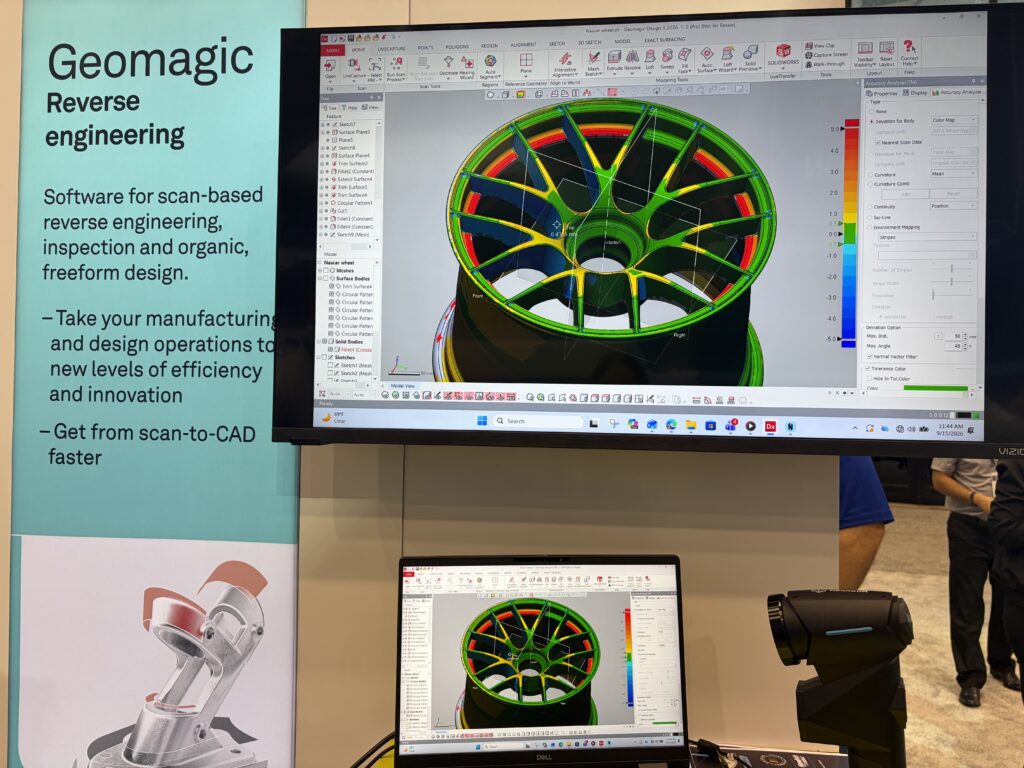
Hexagon’s presence at IMTS 2026 underscored its commitment to providing comprehensive solutions across the manufacturing value chain. Sean Parker, Technical Sales Specialist, highlighted the critical role of Hexagon’s Geomagic DesignX software in reverse engineering and the reconstruction of legacy or damaged parts. When original CAD files are unavailable, the software facilitates the conversion of 3D scanned data into usable CAD models. "Often, users are trying to recreate a broken part, which means that even if they scan it, the data is incomplete," Parker explained. Geomagic DesignX addresses this challenge by intelligently filling in missing data points, transforming point cloud or mesh data into a polygon mesh format. A seamless one-click transfer to DesignX allows for efficient cleanup and modeling.
Greg George, Application Engineer Manager at Hexagon, elaborated on the software’s capabilities: "We wanted to be able to bring in the scan mesh and allow you to model directly on top of it like you’re in the CAD world. We have the same tools that all the CAD packages have, where you can sketch and extract things directly from the mesh." The software’s interoperability is further enhanced by its ability to transfer CAD models and associated information to other popular CAD packages, such as SOLIDWORKS, as "native entities."
Beyond 3D scanning and reverse engineering, Hexagon is actively integrating AI into its manufacturing solutions. Robert Kratzer discussed Hexagon’s Connected Worker Platform, a digital solution designed to streamline paper-based operations within factories. "I think one area where it’s going to be extremely useful is an operator being able to use it like they’re talking to their supervisor," Kratzer stated. "They could type in their issue, and AI tells them how to troubleshoot it." He clarified that the development of trustworthy AI in this context is less about training a broad large language model (LLM) and more about ensuring the AI operates within defined organizational parameters. "As far as work instructions or telling somebody how to troubleshoot something, I think the most important thing is being locked into that organization’s architecture. What you don’t want to have happen is you ask a question, and AI goes out and grabs somebody else’s data or information," he emphasized.
For inspection applications, however, significant training data is crucial. Kratzer noted that customers often lack pre-existing libraries, necessitating the capture and testing of "good vs. bad" scenarios to train AI effectively. He firmly believes that AI in manufacturing is not intended to displace human workers but rather to enhance their roles, making them safer, more efficient, and more productive. AI can also expedite the onboarding process for new employees and free up experienced personnel from repetitive training tasks.
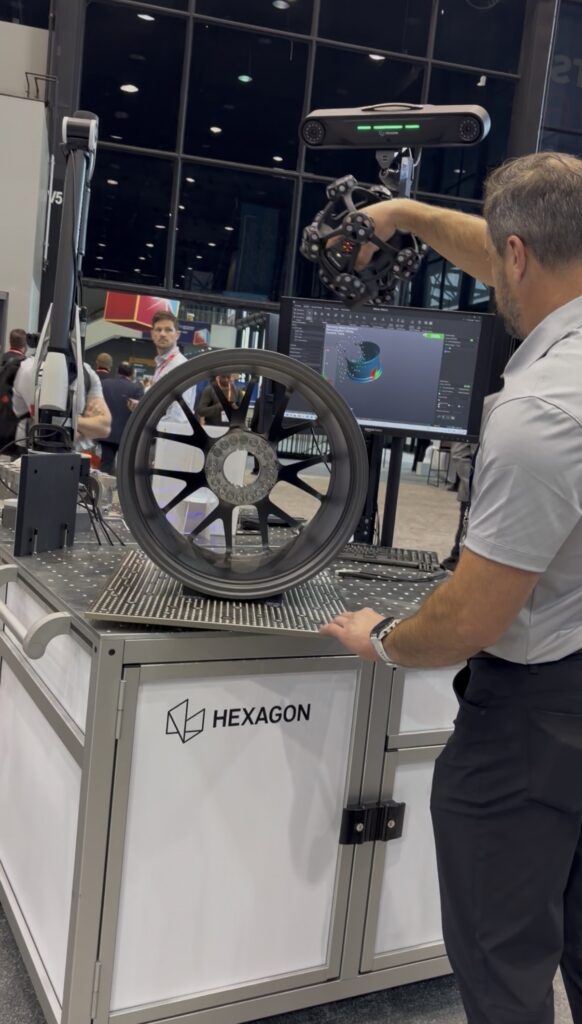
Hexagon also showcased its latest wireless optical tracking scanner, the HYPERSCAN SR. Featuring WiFi 6 connectivity and battery power, it offers rapid deployment. Its dynamic tracking system simultaneously follows both the part and the scanner, ensuring scan continuity despite movement or vibrations. With a broad scanning area, multiple scan modes, and target-free scanning capabilities, the HYPERSCAN SR is optimized for mobile applications such as field service and on-site inspections across industries like construction, automotive, railway, and energy.
Artec 3D: Advancing Precision with Tolerance-Driven Scanning
Artec 3D unveiled its new structured light scanner, the Artec Neo, at IMTS 2026, introducing a concept they term "tolerance-driven 3D scanning." This innovative approach allows users to apply scan targets selectively to critical functional features with specific tolerances, rather than covering the entire object. This flexibility acknowledges that not all surfaces require the same level of precision. For comprehensive metrology needs, the scanner can accommodate targets across the entire part, achieving a volumetric accuracy of 0.025 mm + 0.035 mm/m. In hybrid mode, these targets serve as "metrology anchors." The Neo can then intelligently scan only the necessary areas, leveraging AI for tracking through color, texture, and geometry where targets are absent, eliminating the need to switch scan modes. Alternatively, the scanner can operate entirely without targets, capturing parts at up to 0.05 mm resolution in full color.
EOS: Driving Innovation in Polymer Additive Manufacturing for Defense and Beyond
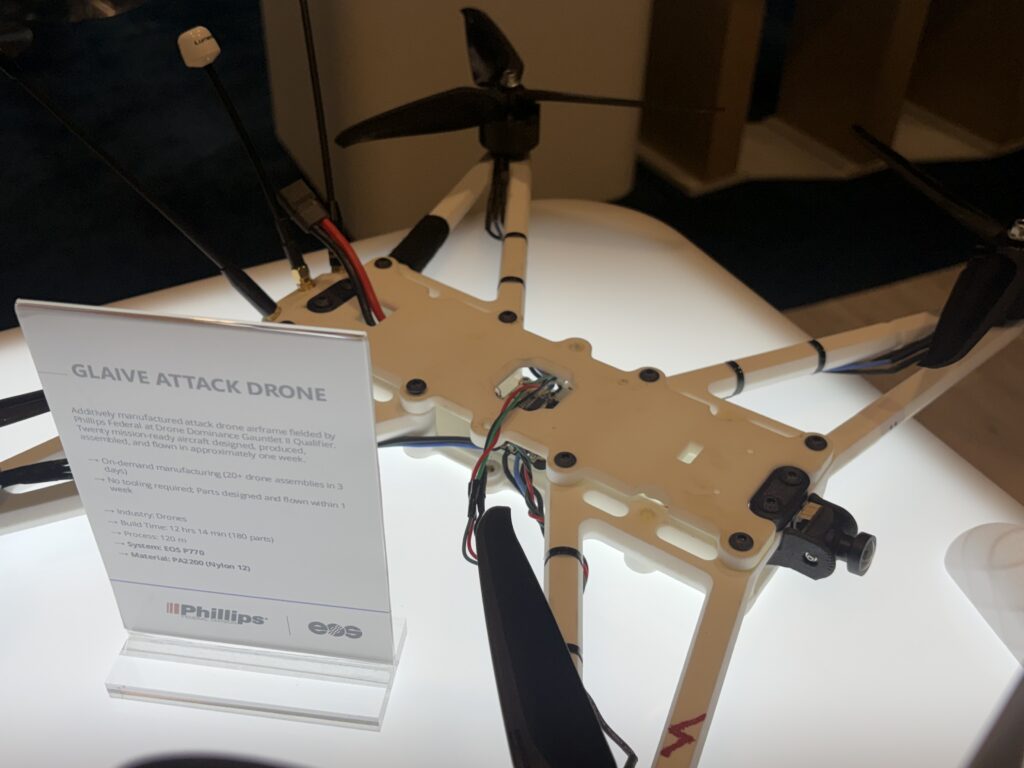
At the EOS booth, Dave Krzeminski, Business Development Manager for Polymer, provided insights into the application of 3D printing in the defense sector, particularly for drone manufacturing. EOS showcased polymer components for 20 mission-ready drone bodies for Adler Aerospace’s Glaive Attack Drone, developed for the Department of Defense’s Drone Dominance Gauntlet II challenge. Krzeminski highlighted the rapid turnaround achieved, with Phillips Federal providing EOS with a tight deadline of just days for components that would typically take weeks. EOS impressively produced 180 parts in just over 12 hours.
EOS also demonstrated its capability in producing Nylon 12 components for Quantum Systems’ Counter-UAS Interceptor drone. These parts, including the drone body and motor pods, are critical for a drone that launches vertically with a solid-fuel booster and can ascend to 4,000 meters in a mere 30 seconds. Krzeminski revealed that Quantum Systems plans to pursue a Guinness World Record for drone speed later this month. The company also presented a demonstration piece illustrating interior conformal ribbing, a design element crucial for drone wings and bodies, created by InfinitForm. Krzeminski noted the ease of use of this platform, which achieved 0.4mm wall thickness and 0.8mm rib thickness on an EOS printer.
HP: Scaling Lightweight Drone Production with Multi Jet Fusion
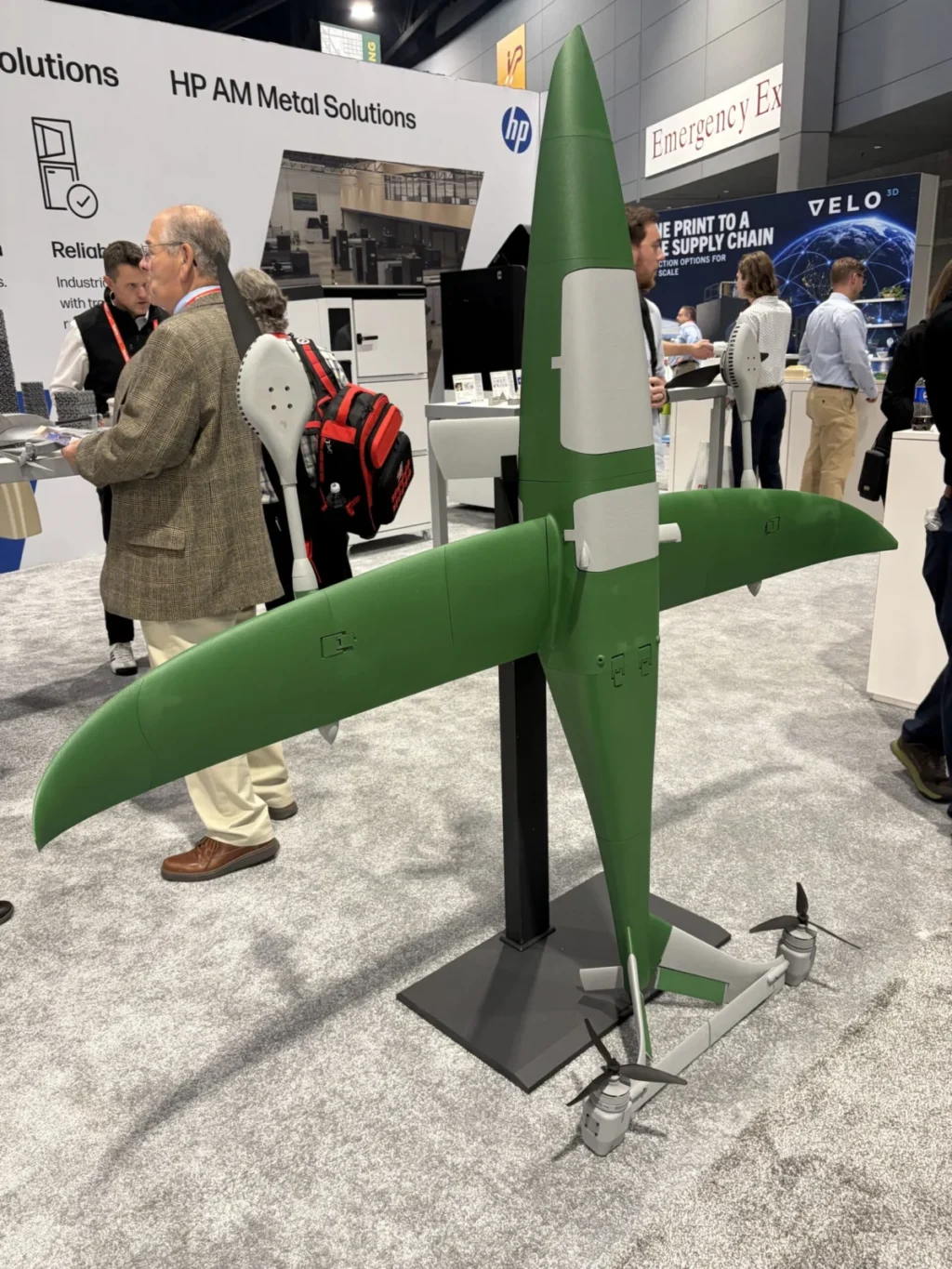
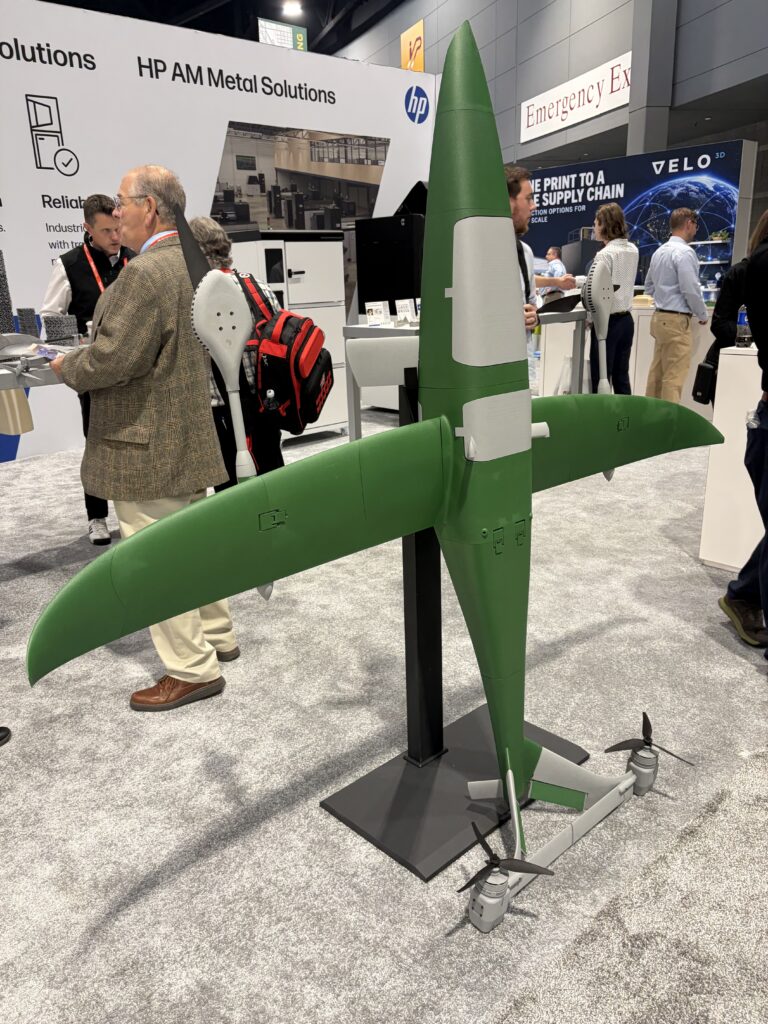
HP’s booth also featured 3D printed drones, emphasizing the capabilities of their Multi Jet Fusion (MJF) technology. Brian Ingold, Global Head of Business Development & Applications Solutions for HP’s Drone Team, highlighted the technology’s suitability for producing thin, strong parts at production scale, as well as incredibly lightweight components. "Many OEMs have gotten quite good at designing all kinds of drones for MJF," Ingold remarked. He presented a remarkably light 3D printed demo drone with a 0.4mm wall thickness, so feather-light it felt akin to holding a paper airplane.
Ingold showcased the "The Eye Above" drone, a fixed-wing UAV designed for anti-poaching efforts in South Africa. These drones, equipped with cameras for monitoring poachers, must be robust to withstand challenging environmental conditions, including strong winds, and durable enough to withstand rapid deployment in potentially hazardous situations. HP’s open parameters facilitated design adjustments for The Eye Above to meet specific operational requirements. The additive manufacturing approach also offers a significant advantage in repairability, allowing for the easy replacement of damaged sections like wing components, rather than requiring the entire part to be discarded.
HP’s MJF technology is also being utilized by companies like blueflite for delivery drones, including applications for urgent blood delivery to accident sites, a critical service given that most emergency vehicles do not carry blood supplies. Xmobots in Brazil leverages MJF parts for drones used in monitoring rainforest deforestation, and a Taiwanese customer is employing MJF-printed drones for tuna population monitoring. These examples underscore the diverse and impactful applications of HP’s additive manufacturing solutions.
Caracol: Advancing Large-Format AM with Robotics and AI
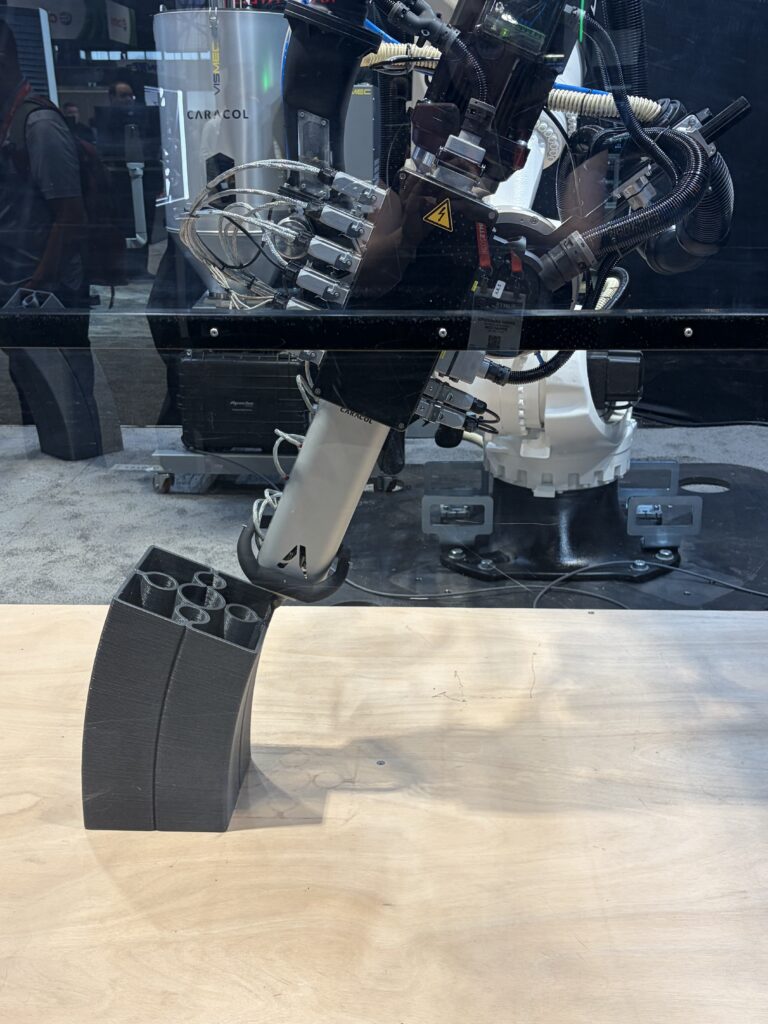
Caracol’s presence in the automation sector of IMTS 2026, rather than the additive area, highlighted their focus on robotic integration for large-format additive manufacturing. The company demonstrated its Heron platform, a robotic system capable of printing large-scale composite structures, such as a construction support for an arch. The Heron platform serves a wide range of applications, including furniture, molds, transportation (maritime, automotive, aerospace), energy, and notably, drones, with a particular emphasis on maritime drones.
Their Vipra metal Directed Energy Deposition (DED) system targets similar industries but with a different range of applications. Francesco De Stefano, Co-Founder and CEO, explained that Caracol has developed these two processes to bring the advantages of large-core modality manufacturing to highly regulated industries.
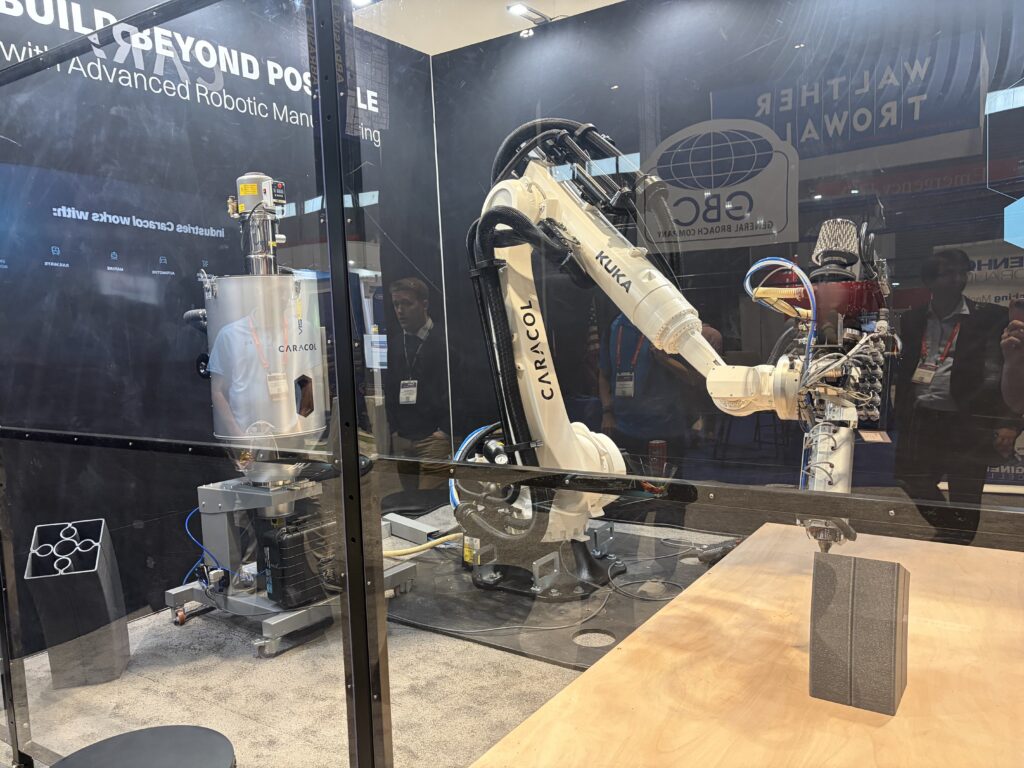
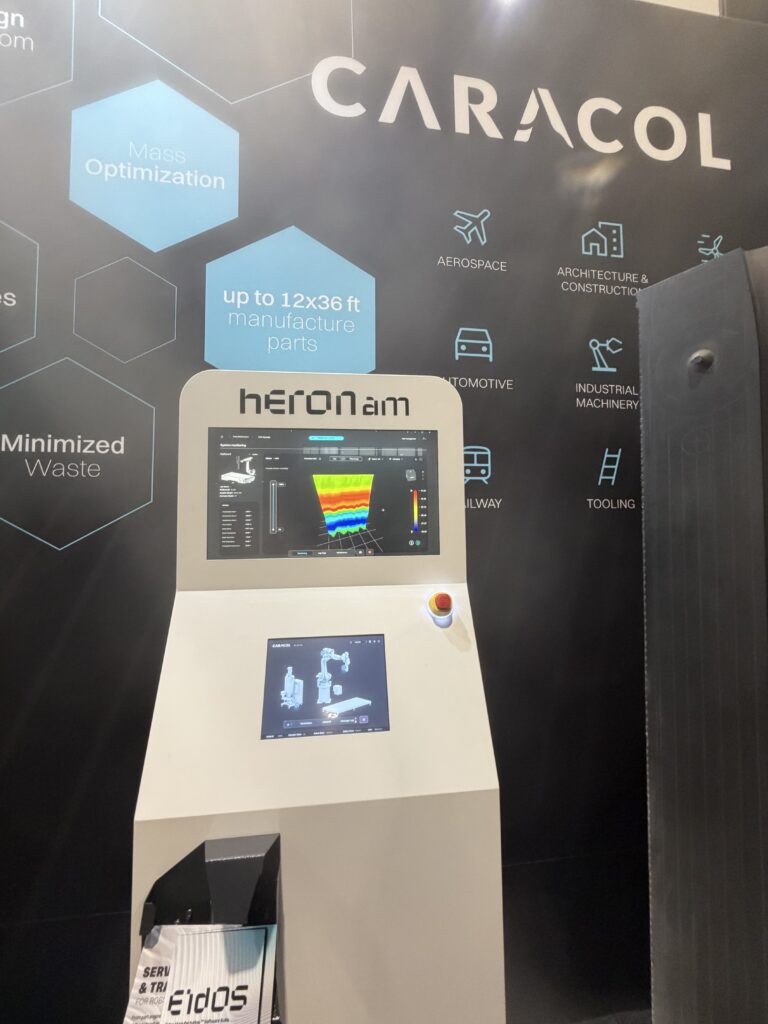
Caracol is also integrating AI into its operations. De Stefano detailed the "analytics part" of their AI usage, where extensive data accumulated from years of service bureau projects is used to train AI models and refine their own processes. Furthermore, Caracol develops AI-powered software to enhance user workflows, making them more efficient, faster, and predictable. At IMTS, Caracol showcased new AI features within its Eidos Manufacturing Software Suite for the Heron, slated for release within the next year. These features empower the machine to make autonomous decisions, learning from its operational performance and self-correcting to compensate for deviations from design parameters or detected defects. "It creates a comparison with a digital twin, and it’s basically able to start understanding, ‘Okay, am I deviating from the parameters that I originally had? Am I recognizing defects on what I’m doing? Let me adjust the next layer and try to compensate for that.’ So we reduce downtime, we reduce scrap, and we increase productivity," De Stefano explained. While still in its early stages, the development of Eidos represents a significant step towards more autonomous and efficient large-format additive manufacturing.
FormAlloy: Pushing the Boundaries of Multimaterial DED
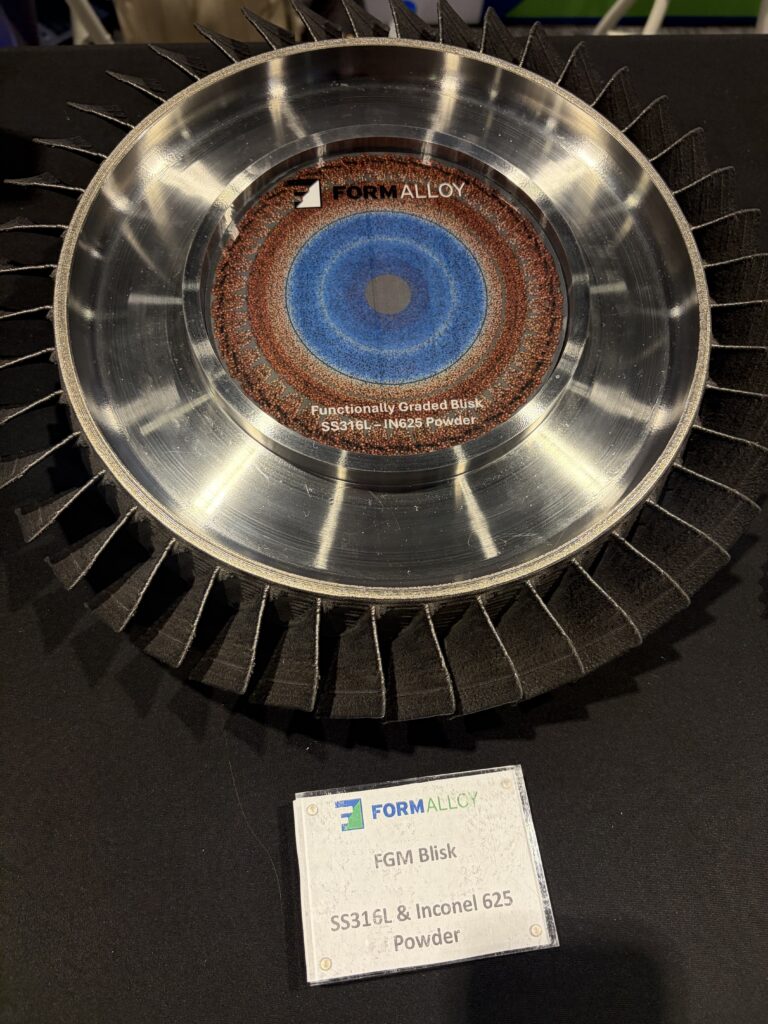
FormAlloy showcased the potential of multimaterial Directed Energy Deposition (DED) with an impressive functionally graded material blisk. CEO and Co-Founder Melanie Lang emphasized the system’s capability to precisely place any material at any location on a part, extending beyond single-direction grading. This allows users to blend different metal powders and tailor material properties with high precision for optimal performance. "This takes out the manual labor and takes advanced additive manufacturing to the next level," Lang stated.
In addition to technological advancements, FormAlloy has undergone significant expansion, moving into a new 24,000-square-foot facility that consolidates all its teams. The company also secured several new defense contracts in 2026 from entities including the US Navy, America Makes, the Defense Innovation Unit (DIU), and the Defense Logistics Agency (DLA). Lang noted that the new facility enhances FormAlloy’s readiness for defense manufacturing.
Aixway3D: Micro Metal 3D Printing Expertise
Aixway3D, a spinout from the Fraunhofer Institute for Laser Technology (Fraunhofer ILT) in Germany, presented its specialization in micro metal 3D printing. With a production facility in Suzhou, China, and an R&D center in Aachen, Germany, the company utilizes its exclusive micron-level Micro-LPBF/SLM technology. This process achieves remarkable accuracy, with typical printing precision ranging from 2-10 µm, a wall thickness of 30 µm, a surface roughness of 0.8 µm Ra, and support-free printing for structures inclined at angles greater than 10 degrees. Aixway3D supports a diverse range of materials, including stainless steel, nickel-based alloys, precious metals, titanium-based alloys, tungsten, and cobalt-chromium alloys. The technology’s ability to optimize surface roughness and accuracy makes it highly suitable for medical device components such as endoscopes, forceps tips, and stents.
Canmora Tech: Large-Scale LPBF with Innovative Tank Movement
Canadian company Canmora Tech showcased its electron beam technology, with a primary focus on large-scale Laser Powder Bed Fusion (LPBF). Their Laser Electron Additive Manufacturing (LEAM) platforms differentiate themselves by moving the powder tank rather than the build plate. This design allows the build plate to be mounted directly onto the machine frame, significantly enhancing process stability. According to Additive Manager Will Starling, this approach is crucial for meter-scale part production, where moving a large, heated build plate upwards of a couple of hundred degrees Fahrenheit would be impractical.
Canmora’s LEAM-Q laser platforms also employ individual laser heads instead of galvos, ensuring a beam that remains consistently perpendicular to the powder bed. This eliminates variations in focal distance or projected areas caused by the angularity of galvo mirrors. The systems can be configured with a single laser or scaled up to 36 lasers for the production of very large naval and energy sector components.
The collective innovations and advancements presented at IMTS 2026 underscore a manufacturing sector rapidly embracing digital transformation, automation, and advanced materials. The growing integration of AI, the increasing maturity of additive manufacturing, and the continuous pursuit of precision and scale signal a dynamic future for global production capabilities.