In the dynamic automotive landscape of the early 1960s, Maserati, a marque steeped in the roaring glory of Grand Prix racing, embarked on a significant metamorphosis. The Italian powerhouse, renowned for its low-volume, bespoke racing machines, began a strategic pivot towards crafting ultra-sophisticated Gran Turismos. These exquisite vehicles were designed not for the roar of the track, but for the discerning tastes of the jet-set elite, promising unparalleled performance and luxury for the open road. Amidst this transition, as the mid-60s heralded the ascendance of high-revving Italian V8s and the innovative mid-engine layout, the Maserati Mistral (Tipo AM109), produced between 1963 and 1970, emerged as a proud, albeit final, custodian of the factory’s most celebrated racing legacy: the double-overhead-cam, twin-spark inline-six engine.
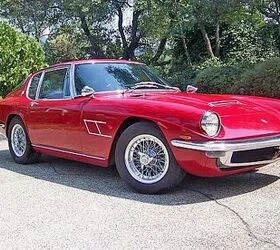
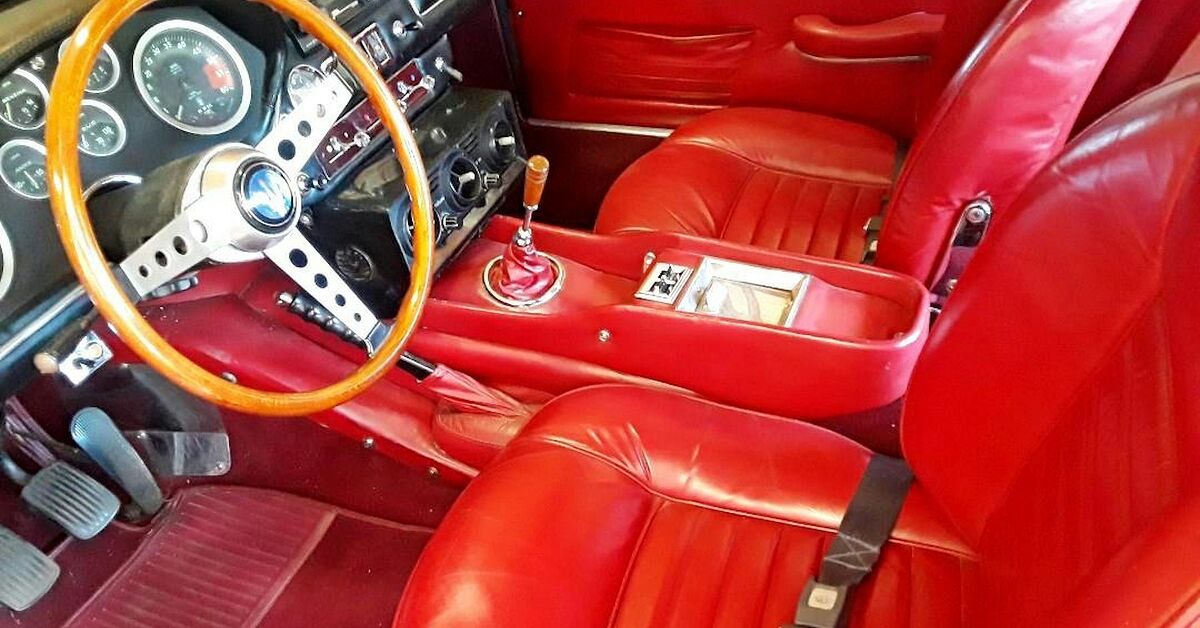
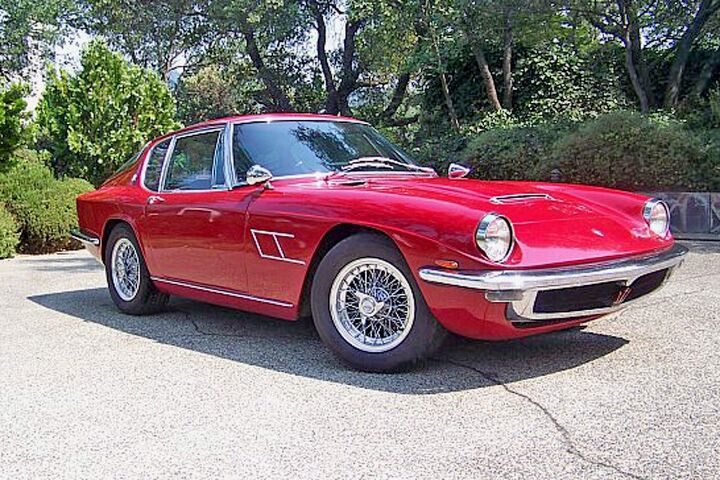
Named in homage to the fierce Mediterranean wind that sweeps through the south of France, the Mistral holds the distinction of being the inaugural model in a distinguished lineage of wind-inspired Maseratis, predating such iconic names as the Ghibli, Khamsin, and Bora. The exterior styling, a masterful creation by Pietro Frua, continues to be lauded as one of the most aesthetically balanced GT designs of the mid-20th century. Its silhouette is characterized by a long, elegantly sweeping hood, a distinctive glass fastback tailgate, and a purposeful stance that exudes classic charm, further accentuated by the timeless appeal of Borrani wire wheels. This particular example, chassis AM109.A1.1390, is a 1967 European-delivery 4.0-liter model, retaining its original ZF 5-speed manual transmission. Presented in a captivating Red-on-Red leather combination, it features European-market metric gauges, displaying a modest 29,423 kilometers, suggesting a life of careful preservation and purposeful use.
The Heart of a Grand Prix Winner: A Direct Lineage to Racing Royalty
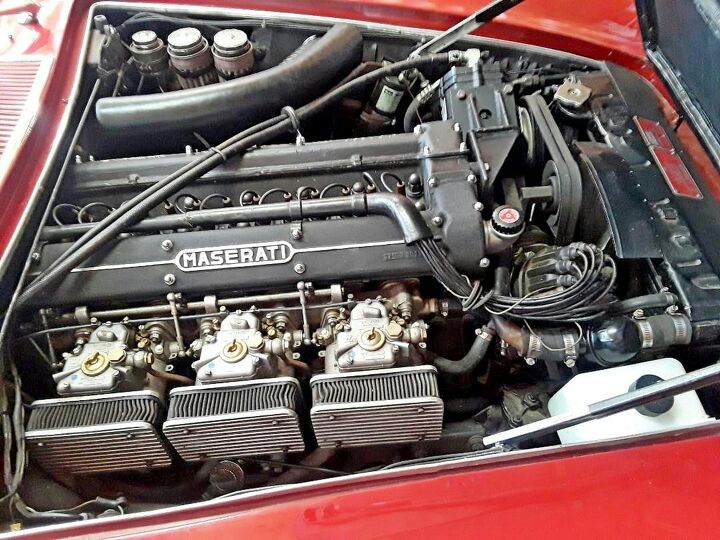
The mechanical heart beating within the Mistral’s aluminum and steel body is not merely an engine; it is a direct descendant of Maserati’s legendary Formula 1 racing pedigree. The 4.0-liter inline-six engine found in the Mistral is the ultimate evolutionary iteration of the power unit that propelled Juan Manuel Fangio to his 1957 Formula 1 World Championship victory aboard the iconic 250F Grand Prix car. By 1967, this celebrated engine had been enlarged to a displacement of 4,014 cubic centimeters. This enhanced iteration was capable of producing an impressive output of approximately 255 to 265 horsepower. Consequently, the 4.0L variant represents the most potent and highly sought-after iteration of the 844 coupés produced during the Mistral’s production run from 1966 to 1970.
This formidable engine was expertly paired with a robust ZF S5-20 5-speed manual transmission, a choice that underscored the car’s sporting intentions and offered drivers a direct, engaging connection to the machine. The braking system was equally impressive, featuring four-wheel Girling disc brakes, providing the necessary stopping power to complement the Mistral’s considerable performance capabilities. With such a potent powertrain, the Mistral was capable of achieving a top speed of 155 mph (approximately 250 km/h), a figure that placed it firmly in the upper echelon of performance GT cars of its era. The meticulous engineering and racing heritage infused into this engine ensured that the Mistral was not just a beautiful car, but a formidable performer with a soul forged in competition.
A Shift in Philosophy: From Track Dominance to Elite Touring
The early 1960s marked a pivotal juncture for Maserati. The company, which had carved its name into automotive history through its relentless pursuit of victory on the Grand Prix circuits, found itself at a crossroads. The immense costs associated with maintaining a competitive racing program, coupled with shifting motorsport regulations and the emergence of new rivals, necessitated a strategic reevaluation. This period saw a gradual but deliberate shift away from the raw, often unpredictable nature of pure racing machines towards the creation of more refined, luxurious, and road-biased grand tourers.
The Mistral, therefore, embodies this transitional phase. While it inherited the cutting-edge engine technology and racing DNA of its predecessors, it was conceived and executed as a vehicle for discerning clientele who sought a blend of exhilarating performance and sophisticated comfort for long-distance journeys. The styling, penned by Frua, reflected this duality: elegant and aerodynamic, yet imposing and purposeful. The interior was a sanctuary of fine craftsmanship, typically featuring high-quality leather, polished wood, and a dashboard replete with the instruments necessary for commanding a powerful machine. This careful balancing act allowed Maserati to cater to a wealthy clientele who appreciated automotive engineering excellence and the prestige associated with the Trident marque, while also securing the company’s financial future through more commercially viable road car production.
The transition to V8 engines, which would become a hallmark of subsequent Maserati models like the Ghibli and the Bora, was already on the horizon. However, the Mistral’s inline-six represented the absolute zenith of this engine configuration for Maserati’s road cars. It offered a smoother power delivery and a distinct character that many enthusiasts found more engaging than the more frenetic V8s. The inline-six, particularly in its larger displacement forms like the 4.0-liter, provided a robust torque band and a linear surge of power that was ideally suited for effortless cruising at high speeds.
A Testament to Craftsmanship and Legacy
The 1967 Maserati Mistral 4.0L, chassis AM109.A1.1390, stands as a compelling example of this era’s automotive artistry. Its European delivery signifies its original market, and the presence of metric gauges further reinforces its continental origins. The striking Red-on-Red color combination is a bold and classic choice that highlights the car’s voluptuous lines and its inherently sporty character. The low mileage of 29,423 kilometers is particularly noteworthy, suggesting that this Mistral has been meticulously maintained and perhaps sparingly used, preserving its original condition and driving integrity.
In the current collector car market, the Mistral often finds itself in the shadow of its more overtly flamboyant successor, the V8-powered Ghibli. The Ghibli, with its dramatic styling and potent V8, has garnered significant attention and has often commanded higher valuations. However, for those who possess a deeper appreciation for mechanical purity and driving engagement, the Mistral offers a arguably more rewarding and nuanced experience. It represents the absolute pinnacle of Maserati’s six-cylinder GT engineering, a hand-crafted automobile designed with the express purpose of traversing continents with effortless grace and speed.
The inclusion of Weber carburetors in this specific 4.0L example points to a carefully considered performance enhancement, potentially optimizing the engine’s breathing and power delivery. This, combined with the car’s mechanical readiness, suggests that chassis AM109.A1.1390 is not merely a static display piece but a vehicle poised for active enjoyment. It is a testament to the enduring appeal of a well-engineered classic GT, ready to embark on its next rally or continental tour, carrying its occupants in style and comfort while offering a driving experience steeped in motorsport history.
The Mistral’s Place in Automotive History
The Maserati Mistral’s significance extends beyond its mechanical prowess and elegant styling. It serves as a tangible link to a bygone era of automotive design and engineering, an era when cars were built with a level of craftsmanship and attention to detail that is rarely seen today. The transition from inline-six engines to V8s, while representing technological advancement, also marked the end of a particular chapter in Maserati’s history. The Mistral’s inline-six was a complex, sophisticated, and powerful engine that, in its final iterations, delivered performance that rivaled or surpassed many contemporary V8s.
The fact that this particular Mistral is available for $150,000 offers a rare opportunity to acquire a multi-award-winning Italian GT with direct connections to Maserati’s golden age of motorsport. For the enthusiast who prioritizes the joy of driving and the visceral connection to a classic machine over mere aesthetic appreciation, this Red-on-Red Mistral represents an exceptional value proposition. It is a car that rewards its driver with a symphony of mechanical sounds, precise handling, and the effortless surge of power that only a finely tuned, naturally aspirated inline-six can provide.
The story of the Mistral is one of evolution, tradition, and the relentless pursuit of automotive excellence. It is a reminder that while technological progress is inevitable, there is an enduring beauty and a profound driving pleasure to be found in the mechanical masterpieces of the past. This 1967 Maserati Mistral 4.0L is more than just a car; it is a rolling piece of history, a testament to the ingenuity of Italian engineering, and a final, glorious flourish of the legendary Maserati straight-six engine. Its presence in the market offers collectors and enthusiasts alike a chance to own a piece of this rich automotive tapestry, a car that continues to captivate with its timeless design, exhilarating performance, and undeniable soul. The original listing for this exceptional vehicle can be found on Hagerty Marketplace, offering a detailed look at its specifications and provenance, inviting a new custodian to experience the last breath of a legendary engine configuration.