
Monterey Car Week, a globally recognized celebration of automotive excellence, once again captivated enthusiasts and collectors with its unparalleled display of automotive history and innovation in 2026. While the event is synonymous with record-breaking auction results for iconic vehicles – this year witnessing the first-ever production Ferrari Luce fetch $40 million, a Shelby Cobra Daytona Coupe command $43 million, and Nick Mason’s pop-art McLaren F1 GTR achieve $35 million – it also serves as a crucial platform for the unveiling of groundbreaking new automotive creations. Following the surprise debut of a pair of Singer Vehicle Design Porsches in collaboration with Louis Vuitton (LV-01 Classic and LV-02 Classic Turbo Tambour), the California peninsula played host to several other significant automotive premieres. Among the most compelling new launches were a spiritual successor to a legendary supercar, the triumphant return of a storied Dutch marque, and a British bruiser that makes a formidable statement beyond its aesthetics.

Gordon Murray Special Vehicles S1: A Modern Homage to the McLaren F1
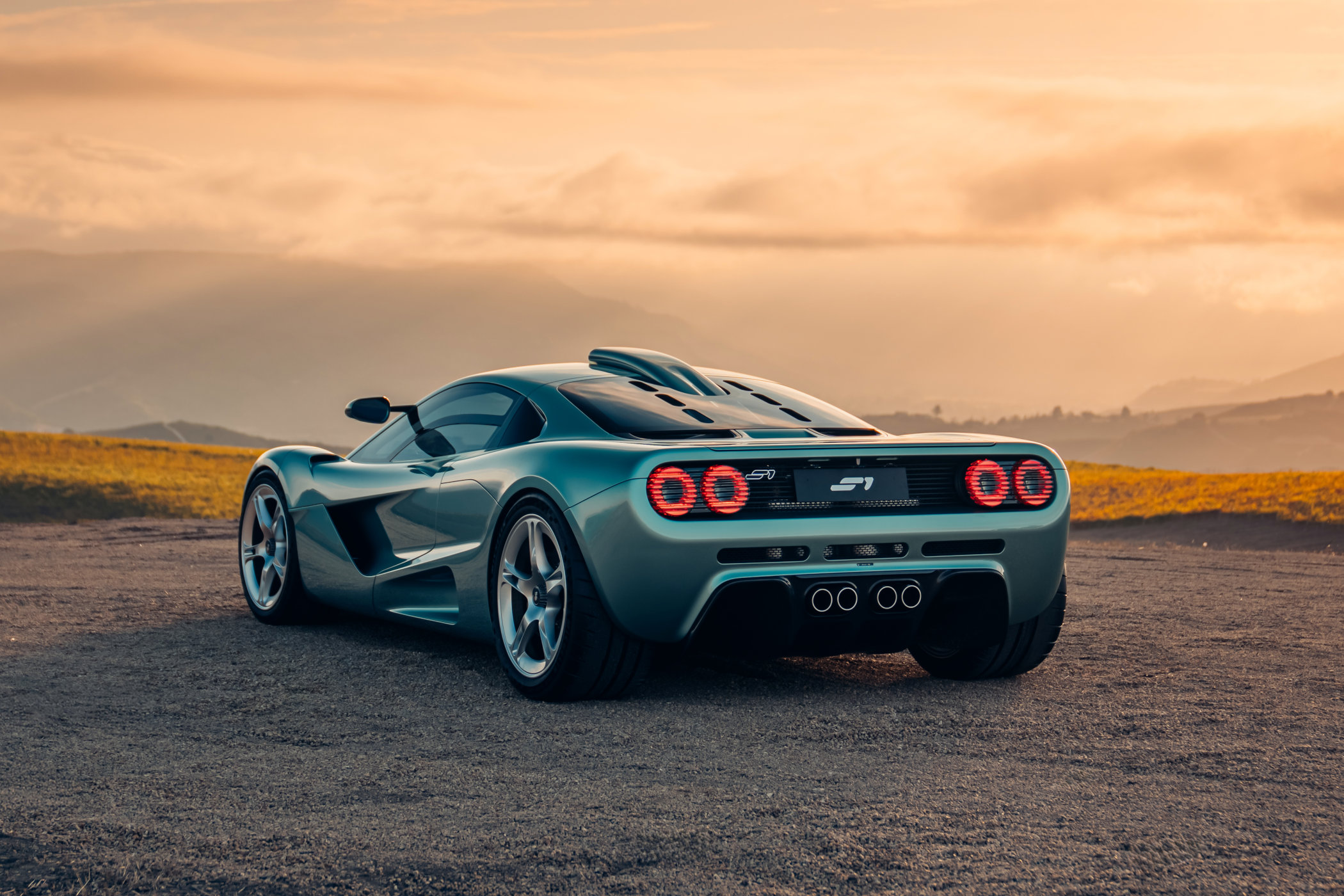
The automotive world collectively held its breath upon the reveal of the Gordon Murray Special Vehicles (GMSV) S1. Its striking silhouette, undeniably evoking the legendary McLaren F1, is no coincidence. The S1 is the brainchild of Gordon Murray himself, the visionary designer behind the original F1. GMSV has previously paid tribute to the F1’s racing pedigree with the S1 LM, a contemporary interpretation of the F1 GTR, the Le Mans-winning variant of the iconic road car. While the S1 LM was an ultra-exclusive project, limited to just five units for a single owner, the new S1 will see a slightly broader, albeit still highly limited, production run of 64 units. This makes the S1 a tantalizing prospect for collectors and enthusiasts who appreciate its lineage and cutting-edge design.
The S1’s exterior undergoes a subtle yet impactful transformation from its spiritual predecessor. The front fascia is rendered with a more aggressive stance, featuring reshaped vents and intakes that enhance its aerodynamic profile. Tighter, more sculpted lines define the rear, culminating in the signature double taillight and exhaust configuration that has become synonymous with Murray’s creations. A particularly elegant design element is the seamless integration of the main beam headlights within the front bumper, contributing to a clean and purposeful aesthetic. True to the F1’s revolutionary layout, the driver remains positioned centrally, flanked by two passenger seats, offering an intimate and engaging driving experience.

Beneath the sculpted rear clamshell resides a potent 4.2-liter naturally aspirated V12 engine, meticulously developed by Cosworth. This powerplant boasts an astonishing redline of 12,100 rpm, promising a symphony of sound and performance. Weighing in at under 1,000 kilograms, the S1’s feather-light construction, combined with the V12’s 690 horsepower delivered through a six-speed manual transmission to the rear wheels, guarantees a thrilling and visceral driving encounter. While official performance figures have not been released and are unlikely to be tested publicly to their full extent, anticipation is high for its capabilities. The S1 represents a significant investment, with the previous S1 LM costing $5 million per unit. While a price for the S1 has not been officially disclosed, it is widely expected to command a price in the multi-million dollar range, reflecting its exclusivity, engineering prowess, and the enduring legacy of Gordon Murray’s design philosophy. For further details, enthusiasts can visit GordonMurray’s official website.
Spyker C8 Preliator XXV: A Dutch Icon Reborn
Monterey Car Week 2026 marked a significant moment for Dutch automotive heritage with the official return of Spyker. After a decade-long hiatus, marred by financial challenges and the ill-fated acquisition of Saab, entrepreneur Victor Muller has successfully revived the Spyker Cars brand. The marque’s resurgence is heralded by the introduction of the C8 Preliator XXV, a limited-edition model that builds upon the brand’s legacy of aviation-inspired design and meticulous craftsmanship. Limited to just 25 units worldwide, this new iteration essentially picks up where the acclaimed C8 and C12 models left off, continuing the distinctive ethos that has defined Spyker.
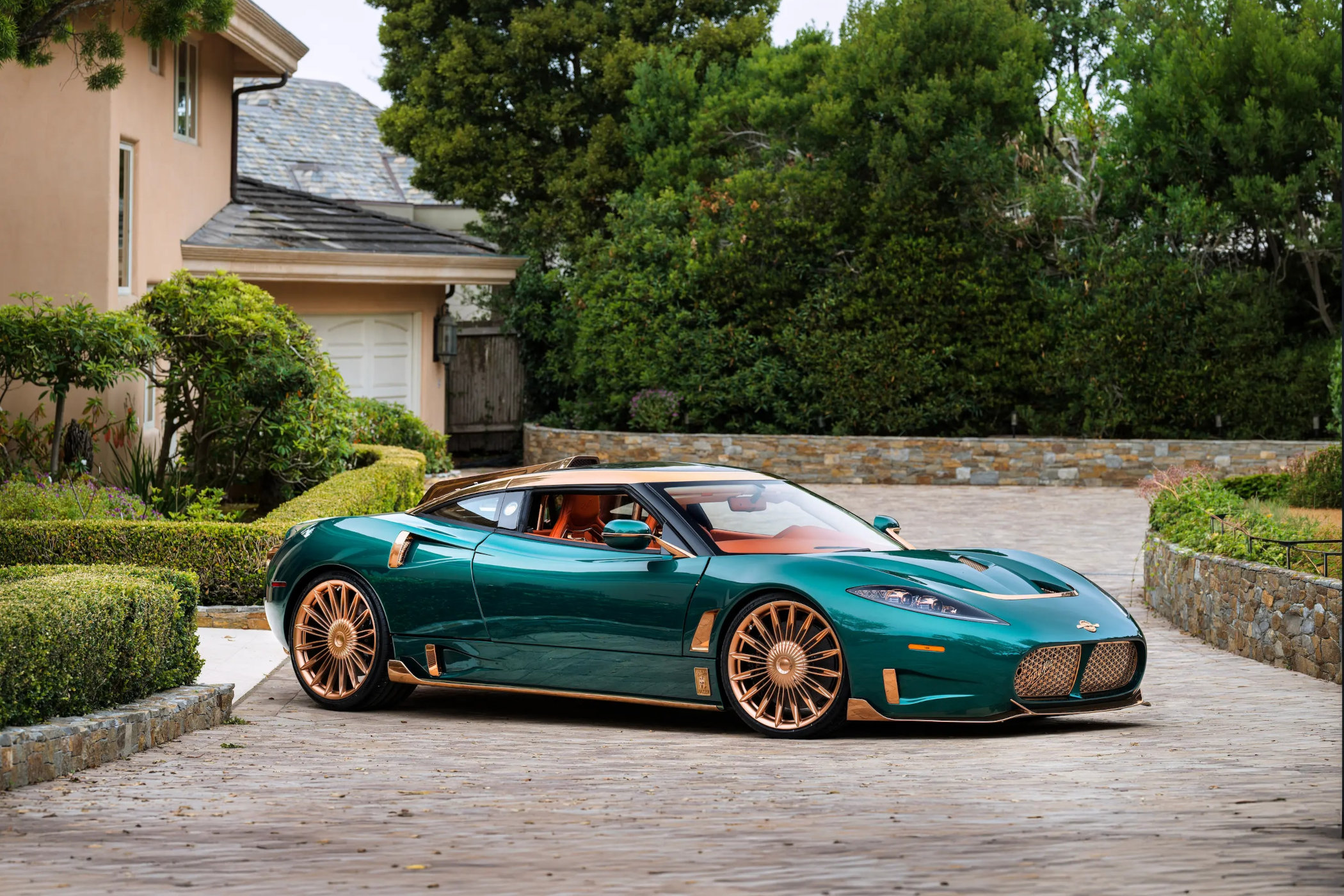
The debut car, presented in a striking green and rose gold color scheme, exemplifies Spyker’s penchant for dramatic flair. The C8 Preliator XXV features a fully hand-built aluminum exterior, meticulously sculpted with aerodynamic elements such as NACA ducts, distinctive fins, and a prominent roof scoop. These design cues, along with numerous other integrated vents and intakes, accentuate its purposeful and visually captivating form. This design is an evolution of the C8 Preliator concept, originally revealed a decade prior but never brought to production. The refreshed model finally brings this vision to life, signaling a robust return for the brand.
Powering the C8 Preliator XXV is a formidable 4.0-liter twin-turbocharged V8 engine sourced from Audi, delivering an impressive 800 horsepower and a colossal 1,000 Nm of torque. This potent combination propels the car to a claimed top speed of 350 kph, necessitating the functional stabilizing fin that runs along the rear deck. In true Spyker fashion, power is channeled through a six-speed manual transmission, featuring the brand’s signature exposed gear linkage prominently displayed within the cabin. With a starting price of approximately EUR 1.5 million, the C8 Preliator XXV firmly positions itself within the hypercar segment of the contemporary automotive market. Furthermore, whispers of the D12 Peking to Paris SUV finally entering production and the potential for a GT3 racing program suggest an ambitious future for the revitalized Spyker brand. For more information, interested parties can visit SpykerCars.com.

Aston Martin Valen: A Roaring Farewell to the V12 Grand Tourer
Concluding the trio of significant new releases is Aston Martin’s latest V12 masterpiece, the Valen. This model makes an undeniable statement, not only through its captivating, color-shifting special paint but also with an aggressive styling that pushes the boundaries of what has been seen on a road-going Aston Martin. Drawing inspiration from extreme models like the Vulcan, Valkyrie, and Valhalla, the Valen presents a dramatic departure from the brand’s more traditional designs. The front fascia is dominated by a substantial grille, a bold reinterpretation of Aston Martin’s iconic signature, set above piercing, mean-looking headlights. A long bonnet, adorned with multiple sculpted cuts and vents, further contributes to its formidable presence.
The full carbon fiber bodywork is a canvas for aerodynamic artistry. Along the sides, aggressive slashes in the side skirts, reminiscent of an F1 car amplified, channel airflow effectively. The rear section is sharply defined, incorporating a substantial integrated rear wing and a massive diffuser, both finished in striking silver. The exhaust system is a complex arrangement, featuring two sets of pipes: one positioned high and permanently open, and a lower set with a valve system that adjusts based on the selected driving mode. This dual-exhaust setup is engineered to deliver an optimal soundtrack across the entire rev range and in any gear, promising an exhilarating auditory experience for occupants and a clear auditory announcement to those nearby.
This vehicle is potentially the final chapter in Aston Martin’s storied history of V12 Grand Tourers, as the automotive landscape shifts towards electrification. The 5.2-liter V12 engine, enhanced by twin turbochargers, produces an astonishing 850 horsepower, making it Aston Martin’s most powerful V12 to date. This powerplant, described by Aston Martin as purpose-built for "immediacy and response," ensures a lively and engaging driving character. The Valen accelerates from 0 to 100 kph in a mere 3 seconds, with a limited top speed of 345 kph. The interior, while claimed by Aston Martin to be the "epicenter of minimalist design," features striking orange accents and 3D-printed elements in the center console, hinting at a highly customizable and bespoke experience for its owners. With a production run capped at 150 units, each offering extensive personalization options, the Valen starts at a price of USD 2 million. Further details are available on AstonMartin.com.
The editorial note acknowledges that the information and imagery used in this article were provided with permission from Gordon Murray Special Vehicles, Spyker Cars, and Aston Martin Lagonda.