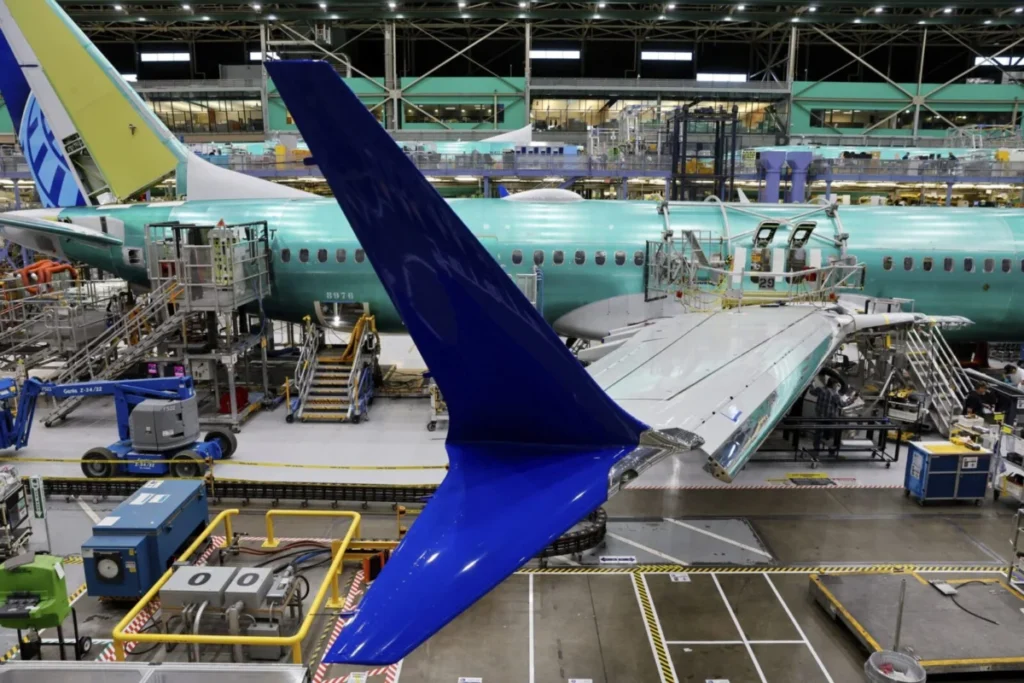
The commercial aviation industry stands on the precipice of a generational leap, as aerospace giants Airbus and Boeing accelerate their development of entirely new single-aisle aircraft. These ambitious projects, targeting successors to the immensely successful A320 family and the Boeing 737 MAX, are poised to redefine air travel efficiency, sustainability, and passenger experience. Both manufacturers are making critical decisions regarding engine configurations, aerodynamic designs, and advanced technologies, with the results expected to usher in the most significant advancement in commercial aviation in decades.
The Farnborough International Airshow, a premier global aerospace exhibition held annually outside London, served as a crucial backdrop for these unfolding developments. Executives from Airbus, Boeing, and leading engine manufacturers convened, offering insights into the complex, multi-year processes that will culminate in the launch of these groundbreaking aircraft. While specific timelines remain subject to technological maturation and market readiness, the industry consensus points towards a potential market entry for these next-generation jets in the late 2020s or early 2030s.
A New Era Dawns: Strategic Timelines and Technological Maturation
Airbus has publicly set a target of a 2030 launch for its A320 family successor, a timeline that includes significant technology development and validation. Guillaume Faury, CEO of Airbus, emphasized the ongoing nature of this endeavor during a media event at Farnborough. "We are not yet there," Faury stated, acknowledging that while technologies are being refined, the roadmap is firmly in place for a prepared launch and entry into service by the end of the next decade. This strategic approach allows for thorough testing and integration of novel systems, ensuring the eventual product meets the demanding standards of global air travel.
Boeing, meanwhile, continues its comprehensive assessment of technologies for its 737 MAX replacement. Lane Ballard, Boeing’s Chief Technology Officer, articulated the company’s measured approach during a press roundtable. "For us, the next couple years is about making sure that we get our finances ready, and we get the technology decisions made so that ultimately we’ll be positioned," Ballard explained. He underscored that the timing of any announcement will be dictated by a confluence of factors: "The time will be right, the market needs to be right, the customers obviously." Ballard also highlighted Boeing’s current focus on fulfilling its substantial backlog of existing aircraft, noting, "We’ve got 6,800 planes in backlog; we’ve got to make sure that we get those into the hands of our customers while we focus on that next leap." This dual focus on current production and future innovation demonstrates Boeing’s commitment to a stable and progressive transition.
The Engine Dilemma: A Crucial Choice for the Future of Flight
At the heart of these new aircraft designs lies the engine configuration, a decision that carries immense weight for fuel efficiency, emissions, and operational cost. The single-aisle market, the largest segment of global aviation, is a fiercely contested arena, with CFM International (a joint venture of GE Aerospace and Safran) and Pratt & Whitney currently dominating. Rolls-Royce, a major player in the wide-body sector, is actively vying to re-enter the single-aisle market with its advanced propulsion technologies.
Tufan Erginbilgic, CEO of Rolls-Royce, expressed optimism regarding the decision timeline, suggesting that both Airbus and Boeing are likely to finalize their engine supplier choices within the next two years. "Once they do the engine decision, you are either in or you are out," Erginbilgic remarked at Farnborough, underscoring the high stakes involved for engine manufacturers.
An Airbus spokesperson confirmed the company’s exploration of various engine configurations, including a potential "open fan" design. This innovative concept involves engine fan blades that are not fully enclosed within a nacelle, potentially leading to significant improvements in propulsive efficiency. Airbus is also investigating longer, thinner wings and more integrated automated systems as key technological pillars for its next-generation aircraft. The planemaker intends to conduct flight tests of a CFM open-fan engine on an A380 test aircraft before the end of the decade, providing critical real-world data.
CFM International’s CEO, Gaël Méheust, reaffirmed the company’s commitment to the open-fan concept, viewing it as essential for achieving the step-change in efficiency required for future engines. Beyond open fan, CFM is also exploring hybrid-electric propulsion and compact core designs for enhanced cooling, signaling a broad approach to next-generation powerplants.
Pratt & Whitney, a long-standing partner to both Airbus and Boeing, sees these new aircraft programs as a significant opportunity. Rick Deurloo, President of Commercial Engines at Pratt & Whitney, stated, "Our incentive is that we would think it’s a great opportunity to maybe get back into Boeing and continue partnering with Airbus. That’s a hell of an incentive for us." This sentiment highlights the competitive landscape and the desire of established players to maintain and expand their market share.
Advancing Propulsion: The Rise of Open Fan and Hybrid-Electric Technologies
The pursuit of greater fuel efficiency and reduced emissions is driving innovation in engine technology. The open-fan design, characterized by its un-ducted fan, promises a substantial improvement in bypass ratio, leading to greater propulsive efficiency. This concept, while still in development, is being rigorously tested by engine manufacturers like CFM International.
Simultaneously, the prospect of hybrid-electric propulsion is gaining traction. While battery technology was once considered a significant hurdle, recent advancements are making this a more viable option. GE Aerospace, in collaboration with BETA Technologies, recently achieved a significant milestone with a hybrid-electric flight test of a modified Saab 340 regional jet. This test aircraft, powered by a 1-megawatt hybrid-electric engine, successfully flew above 30,000 feet, demonstrating the potential of this technology for larger aircraft. GE Aerospace Commercial Engines CEO Mohamed Ali noted, "Simulation has given way to real-world innovation," signaling a shift from theoretical exploration to practical application. Experts suggest that as Airbus and Boeing extend their development timelines, hybrid-electric propulsion systems may mature sufficiently to be integrated into future single-aisle designs.
Revolutionary Wings: Enhancing Aerodynamics for the Future
Beyond propulsion, the aerodynamic design of the aircraft’s wings is another critical area of innovation. The demand for increased fuel efficiency is pushing manufacturers to explore longer and thinner wing designs, often referred to as high-aspect-ratio wings. These wings generate more lift with less drag, leading to significant fuel savings.
Airbus is actively pursuing this avenue by developing and flight-testing next-generation folding wingtips. These innovative wingtips are designed to allow aircraft to utilize longer wingspans for improved efficiency while still adhering to airport gate width restrictions. Richard MacPherson, technology lead on Airbus’s folding wingtip project, explained the significance: "Ultimately, all of this flight-test data that we will gather will be absolutely critical to de-risk the technology of folding wings in flight, but also to unlock the power and potential that long, high-aspect-ratio wings will have in the future." Airbus plans to design, build, and flight-test several different configurations over the next three years, with flight trials scheduled to commence in the latter half of 2027.
Boeing also anticipates longer and thinner wings for its future aircraft. The company is reportedly considering folding wingtips, a technology already incorporated into the design of its 777X wide-body jet, suggesting a consistent approach to aerodynamic optimization across its product lines.
The Industrial Capacity Conundrum: Balancing Technology with Production
While technological readiness is paramount, the industrial capacity and supply chain stability of both Airbus and Boeing are significant factors influencing the development timelines of their next-generation aircraft. John Schmidt, Global Head of Aerospace and Defense at Accenture, commented, "The timing of the next-generation platform will depend as much on industrial readiness as technological readiness." He added that both manufacturers are currently focused on stabilizing their supply chains and meeting unprecedented demand for existing aircraft. Therefore, any new program launch will likely be contingent on a high degree of confidence in the ecosystem’s ability to execute at scale.
Airbus has been proactively addressing its industrial capacity. Faury indicated that the company began assessing its future needs and structuring its operations for next-generation products as early as 2018. This includes a strategic partnership with Dassault Systèmes aimed at integrating aircraft design, production systems, and services within a comprehensive digital environment.
Boeing, facing its own challenges with production quality control on the 787 Dreamliner and certification delays for the 777X, is prioritizing industrial capacity in its new aircraft planning. Ballard stated that the company aims to ensure it can build its next jet at "historically high" production rates, leveraging increased automation and potentially advanced technologies like quantum computing. Boeing is seeking the optimal balance between aerodynamic performance and production efficiency, aiming to deliver an aircraft that is both technologically advanced and economically viable for manufacturers and operators alike.
Market Context and Future Implications
The urgency behind these next-generation aircraft programs is underscored by market projections. Aviation analytics firm Cirium forecasts $3.4 trillion in aircraft deliveries through 2044, with single-aisle aircraft accounting for approximately 75% of this vast market. As current aircraft designs approach the limits of fuel efficiency improvements, the introduction of radically new technologies is becoming increasingly imperative.
Sash Tusa, an aviation industry analyst at Agency Partners, emphasized the critical nature of these decisions. "It’s incredibly important, because get this wrong and you’ve lost a decade," Tusa warned, highlighting the substantial financial and market implications of missteps in aircraft development. The successful deployment of more fuel-efficient and sustainable aircraft will not only benefit airlines through reduced operating costs but will also be crucial in meeting global aviation’s ambitious environmental targets.
The decisions made in the coming years regarding engine choices, wing designs, and overall aircraft architecture will shape the future of air travel for decades to come. The competition between Airbus and Boeing, fueled by innovation from engine manufacturers and a growing demand for sustainable aviation, promises an exciting and transformative period for the global aerospace industry. The successful realization of these next-generation single-aisle aircraft will represent not just a technological achievement, but a vital step towards a more efficient, environmentally conscious, and connected world.