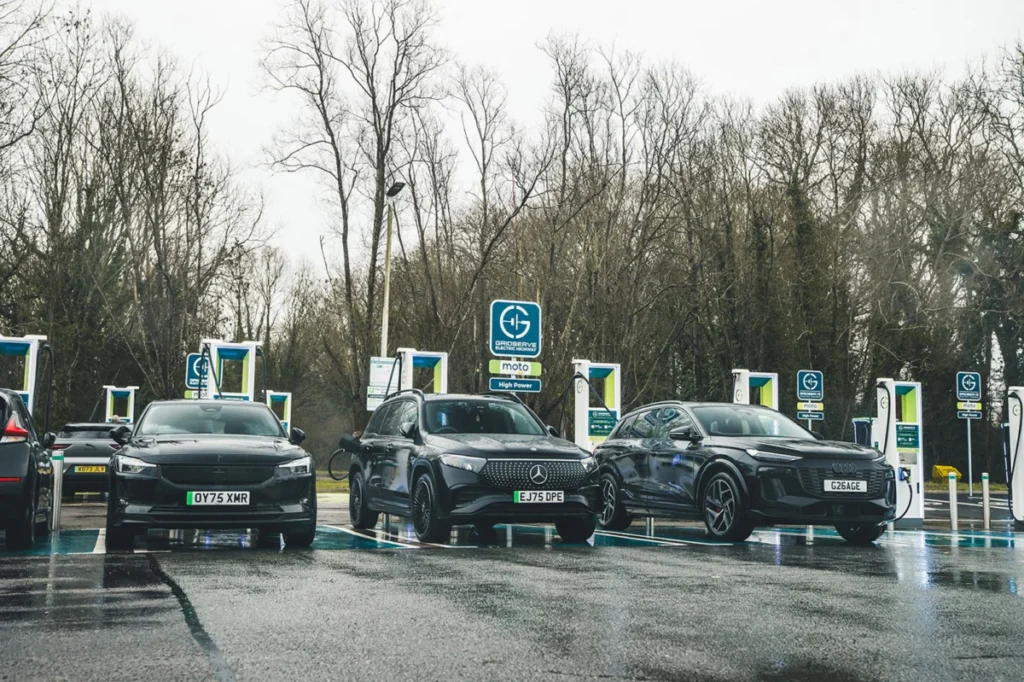
An escalating reliance on expensive public charging infrastructure has propelled the average cost of charging electric vehicles (EVs) for company fleets up by 15% since 2025, reaching a significant 13 pence per mile, according to new analysis from Rightcharge. This surge underscores a critical challenge for businesses transitioning to greener fleets: the financial benefits of EVs are being eroded by suboptimal charging strategies. The data, derived from tens of thousands of fleet charging sessions processed through Rightcharge’s automated expense platform during the first half of the current year, reveals a stark contrast between potential savings and real-world expenditure. This comprehensive dataset, encompassing 1.5 million kilowatt-hours (kWh) of electricity consumed across both home and public charging points, is typically utilized to facilitate company car drivers in recouping their charging costs from employers.
The findings indicate a significant disconnect, with fleets not consistently leveraging the most economical charging rates available. The average cost for charging an electric car has climbed to 46.9 pence per kWh in the first half of the year, a notable increase from the 40.5 pence per kWh recorded in 2025. This represents a 15% escalation in the per-unit cost of electricity. For a typical EV, which consumes approximately 3.5 miles per kWh of electricity, this translates to an average running cost of 13 pence per mile. To contextualize this, a petrol-powered car would need to achieve an average fuel efficiency of 49.5 miles per gallon (mpg) to break even on fuel costs over the same period, based on the Department for Transport’s average pump price of 145.9 pence per litre.
The Hidden Cost of Convenience: Public Charging’s Dominance
The data starkly illustrates the financial implications of fleet charging behaviour. While the theoretical cheapest rate for charging an EV at home, leveraging a cheaper overnight energy tariff, could bring the cost down to as little as 6 pence per kWh (or a remarkably low 2 pence per mile, equivalent to an astonishing 387mpg), Rightcharge’s real-world figures paint a different picture. Fleets are incurring significantly higher expenses. In the first half of the year, home charging costs for fleets averaged 23.8 pence per kWh. While this is considerably lower than public charging rates, it still translates to 7 pence per mile for home charging – over three times more than the most cost-effective rates achievable. At these equivalent prices, a petrol car would require an improbable fuel efficiency of 97.6 mpg to match the running costs.
Rightcharge attributes this overall cost increase directly to the growing reliance on public charging networks. The share of electricity consumption from public chargers within fleets has surged from a mere 28% in 2025 to a substantial 41% in the first half of the current year. This shift towards public charging is a primary driver of the elevated costs.
The Public Charger Premium: A Significant Financial Disparity
The financial chasm between home and public charging is substantial. On average, public chargers are a staggering 3.5 times more expensive than plugging in at home, with costs averaging 80.9 pence per kWh. This premium transforms EV running costs, pushing per-mile expenses into territory comparable to internal combustion engine (ICE) vehicles. Specifically, the 13 pence per mile average for fleet EV charging when factoring in public usage aligns with a petrol car achieving approximately 28.7 mpg.
The impact of this discrepancy is profound. Despite accounting for only 41% of fleets’ total electricity consumption, public charging sessions are responsible for a disproportionately massive 70% of their overall charging expenditure. The variability in pricing across different public charging networks further exacerbates the issue. Rapid chargers, often utilized for convenience and speed, can carry price tags ranging anywhere from 55 pence to a steep 91.5 pence per kWh.
This price variation has tangible financial consequences for drivers and fleet managers alike. For a typical 30 kWh charge – sufficient for a significant top-up on popular EV models like the Hyundai Kona Electric or Volkswagen ID 3 Pro – the cost can fluctuate dramatically. Depending on the charging location, this single charge could set a fleet back between £16.50 and £27.45, a difference of 50%. Such significant variations highlight the need for greater awareness and strategic planning.
Shifting Usage Patterns: The Implications of Workday Charging
Beyond the direct cost per kWh, Rightcharge’s data also reveals contrasting usage patterns between home and public charging. A substantial 71.2% of home charging sessions occur outside of traditional business hours, strongly indicating that drivers are opting for overnight charging. This behaviour aligns with the availability of cheaper, off-peak electricity tariffs.
Conversely, rapid charging presents a starkly different picture. The data shows that 80.5% of rapid charging sessions take place during standard working hours. This suggests that many drivers are utilizing public rapid chargers during the workday, likely due to convenience, the need for a quick charge between appointments, or a lack of accessible home charging solutions. This preference for daytime rapid charging, when electricity prices are often higher and public chargers are more frequently used, contributes significantly to the elevated average costs.
Expert Analysis: The Imperative of Strategic Charging Management
Freddie Winterbotham, Rightcharge’s Head of Strategic Partnerships, emphasized that these findings highlight a critical need for better understanding and management of EV charging within fleets. "The savings from electrification are real," Winterbotham stated, "but they are the reward for managing charging well, not something that happens automatically. They slip away when nobody is watching the numbers."
He elaborated on the crucial role of education and strategic intervention: "Win buy-in and the cheaper charging choice starts to look like the easier one." This sentiment underscores that while the technology for cost-effective EV charging exists, its benefits are contingent upon informed decision-making and operational efficiency.
Winterbotham’s comments point towards several key areas for improvement for fleet operators:
- Driver Education: Many drivers may be unaware of the significant cost differences between various charging options and times. Comprehensive education on optimal charging practices, including the benefits of overnight charging at home and identifying cheaper public networks, is essential.
- Policy and Incentives: Fleet policies can be designed to incentivize cheaper charging behaviours. This could include reimbursement structures that favour off-peak and home charging, or even direct provision of home charging solutions.
- Technological Solutions: Platforms like Rightcharge are crucial for providing visibility into charging costs and usage patterns. Advanced fleet management software can also help identify the most cost-effective charging points based on real-time pricing and driver location.
- Infrastructure Planning: As fleets grow, strategic planning for charging infrastructure becomes paramount. This includes assessing the feasibility and cost-effectiveness of installing more home charging points for drivers who can accommodate them, and carefully selecting public charging network partners based on pricing and reliability.
Background and Context: The EV Transition Accelerates
The push towards electric vehicles in corporate fleets has been a significant trend in recent years, driven by a confluence of factors. Government regulations, such as the phasing out of new petrol and diesel vehicle sales, alongside increasing corporate sustainability targets and a desire to reduce running costs, have accelerated this transition. Many businesses have embraced EVs as a key component of their environmental, social, and governance (ESG) strategies.
The period under review, the first half of the current year following 2025, represents a crucial phase in this transition. As more EVs enter company car fleets, the operational complexities and associated costs of managing these vehicles become increasingly apparent. While the initial adoption phase often focuses on the vehicle itself and the environmental benefits, the ongoing operational costs, particularly charging, are now coming under sharper scrutiny.
Broader Impact and Implications for the Automotive and Energy Sectors
The findings from Rightcharge have far-reaching implications for various stakeholders:
- Fleet Operators: The data serves as a wake-up call for fleet managers. It highlights the urgent need to move beyond simply replacing ICE vehicles with EVs and to actively manage the charging infrastructure and costs associated with them. Failure to do so could significantly undermine the anticipated cost savings of electrification.
- EV Manufacturers: While manufacturers are delivering increasingly capable and efficient EVs, the cost of charging remains a critical factor for consumer and business adoption. Innovations in battery technology that reduce charging times or increase range could indirectly alleviate some of the pressure on public charging infrastructure.
- Charging Network Providers: The significant price disparity between home and public charging suggests an opportunity for charging network operators to re-evaluate their pricing strategies, particularly for businesses. Offering more competitive tariffs for fleet users, potentially through bulk agreements or off-peak incentives, could foster greater EV adoption.
- Energy Suppliers: The data underscores the importance of accessible and affordable home charging solutions. Energy suppliers can play a crucial role by offering attractive overnight charging tariffs and smart charging solutions that help balance grid demand and reduce costs for consumers and businesses.
- Government and Regulators: The findings may prompt further consideration of policies aimed at making public EV charging more affordable and accessible, potentially through subsidies, price caps, or the promotion of standardized pricing structures across different networks.
Conclusion: Optimizing EV Charging for Sustainable Fleet Operations
The escalating costs of fleet EV charging, driven by increased reliance on public infrastructure, present a clear challenge to the perceived economic benefits of electric vehicles. Rightcharge’s analysis reveals that while the potential for significant savings exists, it is heavily dependent on strategic charging management. The substantial price difference between home and public charging, coupled with the tendency for rapid charging to occur during peak hours, necessitates a proactive approach from fleet operators. By prioritizing driver education, implementing supportive fleet policies, and leveraging technological solutions, businesses can ensure that the transition to electric fleets delivers on its promise of both environmental responsibility and financial efficiency. The future of sustainable fleet operations hinges not just on the vehicles themselves, but on the intelligent and cost-effective management of their energy needs.