In the rapidly evolving landscape of modern manufacturing, a dominant form of machine control today relies on multicore industrial PCs (IPCs), powered by advanced x86 and ARM system-on-chip processors. These robust systems are the backbone of discrete automation, adept at simultaneously running deterministic control applications alongside a general-purpose operating system on the same silicon. Machines sophisticated enough to warrant such hardware are typically integrated into industrial networks utilizing high-speed protocols like SERCOS III, EtherCAT, PROFINET, or EtherNet/IP, which efficiently carry the time-sensitive deterministic traffic. Within these architectures, cyclic control tasks are executed on dedicated cores operating under a real-time kernel, a critical requirement for advanced motion-control applications where jitter must be meticulously held within microseconds. Any remaining cores are then allocated to handle non-deterministic functions, ensuring operational fluidity without compromising precision.
The shift towards more intelligent and autonomous manufacturing processes has been a gradual but significant one, largely driven by the demands of Industry 4.0 and the Industrial Internet of Things (IIoT). Historically, industrial control was predominantly centralized, with Programmable Logic Controllers (PLCs) managing operations from a central cabinet. While effective for their time, these systems often struggled with the burgeoning volume of data generated by increasingly instrumented machines and the need for instantaneous, localized decision-making. The emergence of edge computing directly addresses these challenges, pushing computational power closer to the data source. This decentralization mitigates the inherent latency, bandwidth constraints, and security risks associated with sending all raw data to the cloud for processing, making real-time control and analytics feasible on the factory floor.
Data sources within these advanced machine architectures are diverse and rich, encompassing components such as multi-axis servodrives, IO-Link primaries, and an array of sensors meticulously sampling the physical properties of mechanical components interacting with workpieces or other elements of the workcell. Crucially, all this data is meticulously timestamped to a distributed clock, enabling the edge platform to precisely correlate vital information. This includes motor current, positioning error, torque, temperature, and vibration, associating each data point with the exact machine state at that moment. This granular level of data allows for unprecedented insights into machine performance and health.
To prevent processing cores from being overwhelmed by extraneous communications, data filtering is implemented directly at the edge components. This intelligent pre-processing ensures that only relevant, actionable data is transmitted further, significantly boosting the efficiency of communications, irrespective of the industrial protocol in use or its operational speeds. This selective transmission not only conserves bandwidth but also reduces the computational load on higher-level systems, streamlining the entire data pipeline.
Recent years have witnessed a notable trend among motion-components suppliers: the introduction of new servo amplifiers equipped with integrated edge-computing functions, facilitating what are known as "cabinet-free" arrangements. This evolution is not coincidental; drives are often the most extensively instrumented components on a machine. They are inherently designed to close control loops on parameters like current, velocity, and position at high-frequency intervals, making them ideal candidates for data collection. These drives are perfectly positioned to gather critical data such as phase current, rotor position, bus voltage, and winding temperature. Historically, much of this valuable data went unused, discarded between fieldbus cycles due to a lack of local processing capability.
Now, with certain drives incorporating integrated logic, they can independently process this data, reducing or even eschewing reliance on a central controller. This innovation translates into near-instantaneous communication of machine status, often within microseconds. While specifics can vary depending on the chosen industrial-Ethernet protocol, the overarching outcome is motion systems capable of rapid, autonomous action. This localized intelligence empowers machines to prevent potential failures like crashes, jams, and misfeeds, while concurrently relaying critical operational status to higher-level systems in near-real time. The market for industrial edge computing is projected to grow substantially, with analysts forecasting a compound annual growth rate (CAGR) of over 20% in the coming years, driven by the increasing demand for real-time analytics and autonomous operations on the factory floor.
A significant development in this area is the migration of safety functions to edge-computing arrangements. Traditionally handled by safety relays, contactors, and hardwired stop circuits, functions such as safe torque off (STO), safe stops, and various motion limits can now run as certified functions directly on the drive. This integration simplifies safety architectures, reduces wiring complexity, and often improves response times, marking a crucial step towards truly intelligent and safe automation.
The benefits of implementing edge computing at the drive level are multifaceted. Amplifiers capable of executing both logic and safety functions offer greater flexibility in machine design, allowing them to be positioned directly on the machine, even at a considerable distance from the main machine controller and any control cabinetry. While such drives necessitate ruggedized housings (often IP-rated to withstand challenging environmental conditions) and specialized hybrid cabling, the advantages are compelling. These include significantly reduced wiring, enhanced regenerative energy functions, simplified diagnostics, and more powerful machine monitoring capabilities, particularly when the hardware is addressable for remote access. Perhaps most significantly, drive-integrated edge computing delivers a remarkably quick control response, a critical factor in high-performance automation.
Edge Computing for Conveyance: A Detailed Use Case
To illustrate the practical applications of edge computing, consider an industrial conveyor system, a ubiquitous component in manufacturing and logistics. While many conveyors remain relatively simple single-speed systems, a significant number have evolved into sophisticated, networked entities. These advanced systems are meticulously tracked by a network of sensors and encoders, with servodrives and motors precisely coordinated with complementary workcell functions to manipulate and inspect conveyed workpieces.
A vast array of sensor subtypes are deployed to track every conceivable aspect of workpieces, including their orientation, surface quality, weight, and lot number. All this data serves to enrich comprehensive database records, contributing to robust traceability and quality control. Simultaneously, other sensors are tasked with monitoring the health and assembly conditions of the machine itself, tracking parameters such as belt tensions, bearing temperatures, and frame vibrations. This data populates machine-health records, forming the basis for predictive maintenance strategies. With a unified fieldbus clock, all these conveyor events are timestamped with sufficient accuracy to reconstruct the plant condition for any event of interest, enabling root cause analysis and proactive intervention.
For day-to-day operations, edge computing can impart advanced functionalities to conveyor systems. These include zero-pressure accumulation, which prevents workpieces from colliding; gapping, merging, and diverting functions, optimizing material flow; and precise coordination of machine-tending tasks, especially when multiple robotic arms interact with a single conveyor. Controls leverage real-time workpiece positions and other contextual information to command picking, sorting, labeling, or ejecting functions on the fly, dramatically enhancing throughput and flexibility. For example, a major e-commerce fulfillment center recently reported a 15% increase in throughput and a 20% reduction in package damage after implementing edge-enabled conveyor systems that dynamically adjust speed and routing based on real-time sensor data.
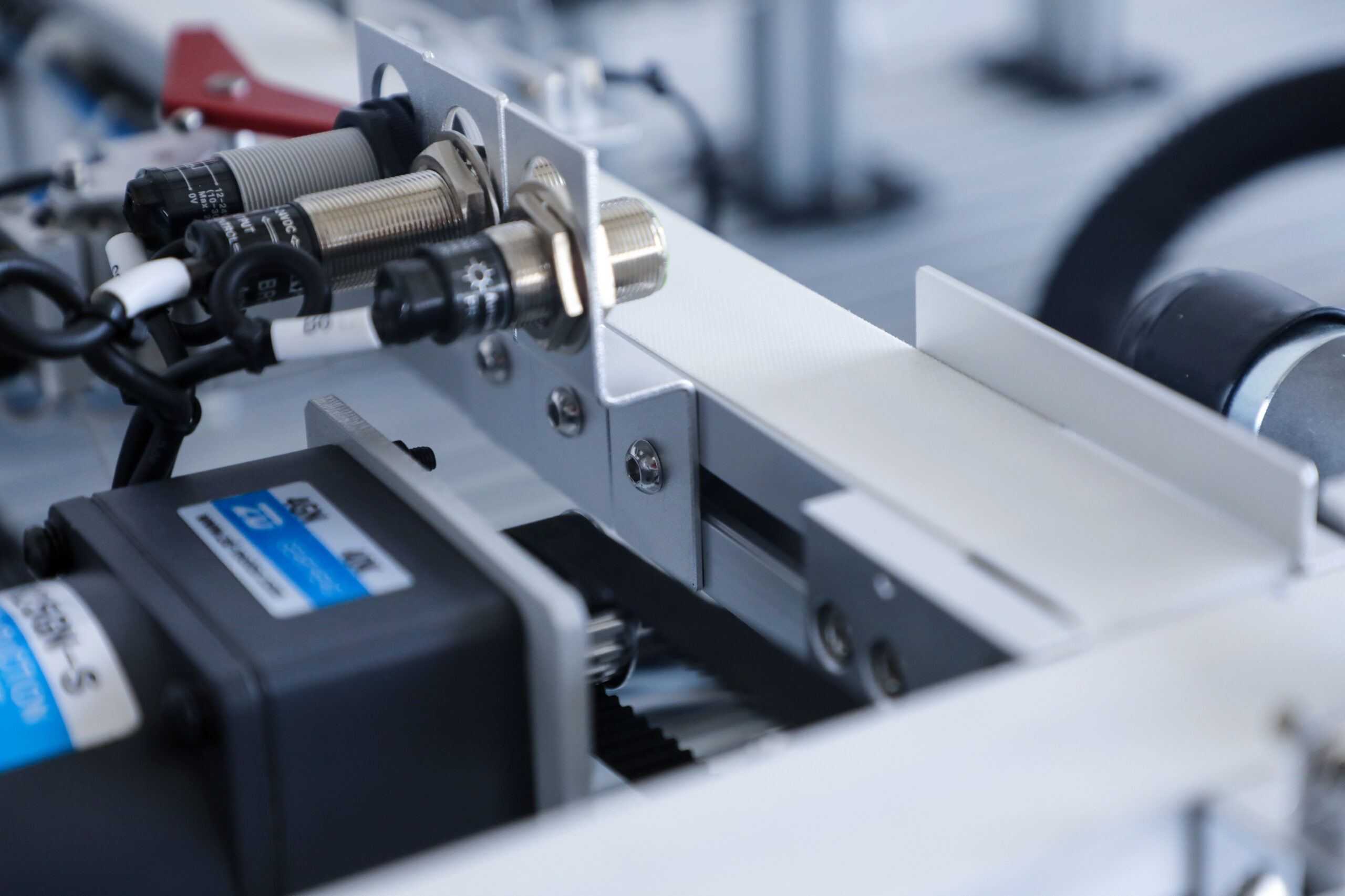
In the realm of condition monitoring for conveyors, edge computing proves invaluable. It leverages motor-torque signature analysis to identify developing issues such as mistracking belt sections or accumulation pressures that indicate a nascent workpiece jam. Similarly, increases in motor-current draw can signal seal or bearing wear, particularly when accompanied by a gradual upward creep in a mechanical component’s operating temperature. By analyzing these subtle changes at the edge, maintenance teams can be alerted to potential failures long before they lead to costly downtime. A recent study by a leading industrial automation firm showed that predictive maintenance strategies enabled by edge computing on conveyors could reduce unplanned downtime by up to 30%.
Furthermore, edge computing brings unparalleled traceability to conveyor-based installations, a feature of paramount importance in industries processing medical, pharmaceutical, and food products. The ability to track every item’s journey, along with environmental and machine parameters, ensures compliance with stringent regulatory requirements and facilitates rapid recall procedures if necessary.
Edge Computing in Simpler Motion Systems: Expanding Reach
While much of the discussion around edge computing emphasizes advanced machine designs with complex fieldbuses and networked servocontrols, its benefits are not limited to high-end applications. Many single-axis and other classic machines still utilize simpler control mechanisms, such as relay contacts, limit and proximity switches, and 4-20 mA analog control loops, often without any deterministic Ethernet-based protocol. Here, "smart edge devices" play a crucial role. These devices can terminate binary and analog signals, performing local interpretation through functions like debounce, scaling, thresholding, timestamping, and feature extraction. This intelligent pre-processing ensures that only pre-summarized data and immediately meaningful events are sent onward, a particularly advantageous approach when data needs to travel over modest Ethernet or wireless connections where bandwidth might be limited.
Motion axes in such arrangements can include a variety of common industrial components: indexers based on pneumatic cylinders, VFD-driven conveyors, gearmotor-driven rollers, and various cam-actuated mechanisms. Even though controls for such axes may not employ closed-loop servocontrol, they still generate signals worth monitoring, especially through edge I/O. Simple limit, home, and proximity switches, for instance, can yield valuable data about strokes, cycles, and dwells. This seemingly basic information, when analyzed at the edge, can inform monitoring systems to prompt the repair of worn components long before a catastrophic machine jam occurs.
Likewise, current transducers, via their 4-20 mA output, can feed into simple motor-current signature analyses to detect issues similar to those described for advanced conveyor systems, such as impending wear or mechanical obstructions. Accelerometers strategically placed on or near couplings, gearboxes, and other mechanical components can detect when peak vibration values exceed a predefined threshold, providing early wear trending without the need for full spectral condition monitoring. Furthermore, Variable Frequency Drives (VFDs), through their speed reference output, can directly serve as data-generating edge devices, communicating machine diagnostics even in simple open-loop systems.
Commercially available hardware with these capabilities includes certain manufacturers’ programmable edge controllers. These devices often come equipped with built-in digital and analog I/O terminals, the ability to locally run custom code, and support for publishing data via industry-standard protocols like MQTT or OPC UA. Other motion suppliers offer controllers that wirelessly pair with sensor nodes or integrate discrete or analog inputs hardwired directly to the machine, demonstrating the diverse range of solutions available for extending edge intelligence across the industrial spectrum. The flexibility and scalability of these solutions are making edge computing accessible to a broader range of industrial operations, from multi-million dollar advanced manufacturing lines to smaller, traditional workshops seeking to modernize.
Broader Implications and the Future Landscape
The widespread adoption of edge computing in industrial automation carries profound implications across economic, operational, and technological fronts. Economically, it promises significant cost reductions by minimizing wiring, shrinking the footprint of control cabinets, and reducing energy consumption through optimized machine operations. The increased productivity stemming from reduced downtime and enhanced efficiency translates directly into improved profitability. Moreover, edge computing facilitates new business models, such as "machine-as-a-service" or predictive maintenance contracts, where manufacturers can offer outcomes rather than just products.
Operationally, edge computing delivers greater agility and localized decision-making, allowing machines to adapt to changing conditions in real-time without relying on a central server or cloud connection. This translates into higher uptime, improved quality control, and a reduction in manual intervention. The enhanced safety features, particularly with integrated drive-based safety, create safer working environments. Industry analysts predict that companies leveraging edge computing for predictive maintenance can reduce maintenance costs by 10-40% and increase asset availability by 5-20%.
Technologically, edge computing represents a crucial convergence of Information Technology (IT) and Operational Technology (OT). This integration drives innovation in areas like artificial intelligence and machine learning at the edge, enabling sophisticated analytics and autonomous control capabilities directly on the factory floor. However, this convergence also introduces complex cybersecurity challenges, necessitating robust security protocols and architectures to protect critical industrial assets from evolving threats. The development of new hardware and software ecosystems around edge computing is a testament to its transformative potential.
Looking ahead, the role of 5G technology is expected to further amplify the capabilities of industrial edge computing. Its ultra-low latency and high bandwidth will enable even more distributed and wirelessly connected edge devices, pushing intelligence further to the absolute periphery of the network. This will pave the way for hyper-converged edge infrastructure, where computing, storage, and networking resources are tightly integrated, offering unparalleled performance and scalability for the factories of the future. While challenges remain, particularly around interoperability, standardization, and the need for skilled personnel, the trajectory of industrial edge computing points towards a future where machines are not just automated, but truly intelligent, adaptive, and autonomous.