The field of materials science has reached a significant milestone as researchers from the University of Chicago and Argonne National Laboratory have unveiled a pioneering method for synthesizing nanocrystals from metal nitrides. This development, detailed in a study published in the journal Nature, addresses a long-standing limitation in nanotechnology. While the 2023 Nobel Prize in Chemistry celebrated the discovery and development of quantum dots—nanocrystals typically made from semiconductors like cadmium selenide—the scientific community has historically struggled to produce similar microscopic structures from metal nitrides. These materials, known for their extreme durability and specialized electronic properties, have finally been brought into the nano-scale fold, potentially revolutionizing industries ranging from healthcare to consumer electronics.
The research team, led by Dmitri Talapin, the Ernest DeWitt Burton Distinguished Service Professor of Chemistry and Molecular Engineering at the University of Chicago, and graduate student Ruiming Lin, has successfully produced a library of nearly a dozen different nitride nanocrystals. This achievement overcomes the fundamental chemical constraints that previously rendered metal nitrides "un-synthesizable" in nanocrystalline form through traditional solution-based chemistry. By mastering the delicate balance of temperature, pressure, and chemical environment, the team has provided a blueprint for a new generation of versatile, high-performance nanomaterials.
The Evolution of Nanocrystal Science
To understand the magnitude of this breakthrough, one must look at the trajectory of nanocrystal research over the past four decades. Nanocrystals are essentially tiny clusters of atoms that exhibit properties different from their bulk counterparts. When a material is shrunk to the nanometer scale—where it may be only a few thousand atoms wide—quantum mechanical effects begin to dominate. In the case of semiconductor nanocrystals, also known as quantum dots, this results in the ability to emit specific colors of light based on their size, a discovery that earned Moungi Bawendi, Louis Brus, and Alexei Ekimov the Nobel Prize in 2023.
Until now, the vast majority of nanocrystal research and commercial application has focused on metal oxides and metal chalcogenides (compounds involving sulfur, selenium, or tellurium). These materials are relatively easy to manipulate because their chemical bonds can be broken and reformed at moderate temperatures in organic solvents. However, metal nitrides—compounds where metal atoms bond with nitrogen—represent a much tougher challenge.
Metal nitrides are "refractory" materials, meaning they are incredibly resistant to heat and wear. Gallium nitride (GaN), perhaps the most famous member of this family, revolutionized the lighting industry by enabling the creation of high-brightness blue light-emitting diodes (LEDs). Despite their utility in bulk or thin-film forms, turning these materials into "colloidal" nanocrystals—particles suspended in a liquid that can be printed or sprayed—has been a "holy grail" for chemists for years.
The Chemical Barrier: Why Nitrides Resisted Synthesis
The primary obstacle to creating metal nitride nanocrystals lies in the strength of the chemical bonds between the metal and nitrogen atoms. In the synthesis of traditional nanocrystals, precursors are dissolved in a liquid and heated. As the crystals grow, the atoms must be able to move, detach, and re-attach to the crystal lattice to correct defects and reach a stable, uniform structure.
Dmitri Talapin describes this process using the analogy of a square dance. For a perfect crystal to form, the "partners" (ions) must be able to break their current hold and move to a new position as the music dictates. In metal nitrides, however, the bonds are so strong that once a metal atom grabs a nitrogen atom, it refuses to let go. This "stickiness" leads to disordered, amorphous clumps rather than the highly ordered, crystalline structures required for technological applications. If the bonds cannot break during the growth phase, the resulting material is effectively useless for high-tech purposes.
A Novel Approach: Molten Salts and Ammonia Pressure
To solve this "death sentence" for nitride nanocrystals, the UChicago and Argonne team had to rethink the environment in which the crystals grow. They moved away from the standard organic solvents used in nanocrystal synthesis, which often decompose at the high temperatures needed to manipulate strong nitride bonds.
Instead, the researchers utilized molten salts as the growth medium. Building on previous work in the Talapin lab, they found that liquid salts could remain stable at extreme temperatures while providing the necessary environment to stabilize the surface of growing nanocrystals. However, the salt alone was not enough.
The true breakthrough came from identifying a "sweet spot" involving temperature and the pressure of ammonia ($textNH_3$). By introducing ammonia under specific pressurized conditions, the researchers created a chemical environment where the metal-nitrogen bonds could finally become reversible. This allowed the atoms to "dance"—breaking and reforming bonds until they settled into a perfect crystalline lattice.
"This process is very unusual—it goes against every bit of common sense in the field," Talapin noted. By operating in this unconventional regime, the team successfully synthesized nanocrystals of gallium nitride (GaN), titanium nitride (TiN), niobium nitride (NbN), and molybdenum nitride (MoN), among others.
A Chronology of Discovery
The path to this discovery was one of persistence and iterative experimentation.
- Phase 1: The Molten Salt Foundation. Several years ago, the Talapin lab began experimenting with molten salts as a replacement for organic solvents, realizing that traditional "wet chemistry" reached its thermal limits too early for many advanced materials.
- Phase 2: The Nitride Challenge. Following the success with other materials, the team focused on nitrides, recognizing their industrial importance. Early attempts resulted in poor crystal quality due to the bond-strength issue.
- Phase 3: The Ammonia Breakthrough. Over months of testing, Ruiming Lin and the team experimented with high-pressure reactors. They discovered that by fine-tuning the partial pressure of ammonia, they could catalyze the exchange of nitrogen atoms, allowing for the "self-correction" of the crystal structure.
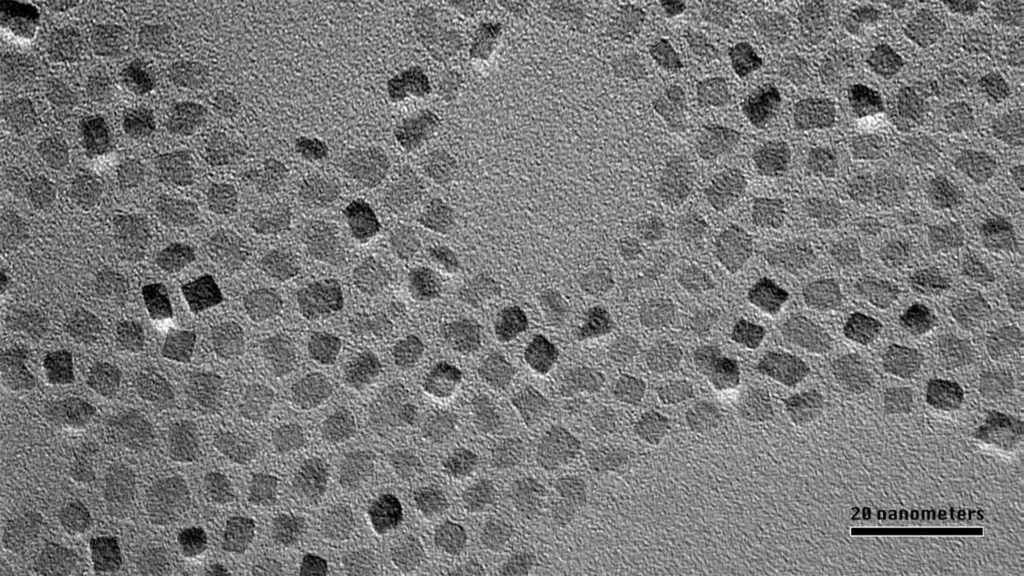
- Phase 4: Characterization and Validation. Using the advanced imaging facilities at Argonne National Laboratory, including electron microscopy and X-ray diffraction, the team confirmed that they had produced high-quality, discrete nanocrystals with uniform sizes and shapes.
Supporting Data and Material Profiles
The study successfully demonstrated the synthesis of a diverse array of nitrides, each with distinct industrial value:
- Gallium Nitride (GaN): Already the backbone of the LED and 5G power amplifier industries. In nanocrystal form, GaN could lead to even more efficient, flexible micro-LED displays.
- Titanium Nitride (TiN): Known for its extreme hardness and gold-like color, TiN is frequently used as a coating for drill bits and in medical implants. Nanocrystalline TiN could be used in "plasmonic" applications, where it interacts with light to generate heat for cancer therapies.
- Niobium Nitride (NbN): A vital material for superconductors. NbN nanocrystals could be used to create printable superconducting circuits for quantum computers.
- Molybdenum Nitride (MoN): A highly effective catalyst used in industrial chemical reactions. The high surface-area-to-volume ratio of nanocrystals would vastly increase its catalytic efficiency.
The researchers noted that these materials are not only high-performing but also relatively abundant and inexpensive compared to the rare-earth elements or toxic heavy metals (like cadmium) often used in current quantum dot technology.
Potential Applications and Broader Impact
The ability to produce metal nitrides as colloidal nanocrystals opens a plethora of "soft" manufacturing possibilities. Currently, metal nitrides are typically grown on rigid substrates using expensive vacuum-based processes like Chemical Vapor Deposition (CVD). These processes require high heat and rigid surfaces, limiting where the materials can be used.
By contrast, nanocrystals suspended in liquid can be treated like ink. This leads to several transformative applications:
- Flexible Electronics: Nitride inks could be printed onto plastics or fabrics, enabling wearable sensors, flexible displays, and "smart" textiles that are durable and heat-resistant.
- Advanced Lighting: The next generation of displays could feature "nitride quantum dots," which offer superior stability and color purity compared to current organic or chalcogenide-based alternatives.
- Bio-medical Implants: Because many metal nitrides are biocompatible, these nanocrystals could be used in the next generation of medical sensors or as coatings for implants that better integrate with human tissue.
- Energy and Catalysis: The high surface area of these nanocrystals makes them ideal for accelerating chemical reactions in hydrogen fuel cells or carbon-capture technologies.
Institutional Support and Future Outlook
This research was a collaborative effort involving several high-level facilities. The team utilized the National Science Foundation Materials Research Science and Engineering Center (MRSEC) at the University of Chicago, as well as the Center for Nanoscale Materials at Argonne National Laboratory. Funding was provided by a diverse group of stakeholders, including the U.S. Department of Energy, the Air Force Office of Scientific Research, the National Science Foundation, and the Samsung QD Cluster Collaboration.
The involvement of industry giants like Samsung underscores the commercial potential of this discovery. As the tech industry seeks more sustainable and durable materials for the next generation of devices, metal nitrides offer a compelling path forward.
"I remember the first time I looked through the electron microscope and saw those crystals," said Ruiming Lin. "You always hope something you discovered will wind up in applications. I think there will be many uses."
The success of this study suggests that the "boundaries of the field" are indeed expanding. By rethinking the fundamental thermodynamics of crystal growth, the UChicago and Argonne team has not only added a new set of tools to the materials science toolkit but has also challenged the long-held belief that certain materials are simply too "stubborn" to be manipulated at the nanoscale. As this technology moves from the laboratory to the factory floor, the world may soon see a new era of "printable" high-performance hardware.