The journey to control the cacophony of the automobile has been a protracted and evolving one, marked by legislative attempts, technological advancements, and a growing societal demand for quieter streets. From the early days of the internal combustion engine, when noise was an accepted, albeit often irritating, byproduct of progress, to the sophisticated noise-abatement technologies of today, the story of automotive noise regulation is a compelling narrative of adaptation and innovation. This article delves into the historical efforts to quantify and curb vehicle noise, tracing the legislative landscape, the development of measurement tools, and the persistent challenges faced by authorities and manufacturers alike.
The Dawn of Regulation: Tackling the Unquantifiable
In the early 20th century, the burgeoning automotive industry was a source of both fascination and disruption. While the freedom and convenience of personal transport were celebrated, the accompanying din was a growing concern for urban dwellers. Legislation began to emerge, attempting to address this sonic blight. By the end of a particular year, a significant number of individuals – 1282 – faced prosecution under an act designed to mitigate noise. This statistic, however, highlights a fundamental challenge: noise, at its core, was unquantifiable. The absence of standardized measurement tools meant that enforcement was often subjective and reliant on individual perception. The very act of prosecution, therefore, underscored the difficulty in defining and enforcing acceptable noise levels when the yardstick was so elusive.
The Quest for Measurement: Introducing the Decibel and the Phon
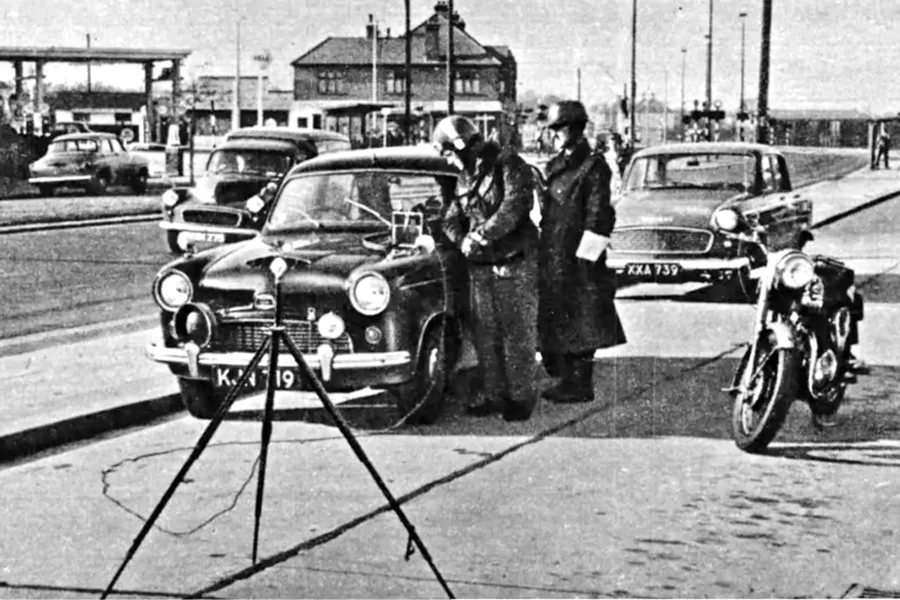
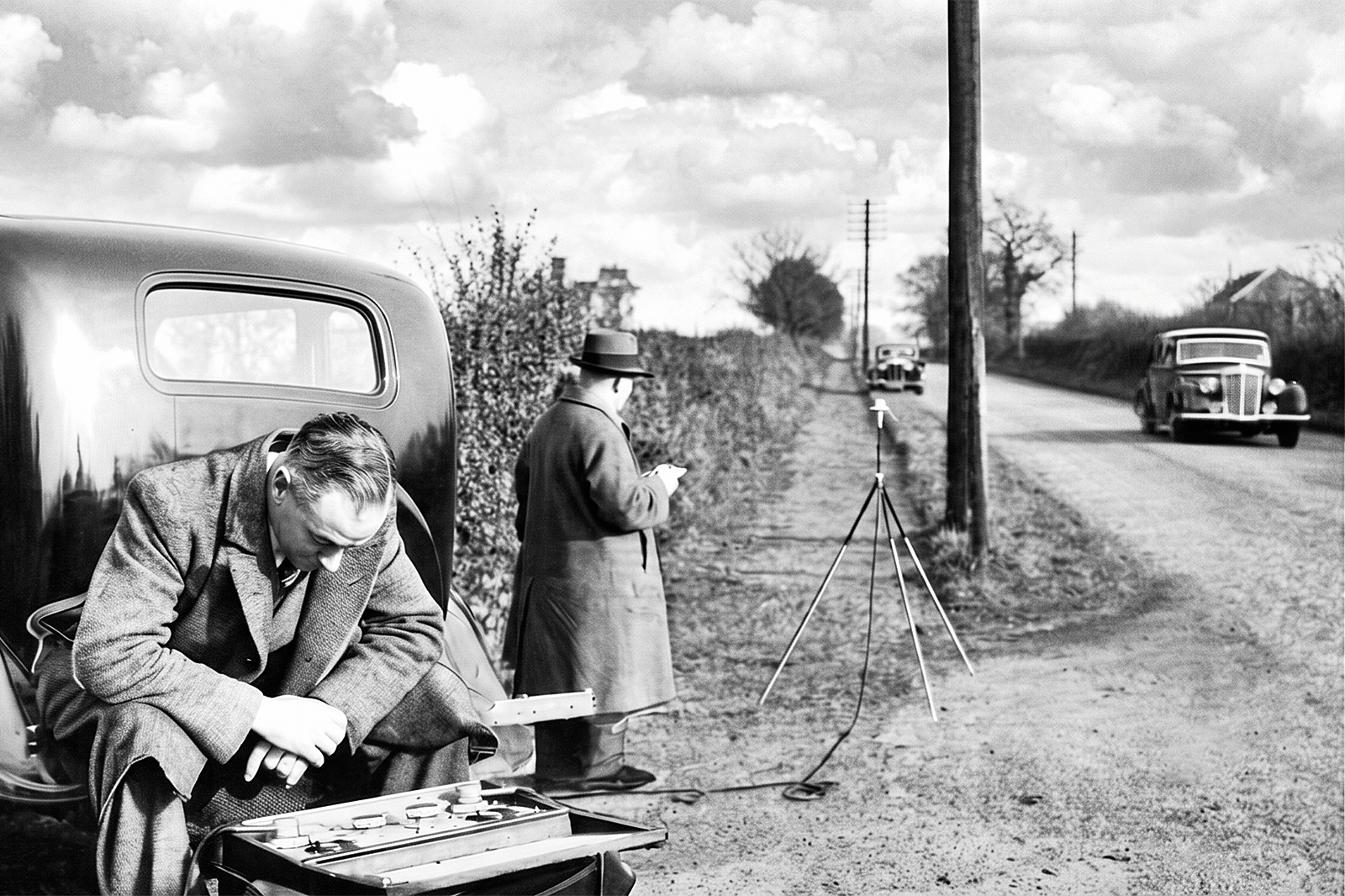
The landscape of noise measurement began to shift dramatically in 1937. By this point, the initial zeal for quiet had considerably waned, and the pervasive noise of engines had become an accepted, if not embraced, feature of modern life. It was in this year that the automotive world, and indeed society at large, encountered its first real attempt at scientifically measuring sound: the introduction of the sound measuring machine.
Prior to this innovation, two fundamental units of sound had been devised, each attempting to capture a different aspect of acoustic experience. The decibel (dB) emerged as a measure of mechanical energy, providing a purely objective, physical quantification of sound pressure. However, sound perceived by the human ear is not merely a function of energy. Our auditory system is a complex biological instrument that interprets sound waves differently based on their frequency.
To account for this crucial variable, the phon was developed. The phon aimed to measure loudness as perceived by the human ear, taking into account the non-linear way we experience different frequencies. This was a significant step forward, as it sought to align objective measurement with subjective perception, a critical factor in determining what constitutes an "obnoxious" or "excessive" noise.
Early Benchmarks and the Ministry of Transport’s Stance
With the advent of these new measurement tools, authorities began to establish benchmarks. The Ministry of Transport, recognizing the impact of vehicle noise on public well-being, recommended a maximum limit for car exhaust noise. This recommendation stipulated that no car should exceed 90 phons. To contextualize this figure, 90 phons is described as being slightly above the potency of sitting by an open window on an express train – a soundscape that, even then, was understood to be considerable.
In the context of automotive testing, this provided a new metric for evaluation. Early road tests, such as those conducted on Wolseley saloons, began to incorporate these measurements. During these tests, a Wolseley saloon cruising at 30 mph in top gear was recorded at a peak of 77 phons, measured from a distance of 18 feet. This figure, significantly below the recommended 90-phon limit, indicated that at least some contemporary vehicles were performing well within the nascent regulatory framework. However, it also hinted at the potential for vehicles to exceed these limits, particularly under different driving conditions or with modifications.
Democratization of Ownership and the Evolution of Legislation
The post-war era witnessed a profound transformation in car ownership. The automobile transitioned from a luxury item to a more accessible mode of transport, a phenomenon often referred to as the "democratization of ownership." As more households acquired vehicles, the collective impact of their noise became more pronounced. This surge in car ownership necessitated a re-evaluation and strengthening of noise regulations.
In 1955, further legislation was introduced to address this growing concern. The updated regulations mandated that "Every [Internal Combustion Engine] vehicle shall be fitted with silencer, expansion chamber or other contrivance suitable and sufficient for reducing as far as may be reasonable the exhaust noise." This provision shifted the onus from a simple noise limit to a requirement for manufacturers to actively engineer noise reduction into their vehicles. The phrase "as far as may be reasonable" acknowledged the inherent difficulties in achieving complete silence and the trade-offs involved in engine performance and cost.
The Unintended Consequences: Modifications and the "Hellish Noise"
Despite these legislative efforts, the problem of excessive vehicle noise persisted, and in some cases, exacerbated. By 1959, Members of Parliament were raising concerns about vehicles that were particularly offensive in terms of their noise output. A Member of Parliament argued that "many vehicles are particularly obnoxious in this respect, especially motorcycles and sports cars." The observation was that while these vehicles might not have been excessively noisy when leaving the factory, owners often sought to enhance their performance or aesthetic appeal through modifications. These modifications, often aimed at increasing engine power or altering the exhaust note, frequently resulted in a "hellish noise" that was deemed "completely unnecessary."
This parliamentary statement highlights a critical ongoing challenge in noise control: the divergence between factory specifications and post-ownership modifications. The desire for a more aggressive or distinctive sound from certain vehicle types, particularly performance-oriented ones, often superseded the desire for quiet. This created a cat-and-mouse game between regulators, manufacturers, and individual owners, where attempts to curb noise were met with ingenuity in circumventing them.
The Role of Technology and Engineering in Noise Reduction
The history of automotive noise control is inextricably linked to advancements in engineering and materials science. The development of more sophisticated silencers and exhaust systems has been a continuous process. Early silencers were relatively basic, relying on simple baffles to dissipate sound energy. Over time, these evolved into multi-chambered designs, acoustic resonators, and the use of sound-absorbing materials.
The expansion chamber, mentioned in the 1955 legislation, is a prime example of such technological evolution. These chambers are designed to create pressure waves that cancel out the sound waves produced by the engine’s exhaust pulses. By carefully controlling the volume and geometry of these chambers, engineers can significantly reduce the noise emitted.
Furthermore, the design of the engine itself plays a crucial role. Modern engine designs often incorporate features aimed at minimizing inherent noise, such as optimized combustion chamber shapes, quieter valve trains, and improved engine mounts to isolate vibrations. The chassis and body of the vehicle also contribute to noise reduction through sound deadening materials and aerodynamic designs that minimize wind noise.
Broader Societal and Health Implications
The impact of traffic noise extends beyond mere annoyance. Extensive research has linked prolonged exposure to high levels of noise pollution to a range of adverse health effects. These include stress, sleep disturbances, cardiovascular problems, and cognitive impairment, particularly in children. The World Health Organization (WHO) has identified noise pollution as a significant environmental health risk in urban areas.
The economic implications are also substantial. The cost associated with noise-related health issues, reduced property values in noisy areas, and the implementation of noise mitigation measures all contribute to the overall burden of traffic noise. This understanding has increasingly driven policy decisions, pushing for more stringent noise standards and promoting quieter modes of transport.
The Evolving Regulatory Landscape: International Perspectives
The challenge of automotive noise is a global one. Different countries and regions have adopted varying approaches to noise regulation, often influenced by their specific urban environments, vehicle populations, and cultural attitudes towards noise.
In the European Union, for instance, noise emissions from vehicles are regulated through a series of directives and regulations. These standards have become progressively stricter over time, with specific limits set for different vehicle categories, including cars, motorcycles, and heavy-duty vehicles. The focus has shifted from simply controlling exhaust noise to addressing noise from tires, engines, and other sources.
In the United States, the Environmental Protection Agency (EPA) has established noise emission standards under the Noise Control Act of 1972. These regulations cover various sources of noise, including medium and heavy-duty trucks and motorcycles. State and local governments also play a role in enforcing noise ordinances.
The International Organization for Standardization (ISO) develops international standards for noise measurement and assessment, providing a framework for consistent testing and comparison across different regions. These standards cover aspects such as measurement procedures, microphone placement, and the definition of various noise metrics.
The Future of Automotive Noise Control: Electrification and Beyond
The advent of electric vehicles (EVs) presents a paradigm shift in the battle against automotive noise. EVs are inherently quieter than their internal combustion engine counterparts, producing significantly less mechanical and exhaust noise. This is a major advantage for urban environments, promising a reduction in overall noise pollution.
However, the near silence of EVs also introduces new considerations. At low speeds, the lack of audible engine noise can pose a safety risk to pedestrians and cyclists, particularly those with visual impairments. To address this, regulations are being developed to mandate the emission of artificial sounds by EVs at low speeds, ensuring their detectability.
Beyond electrification, ongoing research and development are focused on further noise reduction technologies. This includes advancements in tire design to minimize road-tire interaction noise, improved aerodynamic shaping to reduce wind noise at higher speeds, and the development of active noise cancellation systems within vehicles.
Conclusion: A Continuing Pursuit of Serenity
The journey from the unquantifiable roar of early automobiles to the sophisticated noise management systems of today is a testament to persistent innovation and evolving societal priorities. The initial prosecutions under vague noise acts, the pioneering introduction of the decibel and phon, and the continuous refinement of legislative frameworks and engineering solutions all underscore a long-standing quest for quieter, more liveable environments.
While significant progress has been made, the challenge of automotive noise remains dynamic. The rise of electric vehicles, while offering a significant reduction in traditional noise sources, introduces new safety considerations. The ongoing tension between performance desires and the need for quiet, particularly with modified vehicles, suggests that the dialogue between regulators, manufacturers, and the public will continue. Ultimately, the pursuit of automotive serenity is not merely about reducing decibels; it is about enhancing the quality of life in our increasingly urbanized world, a goal that demands continued vigilance, technological advancement, and a collective commitment to a quieter future.