The fundamental understanding of the physical universe rests upon two pillars that, despite their individual predictive power, remain mathematically and conceptually incompatible. For over a century, physicists have navigated a fractured landscape where the laws governing the subatomic world—quantum mechanics—and the laws governing the cosmos—Einstein’s general relativity—refuse to merge into a single, unified theory. This quest for "quantum gravity" has long been considered the "Holy Grail" of modern physics. However, a groundbreaking study published in the journal npj Quantum Information suggests that the road to proving the quantum nature of gravity may be more complex than previously anticipated. Researchers from Kyushu University, the University of Waterloo, and Stockholm University have developed a theoretical framework indicating that many experimental signatures previously thought to prove gravity’s quantum behavior could, in fact, be explained through classical interpretations of spacetime.
The Century-Old Schism in Modern Physics
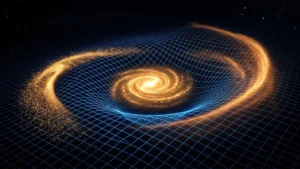
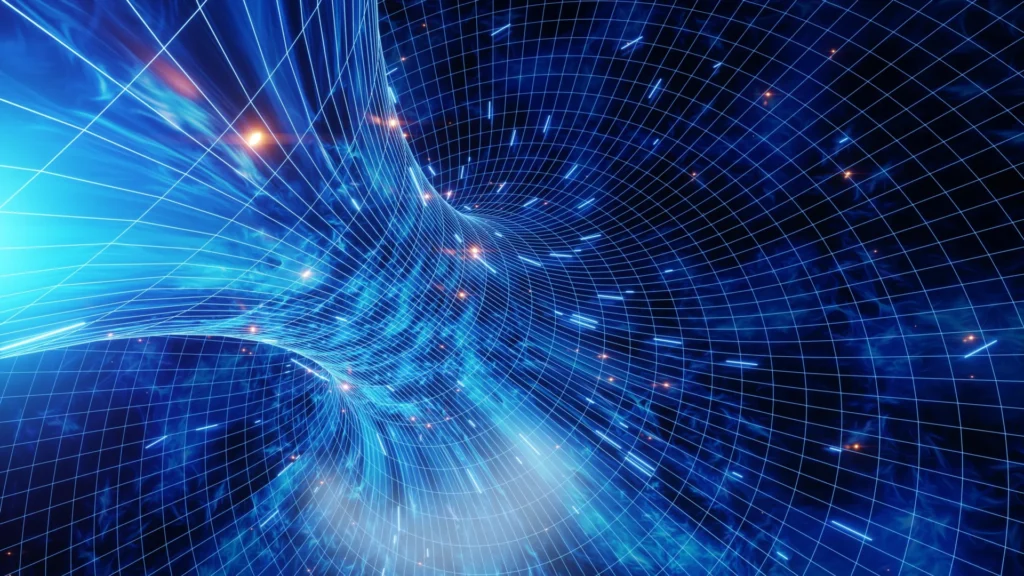
To understand the significance of this new research, one must first look at the divergent paths taken by 20th-century physics. In 1915, Albert Einstein revolutionized our understanding of the cosmos with his General Theory of Relativity. He proposed that gravity is not a traditional force like magnetism, but rather a geometric property of spacetime itself. In this view, massive objects like stars and planets warp the fabric of the universe, much like a heavy ball resting on a trampoline, causing other objects to follow curved paths. This theory has been confirmed with staggering precision, most recently through the detection of gravitational waves—ripples in spacetime caused by the collision of black holes.
Simultaneously, the development of quantum mechanics provided a framework for the behavior of matter and energy at the smallest scales. Quantum theory introduces concepts that defy everyday intuition, such as superposition, where a particle can exist in multiple states or locations at once until it is measured. While general relativity treats spacetime as a smooth, continuous, and "classical" backdrop, quantum mechanics suggests that everything in the universe should be subject to "quantization"—the idea that physical properties occur in discrete, indivisible units.
The conflict arises when physicists attempt to apply quantum rules to the fabric of spacetime. If matter is quantum and matter curves spacetime, then logic suggests that spacetime itself must also be quantum. This would mean that gravity could exist in a superposition of different states, with the universe essentially "bending" in multiple ways simultaneously. However, the mathematical frameworks used to describe these two worlds break down when combined, resulting in nonsensical "infinities" that have thwarted the greatest minds in physics for decades.
The Relativity of Spacetime Superpositions
The recent study led by Associate Professor Joshua Foo of Kyushu University’s Institute for Advanced Study introduces a concept termed the "Relativity of Spacetime Superpositions." This framework addresses a critical question: if gravity were in a quantum superposition, what would that look like in a laboratory setting?
Traditionally, many physicists have designed experiments based on the assumption that observing a quantum particle in a "delocalized" state (existing in two places at once) while interacting with gravity would provide evidence that gravity itself is quantum. The Kyushu-Waterloo-Stockholm team, however, has demonstrated that such observations are inherently ambiguous. Their research shows that many scenarios described as a "quantum superposition of gravity" can be mathematically reinterpreted as quantum particles moving through a perfectly ordinary, classical gravitational field and a stable spacetime.
"Many researchers have proposed experiments that could potentially reveal the quantum nature of gravity," explained Professor Foo. "What we found is that some of these scenarios can be viewed from two equally valid perspectives. One interpretation describes gravity as being in a quantum superposition, while the other describes quantum particles moving in an ordinary gravitational field."
To illustrate this complex idea, the researchers use the analogy of cartography. Imagine two different maps of the same mountain range, each using a different projection method. One map might make the peaks look wider, while the other makes them look steeper. Despite their visual differences, both maps are describing the exact same physical terrain. In the context of quantum gravity, the researchers argue that what looks like "quantum gravity" in one mathematical "map" might simply look like "classical gravity" in another, provided the motion of the particles is accounted for correctly.
Chronology of the Search for Quantum Gravity
The pursuit of a unified theory has moved through several distinct eras, each bringing us closer to the experimental threshold that the new study now scrutinizes:
- 1915–1919: Einstein publishes General Relativity; Sir Arthur Eddington’s solar eclipse observation confirms that gravity bends light, establishing the classical view of spacetime.
- 1920s–1940s: The "Copenhagen Interpretation" of quantum mechanics is established, introducing the concept of wave-particle duality and superposition.
- 1960s–1970s: Physicists attempt to "quantize" gravity using the same methods used for electromagnetism (Quantum Electrodynamics). These efforts fail due to the "renormalization" problem, where calculations produce infinite values.
- 1980s–2000s: String Theory and Loop Quantum Gravity emerge as the two leading theoretical contenders for a "Theory of Everything," though both lack direct experimental evidence.
- 2015: The first detection of gravitational waves by LIGO confirms that spacetime can vibrate, reinforcing the classical wave-like nature of gravity.
- 2020s: Scientists begin proposing "table-top" experiments using ultra-sensitive quantum sensors to detect whether gravity can entangle two particles—a feat that would require gravity to be quantum.
The Kyushu study arrives at a pivotal moment when experimental technology is finally catching up to theoretical ambition. By identifying a fundamental ambiguity in how these experiments are interpreted, the team is essentially providing a "stress test" for future discoveries.
Identifying the "Smoking Gun" of Quantum Physics
One of the most significant contributions of this research is its role in refining the criteria for what constitutes proof. In science, a "false positive" can set a field back by years. If an experiment produces a result that looks like quantum gravity but can actually be explained by existing classical physics, it cannot be used as definitive evidence.
Co-author Magdalena Zych of Stockholm University emphasized that the findings do not rule out the existence of quantum gravity. Instead, they provide a more rigorous roadmap for identifying it. "Our work does not tell us that such experiments rule out quantum gravity," Zych stated. "Rather, it helps us identify which experimental signatures would genuinely require a quantum description of gravity and which ones could arise from more familiar physics. That distinction is crucial for designing future experiments."
The study suggests that for an experiment to truly prove gravity is quantum, it must demonstrate a phenomenon that cannot be "mapped back" to a classical spacetime description. This might include specific types of gravitational entanglement or signatures that persist regardless of the observer’s frame of reference.
Supporting Data and Theoretical Implications
The researchers utilized advanced mathematical modeling to test different "frames of reference" in a gravitational field. In classical physics, your frame of reference—whether you are standing still or falling freely—changes how you perceive forces. The team extended this logic to the quantum realm.
Their data suggests that the "quantumness" of gravity may be relative to the observer’s state of motion. In certain frames, the gravitational field appears to be in a superposition; in others, it appears classical. This suggests that the property of being "quantum" might not be an absolute characteristic of the field itself in these specific scenarios, but rather a result of the interaction between the particle and the field.
This has profound implications for the "Measurement Problem" in quantum mechanics. If the very nature of spacetime (the stage upon which all physics occurs) depends on the observer’s perspective in this way, it may require a total rethink of how we define physical reality at the most fundamental level.
Broader Impact and Future Technological Evolution
While the study focuses on high-level theoretical physics, the history of the field suggests that these discoveries eventually trickle down into daily life. The history of science is replete with examples of "abstract" research leading to world-changing technology.
For instance, the development of Global Positioning Systems (GPS) would be impossible without Einstein’s theories. GPS satellites must account for the fact that time moves slightly faster further away from Earth’s mass (General Relativity) and that their high speed causes time to slow down (Special Relativity). Similarly, the quantum mechanics that governs the behavior of electrons is the foundation of the semiconductor industry, which powers every smartphone and computer on the planet.
A successful theory of quantum gravity could potentially unlock technologies that are currently the stuff of science fiction. It could provide insights into "wormholes," the possibility of manipulating spacetime for faster-than-light communication, or understanding the energy densities of the vacuum (dark energy).
By narrowing the search for evidence, the Kyushu-Waterloo-Stockholm team is helping to ensure that the resources and intellectual capital of the global physics community are directed toward the most promising avenues of discovery.
Conclusion: Refining the Search for the Theory of Everything
The work of Foo, Zych, and their colleagues represents a vital step in the maturation of quantum gravity research. It shifts the conversation from "how can we see quantum gravity?" to "how can we be sure what we are seeing is quantum gravity?"
As experiments become more sophisticated, the "Relativity of Spacetime Superpositions" will serve as a benchmark for evaluating claims of new physics. The challenge of merging the micro and the macro remains the greatest hurdle in science, but by clarifying the distinction between the quantum and the classical, researchers are finally beginning to see the true shape of the terrain they are exploring.
"Understanding how gravity and quantum mechanics fit together is one of the greatest challenges in physics," concluded Professor Foo. "Before we can test gravity’s quantum nature, we first need to know what evidence would prove that we’ve found it. Our work helps clarify that question."