In a landmark study that could redefine the manufacturing of aerospace and energy components, materials scientists at Purdue University have successfully engineered a method to imbue brittle intermetallic compounds with both extreme strength and significant flexibility. The research, published in the journal Science Advances, introduces a structural framework that allows cobalt aluminum (CoAl) alloys to withstand stresses up to ten times greater than high-strength structural steel while maintaining the ability to deform without fracturing. This breakthrough addresses a century-old limitation in metallurgy: the inherent trade-off between a material’s hardness and its ductility.
Intermetallics have long been viewed as the "holy grail" of high-performance materials due to their unique atomic arrangements. Unlike standard alloys, where atoms are randomly distributed, intermetallics consist of two or more metallic elements organized in a highly ordered, repeating crystal lattice. This internal geometry provides them with exceptional thermal stability, high melting points, and a remarkable resistance to "creep"—the tendency of solid materials to move slowly or deform permanently under the influence of persistent mechanical stresses and high temperatures. However, these same ordered structures make the materials notoriously brittle at room temperature. For decades, this brittleness has prevented the widespread adoption of intermetallics in complex industrial machinery, as they often shatter like glass when subjected to sudden impact or intricate shaping processes.
The Science of Controlled Imperfection
The Purdue research team, led by Xinghang Zhang, a professor in the School of Materials Engineering, focused on Cobalt Aluminum (CoAl), a compound prized for its potential in next-generation turbine blades. The core of their discovery lies in the strategic manipulation of atomic-scale defects. In traditional metallurgy, a "defect" is often seen as a point of failure. However, in the realm of nanostructured materials, specific types of defects known as dislocations are essential for plasticity.
Dislocations are microscopic irregularities within a crystal lattice where the rows of atoms are misaligned. When a metal is stressed, these dislocations move through the structure, allowing layers of atoms to slide over one another. This sliding process is what enables a metal to bend or stretch—a property known as plasticity. In standard CoAl, the density of these dislocations is too low, and their movement is restricted by the rigid crystal structure, leading to immediate fracture under pressure.
To overcome this, the Purdue team moved away from traditional casting methods, which involve melting metals and allowing them to solidify. Instead, they utilized magnetron sputtering deposition. This technique involves creating a vapor of the alloy and depositing it onto a substrate to form a thin film. This "nonequilibrium" fabrication method allowed the engineers to "freeze" the material in a state that contains a high density of pre-existing dislocations.
Furthermore, the team engineered what they term a "framework of amorphous interfaces" (FAIs). These are ultra-thin boundaries within the material that lack a defined crystal structure. During mechanical deformation, these amorphous regions act as flexible buffers. As the material is compressed or stretched, these interfaces partially crystallize, a process that triggers the nucleation of even more dislocations. This self-generating mechanism of internal movement allows the CoAl to absorb energy and change shape rather than snapping.
Quantifying the Breakthrough: Strength and Plasticity Data
The results of the Purdue experiments have set a new benchmark for intermetallic performance. In mechanical testing conducted inside scanning electron microscopes, the CoAl nanolaminate system demonstrated a yield strength of 6 gigapascals (GPa). To put this into perspective, the high-strength structural steel used in modern skyscrapers and bridges typically possesses a yield strength ranging from 0.5 to 1 GPa. The Purdue-engineered CoAl is effectively six to ten times stronger than one of the most trusted materials in heavy industry.
Beyond its raw strength, the material’s plasticity—its ability to deform permanently without breaking—reached 15% under compression at room temperature. For a material class that is usually characterized by zero or near-zero room-temperature ductility, 15% represents a transformative leap. This level of plasticity ensures that if a component made of this material were to face an overstress event, it would bend or dent rather than catastrophically shattering, providing a critical safety margin for high-stakes applications like aviation.
"This combination of ultrahigh mechanical strength and outstanding plasticity make the current CoAl nanolaminate system one of the best intermetallic systems reported to date," noted Ke Xu, a postdoctoral researcher at Purdue and the study’s first author. The ability to achieve these properties at room temperature is particularly significant, as it simplifies the manufacturing and machining of components that previously required extreme heat to shape.
Collaborative Analysis and Atomic Simulations
The research was a multi-institutional effort, involving advanced computational modeling to verify the laboratory findings. Professor Yashashree Kulkarni and PhD student Anand Mathew from the University of Houston provided molecular dynamics simulations that allowed the team to "see" the atomic interactions occurring during deformation.
These simulations confirmed that the amorphous interfaces were not merely passive boundaries but active participants in the material’s resilience. The data showed that as stress was applied, the amorphous regions transitioned into a crystalline state, facilitating the flow of dislocations into the surrounding CoAl layers. This atomic-level choreography explains why the material can sustain such high loads; the stress is distributed and dissipated through the movement of dislocations rather than concentrating at a single point to form a crack.
The study also involved contributions from Haiyan Wang, the Basil S. Turner Professor of Engineering at Purdue, whose expertise in electrical and computer engineering helped refine the microstructure analysis. This interdisciplinary approach was vital for understanding how the electrical and structural properties of the nanolaminate influenced its mechanical behavior.
Chronology of Development and Future Scaling
The journey to this discovery began with the recognition that traditional alloy design had reached a plateau. For years, researchers attempted to improve CoAl by adding alloying elements or adjusting the grain size through conventional thermomechanical processing. While these methods yielded marginal improvements, they could not bypass the fundamental brittleness of the B2-type crystal structure of CoAl.
The shift toward magnetron sputtering marked a turning point. By moving from the liquid-solid phase (casting) to the vapor-solid phase (sputtering), the researchers gained unprecedented control over the material’s architecture at the nanometer scale.
The current phase of the research, led by Zhang’s Nanometal Group, is now focused on scalability. While the initial success was achieved in thin-film nanolaminates, the goal is to translate these "amorphous interface" principles to bulk materials. This would involve developing new processing techniques—such as advanced additive manufacturing (3D printing) or specialized powder metallurgy—that can replicate the high-density dislocations and amorphous frameworks in larger, three-dimensional parts.
"We will also be testing the concept using other intermetallics," Xu stated, "with the goal of establishing the general applicability of FAIs for improving plasticity in this metal class." If successful, this could lead to a new family of "ductile intermetallics" based on nickel, titanium, or iron, each tailored for specific industrial needs.
Broader Implications for Industry and Global Technology
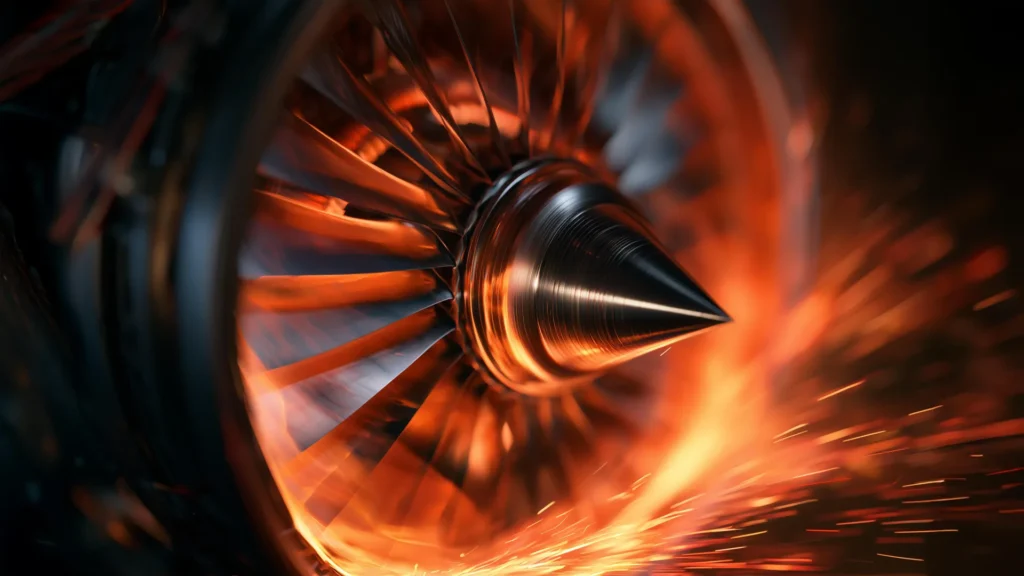
The implications of this research extend far beyond the laboratory. In the aerospace sector, the demand for engines that can operate at higher temperatures and rotational speeds is constant. Higher speeds equate to greater centrifugal forces, which current materials struggle to withstand without adding excessive weight. A CoAl-based turbine blade, possessing 6 GPa of strength and the toughness to survive impacts, would allow jet engines to run hotter and faster, significantly increasing fuel efficiency and reducing carbon emissions.
In the energy sector, gas turbines used for electricity generation face similar challenges. Materials that can resist creep and oxidation at high temperatures while remaining easy to manufacture could lower the cost of energy production and extend the lifespan of critical infrastructure. Additionally, the defense and space industries could utilize these materials for heat shields, structural components for spacecraft, and high-impact armor.
The National Science Foundation (NSF), which primarily funded the research through its Metals and Metallic Nanostructures program, views this as a vital step in maintaining technological leadership in advanced manufacturing. By unlocking the potential of intermetallics, the research provides a roadmap for creating materials that are not just stronger, but "smarter" in how they handle mechanical failure.
As the Nanometal Group at Purdue moves forward, the focus remains on the synergy between material synthesis and atomic-scale analysis. The ability to design a material from the atoms up, intentionally placing "defects" to serve as engines of flexibility, represents a paradigm shift in engineering. For the aerospace and energy industries, the era of brittle limitations may soon be replaced by an era of high-strength, deformable excellence.