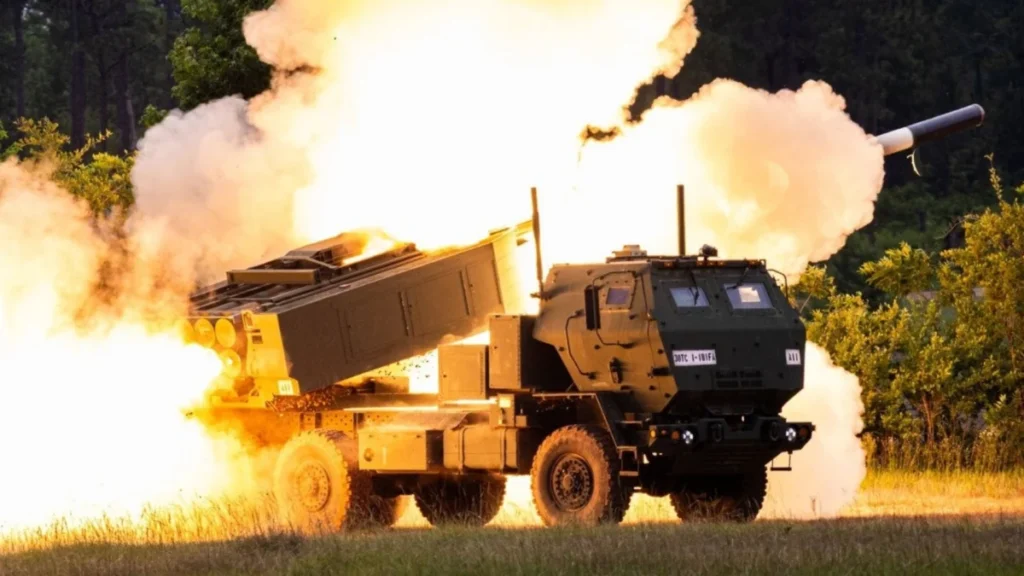
The United States Army has officially commenced the prototype development phase for a groundbreaking autonomous launcher system designed to provide commanders with unparalleled flexibility and expanded firepower capabilities across future battlefields. This ambitious undertaking, central to the Army’s broader Fires modernization strategy, saw the service award a substantial $33.4 million Other Transaction Agreement (OTA) to the Georgia Tech Research Institute (GTRI). GTRI’s critical role will be to integrate the various major components of this innovative system, known as the Common Autonomous Multi-Domain Launcher (CAML). This strategic investment underscores the Army’s commitment to leveraging advanced robotics and artificial intelligence to maintain a decisive edge in an increasingly complex global security landscape.
The contract with GTRI initiates a roughly 36-month development and integration period, at the culmination of which the Army is slated to begin critical Increment Zero demonstrations. These early trials are pivotal, intended to rigorously evaluate the system’s foundational capabilities and inform subsequent development stages. The CAML program represents a significant stride towards realizing the Army’s vision for Multi-Domain Operations (MDO), where seamless integration of capabilities across land, air, sea, space, and cyber domains is paramount. This initiative aims to enhance the Army’s ability to deliver precision fires rapidly and responsively, even in highly contested environments.
The Strategic Imperative: Modernizing Army Fires for a New Era
The pursuit of the Common Autonomous Multi-Domain Launcher is not an isolated endeavor but a cornerstone of the Army’s comprehensive Fires modernization strategy. This strategy is driven by the recognition that potential peer and near-peer adversaries possess increasingly sophisticated long-range precision strike capabilities, robust air defense systems, and advanced electronic warfare tools. In such an environment, traditional, static fire support assets become vulnerable. The Army’s modernization efforts, spearheaded by organizations like Army Futures Command and the Long Range Precision Fires (LRPF) Cross-Functional Team, are focused on developing systems that are more survivable, more adaptable, and capable of operating autonomously or semi-autonomously to reduce risk to human personnel.
The current geopolitical climate, characterized by renewed great power competition, has accelerated the need for transformative military technologies. Lessons from recent conflicts and extensive wargaming simulations have highlighted the critical requirement for mobile, dispersed, and difficult-to-target fire platforms. The CAML is specifically designed to address these challenges by offering a distributed and agile fires solution. It aims to complement existing and future long-range precision fires systems, such as the Precision Strike Missile (PrSM) and the Extended Range Cannon Artillery (ERCA), by providing a flexible launch platform that can deploy a variety of munitions in a timely and survivable manner. This approach enhances the overall lethality and survivability of Army formations by making them less predictable and harder for adversaries to target.
Unpacking CAML: The Power of Modular Architecture
At the heart of the CAML program’s innovation lies its distinctive modular architecture. Unlike conventional launcher designs that are typically monolithic and highly specialized for a specific munition type, CAML eschews this traditional approach in favor of a highly adaptable, two-part system. This design concept envisions the pairing of a common autonomous mobility platform with interchangeable munitions pallets. This fundamental separation of the mobility component from the weapon payload is a game-changer, offering unprecedented flexibility in weapon integration and operational deployment.
The benefits of this modularity are multifaceted. Firstly, it allows engineers to develop and refine mobility platforms and weapons components independently. This parallel development significantly streamlines the design and testing phases, enabling faster iteration and integration of cutting-edge technologies. As new munitions are developed or existing ones are upgraded, they can be rapidly adapted for use with the CAML system by simply designing a compatible pallet, without requiring a complete redesign of the entire launcher system. This ‘plug-and-play’ capability is crucial for maintaining technological superiority in a rapidly evolving threat landscape.
Secondly, the modular approach facilitates contributions from multiple technical partners, each specializing in a particular system. This allows the Army to tap into a broader industrial and academic base, fostering competition and innovation. For instance, one contractor might excel in autonomous mobility systems, while another leads in advanced munition design or mission systems. GTRI, in this context, serves as the vital nexus, ensuring seamless integration between these independently developed components. Their responsibilities span systems engineering, interface integration, advanced modeling and simulation, and comprehensive integrated testing of the prototype. This collaborative model is a departure from traditional single-contractor approaches, promising more robust and diversified technological solutions.
GTRI’s Pivotal Role: Bridging Components into a Cohesive System
The Georgia Tech Research Institute’s role as the primary integrator for CAML is both critical and technically demanding. The central engineering challenge lies in ensuring that disparate components—developed by potentially different entities—can operate harmoniously and effectively as a single, cohesive system. This involves verifying that the launcher’s mobility platform, its mission command and control systems, and its various munitions interfaces communicate and function flawlessly under a wide range of realistic operating conditions. GTRI’s expertise in complex systems integration, robotics, and defense technology makes it an ideal partner for this intricate task.
GTRI will be responsible for developing the integrated acceptance test plan, a comprehensive roadmap for evaluating the prototype’s performance. They will also lead the physical testing phases, which are designed to reveal how well the modular architecture performs once individual components are brought together as part of a complete launcher system. These tests will go beyond individual component verification, focusing on system-level performance, reliability, and operational effectiveness. This includes assessing the autonomous navigation capabilities, the precision of munition deployment, and the robustness of the system’s communication and control protocols in varied terrains and electromagnetic environments.
The institute’s work will lay the groundwork for subsequent development phases. The Army anticipates another major award to follow, specifically covering the Autonomous Mobility Platform, further highlighting the distributed nature of this procurement strategy. Additional prototype awards are also expected to support other CAML components, ensuring a competitive development effort that continuously seeks out the best available technologies. This structured approach gives the Army multiple opportunities to compare and contrast competing technologies during the development cycle, fostering innovation and preventing vendor lock-in. Crucially, it also builds in the possibility of replacing or upgrading individual components without necessitating a complete redesign of the entire launcher, a significant advantage in terms of lifecycle cost and adaptability.
Rigorous Experimentation: Soldiers at the Forefront of Development
The Army’s development strategy for CAML places a strong emphasis on extensive experimentation and direct soldier involvement, recognizing that the ultimate success of any military system hinges on its utility and effectiveness in the hands of its operators. Before any decision is made to move CAML beyond the prototype stage into full production, the Army plans to employ a multi-faceted approach to generate crucial data and feedback. This includes live-fire demonstrations, sophisticated virtual simulations, and, most importantly, direct soldier testing.
Live-fire demonstrations will provide tangible evidence of the system’s lethality and accuracy under realistic combat scenarios, evaluating how various munitions perform when launched from the autonomous platform. Virtual simulations, on the other hand, offer a cost-effective and safe environment to test a vast array of operational parameters, tactics, and environmental conditions that might be difficult or impossible to replicate physically. These simulations will help refine the system’s software, optimize its operational algorithms, and identify potential vulnerabilities.
However, it is the direct involvement of soldiers that is expected to yield the most invaluable insights. Placing prototypes in the hands of future users will provide engineers and program managers with a clearer, more practical understanding of how the system performs outside the controlled confines of a laboratory or simulation environment. Soldier feedback will be instrumental in shaping the launcher’s final requirements, refining its human-machine interface, and influencing its eventual production configuration. This user-centric development approach ensures that CAML will be not just technologically advanced, but also operationally intuitive, reliable, and truly beneficial on the battlefield.
Lt. Gen. Frank Lozano, the Army’s Portfolio Acquisition Executive for Fires, articulated the strategic vision behind CAML, emphasizing its role in fostering rapid learning and experimentation. He stated that the program would enable the service to explore different launcher concepts, ultimately pursuing more adaptable and survivable Fires capabilities. This iterative development process, informed by continuous feedback, is designed to allow the Army to learn quickly, adapt rapidly, and avoid costly mistakes often associated with traditional, monolithic defense acquisition programs.
Broader Implications: Reshaping Future Battlefield Dynamics
The development of the Common Autonomous Multi-Domain Launcher carries significant implications for the future of warfare and the operational dynamics of the U.S. Army. Foremost among these is the enhanced operational flexibility it promises. Autonomous launchers can be dispersed widely across a battlefield, operating independently or in coordinated swarms, presenting adversaries with a much more challenging targeting problem. This distributed lethality increases the survivability of fire assets and complicates enemy reconnaissance and strike efforts.
Furthermore, CAML could significantly impact battlefield logistics and soldier safety. By reducing the number of personnel required to operate and deploy these systems, the Army can minimize human exposure to direct combat risks, especially in highly dangerous forward positions. Autonomous resupply capabilities for munitions, potentially integrated with CAML, could further reduce the logistical footprint and risks associated with maintaining fire support. This shift towards autonomous operations aligns with broader trends in military modernization aimed at reducing human casualties and improving force protection.
The modularity inherent in CAML also has profound economic and strategic implications. The ability to rapidly integrate new technologies and adapt to evolving threats without a complete system overhaul could lead to substantial cost savings over the lifecycle of the system. It also means that the Army can react more swiftly to technological advancements made by adversaries, maintaining a competitive edge. This adaptability is crucial in an era where technological advantage can be fleeting.
While the strategic advantages are clear, the development of autonomous weapon systems like CAML also necessitates careful consideration of ethical frameworks and command-and-control protocols. Discussions around "human-in-the-loop" versus "human-on-the-loop" decision-making, ensuring accountability, and adherence to international humanitarian law are ongoing and form a critical part of the broader conversation surrounding military AI. The Army’s approach, focusing on prototype development and extensive soldier testing, allows for these critical considerations to be addressed iteratively as the technology matures.
Timeline and Future Outlook
The current timeline for CAML development is robust, with GTRI’s 36-month integration phase leading directly into Increment Zero demonstrations. This initial phase, expected to conclude around 2027, will be followed by further competitive prototype awards for the Autonomous Mobility Platform and other key components. The Army’s strategy is explicitly stated: CAML does not represent a production decision at this stage. Instead, the prototype effort is a deliberate process to determine which autonomous and modular technologies can most effectively deliver useful capabilities on the multi-domain battlefield.
The insights gleaned from live-fire tests, virtual simulations, and, crucially, direct soldier feedback will be instrumental in shaping the future trajectory of the program. Should the prototypes prove successful in meeting the Army’s stringent requirements for adaptability, survivability, and lethality, CAML could transition into a full-scale acquisition program, fundamentally transforming how the U.S. Army projects firepower in future conflicts. The Common Autonomous Multi-Domain Launcher is poised to become a cornerstone of the Army’s future Fires capability, embodying the service’s commitment to innovation, agility, and maintaining overmatch against any adversary.