In a significant advancement for the field of condensed matter physics, a team of researchers at the Max Planck Institute for the Structure and Dynamics of Matter (MPSD) has successfully bypassed the traditional limitations of superconducting measurements to reveal the intrinsic "speed limit" of electrical current. By employing electrical pulses lasting only a few picoseconds—trillionths of a second—the team has demonstrated how superconductors behave when pushed to their theoretical breaking point, offering a new window into the quantum mechanics that govern these zero-resistance materials. The study, led by researchers at the Hamburg-based institute, marks a departure from conventional direct-current (DC) testing, which has historically been hampered by thermal and magnetic interference.
Superconductivity represents one of the most profound phenomena in quantum physics. Discovered in 1911 by Heike Kamerlingh Onnes, it describes a state in which a material loses all electrical resistance when cooled below a specific transition temperature. In this state, electricity flows without any energy loss to heat, a property that has enabled technologies ranging from Magnetic Resonance Imaging (MRI) machines to the powerful particle accelerators at CERN. However, this state is notoriously fragile. It can be destroyed by excessive temperature, strong magnetic fields, or, as explored in this latest research, an overabundance of electrical current.
The Microscopic Battle: Cooper Pairs vs. Vortices
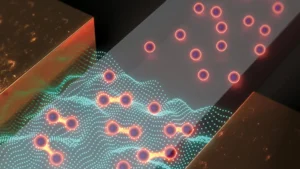
At the heart of superconductivity are Cooper pairs—pairs of electrons that, contrary to their natural tendency to repel one another, become bound together via interactions with the material’s crystal lattice. These pairs move in a coordinated, coherent quantum state, acting more like a singular wave than individual particles. This collective motion allows them to navigate the lattice without scattering, which is the source of electrical resistance in normal metals.
However, every superconductor has a "critical current," a threshold beyond which the superconducting state collapses. In practical applications, this limit is often reached much earlier than theory suggests it should. In Type-II superconductors, which include most high-temperature and technologically relevant materials, the bottleneck is typically caused by "vortices." These are microscopic "tornadoes" of magnetic flux that penetrate the material. When a current is applied, it exerts a Lorentz force on these vortices, causing them to move. This motion creates friction, generates heat, and ultimately breaks the delicate Cooper pairs, reverting the material to a resistive state.
To find the true, fundamental limit of the material—known as the depairing current—scientists must find a way to study the material before these vortices have a chance to interfere. The MPSD team achieved this by "outrunning" the physics of the vortices themselves.
Outrunning the Vortex: The Picosecond Strategy
The breakthrough methodology centers on the disparity between the speed of vortex motion and the speed of the applied electrical pulse. While vortices can move at impressive speeds of tens of kilometers per second, they still require a finite amount of time to accelerate and travel through the material. By applying current in bursts lasting only a few picoseconds, the researchers ensured that the electrical density reached its peak and dissipated before the vortices could move more than a few nanometers.
"Our strategy was to outrun the vortex dynamics," explained Eryin Wang, the lead author of the study. By working on a timescale comparable to the internal dynamics of the superconducting state itself, the team was able to observe the material’s response to "twisting" the phase of the coherent quantum state—an effect Wang likens to winding a spring until it snaps.
When the current is increased to extreme levels over these ultra-short intervals, the "spring" of the quantum phase is wound so tightly that it becomes unstable. This is the point of the depairing current, where the energy of the current itself is sufficient to pull the Cooper pairs apart, regardless of whether vortices are present or moving.
The Ultrafast Experimental Platform
The technical execution of this experiment required an advanced ultrafast electrical transport platform developed at the MPSD. The system utilizes photoconductive switches—semiconducting elements that become conductive only when struck by light. To trigger these switches, the team used a specialized laser system emitting 300-femtosecond green pulses at a wavelength of 515 nanometers.
Once the laser pulse hits the switch, it generates an electrical pulse that travels along a coplanar waveguide—a specialized transmission line designed to maintain the integrity of high-frequency signals. These pulses are then directed through superconducting samples that are meticulously fabricated to be only a few micrometers in size. This miniaturization is essential to ensure that the current density remains uniform and that the data collected reflects the intrinsic properties of the material rather than bulk defects.
Comparative Analysis: NbN vs. YBCO
The researchers focused their investigation on two distinct materials: Niobium Nitride (NbN) and Yttrium Barium Copper Oxide (YBCO). These materials were chosen because they represent the two primary "symmetries" of superconductivity.
NbN is a conventional superconductor with an "s-wave" energy gap. This means that the energy required to break a Cooper pair is relatively uniform in all directions within the material. In the MPSD experiments, NbN exhibited a "hard" limit. It remained robustly superconducting until the current reached a specific, high threshold, at which point the superconductivity collapsed abruptly. This behavior confirmed that in s-wave materials, the transition from a superfluid of Cooper pairs to a resistive state of individual electrons is a sharp, well-defined event when vortex motion is eliminated.
In contrast, YBCO is a high-temperature cuprate superconductor with a "d-wave" energy gap. In these materials, the energy gap is highly directional; in some directions, it is very strong, while in others (known as nodes), it vanishes entirely. The experimental results for YBCO showed a "soft" or progressive weakening of the superconducting state. As the current increased, the resistance rose gradually rather than spiking at a single point. This suggests that the Cooper pairs in the "weaker" directions of the d-wave gap begin to break apart much earlier than those in the "stronger" directions.
This finding is particularly significant for the scientific community, as it provides a direct transport-based measurement of the gap symmetry—a property that usually requires complex spectroscopic techniques to observe.
Chronology of Superconducting Current Research
The journey to this discovery follows a century of progress in understanding the limits of electrical transport:
- 1911: Heike Kamerlingh Onnes discovers superconductivity in mercury; he quickly realizes that high currents destroy the state.
- 1950s: The Ginzburg-Landau theory provides a mathematical framework for the "depairing current," though it remains difficult to measure experimentally in many materials.
- 1957: The BCS theory (Bardeen, Cooper, Schrieffer) explains the microscopic origin of Cooper pairs.
- 1960s-1980s: The discovery of Type-II superconductors and the "flux pinning" method allows for higher practical currents, though still limited by vortex motion.
- 1986: Discovery of high-temperature cuprates (like YBCO) by Bednorz and Müller, introducing the complexities of d-wave symmetry.
- 2010s-Present: Advances in ultrafast spectroscopy and laser-driven materials science at institutes like MPSD begin to allow scientists to probe materials on the femtosecond and picosecond timescales.
Implications for Future Technology and Research
The ability to reach and manipulate the depairing current has far-reaching implications for both fundamental science and practical engineering.
Quantum Computing:
Superconducting qubits are a leading candidate for scalable quantum computers. These qubits rely on the precise control of the superconducting state. Understanding the ultrafast limits of current flow and how Cooper pairs break apart could lead to more resilient qubit designs and faster gate operations, potentially reducing the error rates caused by environmental decoherence.
Optoelectronics:
The research demonstrates that superconductors can be integrated into ultrafast electronic circuits that operate at terahertz frequencies. By using light to trigger electrical pulses in superconductors, engineers could develop a new class of "optically gated" electronics that are orders of magnitude faster than current silicon-based transistors.
High-Field Magnets:
For applications like fusion energy (tokamaks) and next-generation particle colliders, the goal is to push superconductors to carry as much current as possible. While this study focuses on ultrafast timescales, the insights gained about the fundamental limits of NbN and YBCO help materials scientists design better "pinning" centers to prevent vortex motion in long-term DC applications.
Theoretical Physics:
The gradual breakdown observed in YBCO provides new data for theorists working on the "unsolved" mystery of high-temperature superconductivity. Since the pairing mechanism in cuprates is still a subject of intense debate, seeing how these pairs respond to extreme "twisting" of their quantum phase offers vital clues about the forces holding them together.
Conclusion and Future Outlook
"Our results suggest that picosecond transport can provide access to microscopic properties of superconductors, including their gap symmetry, that are not directly available from conventional DC transport," noted Andrea Cavalleri, the research group leader at MPSD.
The team plans to expand their research to include a broader variety of materials, including "iron-based" superconductors and "heavy-fermion" systems. By building a comprehensive map of how different materials respond to ultrafast currents, the researchers hope to uncover universal laws governing the transition from quantum coherence to classical resistance.
Ultimately, this study proves that the "limits" we perceive in materials are often just a matter of the timescale on which we observe them. By looking at the world through the lens of a picosecond, the MPSD team has revealed a hidden landscape of quantum stability, paving the way for a future where electricity can be controlled with the speed and precision of light.