The universe, in its grand design, is often conceived as a symmetrical entity, a concept rarely pondered in daily life but fundamental to our understanding of cosmic dynamics. However, recent research, spearheaded by a team of physicists and astronomers, presents a compelling new study suggesting that the universe might be fundamentally asymmetric or lopsided, implying that its properties are not uniformly consistent across all directions. This groundbreaking finding, recently published in a peer-reviewed paper, introduces a significant "cosmic dipole anomaly" that poses a serious, even existential, challenge to the prevailing "standard cosmological model," widely known as the Lambda-CDM model.
The Bedrock of Modern Cosmology: Isotropic and Homogeneous
At the heart of modern cosmology lies the standard cosmological model, which meticulously describes the dynamics, evolution, and large-scale structure of the entire cosmos. This model is built upon a foundational assumption: that the universe is isotropic and homogeneous. Isotropic means it looks the same in all directions, regardless of the observer’s vantage point. Homogeneous implies that it is uniform when averaged over sufficiently large scales, meaning there are no preferred locations or centers. These twin pillars of cosmic symmetry are crucial, as they allow for a vastly simplified mathematical description of spacetime within Albert Einstein’s theory of general relativity, known as the Friedmann-Lemaître-Robertson-Walker (FLRW) metric. The FLRW description is the mathematical backbone that underpins the Lambda-CDM model, enabling cosmologists to solve Einstein’s complex field equations and model the universe’s expansion, its constituents (dark energy, dark matter, baryonic matter), and its overall evolution from the Big Bang to the present day.
The primary observational evidence supporting this symmetric vision has long been the Cosmic Microwave Background (CMB). Discovered in 1964 by Arno Penzias and Robert Wilson, the CMB is the faint echo of the Big Bang, relic radiation permeating all of space. Its astonishing uniformity across the sky, varying by only about one part in a hundred thousand, has historically instilled great confidence among cosmologists in the isotropic and homogeneous FLRW description. This remarkably smooth radiation field represents the universe approximately 380,000 years after the Big Bang, a snapshot of its infant state when it was a hot, dense plasma before cooling sufficiently for atoms to form and light to travel freely. The near-perfect uniformity of the CMB has served as a powerful testament to the universe’s large-scale order and symmetry.
Cracks in the Cosmic Foundation: The Hubble Tension and Beyond
Despite the elegance and predictive power of the standard cosmological model, recent decades have seen the emergence of several perplexing "tensions" or disagreements in astronomical data. These discrepancies hint at potential inconsistencies within the model or suggest that our understanding of the universe might be incomplete. One of the most widely debated of these is the "Hubble tension," named after Edwin Hubble, whose pioneering observations in 1929 revealed that the universe is expanding.
The Hubble tension manifests as a significant disagreement between measurements of the universe’s expansion rate, known as the Hubble constant (H₀). On one hand, measurements derived from observations of the early universe, primarily from the CMB (e.g., by the Planck satellite), predict a certain expansion rate. On the other hand, direct measurements of the local, more recent universe, using techniques like observing Type Ia supernovae (standard candles) and data from telescopes like the Hubble Space Telescope and satellites like Gaia, yield a consistently higher expansion rate. This discrepancy, which began to solidify in the early 2000s, has grown to a statistically significant level, typically around 4-6 sigma, making it highly unlikely to be a statistical fluke.
While the Hubble tension is a critical challenge, the cosmic dipole anomaly, the subject of the new study, is argued by the authors to be even more fundamental. Unlike the Hubble tension, which primarily concerns the rate of expansion, the dipole anomaly questions the very directionality and symmetry of the universe, striking at the core assumptions of the FLRW metric itself.
Decoding the Cosmic Dipole Anomaly: A Fundamental Test
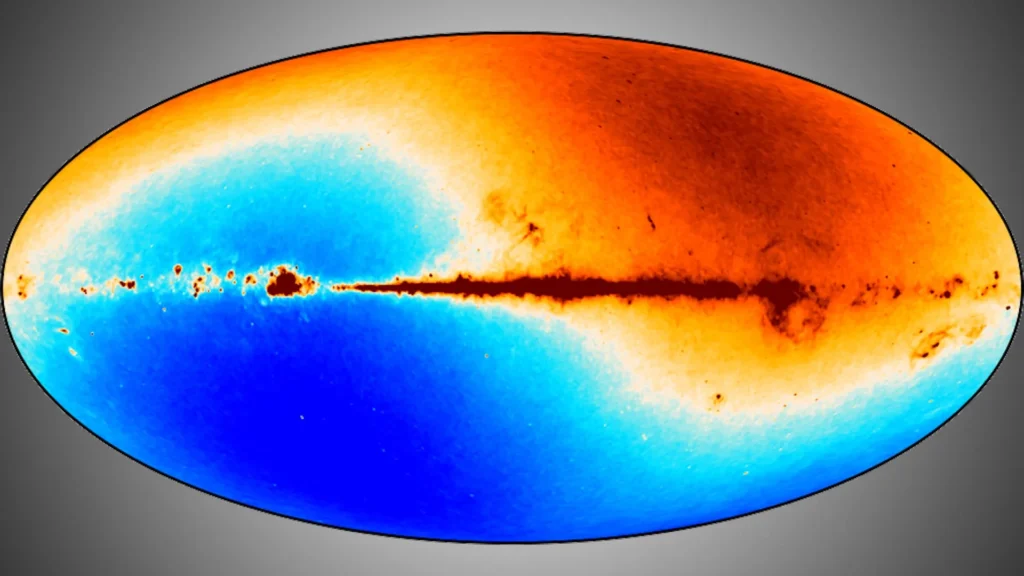
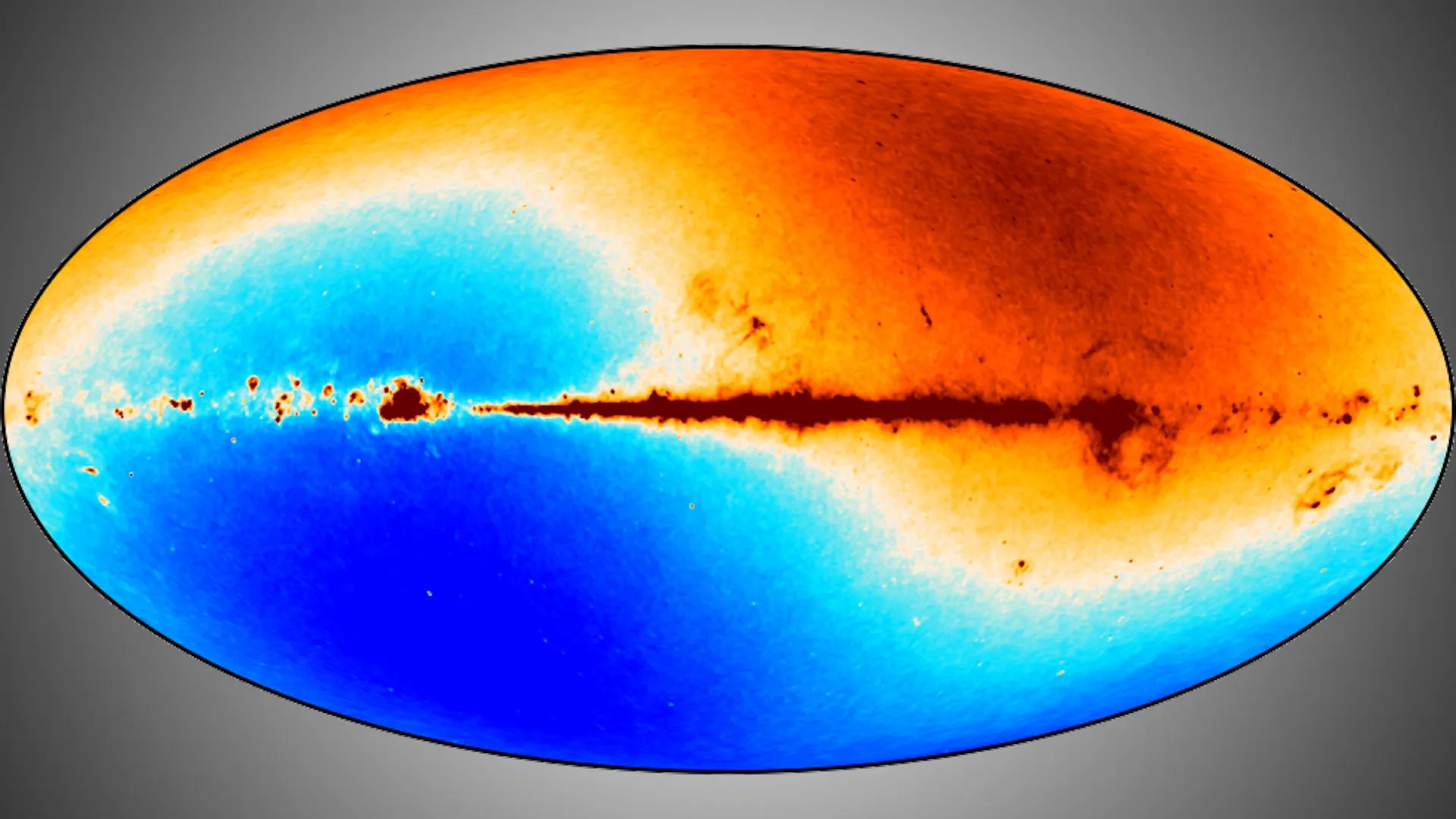
To understand the cosmic dipole anomaly, it’s essential to first revisit the CMB. While the CMB is remarkably uniform, it does exhibit small variations. The most significant of these is the CMB dipole anisotropy. This anisotropy is observed as a slight temperature difference across the sky: one side appears marginally hotter, and the opposite side slightly cooler, by about one part in a thousand. This specific pattern is overwhelmingly attributed to the Earth’s peculiar velocity relative to the CMB rest frame. As our solar system moves through space, we are effectively "rushing" towards one part of the sky, causing the CMB photons coming from that direction to be blue-shifted (appearing hotter), and moving away from the opposite direction, causing photons to be red-shifted (appearing cooler). This phenomenon is analogous to the Doppler effect for sound waves.
Crucially, this CMB dipole, resulting from our local motion, does not inherently challenge the Lambda-CDM model. The model accounts for local motion within a globally isotropic universe. However, if the universe truly conforms to the FLRW description, then this observed CMB dipole should have a corresponding effect on other cosmological observations. Specifically, the observed distribution and properties of distant astronomical sources should also exhibit a similar dipole anisotropy, one that is consistent with our motion relative to the CMB.
The Ellis-Baldwin Test: Probing Universal Symmetry
This critical consistency check was first proposed in 1984 by renowned cosmologists George Ellis and John Baldwin. They posited that if the universe is indeed isotropic on large scales, then the dipole observed in the CMB due to our local motion should be reflected in the sky distribution of distant astronomical sources, such as radio galaxies and quasars. The stipulation for "very distant" sources is vital: nearby objects could exhibit their own clustering patterns that might create a spurious "clustering dipole" unrelated to our motion or the overall cosmic symmetry. By examining extremely remote galaxies and quasars, which represent the universe at earlier epochs and across vast cosmic distances, scientists can probe the universe’s fundamental structure, minimizing the influence of local gravitational perturbations.
The "Ellis-Baldwin test" thus became a powerful theoretical tool. Its premise is straightforward: if the symmetrical FLRW assumption is correct, the observed variation in the CMB temperature across the sky, caused by our motion, must directly correspond to a similar dipole variation in the number counts or luminosities of distant astronomical sources. Consistency between these two independent observations – the CMB’s temperature fluctuations and the distribution of cosmic matter – would strongly support the standard Lambda-CDM model and the underlying FLRW metric. Conversely, any significant discordance would directly challenge these fundamental assumptions, effectively questioning the very basis of our most accepted cosmological framework.
For decades, the data catalogues required to perform this extremely precise test with sufficient statistical power were not available. However, recent advancements in observational astronomy, fueled by increasingly sensitive telescopes and wide-field surveys, have finally provided the necessary high-quality, large-scale datasets.
Confronting the Data: The Universe Fails the Symmetry Test
The new study, which meticulously analyzed these recently available data catalogues, delivers a striking conclusion: the universe fails the Ellis-Baldwin test. The observed variation in the distribution of matter (as traced by distant radio galaxies and quasars) does not align with the variation predicted from the CMB dipole. This discordance suggests that the cosmic dipole anomaly is not merely an observational quirk but a fundamental challenge to the isotropic and homogeneous nature of the universe as described by the FLRW metric.
The robustness of this finding is further bolstered by the consistency of results obtained from different observational platforms and across various wavelengths. The study indicates that the same anomalous result is observed using terrestrial radio telescopes, which probe radio emissions, and satellites observing at mid-infrared wavelengths. This multi-messenger concordance is highly significant because the potential sources of systematic error are quite distinct for different types of telescopes, detectors, and electromagnetic spectrum bands. The fact that independent instruments and methodologies yield the same conclusion strengthens the credibility of the observed anomaly and mitigates concerns that it might be an artifact of a particular instrument or analysis technique.
The cosmic dipole anomaly has, therefore, firmly established itself as a major, albeit largely unacknowledged, challenge to the standard cosmological model. The authors note that the astronomical community has, to a significant extent, chosen to largely ignore this anomaly. This reluctance to fully engage with the problem may stem from its profound implications. Unlike some other cosmological tensions that might be resolvable by minor tweaks to the Lambda-CDM model (e.g., adjusting parameters or adding a new particle), the cosmic dipole anomaly potentially demands a more radical re-evaluation.
Paradigm Shift or Persistent Puzzle? Implications for Fundamental Physics
The implications of the universe failing the Ellis-Baldwin test are truly monumental. If the cosmic dipole anomaly is confirmed and cannot be reconciled within the existing framework, it would necessitate abandoning not just the Lambda-CDM model but potentially the FLRW description itself. This would mean going back to square one, requiring cosmologists to re-examine the most fundamental assumptions about the universe’s large-scale structure and dynamics.
Such a shift would open the door to a plethora of alternative cosmological models. Instead of a perfectly isotropic universe, we might need to consider intrinsically anisotropic models, where spacetime itself possesses a preferred direction or orientation. This would drastically alter the mathematical framework for describing the universe’s expansion, the behavior of gravity on cosmic scales, and potentially even the nature of dark energy and dark matter. It could lead to a rethinking of the early universe, the Big Bang, and the mechanisms that shaped the cosmos we observe today.
The potential for a paradigm shift is immense, impacting not only cosmology but also fundamental physics. It could provide new avenues for exploring modified theories of gravity, alternative dark energy models, or even entirely new physics beyond the Standard Model of particle physics. Such a discovery would fundamentally alter humanity’s scientific worldview, akin to the Copernican revolution or Einstein’s theory of relativity.
The Road Ahead: New Observatories and AI-Driven Discovery
The scientific journey to either resolve or confirm the cosmic dipole anomaly is far from over. An unprecedented avalanche of new data is anticipated from a new generation of sophisticated observatories and satellites. Missions like the European Space Agency’s Euclid satellite, launched in 2023, are designed to map the large-scale structure of the universe with unprecedented precision, providing crucial insights into dark energy and dark matter. NASA’s SPHEREx (Spectro-Photometer for the History of the Universe, Epoch of Reionization, and Ices Explorer) will conduct an all-sky survey in near-infrared light, creating a 3D map of the universe.
Ground-based observatories are also pushing the boundaries of cosmic exploration. The Vera C. Rubin Observatory, with its massive 8.4-meter primary mirror, is set to undertake the Legacy Survey of Space and Time (LSST), providing a panoramic, deep, and fast survey of the entire visible sky. Meanwhile, the Square Kilometre Array (SKA), an ambitious international project, is building the world’s largest radio telescope, promising to revolutionize our understanding of cosmic magnetism, dark energy, and the origins of the universe.
These forthcoming datasets will offer significantly improved statistical power and cover broader swathes of the cosmos with higher resolution and sensitivity. This wealth of information will be critical for scrutinizing the cosmic dipole anomaly further, either revealing its true nature or providing new insights into its origin.
Furthermore, the analysis of such vast and complex datasets is increasingly reliant on cutting-edge computational techniques. The study highlights the potential role of artificial intelligence (AI), particularly machine learning algorithms, in sifting through gigabytes and terabytes of astronomical data. Machine learning can identify subtle patterns, correlations, and anomalies that might elude traditional analytical methods, potentially uncovering new insights into how to construct a new cosmological model that accommodates the observed discrepancies. AI could accelerate the process of model building, testing, and refinement, allowing cosmologists to explore a much wider parameter space for alternative theories.
In conclusion, the cosmic dipole anomaly represents a profound moment in cosmology. It challenges our deepest-held assumptions about the universe’s fundamental nature and symmetry. While the scientific community grapples with these challenging findings, the confluence of new observational capabilities and advanced analytical tools, including AI, promises a thrilling era of discovery. The ultimate impact could be truly immense, fundamentally reshaping our understanding of the universe and our place within its grand, and perhaps lopsided, expanse.