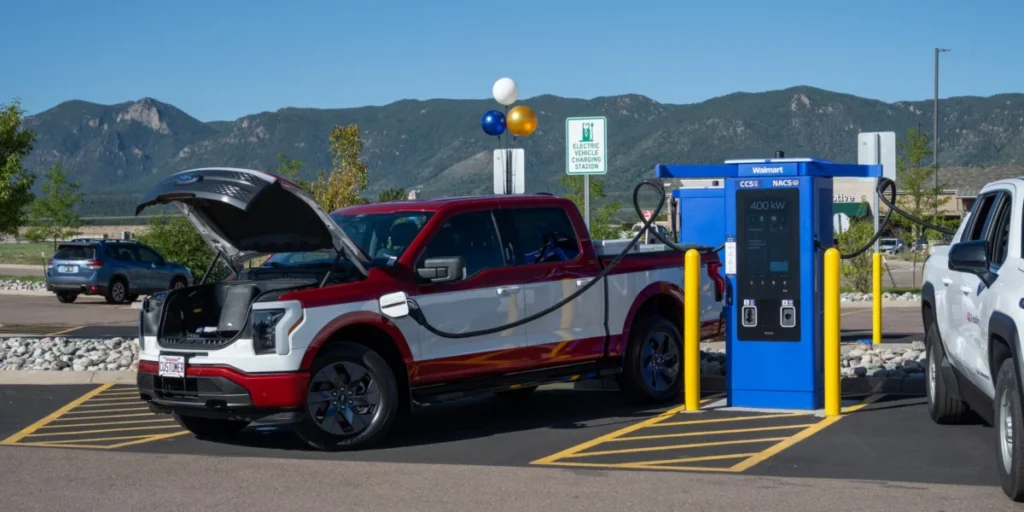
Walmart has opened its 100th company-owned electric vehicle (EV) fast-charging site, marking a significant achievement in its ambitious plan to become a major player in the U.S. EV charging infrastructure. This expansion brings Walmart’s network to 100 locations across 20 states, strategically positioned to enhance the accessibility of EV charging for communities nationwide.
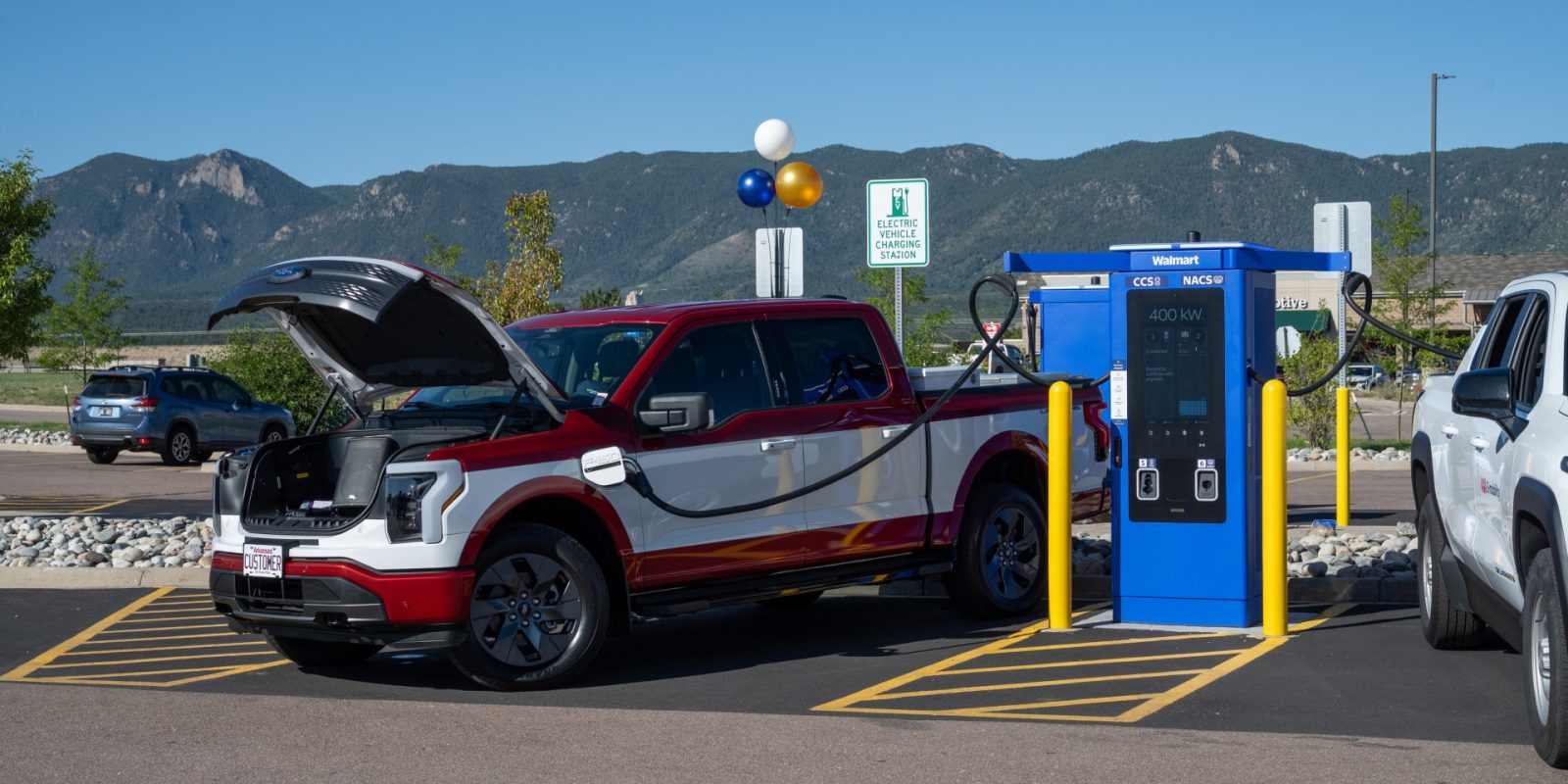
The landmark 100th site is located at the Walmart Supercenter at 16218 Jackson Creek Parkway in Monument, Colorado. This facility features eight charging plugs, comprising four CCS1 and four NACS connectors, capable of delivering up to 400 kilowatts (kW) of power. While current EV technology cannot fully utilize the 400 kW capacity, these high-power chargers are designed to accommodate future advancements and significantly reduce charging times for compatible vehicles.
Shayne Wahlmeier, senior vice president of Walmart Energy, underscored the importance of this milestone. "Reaching 100 sites is an important milestone, and our broad footprint positions us to make EV charging more accessible for communities while expanding the ways we serve our customers," Wahlmeier stated. This expansion aligns with Walmart’s broader strategy to integrate essential services into its retail operations, making everyday life more convenient for its vast customer base.
A Network Built for Speed and Accessibility

The majority of Walmart’s EV charging sites are equipped with a robust setup of eight to 16 charging plugs, typically divided between the widely adopted CCS1 and the emerging NACS standards. The Monument, Colorado location, with its eight-plug configuration, represents a common configuration for many of the network’s sites, balancing capacity with space efficiency.
Walmart is deploying advanced 400 kW chargers from two leading manufacturers: Switzerland-based ABB E-mobility and Italian charger specialist Alpitronic. The specific models in use are ABB’s A400 All-in-One and Alpitronic’s HYC400 Hypercharger. The Monument site, for instance, features ABB hardware. These state-of-the-art chargers are engineered for high-performance charging. ABB’s A400, for example, can simultaneously supply 200 kW to two EVs or deliver the full 400 kW to a single vehicle, optimizing charging speed and efficiency.
Similarly, Alpitronic units at Walmart locations operate with a dual-stall capability. One charger can be equipped with both a CCS1 and a NACS cable, allowing it to serve two vehicles concurrently. Early testing at a Walmart site in McKinney, Texas, demonstrated the impressive capabilities of this network. EV expert Tom Moloughney reported that a GMC Hummer EV successfully drew over 300 kW, achieving a charge from 1% to 53% in just 27 minutes. This swift charging capability is crucial for drivers on the go, transforming charging stops into brief interludes rather than extended waiting periods.
In-House Software Innovation for Seamless User Experience
A key differentiator of Walmart’s EV charging initiative is its proprietary software platform, developed entirely in-house by Walmart Global Tech. While the company sources its charging hardware from leading manufacturers, it retains control over the intelligent software that powers the network. This in-house development allows for a deeply integrated and customizable user experience.
The platform is responsible for a multitude of critical functions, including:
- Network Connectivity: Ensuring reliable communication between chargers and the central system.
- Real-Time Data Management: Providing live updates on charger availability, operational status, and performance metrics.
- Payment Processing: Facilitating secure and efficient transactions for charging sessions.
- Information Dissemination: Pushing station data to popular mapping and EV charging applications such as Apple Maps, Google Maps, PlugShare, ChargeHub, and Chargeway.
Crucially, the customer-facing interface is integrated directly into the existing Walmart mobile application. This eliminates the need for drivers to download separate, specialized charging apps, streamlining the process. Users can effortlessly locate available chargers, initiate charging sessions, manage payments, and monitor their vehicle’s charging progress all from their smartphone.
Furthermore, Walmart is incentivizing its Walmart+ members with discounts on charging, adding another layer of value for its loyal customer base. While the current system emphasizes app-based payments, Walmart has indicated that additional payment methods will be introduced as the network expands. This is a vital consideration, as a diverse range of payment options, including the ability to use credit cards directly at the charging station, will enhance convenience for a broader spectrum of EV drivers.
"When a customer pulls into a Walmart to charge, we want the experience to feel as reliable and effortless as the rest of their shopping trip," commented Adam Happel, general manager of Walmart Retail EV Charging. "We’re proud to reach 100 sites, but our focus remains on building a network customers can count on every time they charge with us." This customer-centric approach highlights Walmart’s commitment to integrating EV charging seamlessly into the overall shopping experience.
A Strategic Expansion with Far-Reaching Implications

Walmart’s foray into EV charging is not merely a side project; it represents a strategic expansion into a rapidly growing market, leveraging its extensive retail footprint. The company initially announced plans to install chargers at thousands of Walmart and Sam’s Club stores by 2030. With over 5,200 U.S. locations and the fact that approximately 90% of Americans live within a 10-mile radius of a Walmart store, the retail giant is exceptionally well-positioned to develop one of the nation’s largest and most accessible fast-charging networks.
The implications of this rapid expansion are far-reaching for both consumers and the broader EV ecosystem. By making fast charging more ubiquitous, Walmart is directly addressing one of the primary barriers to EV adoption: range anxiety and the availability of convenient charging infrastructure. The integration of charging stations into existing retail locations means drivers can simultaneously charge their vehicles while shopping for groceries, running errands, or enjoying other amenities, effectively turning charging time into productive time.
Addressing the Growing Demand for EV Infrastructure
The growth of the EV market has been exponential in recent years. According to the International Energy Agency (IEA), global EV sales surpassed 10 million in 2022, and projections indicate continued robust growth. This surge in electric vehicles necessitates a corresponding expansion of charging infrastructure. Government initiatives and private sector investments are both playing crucial roles in building out this network.
Walmart’s investment is a significant contribution to this effort. By partnering with leading hardware manufacturers and developing its own sophisticated software, the company is demonstrating a commitment to not only quantity but also quality and user experience. The inclusion of both CCS1 and NACS connectors at its stations ensures compatibility with a wide range of current and future EV models, further solidifying its position as a versatile charging provider.

Background and Context
The journey to 100 charging sites represents a phased rollout and continuous learning process for Walmart. The initial installations likely involved pilot programs and strategic site selection to optimize placement based on traffic patterns, customer demographics, and electricity availability. The company’s announcement of its charging network plans in 2021 signaled a serious commitment to the EV transition, aligning with broader corporate sustainability goals and the increasing consumer demand for electric transportation.
The decision to use 400 kW chargers, even if they are currently underutilized by most vehicles, reflects a forward-thinking approach. This investment ensures that the infrastructure will remain relevant and capable as battery technology advances and EV manufacturers introduce vehicles with faster charging capabilities. This proactive stance minimizes the need for costly upgrades in the near future and positions Walmart as a long-term provider of essential EV services.
Broader Impact and Analysis
Walmart’s aggressive expansion into EV charging has several key implications:

- Increased Accessibility: By placing chargers at 100 locations across 20 states, Walmart is making EV charging more convenient for a larger segment of the population, particularly in areas where public charging infrastructure might be less developed.
- Competitive Landscape: This move intensifies competition within the EV charging market, potentially driving down costs and improving service quality for consumers. Other retailers and fuel providers are likely to accelerate their own charging infrastructure plans in response.
- Consumer Behavior: The integration of charging into shopping trips can influence consumer behavior, making EV ownership more appealing to a wider demographic by reducing perceived inconveniences.
- Grid Impact: As the network grows, managing the increased electricity demand will become a consideration for local utility providers. Smart charging technologies and grid integration will be crucial to ensure a stable power supply.
- Standardization: The dual-use of CCS1 and NACS connectors at Walmart sites reinforces the ongoing transition towards the NACS standard in North America, driven by major automakers and charging network providers.
The success of Walmart’s charging network will hinge on its ability to maintain reliability, offer competitive pricing, and continue to innovate its user experience. As the company continues to expand its footprint, its impact on the acceleration of EV adoption in the United States is poised to be substantial. The company’s commitment to providing a seamless and accessible charging experience directly addresses critical consumer needs and positions Walmart as a vital enabler of the electric mobility revolution.
The continued rollout of these charging stations is not just about providing a service; it’s about Walmart embedding itself into the evolving landscape of transportation and energy, demonstrating a clear vision for its role in a sustainable future. As more drivers transition to electric vehicles, the availability of reliable and fast charging at familiar retail locations like Walmart will undoubtedly play a pivotal role in their decision-making process and daily driving experience.