In a landmark development for the field of quantum photonics, researchers at the University of Technology Sydney (UTS) have successfully demonstrated a sophisticated method for controlling quantum light sources by manipulating atomically thin layers of hexagonal boron nitride (hBN). The team’s breakthrough, which involves the precise twisting of these layers to create a "twistable" platform, offers a significant leap forward in the tunability of quantum emitters. These microscopic light sources are considered the fundamental building blocks for the next generation of quantum technologies, including ultra-secure communications, high-speed quantum computing, and biological sensors with unprecedented sensitivity.
The research, led by Dr. Angus Gale and supervised by Professor Igor Aharonovich, addresses one of the most persistent challenges in quantum physics: the inability to reliably "tune" or adjust the properties of light emitted by solid-state materials. By utilizing the unique structural properties of hBN, a two-dimensional material often referred to as "white graphene," the UTS team has provided a new "lever" for scientists to manipulate the quantum world at a granular level.
The Science of Twistronics and Quantum Emitters
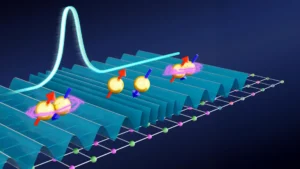
At the heart of this discovery is a concept known as "twistronics"—a field of condensed matter physics that explores how the mechanical rotation of two-dimensional lattices can fundamentally alter the electronic and optical properties of a material. While twistronics has been famously applied to graphene to create superconductivity, its application to quantum light sources in hexagonal boron nitride represents a novel frontier.
Hexagonal boron nitride is a van der Waals material consisting of nitrogen and boron atoms arranged in a honeycomb lattice. Because the bonds between the layers are relatively weak, researchers can isolate single atomic sheets. Within these sheets, naturally occurring or engineered "defects"—missing atoms or substitutions—act as quantum emitters. These emitters produce single photons, the smallest possible units of light, which can carry quantum information.
The UTS team found that by stacking two layers of hBN and rotating them at specific angles, they could exert a profound influence on these emitters. Dr. Gale noted that the magnitude of the change in light color and wavelength was far greater than what is typically achievable through other tuning methods, such as mechanical strain or electrical fields. This discovery suggests that the "twist" degree of freedom is perhaps the most powerful tool currently available for engineering quantum light.
A Breakthrough in Material Manipulation
The methodology employed by the UTS researchers differs significantly from traditional semiconductor manufacturing. In conventional quantum systems, such as those based on diamond or silicon carbide, the quantum emitters are embedded within a rigid, three-dimensional crystal lattice. Once the material is grown, the properties of the emitters are largely fixed. Adjusting them requires extreme external pressures or temperatures, which are often impractical for integrated technology.
"You can’t really do that with traditional materials," Dr. Gale explained. "We are leveraging the fact that hexagonal boron nitride is layered. We can pick it up, stack it, twist it, and use that twist to modify the emitters."
During the experimental phase, the researchers utilized a process of repeatedly lifting, rotating, and restacking the hBN layers. This iterative approach allowed them to observe the shifting emission spectra in real-time. Unlike previous studies that produced a device at a fixed angle, this "dynamic" manipulation proved that the properties of the light could be continuously and predictably tuned. The team’s ability to "restack" the material also points toward a potential for reconfigurable quantum devices—hardware that can be adjusted after fabrication to meet specific operational requirements.
The Cheese Slice Analogy: Understanding Layered Structures
To illustrate the complexity and potential of their work, Dr. Gale utilized a culinary analogy, comparing hBN to a stack of cheese slices. In a solid block of cheese, the interior is inaccessible and immutable without destroying the structure. However, with slices, one can peel them apart, change their orientation, and reassemble them to create entirely different interactions between the layers.
In the context of quantum physics, these "interactions" refer to the way the atomic lattices of the two layers overlap. When two hexagonal grids are twisted relative to one another, they create a Moiré pattern—a new, larger periodic structure. This Moiré superlattice creates a unique local environment for the quantum emitters, shifting their energy levels and, consequently, the wavelength of the light they emit.
Professor Igor Aharonovich emphasized that this interaction is what makes 2D materials so revolutionary. "You can take two layers that don’t do much on their own, put them together at a specific angle, and suddenly you have a completely different system," he said. This emergent behavior is a hallmark of quantum materials and is the primary driver behind the global interest in hBN.
Chronology of Development and Research Context
The UTS breakthrough is the latest in a decade-long global effort to harness hexagonal boron nitride for quantum applications. The timeline of this research field highlights the rapid evolution of the material’s status:
- 2010–2012: Initial focus on hBN primarily as an insulating substrate for graphene due to its atomic smoothness and lack of dangling bonds.
- 2015–2016: Discovery of bright, room-temperature single-photon emitters in hBN. This was a "eureka" moment for the physics community, as most other quantum emitters (like those in diamond) require cryogenic cooling to operate effectively.
- 2018–2020: Researchers begin exploring "Strain Engineering," using mechanical stretching to tune hBN emitters. While successful, the range of tuning remained limited.
- 2022–2023: The UTS team begins experimenting with the "twist" degree of freedom, moving beyond static stacks to dynamic, rotatable interfaces.
- 2024: The publication of the current findings, demonstrating that twisting provides a significantly larger tuning range than previously thought possible.
This progression shows a shift from discovering natural properties to active, precision engineering of the material’s quantum output.
Technical Implications for Quantum Computing and Communications
The ability to tune quantum light sources has profound implications for the technical viability of quantum networks. One of the primary hurdles in quantum communication is the "indistinguishability" problem. For two quantum bits (qubits) to interfere and perform logic operations or be used in entanglement-based protocols, the photons they emit must be identical in color and shape.
Because of manufacturing variances, two quantum emitters are rarely identical. By using the twisting method developed at UTS, engineers could theoretically "tune" disparate emitters until their outputs match perfectly. This would allow for the scaling of quantum networks, where multiple nodes must communicate with high fidelity.
In the realm of cybersecurity, this technology supports the development of Quantum Key Distribution (QKD). QKD uses single photons to create encryption keys that are mathematically impossible to hack. Tunable hBN emitters could lead to more robust and portable QKD devices that operate at room temperature, making secure quantum communication accessible for mobile devices and satellite links.
Broader Impact: Healthcare, GPS, and Beyond
Beyond computing, the UTS research has significant ramifications for quantum sensing. Quantum sensors use the sensitivity of emitters to their environment to measure physical quantities with extreme precision.
- Healthcare: Tunable hBN sensors could be integrated into lab-on-a-chip devices to detect minute magnetic fields or chemical changes within single biological cells. This could lead to earlier diagnosis of diseases or more precise drug delivery monitoring.
- Navigation and GPS: Quantum sensors are being developed to provide highly accurate positioning data in environments where GPS signals are blocked or jammed, such as underwater or in dense urban canyons. The portability of hBN-based systems makes them ideal candidates for this "quantum PNT" (Positioning, Navigation, and Timing) technology.
- Material Science: The "twistable" platform itself is a tool for fundamental physics, allowing researchers to probe the nature of light-matter interactions in ways that were previously impossible.
Expert Analysis and Future Outlook
The work at UTS is being viewed by the scientific community as a critical bridge between laboratory curiosity and industrial application. While the "twist" method is currently a manual or semi-automated process in a cleanroom environment, the proof-of-concept opens the door for automated nanomanufacturing.
The next challenge for Dr. Gale and Professor Aharonovich will be the integration of these twisted layers into "on-chip" photonic circuits. To be useful in a computer or a smartphone-sized sensor, these twisted hBN stacks must be coupled with waveguides and detectors on a silicon chip.
"Rather than trying to make hBN defects behave like traditional solid-state hosts, we took advantage of hBN’s own strength: its thin, layered, twistable structure," Gale noted. This philosophy of "working with the material rather than against it" is likely to define the next era of quantum materials research.
As nations continue to invest billions into the "Quantum Race"—with the United States, China, and the European Union all launching major initiatives—the innovations coming out of Australian institutions like UTS highlight the importance of international collaboration and fundamental material science. The ability to control light at the atomic level is no longer a theoretical dream; it is becoming a tangible tool for the technological revolution of the 21st century.
The UTS study not only provides a new method for tuning light but also reinforces the status of hexagonal boron nitride as a premier material for the quantum age. With its ability to operate at room temperature and its inherent flexibility, hBN, through the lens of twistronics, is set to become the "silicon" of the quantum photonics era.