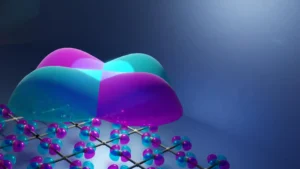
In a significant advancement for the field of condensed matter physics, an international team of researchers has uncovered evidence of altermagnetism in ultrathin films of ruthenium dioxide, a material previously categorized as nonmagnetic in its bulk form. The study, published in the journal Science Advances, suggests that the magnetic properties of quantum materials can be fundamentally altered by manipulating their physical dimensions and applying atomic-scale pressure, known as lattice strain. This discovery offers a potential roadmap for the development of next-generation spintronic devices, which could lead to computer memory that is significantly smaller, faster, and more energy-efficient than current technologies.
The research was led by Ming Yi, an associate professor of physics and astronomy at Rice University, in collaboration with Bharat Jalan from the University of Minnesota and Milan Radovic from the Paul Scherrer Institute in Switzerland. By focusing on ruthenium dioxide ($RuO_2$) at the scale of just a few atomic layers, the team successfully demonstrated that the material exhibits a unique "spin texture" characteristic of altermagnetism—a third branch of magnetism that was only theoretically proposed in recent years.
The Emergence of Altermagnetism in Quantum Materials
To understand the significance of this discovery, it is necessary to contextualize altermagnetism within the broader history of magnetic research. For decades, magnetism was largely divided into two primary categories: ferromagnetism and antiferromagnetism. Ferromagnets, such as the common iron magnet, feature electron spins that align in the same direction, creating a strong external magnetic field. While useful, these external fields cause "crosstalk" between neighboring bits in computer memory, limiting how closely they can be packed together.
Antiferromagnets, conversely, feature spins that point in opposite directions, effectively canceling each other out. This lack of an external magnetic field allows for higher packing density, but the internal magnetic states are notoriously difficult to manipulate and measure for data storage purposes.
Altermagnetism represents a "third way." It combines the most desirable traits of both previous forms: it produces no net external magnetic field (like an antiferromagnet), yet it possesses spin-polarized electronic bands (like a ferromagnet). This unique combination allows for the high-speed manipulation of data without the interference caused by stray magnetic fields. While ruthenium dioxide was among the first candidates proposed for this state, initial experiments on bulk samples—large, naturally occurring or lab-grown crystals—yielded no evidence of magnetic behavior, leading to a prolonged scientific debate.
Chronology of the Discovery and the Ruthenium Dioxide Debate
The quest to identify altermagnetism in ruthenium dioxide has been a multi-year journey marked by conflicting reports and theoretical challenges. The timeline of this discovery highlights the evolution of the field:
- 2019-2021: Theoretical Predictions: Theoretical physicists began publishing papers suggesting that certain materials with specific crystal symmetries, including $RuO_2$, could host a new magnetic state. These predictions sparked a global race to confirm the existence of altermagnetism.
- 2022: The Bulk Material Consensus: Various research groups conducted high-precision measurements on bulk ruthenium dioxide. These studies consistently failed to find the expected magnetic signatures, leading many in the community to conclude that the material was inherently nonmagnetic.
- 2023: Shifting the Focus to Thin Films: Recognizing that the properties of quantum materials can change drastically at the nanoscale, the team led by Ming Yi and Bharat Jalan decided to investigate $RuO_2$ in its ultrathin form.
- 2024: Experimental Breakthrough: Using advanced spectroscopy at the Paul Scherrer Institute, the team identified the specific spin textures required to confirm altermagnetism in films only a few nanometers thick.
"Ruthenium dioxide was one of the first materials to be proposed as an altermagnetic candidate, but studies on its bulk form didn’t return evidence of magnetism," explained Ming Yi. "Our research shows that its ultrathin form, on the other hand, may be the key in making it magnetic."
Experimental Methodology: Spin-Resolved Spectroscopy
The researchers achieved their results by synthesizing high-quality ultrathin films of $RuO_2$ using molecular beam epitaxy, a process that allows for the growth of materials one atomic layer at a time. These films were then subjected to spin-resolved angle-resolved photoemission spectroscopy (spin-ARPES).
Spin-ARPES is a highly specialized technique that uses high-energy photons from a synchrotron light source to knock electrons out of a material. By measuring the kinetic energy, the angle at which the electrons exit, and their spin orientation, scientists can reconstruct the "spin texture" of the material’s electronic structure.
Yichen Zhang, the study’s first author and a recent Rice University graduate, noted the importance of the experimental conditions. "After analyzing our measurements, including informing our interpretation with theoretical calculations, we found that, in our experimental conditions, the ruthenium dioxide shows spin textures consistent with unconventional magnetism," Zhang said. "This suggests that bulk and ultrathin ruthenium dioxide, under the right conditions, may have distinctly different magnetic properties."
The data revealed that the electronic bands were split according to their spin—a hallmark of magnetism—despite the material having zero net magnetization. This provided the "smoking gun" evidence for altermagnetism that had eluded previous researchers working with bulk samples.
Atomic Strain as a Magnetic Tuning Knob
Perhaps the most consequential finding of the study is the role of lattice strain in inducing magnetism. Lattice strain occurs when a thin film is grown on a substrate with a slightly different atomic spacing. To fit onto the substrate, the atoms in the $RuO_2$ film must stretch or compress, creating internal pressure that alters the material’s electronic environment.
The team found that the altermagnetic signature was only present when the $RuO_2$ lattice was strained. In unstrained samples, the electron spins remained disordered, mimicking the nonmagnetic behavior of the bulk material.
"The strain-dependent nature suggests that we may be able to use lattice strain as a tuning knob to induce or control altermagnetism," Zhang added. This insight is critical because it suggests that magnetism is not just an inherent property of the material but a state that can be engineered. By precisely controlling the degree of strain, researchers could theoretically "turn on" or "turn off" magnetic properties at will, or even modulate the strength of the magnetic response.
Implications for Spintronics and Future Computing
The discovery of strain-controlled altermagnetism in $RuO_2$ has profound implications for the field of spintronics. Traditional electronics rely on the flow of electrical charge (electrons) to process information. Spintronics, however, utilizes the "spin" of the electron—an intrinsic angular momentum—as an additional degree of freedom.
The integration of altermagnetic materials into computer architecture could lead to several technological leaps:
1. Ultra-High-Density Memory
Because altermagnets do not produce stray magnetic fields, individual memory cells (bits) can be placed much closer together without interfering with one another. This could lead to a dramatic increase in the capacity of Random Access Memory (RAM) and hard drives.
2. Enhanced Processing Speeds
Altermagnetic materials allow for much faster switching of magnetic states compared to ferromagnets. This could enable processors to operate at terahertz frequencies, far surpassing the gigahertz limits of current silicon-based technology.
3. Energy Efficiency
One of the primary challenges in modern computing is heat generation. Spintronic devices theoretically require much less energy to flip a bit than charge-based devices, which would reduce power consumption in massive data centers and extend the battery life of mobile electronics.
4. Non-Volatile RAM
The stability of the altermagnetic state suggests that it could be used to create non-volatile memory that retains data even when the power is turned off, combining the speed of RAM with the persistence of a solid-state drive.
A New Frontier in Quantum Material Synthesis
The success of the collaboration between Rice University, the University of Minnesota, and the Paul Scherrer Institute underscores the necessity of interdisciplinary work in quantum research. The high-quality material preparation performed by Jalan’s team at Minnesota was essential for providing the "clean" samples required for sensitive measurements, while the advanced spectroscopy at Radovic’s facility in Switzerland allowed for the visualization of the electron spins.
Ming Yi emphasized the complexity of the task: "The high-quality material prep and the careful measurement protocol were critical to our observation of the correct electron spin properties. Through this, we were able to determine not only the magnetic state symmetries but a potential way to manipulate it in next-generation quantum materials."
The study also serves as a cautionary tale for the scientific community regarding "nonmagnetic" materials. It suggests that many materials previously dismissed as inert may harbor hidden quantum states that only emerge under specific conditions of dimensionality or mechanical stress.
Funding and Institutional Support
The research was supported by several major scientific funding bodies, reflecting the high priority placed on quantum material research by the U.S. government and private foundations. Funding was provided by the U.S. Department of Energy (DOE) under grants DE-SC0026179, DE-SC0020211, and DE-SC0024710. Additional support came from the Gordon and Betty Moore Foundation’s EPiQS Initiative (GBMF9470) and the Robert A. Welch Foundation (C-2175).
As researchers move forward, the focus will likely shift toward integrating these ultrathin ruthenium dioxide films into functional circuits. The ability to control magnetism via lattice strain opens a new chapter in material science, where the physical "stretching" of an atom can dictate the flow of information in a computer chip. While commercial applications may be years away, the identification of this "third magnetism" in a common oxide marks a pivotal moment in the quest for the next generation of electronics.