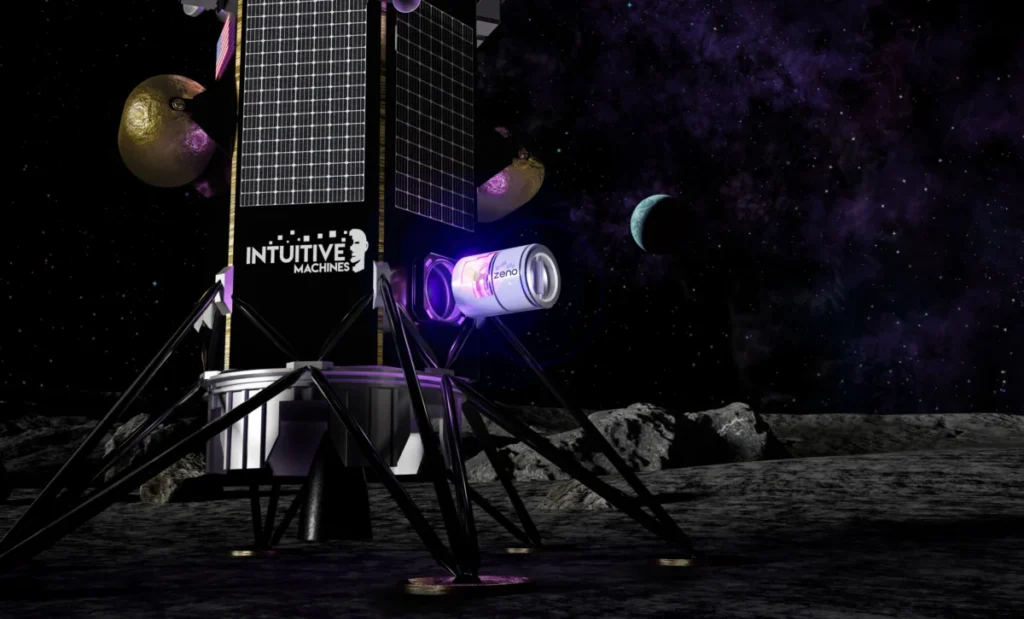
The ambitious roadmap NASA is meticulously charting for future space exploration, particularly missions involving nuclear power and propulsion, faces a significant obstacle: cost. This sentiment was underscored by a leading voice at the U.S. Space Nuclear Industry Symposium, who highlighted the financial realities that could impede progress towards establishing a sustained human presence on the Moon and venturing further into the solar system.
The Harsh Realities of Lunar Survival
Vince Bilardo, executive director of nuclear space programs for Intuitive Machines, a Houston-based aerospace company, articulated the stark challenges inherent in lunar operations. "The lunar surface at the south pole, where we want to land, is a very challenging environment where you need to be able to survive the lunar night," Bilardo stated during the symposium. The long, frigid lunar nights, which can last for weeks, necessitate a reliable and continuous power source to keep critical systems operational and protect sensitive equipment from extreme temperature fluctuations.
To address this fundamental requirement, Bilardo emphasized the critical role of Radioisotope Power Systems (RPS), specifically those designed as "survive-the-night generators." These systems leverage the heat generated by the radioactive decay of specific isotopes to produce electricity, offering a robust solution for environments where solar power is unavailable for extended periods.
A New Approach to Lunar Power: Americium Over Plutonium
Intuitive Machines is at the forefront of developing such a system. In 2023, the company, as part of a multi-company team led by Zeno Power, was awarded a $15 million contract by NASA. This funding is earmarked for the development of a radioactive generator designed for integration into lunar landers. A key innovation in this project is the planned use of americium-241 as the primary isotope, a departure from NASA’s historical reliance on plutonium-238.
For decades, plutonium-238 has been the workhorse for powering NASA’s Multi-Mission Radioisotope Thermoelectric Generators (MMRTGs), which have been instrumental in the success of deep-space missions, most notably the Mars rovers. These MMRTGs convert the heat from plutonium decay into electricity, providing a consistent and long-lasting power source for scientific instruments and operational systems in the harsh vacuum of space. However, the availability of plutonium-238 is a growing concern.
"It is produced by the Department of Energy for NASA’s outer planetary deep space science exploration missions, and we do not believe that plutonium 238 is going to be made available in sufficient quantities for the number of commercial generators we would need to support Moon Base," Bilardo explained. This statement directly addresses NASA’s ambitious objective to establish the foundational elements of a lunar surface base by 2030. The projected scale of lunar operations, encompassing sustained human presence and extensive scientific research, will demand a significantly larger and more consistent supply of radioisotope power than currently anticipated for plutonium-238.
The High Price of Americium and the Need for Collaboration
The shift towards americium-241, while offering a potential solution to the plutonium shortage, introduces its own set of challenges, chief among them being its substantial cost. "Americium is expensive," Bilardo acknowledged, highlighting the economic barrier. "And there’s work that needs to be done across government, NASA, [the Department of Energy] and commercial industry to try to drive the price down for that material if we’re going to be able to use it in a sustainable fashion on the lunar surface."
This call for collaborative action underscores a critical pathway forward. Reducing the cost of americium will likely require concerted efforts in optimizing its production, refining extraction and processing techniques, and potentially exploring new avenues for its sourcing. Without a more economically viable supply chain, the widespread deployment of americium-based power systems on the Moon could remain prohibitively expensive.
Beyond the material cost, another significant hurdle identified by Bilardo is the lack of a framework for insuring or indemnifying private commercial missions that carry radioactive materials. This regulatory and financial gap presents a substantial risk for commercial entities looking to develop and operate lunar assets. Establishing clear guidelines and mechanisms for risk management and liability will be essential to foster private investment and participation in space nuclear initiatives.
NASA’s Commitment to Lunar Nuclear Infrastructure
The urgency of these challenges is recognized by NASA itself. Nujoud Merancy, NASA’s Moon Base chief architect, echoed Bilardo’s sentiments during the same panel discussion, emphasizing the agency’s commitment to facilitating the use, production, and indemnification of these vital materials.
"Uncovering these production gaps is where we need to focus," Merancy stated. Her remarks highlighted the proactive stance NASA is taking to address the multifaceted issues surrounding space nuclear power. "And being able to do things like incentivizing things to get launched, to work through the production, to work through the launch indemnification – we have to start attacking these problems. And americium is one that comes up frequently" in the context of lunar base planning.
This indicates that NASA is not only aware of the logistical and economic complexities but is actively seeking solutions. Incentivizing the development of production capabilities, streamlining the launch process for missions involving radioactive materials, and establishing robust indemnification policies are all critical components of a comprehensive strategy to enable lunar nuclear power. The recurring mention of americium suggests it is a primary focus for near-term lunar power solutions.
A National Imperative: Accelerating In-Space Nuclear Capabilities
The drive towards advanced space nuclear technologies extends beyond lunar ambitions and is viewed as a national priority. Aaron Miles, coordinator for strategic capabilities at the White House Office of Science and Technology Policy, outlined the administration’s aggressive timeline for testing in-space nuclear power and propulsion systems.
"The Trump administration wants to see initial tests of in-space nuclear power and propulsion in the next two years," Miles announced. This ambitious goal reflects a strategic understanding of the transformative potential of nuclear technology for space exploration and national security.
Miles further elaborated on specific upcoming missions that exemplify this commitment. In addition to the planned fission reactor for the Moon Base, slated for a 2030 launch, he referenced "Space Reactor-1 Freedom." This nuclear-electric spacecraft is scheduled for a 2028 launch and is designed to transport three scientific helicopters to Mars. Such missions will not only test the viability of nuclear propulsion and power generation in deep space but also enable entirely new classes of scientific investigations on other planets.
"We believe the general success of American space nuclear power efforts may depend on making this significant achievement during this term," Miles concluded, underscoring the perceived importance of these near-term milestones for solidifying the United States’ leadership in space nuclear technology.
Broader Implications: The Dawn of a New Era in Space Exploration
The convergence of these developments signals a potential paradigm shift in space exploration. Nuclear power offers the promise of significantly extending the reach and duration of human and robotic missions. For lunar bases, it enables sustained operations through the long lunar nights, supporting research, resource utilization, and the eventual establishment of a permanent human presence.
On Mars, nuclear propulsion could drastically reduce transit times, opening up possibilities for more frequent crewed missions and the transport of larger payloads. Nuclear power systems would also provide the robust energy needed for advanced surface operations, including the powering of habitats, rovers, and scientific instruments.
The challenges of cost, production, and regulation are not trivial, but the clear commitment from both NASA and the White House suggests a determined effort to overcome them. The symposium served as a critical platform for stakeholders from government, industry, and academia to converge on these complex issues, fostering collaboration and charting a course toward a future where nuclear power is an indispensable tool for humanity’s expansion into the cosmos. The success of these initiatives will not only depend on technological innovation but also on effective policy-making and strategic investment to ensure that the promise of nuclear power in space can be fully realized. The journey to the Moon and beyond is increasingly powered by a nuclear future, and the industry is actively grappling with the significant financial and logistical foundations required to make that future a reality.