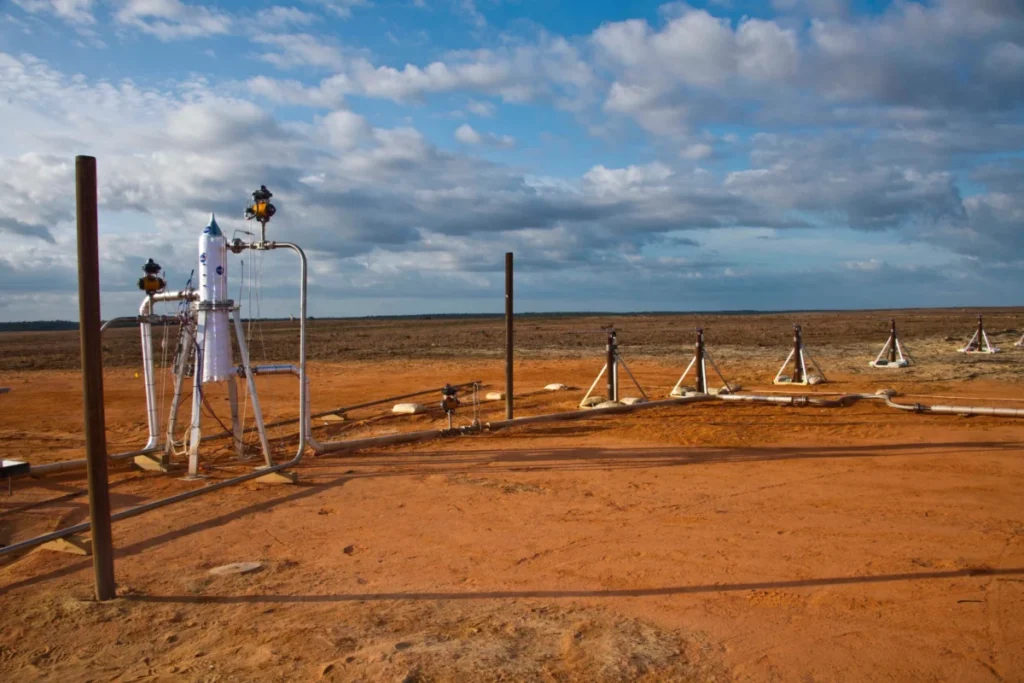
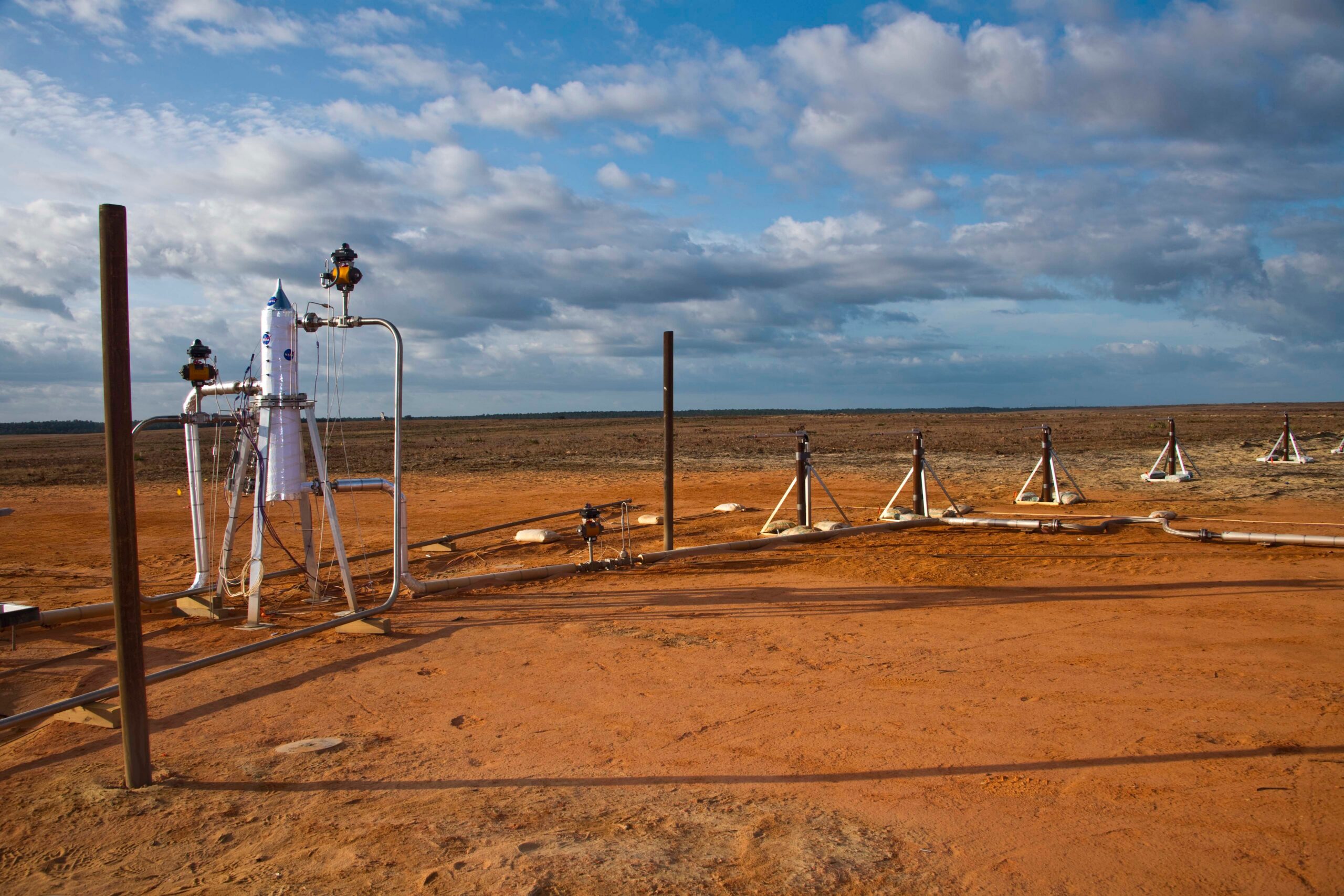
NASA is nearing the conclusion of a comprehensive test campaign at Eglin Air Force Base in Florida, meticulously simulating rocket explosions fueled by liquid methane and liquid oxygen. The initiative, slated to wrap up by mid-September, aims to fundamentally update launch safety protocols and define critical keep-out zones for future rocket launches. These experiments are crucial for ensuring the safe integration of next-generation launch vehicles, which increasingly rely on methane as a primary propellant.
The rigorous testing began in January and has since involved numerous controlled detonations of test articles containing pressurized liquid natural gas, predominantly methane, and liquid oxygen. According to Jason Hopper, deputy project manager of NASA’s Liquid Oxygen Methane Assessment, as of August 26th, engineers had successfully conducted 16 such detonations. The scale of these simulations is significant, with the largest utilizing a substantial 9,000 kilograms of propellant. The program plans to conduct three additional explosions at this maximum scale before its scheduled conclusion on September 16th.
This intensified research underscores NASA’s commitment to thoroughly understanding the safety profile of liquid oxygen and methane (LOX-Methane) propulsion systems. The agency’s proactive stance stems from the burgeoning popularity of this propellant combination, particularly for the development of super heavy-lift launch vehicles. Prominent examples include SpaceX’s Starship and Blue Origin’s New Glenn, both of which are designed to consume hundreds of thousands of kilograms of methane per launch, as detailed in their respective public specifications.
Existing NASA models and safety protocols for ground-based rocket explosions were developed decades ago, primarily for rockets utilizing liquid hydrogen and liquid oxygen (LOX-LH2), such as the Space Launch System (SLS), or liquid oxygen and kerosene (LOX-RP-1), like SpaceX’s Falcon family of rockets. However, the unique combustion characteristics and potential failure modes of LOX-Methane systems necessitate the development of entirely new analytical models and safety frameworks. Hopper emphasized that these new models are critical for accurately predicting the behavior of methane-fueled rocket explosions.
The remote detonation tests at Eglin are a collaborative effort, involving the Federal Aviation Administration (FAA) and the U.S. Space Force, highlighting the multi-agency importance of this safety research. The tests are designed to replicate two specific failure scenarios that could lead to a catastrophic event. The first scenario involves a "bulkhead failure," where the integrity of the barrier separating the liquid oxygen and liquid natural gas tanks within the test article is compromised. The second scenario focuses on the failure of a "transfer tube," a critical component responsible for feeding one of the propellants through the tank containing the other. Understanding the consequences of these internal breaches is paramount for designing robust safety systems.
Detailing the Explosive Phenomena: Data Collection and Analysis
To meticulously capture the aftermath of these simulated explosions, NASA and its contractor, Amentum, have deployed a sophisticated array of instrumentation. Test articles were instrumented directly, with sensors extending outwards up to approximately 240 meters. This comprehensive monitoring includes high-speed optical cameras, specifically engineered to track the rapid movement of debris, as well as acoustic microphones and specialized sensors designed to measure the intense heat and pressure generated by the detonations.
The primary safety concerns identified by Hopper revolve around "blast overpressure" and "fragmentation." These phenomena have far-reaching implications across four critical domains: ground siting, range safety, crew safety, and nuclear payload safety.
Ground Siting: This refers to the development of designated hazard areas around launch facilities to ensure the protection of personnel and infrastructure during ground operations, such as the intricate process of fueling a rocket on a launch pad. The data from these tests will inform the optimal placement of launch pads and support facilities to minimize risk.
Range Safety: This encompasses the establishment of robust "keep-out zones" for people, vehicles, watercraft, and aircraft during all phases of a launch. Understanding the blast radius and potential debris field is essential for defining these safe distances.
Crew Safety: A critical aspect of the research involves assessing how a methane explosion might impact the safety of a rocket capsule during an abort scenario. This analysis is crucial for establishing reliable abort rules, such as the critical timing for stage separation if an emergency arises.
Nuclear Payload Safety: For missions carrying nuclear materials, NASA must be able to predict and mitigate the potential dispersion of radioactive elements in the event of an explosion. This requires a deep understanding of the blast dynamics and their potential to breach containment.
Amentum, the lead contractor for this testing effort, has described the campaign as having "provided valuable experimental data on the explosive behavior" of the LOX-Methane combination. The company further stated that this data will be instrumental in validating and refining analytical models and predictive methods. By enhancing the industry’s understanding of why and how these explosions occur, the research directly contributes to improved safety standards across the burgeoning space sector.
Historical Context and Real-World Incidents
While NASA’s current testing is highly controlled, the space industry has witnessed real-world incidents involving liquid methane-fueled rockets, providing a sobering backdrop to this safety research. In June 2025, a Starship upper stage experienced an explosion during a static fire test at SpaceX’s Starbase facility in Texas. More recently, in May of the same year, a New Glenn rocket exploded during a hot-fire test on its Florida launch pad, causing significant damage to nearby structures and generating a massive mushroom cloud. These events underscore the critical need for precise safety protocols when dealing with propellants like liquid methane.
Extending the Reach: Acoustic Wave Propagation Studies
Beyond the immediate blast dynamics, the testing campaign has also incorporated ambitious studies on the propagation of acoustic sound waves generated by these explosions. In collaboration with Amentum, Professor Kent Gee from Brigham Young University has led student teams in deploying microphones at distances of up to 30 kilometers from the test sites. This extensive network allows for a comprehensive measurement of how sound waves travel and attenuate over long ranges.
Professor Gee, working as a subcontractor on the project, has observed that atmospheric conditions play a significant role in the intensity of these pressure waves. Factors such as wind direction, temperature, and humidity, along with topographical features like hills, can all influence how far and how strongly the acoustic waves propagate.
"We know weather affects sound, but when it comes to measuring the impact weather has on a blast like this, we need the data from multiple tests to build a model that we can use to gauge even larger explosions," Professor Gee explained in an interview earlier in August. He further highlighted the surprising impact of the surrounding natural environment.
"The surrounding greenery is another big factor in how far the sound waves travel," he added. "Foliage is actually scattering the sound, and that sound absorption through the trees and ground cover is actually turning out to be more than I would have expected." This detailed understanding of sound attenuation in varied environments is crucial for establishing accurate safety zones that account for atmospheric conditions and terrain.
The Future of Space Launch Safety
The comprehensive data gathered from this intensive test campaign will serve as a foundational element for NASA’s future safety guidelines. By simulating catastrophic events and meticulously analyzing their consequences, the agency is building a robust understanding of the risks associated with LOX-Methane propulsion. This knowledge will directly translate into updated regulations, improved launch site designs, and enhanced safety procedures for both crewed and uncrewed space missions.
The increasing reliance on methane as a propellant for reusable and heavy-lift rockets signifies a new era in space exploration. As companies like SpaceX and Blue Origin push the boundaries of what is possible, NASA’s commitment to rigorous safety testing ensures that this advancement is accompanied by an equally robust commitment to the safety of personnel, infrastructure, and the environment. The successful conclusion of this test campaign will mark a significant milestone in enabling the next generation of spaceflight with greater confidence and assurance. The implications of this research extend beyond NASA, providing vital data for international partners and commercial entities operating in the global space launch market, fostering a safer and more sustainable future for space exploration.