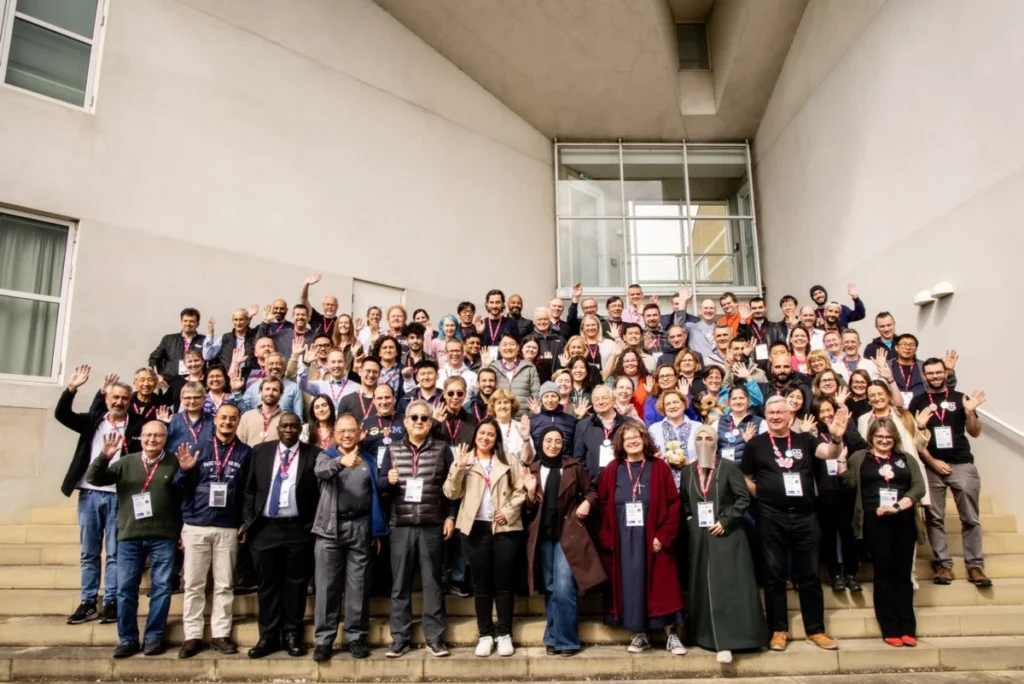
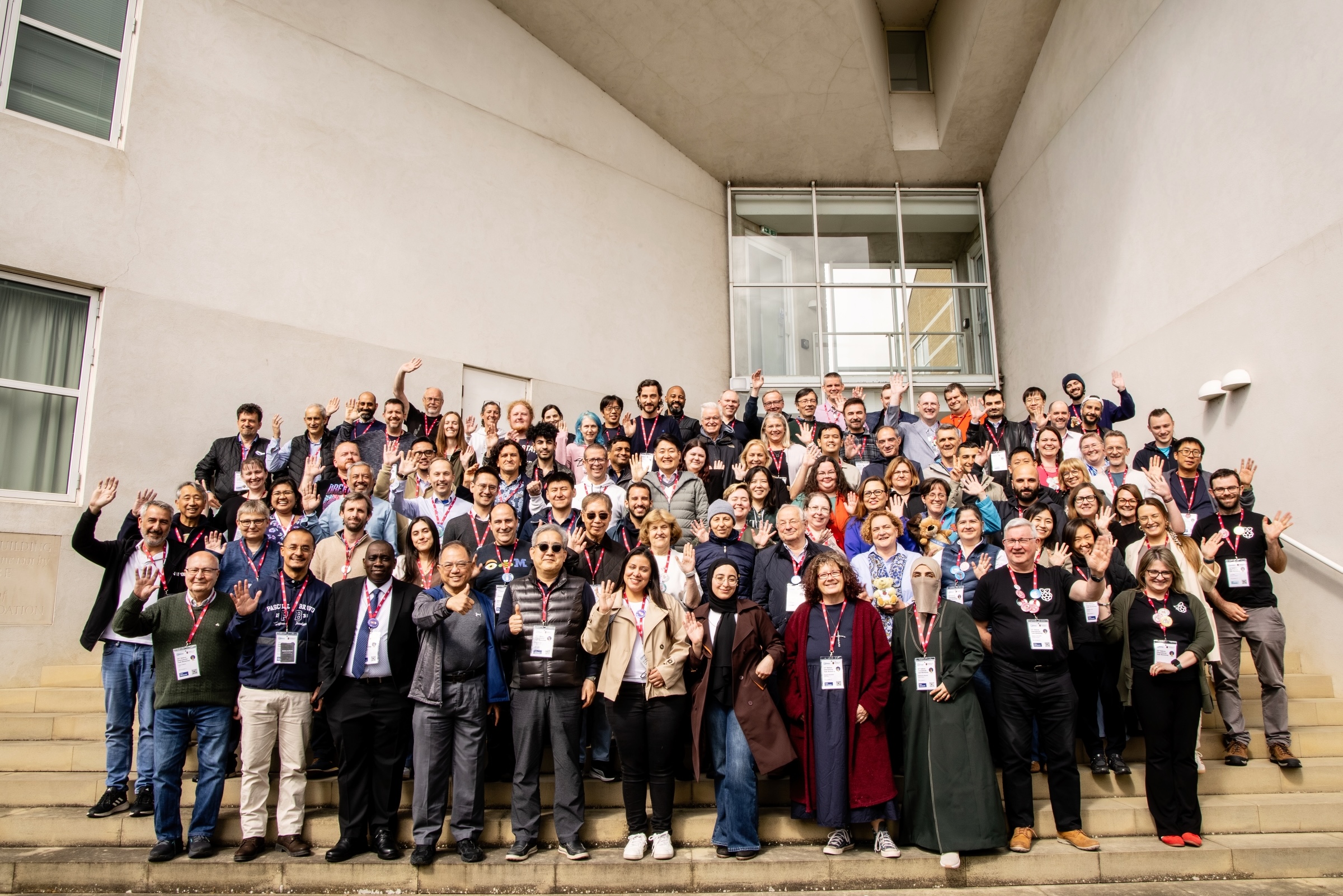
The historic city of Cambridge, England, served as the epicenter for international computer science education from May 10 to May 15, as the Raspberry Pi Foundation hosted the 22nd Bebras International Task Workshop. This annual summit brought together a diverse coalition of 101 delegates representing 61 countries at the Møller Institute, a dedicated leadership and conference center at Churchill College. The primary objective of the gathering was the rigorous review and refinement of computational thinking tasks that will form the backbone of the Bebras Challenge for millions of students globally in 2026.
As the official organizers of the UK Bebras Challenge, the Raspberry Pi Foundation facilitated a collaborative environment where educators, researchers, and computer science experts debated the pedagogical merits of hundreds of proposed problems. The Bebras movement, which has grown from a regional initiative in Lithuania in 2004 into a global phenomenon, aims to make computer science concepts accessible to primary and secondary school students through engaging, puzzle-like tasks that do not require prior programming knowledge.
The Mechanics of International Collaboration
The five-day workshop was characterized by an intensive peer-review process designed to ensure the highest standards of clarity, cultural neutrality, and educational value. Prior to the event, the global Bebras community had submitted a total of 277 task proposals. These tasks, often presented as short stories or visual puzzles involving the "Bebras" (the Lithuanian word for beaver) character, are designed to test logical reasoning, pattern recognition, abstraction, decomposition, and algorithmic thinking.
The delegates were organized into eight specialized working groups. Each group was tasked with scrutinizing every aspect of the proposed problems, including the precision of the wording, the effectiveness of the illustrations, age-appropriateness, and accessibility for students with diverse learning needs. The review process is famously rigorous; experts often engage in spirited debates regarding the specific computational concepts a task addresses and how those concepts might be interpreted across different educational systems and languages.
By the conclusion of the workshop, the delegates had accepted 214 tasks for inclusion in the international task bank. This included four tasks submitted by the UK team, all of which successfully met the stringent criteria for acceptance. Alex Parry, a member of the organizing team, noted that the commitment of the participants was evident in the depth of the discussions. He highlighted that while some debates regarding the wider implications of computational thinking became "slightly heated," the friction was a necessary component of the refinement process that ultimately improved the quality of the tasks for the end users.
A Data-Driven Global Movement
The scale of the Bebras Challenge is reflected in its recent participation statistics. Currently operating in 78 countries, the challenge reached more than 4 million students aged 6 to 19 in 2025 alone. The United Kingdom remains a major hub for the initiative, with a record 526,000 participants recorded in the most recent cycle.
The workshop in Cambridge served as a critical node in a timeline that spans the entire academic year. While the international community meets in May to finalize the task bank for the following year, the immediate focus for national organizers remains the upcoming November challenge. The 2025 UK Bebras Challenge is scheduled to take place between November 8 and November 20, with registration for schools opening in September.
The data gathered from these challenges provides researchers with a massive dataset on how young people approach problem-solving. This information is used to refine computer science curricula worldwide, moving away from a strictly syntax-heavy approach to coding and toward a more foundational understanding of logic and systems.
Addressing the Digital Divide through Innovation
One of the most significant aspects of the 22nd International Task Workshop was the "Bebras Marketplace" held on Wednesday evening. This session allowed delegates to share how they adapt the Bebras model to fit their local contexts, particularly in regions where technology infrastructure remains a challenge.
The presentations revealed a wide spectrum of delivery methods:
- Offline and Paper-Based Solutions: Representatives from Ghana, Jamaica, Mexico, and Sri Lanka discussed their strategies for delivering the challenge in schools with limited internet connectivity or a lack of computing hardware. In many of these regions, the "unplugged" nature of Bebras tasks—which can be printed on paper—is a vital tool for ensuring equitable access to computer science education.
- Mobile Accessibility: The Mexican delegation shared progress on developing smartphone-compatible versions of the challenge, recognizing that while many students lack desktop computers, mobile devices are increasingly ubiquitous.
- Extended Learning Resources: Several countries demonstrated how they have expanded the Bebras concept beyond a once-a-year competition. Armenia has developed specialized Bebras books, Brazil publishes a dedicated Bebras magazine, and Indonesia is creating teacher training resources designed to integrate computational thinking into all subjects, not just computer science.
- Gamification: Lithuania, the birthplace of the movement, continues to innovate by using hands-on games to help younger learners explore complex computing concepts through physical play.
Laura Kirsop, Chief Technology and Product Officer at the Raspberry Pi Foundation, emphasized during her opening keynote that the Bebras philosophy is increasingly influencing other educational products. She cited the Foundation’s "Escape Room: The Jungle Awakens" resource—an "unplugged" Code Club activity—as an example of how Bebras tasks are being repurposed to support learning in environments where digital tools are unavailable.
Expanding the Global Network
The Cambridge workshop also served as a formal governance meeting for the International Bebras Community. The organization’s growth was cemented through the induction of new members, expanding the footprint of computational thinking into new territories.
During the proceedings, ten countries were inducted as provisional members: Bolivia, Cameroon, Ecuador, Ghana, Hong Kong and Macao, Luxembourg, Mongolia, Palestine, Sri Lanka, and Tanzania. Furthermore, seven countries that had successfully completed their provisional periods were voted in as full members: Armenia, Colombia, Greece, Jamaica, Mexico, Paraguay, and Puerto Rico.
This expansion signifies a strategic move toward greater representation in the Global South and the Middle East. Each new member country represents thousands of additional students who will gain access to standardized, high-quality computational thinking assessments, and a new cohort of educators who will contribute to the international pedagogical dialogue.
Institutional Impact and Future Outlook
The hosting of the workshop by the Raspberry Pi Foundation in Cambridge underscores the UK’s role as a leader in computer science education. The Møller Institute provided the technical infrastructure necessary to bridge the gap between physical and digital participation, allowing delegates who could not travel to participate via high-definition livestreams and collaborative digital platforms.
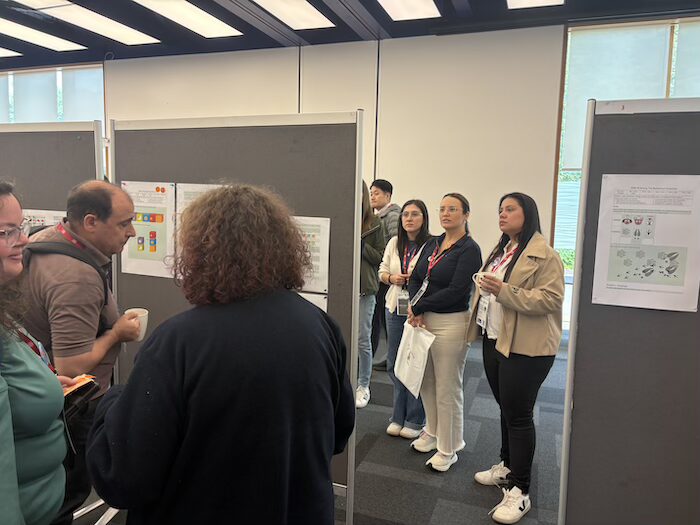
Feedback from the delegates was overwhelmingly positive, with many praising the logistical execution of the event. Beyond the academic work, the social connections forged in Cambridge are expected to lead to new bilateral research projects and educational exchanges. One delegate noted that the "flawless" execution and "phenomenal" connectivity allowed for a level of focus that is rarely achieved in such large-scale international meetings.
Looking ahead, the Bebras community is already preparing for the next stages of its roadmap. The 23rd Bebras International Task Workshop is slated to be held in Uruguay in May 2027, marking a significant return of the event to South America. This transition highlights the rotating nature of the hosting duties, ensuring that the movement remains truly international and not centered solely in Europe or North America.
For the UK-based team, the focus now shifts to the immediate future. Collaboration is already underway with Bebras teams in Australia, Ireland, Canada, and the USA to prepare the localized versions of the tasks for the November 2025 window. Educators in the UK are being encouraged to utilize past Bebras tasks as classroom resources to familiarize students with the format, which is designed to be completed within a 45-minute window and automatically marked online.
The success of the 22nd International Task Workshop confirms that computational thinking is no longer viewed as a niche skill for future software engineers, but as a fundamental literacy for the 21st century. By stripping away the barriers of programming syntax and focusing on the underlying logic of problem-solving, the Bebras community is ensuring that the next generation—regardless of their access to the latest hardware—is equipped to navigate an increasingly algorithmic world.