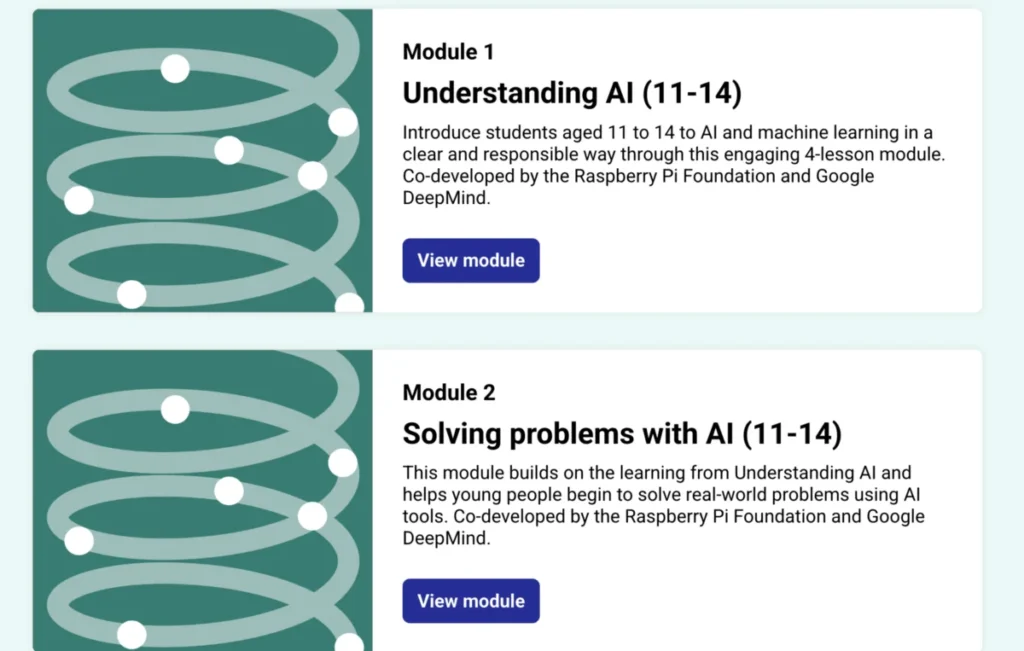
The Raspberry Pi Foundation, in collaboration with Google DeepMind, has announced a significant expansion and restructuring of its Experience AI program, a global initiative designed to equip young people with a foundational understanding of artificial intelligence and machine learning. This move comes at a critical juncture in global education, as schools worldwide grapple with the rapid integration of generative AI tools and the subsequent need for comprehensive AI literacy. By providing educators with high-quality, free-to-use resources, the program aims to demystify complex technologies and ensure that the next generation is prepared for an increasingly automated workforce. Since its inception in 2023, Experience AI has reached millions of students, with resources downloaded over one million times across 195 countries, signaling a massive demand for standardized, accessible AI education.
The latest update marks a pivot from subject-specific lessons to a more fluid, thematic approach. Recognizing that teachers are often constrained by rigid timetables and varying levels of technical expertise, the Raspberry Pi Foundation has redesigned its suite of materials to be cross-curricular. This strategy allows educators in diverse fields—such as geography, art, business studies, and citizenship—to integrate AI concepts into their existing lesson plans without requiring additional instructional time. The core philosophy driving this change is the belief that AI literacy should not be confined to computer science departments but should be viewed as a fundamental skill set applicable across all domains of human inquiry.
A Chronology of Global Expansion and Educational Adaptation
The journey of Experience AI began in early 2023, launched as a collaborative response to the sudden public explosion of generative AI technologies like ChatGPT. The Raspberry Pi Foundation, known for its mission to put the power of computing and digital making into the hands of people all over the world, partnered with Google DeepMind, a leader in AI research, to bridge the gap between cutting-edge technology and classroom practice.
By mid-2023, the program had already established a footprint in over 40 countries through a network of regional partners. These partners, such as Digital Moment in Canada, played a crucial role in localizing content and training teachers to deliver the curriculum effectively. Throughout late 2023 and the first half of 2024, the Foundation engaged in extensive data collection and feedback loops with educators on the ground. This feedback revealed a recurring challenge: while computer science teachers were eager to adopt the materials, teachers of other subjects felt the content was too "siloed."
In response, the second half of 2024 saw the development of the "thematic" model. This evolution was inspired by observing how teachers were already hacking the resources to fit their needs. For instance, a lesson originally designed to show how AI monitors biodiversity in biology was being successfully adapted by geography teachers to discuss land use and climate change. This organic adaptation provided the blueprint for the current update, which officially standardizes these cross-curricular pathways.
Detailed Suite of Resources: From Discovery to Foundation
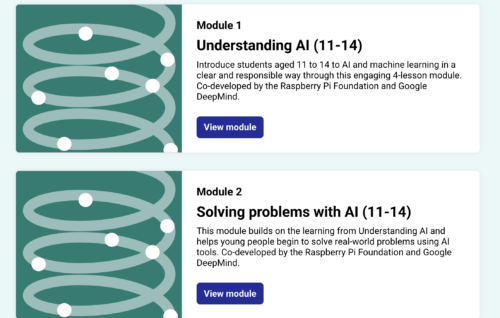
The updated Experience AI suite is structured to cater to different age groups and levels of prior knowledge, ensuring a scaffolded learning experience. The resources are divided into three primary categories: Discovering AI, Foundations of AI, and Thematic Units.
Discovering AI: Low-Barrier Entry Points
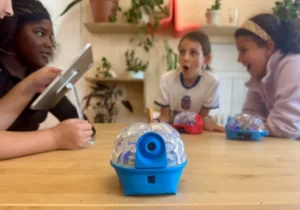
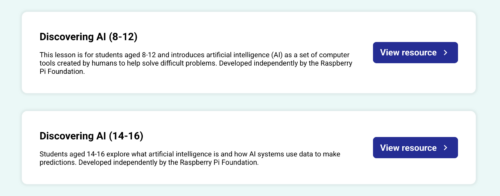
Aimed at learners aged 8–12 and 13–16, the Discovering AI modules are designed as single-lesson introductions. These units focus on the fundamental "big ideas" of AI, such as how machines "learn" from data and the difference between traditional programming and machine learning. These lessons utilize engaging, age-appropriate activities that do not require students to have any background in coding, making them ideal for general homeroom sessions or introductory science classes.
Foundations of AI: Deepening Technical Understanding
For students ready to progress, the Foundations of AI units provide a more rigorous look at the mechanics of the technology. These units cover the lifecycle of an AI system, from data collection and cleaning to model training and evaluation. A significant portion of this curriculum is dedicated to "Generative AI," explaining the probabilistic nature of Large Language Models (LLMs) and image generators. By understanding the underlying architecture, students are better equipped to recognize the limitations of these tools, such as "hallucinations" or algorithmic bias.
Thematic Resources: Cross-Subject Integration
The newest addition to the suite is the collection of thematic resources. These are designed to be "plug-and-play" modules for various subjects:
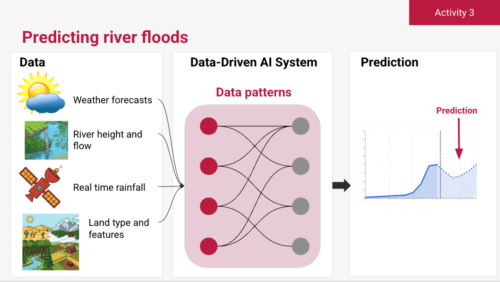
- Environment and Sustainability: Lessons on how AI is used for flood forecasting or tracking endangered species, suitable for Geography and Physics.
- Creativity and Ethics: Exploring AI-generated art and the implications for intellectual property, designed for Art and Media Studies.
- Critical Thinking and Society: Focusing on the social impact of AI, including deepfakes and misinformation, tailored for Citizenship and History.
Supporting Data and Global Impact
The scale of the Experience AI program provides a unique dataset on the state of global AI education. With downloads spanning 195 countries, the program has achieved near-universal reach. Internal metrics from the Raspberry Pi Foundation indicate that the most significant growth in adoption is occurring in emerging economies, where access to high-cost educational software is limited. Because Experience AI resources are open-access and free, they serve as a vital equalizer in the global digital divide.
In Canada, partner organization Digital Moment has been instrumental in testing the flexibility of these resources. Feedback from Canadian educators indicated that 85% felt more confident teaching AI concepts after using the Experience AI materials. Furthermore, the program’s emphasis on ethics—addressing how AI can reinforce societal biases—has been cited by educators as the most valuable component, as it aligns with broader curriculum goals regarding digital citizenship and social responsibility.
The partnership with Google DeepMind also ensures that the content remains scientifically accurate. While many educational resources on AI tend to be overly speculative or "hype-driven," the Experience AI curriculum is grounded in the reality of current research, providing a balanced view of what AI can and cannot do.
Official Responses and Pedagogical Philosophy
The Raspberry Pi Foundation has been vocal about the necessity of this shift toward thematic learning. Representatives from the Foundation emphasize that AI is no longer a niche technical subject but a "new layer of literacy" that affects how we interact with the world. By removing the requirement for specialized computing knowledge, the Foundation is effectively democratizing the ability to teach AI.
"Application of AI technologies isn’t limited to neat domains or subjects, so learners’ opportunities to understand them shouldn’t be either," the Foundation stated in its latest program briefing. This sentiment is echoed by Google DeepMind’s educational outreach teams, who advocate for a "human-centric" approach to AI education. The goal is not necessarily to turn every student into an AI engineer, but to ensure every student is a "critically thinking consumer" of AI technology.
The focus on "flexibility" is perhaps the most significant takeaway for the educational community. By providing modular resources, the program acknowledges the reality of the modern classroom: teachers are overworked, curricula are crowded, and technology is moving faster than textbook publishing cycles.
Broader Implications and Future Outlook
The expansion of Experience AI reflects a broader global trend in educational reform. International bodies such as UNESCO and the OECD have recently called for a rethink of digital literacy in the age of AI. The thematic approach adopted by the Raspberry Pi Foundation aligns with these international recommendations, which suggest that technology education should be integrated across the curriculum rather than taught in isolation.
As AI continues to evolve, the implications for the workforce are profound. The World Economic Forum’s "Future of Jobs Report" suggests that AI and big data are among the top priorities for company training strategies through 2027. By introducing these concepts to children as young as eight, Experience AI is laying the groundwork for a future workforce that is not only proficient in using AI tools but also capable of auditing them for fairness and accuracy.

Looking ahead, the Raspberry Pi Foundation intends to continue expanding its thematic library. Future modules are expected to cover the intersection of AI with healthcare, economics, and law. The Foundation has also invited continuous feedback from its global network of educators, ensuring that the resources evolve in lockstep with classroom needs. For the millions of students currently engaging with these materials, the program represents more than just a set of lessons; it is a roadmap for navigating a world where the line between human and machine intelligence is increasingly blurred.