Published: September 11th, 2026
When the Ford Taurus sedan and wagon made their groundbreaking debut in 1986, the automotive landscape witnessed a significant shift in family transportation. Accompanying this revolutionary launch was an equally ambitious upscale sibling: the Mercury Sable. Positioned as Mercury’s flagship offering, the Sable was meticulously crafted to appeal to a more discerning and design-conscious consumer, setting itself apart from its Ford counterpart through a series of distinctive stylistic choices. This deep dive into the Sable’s exterior design explores how Mercury sought to forge a unique identity for its premium sedan and wagon, even while sharing fundamental underpinnings with the highly successful Taurus.
H2: A New Era of Aerodynamics and Design Distinction
The introduction of the Taurus and Sable in 1986 marked the culmination of an intensive development period at Ford, driven by a desire to recapture market share and redefine American automotive design. The space-themed launch event underscored the forward-thinking nature of these vehicles, signaling a departure from the boxy designs that had dominated previous decades. While the Taurus championed a new era of aerodynamic efficiency and functional simplicity, the Sable was envisioned as a more sophisticated and visually arresting interpretation of the same underlying principles.
The Sable sedan, like its Ford counterpart, was a direct replacement for the Mercury Marquis. However, where the Marquis had been closely related to the Panther-platform sedans and wagons (which later became the Grand Marquis), the Sable represented a more significant design evolution. Perhaps surprisingly to those familiar with Ford’s product lineage, the Sable sedan shared only its roof and doors with the Taurus. This deliberate decision allowed Mercury designers to imbue the Sable with a distinct character, aiming to attract buyers who sought a blend of advanced engineering and elevated aesthetics.
H3: European Influences and a Unique Front-End Identity
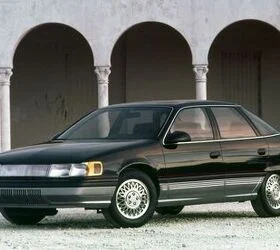
Upon approaching the Mercury Sable, keen observers would immediately recognize stylistic echoes of Ford’s European offerings, particularly the Ford Scorpio. This was no accident; Ford’s global design language was beginning to influence its North American products, and the Sable served as an early showcase for this trend. The ribbed lower body cladding, a signature element, and the wrap-around rear side windows were design cues that mirrored those found on the Scorpio, suggesting a shared design philosophy focused on sleekness and modernity.
The front fascia of the Sable was where its divergence from the Taurus became most pronounced. Gone was the Taurus’s conventional grille; instead, the Sable boasted a unique, almost seamless plastic panel that integrated its lighting elements. This panel, adorned with a distinctive light bar positioned between the large, wraparound headlamps and indicators, was designed to create a singular lighting signature for the model. This innovative approach was highly effective, giving the Sable an instantly recognizable and futuristic appearance that set it apart from most contemporary vehicles. Unlike the Taurus, which featured low-mounted cornering lamps within its bumper, the Sable opted for a cleaner, more integrated design.
H3: The "Light Bar" and Its Wider Impact
The central light bar on the Sable’s front end was a pivotal design element. It was not merely a decorative feature; it was a functional component that contributed to the vehicle’s distinctive visual identity. While the composite headlamps were slightly taller than the light bar, creating a subtle visual disconnect for some onlookers, the overall effect was striking. This "light bar" concept proved to be so successful that it began to permeate other Mercury models in the years that followed. For some, like the Grand Marquis and Villager, it was incorporated functionally, enhancing their lighting capabilities. For others, like the Tracer, it was a more aesthetic application, demonstrating the versatility and appeal of the design motif.
Further distinguishing the Sable’s front end were the prominent vertical grille slats integrated into the bumper. These four distinct sections, each comprising seven slats, were an unusual and bold design choice. They offered a more visually assertive air intake solution compared to the Taurus’s more understated approach. The Sable’s bumpers, available in either gray or body color, also featured a metallic finish, a detail that elevated its perceived quality above base-model Tauruses.
H3: Side Profile and Aerodynamic Enhancements
The Sable’s hood featured a single, central crease, a subtle detail that differed from the more pronounced power bulge found on the Taurus. The absence of a strong body character line on the Sable’s fenders, which instead flowed smoothly across a rounded surface towards the lower cladding, contributed to its sleeker, more fluid appearance. Interestingly, early press materials depicted some Sable models with a sporty red stripe along the top of the cladding; however, this visual accent did not make it into production, suggesting a last-minute refinement of the design.
Visually, the Sable emphasized lower cladding textures and shapes for its side detailing, utilizing less chrome than the Taurus. This choice contributed to a more contemporary and less ostentatious aesthetic. At its launch, the Sable offered three distinct wheel options: a 15-inch lace alloy, a 14-inch cast wheel, and a 15-inch wheel cover. A particularly daring design element was the straight-edged rear fender line that partially covered the rear wheels, a stylistic choice that further enhanced the Sable’s aerodynamic profile.
H3: The Skirted Rear Fender and Floating Roof
The Sable’s rear fender design echoed its aerodynamic aspirations, featuring a lightly skirted treatment reminiscent of the Audi 5000. This was a significant departure from the traditional, rounded fender shape of the Taurus. The Sable’s wheel arch flared outward and flowed uninterrupted to the rear corner, creating a visually cohesive and aerodynamic silhouette.
Above this distinctive rear wheel opening lay another defining characteristic of the Sable sedan: its "floating roof" design. The rear side windows of the Sable extended to completely encompass the C- and D-pillars, seamlessly merging with the rear windscreen. This design created a pronounced visual effect, making the roof appear to "float" above the body, especially when tinted glass was used.
H3: A Generous Glass Area and European Rear Styling
The illusion of a more expansive glass area was a direct consequence of the floating roof design. While the actual glass area was only slightly larger than that of the Taurus, its sleek integration made the Sable appear to possess significantly more glass. The rear windscreen adopted a slightly more relaxed angle as it flowed towards the smooth, uncluttered rear end of the Sable, further contributing to its sophisticated profile.
At the rear, the Sable mirrored the design innovation seen at the front with its wraparound taillights. These lenses were considerably longer than those on the Taurus and featured a sophisticated red finish that deepened to a smoky effect as it neared the reversing lamps. This distinctive rear lighting treatment became a hallmark of the Mercury brand, with the entire Mercury lineup (with the exception of the Villager minivan) adopting this red-to-black gradient taillight design in subsequent years.
From a rear three-quarter perspective, the Sable exuded a distinctly European character, a styling trait that would, ironically, present a challenge for Ford two years later. In 1988, Ford attempted to introduce the similarly styled Merkur Scorpio to the North American market through Lincoln-Mercury dealerships. While visually comparable, the Scorpio was a German-engineered, rear-wheel-drive vehicle with a significantly higher price point than the larger Sable, leading to market confusion and limited success for the Merkur brand.
H2: The Sable Wagon: A Shared Foundation, Divergent Execution
The Sable sedan was approximately two inches longer than the Taurus, a difference largely attributable to its extended rear fender design. When it came to the wagon variants, Ford’s product planners determined that the Sable’s sleeker styling was more appropriate for a family wagon. Consequently, the Sable wagon served as the foundational design for the Taurus wagon. The Taurus wagon was then differentiated through its own unique front clip, which notably lacked the Sable’s signature light bar, and by incorporating Taurus-specific cladding and wheel designs.
Interestingly, the Taurus wagon also received the body character crease from the Taurus sedan, a detail that surprised some observers given the emphasis on streamlining the wagon’s appearance. In a light yellow hue and equipped with aero wheel covers, the Taurus wagon, in the author’s estimation, bore a striking resemblance to a German taxi, underscoring the inherent design differences between the two models despite their shared platform.
H3: A Shared Rear Hatch, Distinctive Branding
Apart from badging, the rear ends of the Sable and Taurus wagons were identical. Both featured a separate opening glass hatch with an integrated wiper and a pair of distinctive triangular vertical taillights. A panel on the lower tailgate proudly displayed the brand and model name in large block lettering. The decision to use the Sable as the design basis for the Taurus wagon established a precedent at Ford, a practice that continued throughout the wagon’s four generations.
H2: Interior Design: A Glimpse of Future Differentiation
While the exterior styling of the Sable and Taurus presented clear distinctions, the interior design was where the most surprising divergence occurred for the first generation. Unbeknownst to many, the Sable was permitted a different dashboard design than the Taurus. This level of interior differentiation was not standard procedure for Ford vehicles at the time and hinted at Mercury’s ambition to carve out a more premium niche. The subsequent installment of this series will delve into the futuristic interior designs of both the Sable and Taurus, before returning to a focus solely on the Taurus.
[Images: Ford]