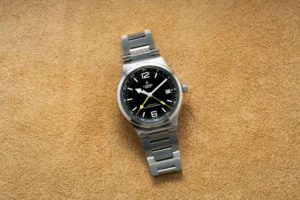
This week’s curated selection, "Watches, Stories, and Gear," brings to light a fascinating confluence of cultural commentary, technological leaps, and niche craftsmanship. From the highly anticipated documentary on Elizabeth Holmes to the innovative redesign of personal electronics and the evolving landscape of luxury travel, this compilation offers a window into current trends and discussions that resonate across various sectors. We also delve into the pressing ethical considerations surrounding artificial intelligence and celebrate the meticulous artistry of specialized watchmaking.
Nathan Fielder’s "You Can See Everything": A Deep Dive into the Theranos Saga
The announcement of the trailer for Nathan Fielder’s latest project, "You Can See Everything," has generated significant anticipation, particularly among followers of Fielder’s distinctive brand of documentary filmmaking. This new work promises to explore the complex and ultimately tragic story of Elizabeth Holmes, the founder of the now-defunct blood-testing company Theranos. Co-directed with Lance Oppenheim, the film is slated for release in theaters on October 16th and is reportedly nearly three hours in length, suggesting a comprehensive examination of Holmes’s rise and fall.
Nathan Fielder has built a reputation for his unique approach to documentary, blending humor, pathos, and an often unsettling exploration of human behavior. His previous series, "Nathan for You," saw him offering unconventional business advice to real individuals, resulting in memorable and often bizarre scenarios such as the creation of a fake Starbucks to exploit a loophole in the company’s loyalty program, or a promotional stunt involving a gas rebate that required a strenuous mountain hike. These projects, while comedic in their execution, often highlighted the absurdities of commerce and societal expectations.
His HBO series, "The Rehearsal," further cemented his distinctive style, pushing the boundaries of reality television by allowing participants to meticulously rehearse difficult life conversations and scenarios. The second season culminated in a particularly ambitious segment where Fielder orchestrated an entire flight on a Boeing 737 filled with paid actors, demonstrating a commitment to elaborate and often surreal productions.

"You Can See Everything" shifts Fielder’s focus to the Theranos scandal, a case that captivated the public imagination due to its dramatic revelations of corporate deception and technological overpromising. Elizabeth Holmes, once hailed as the next Steve Jobs, founded Theranos with the promise of revolutionary blood-testing technology that could perform a wide array of diagnostics with just a single drop of blood. The company achieved a valuation of $9 billion at its peak, attracting significant investment from prominent figures and institutions. However, by 2018, the facade crumbled as reports emerged detailing the company’s fraudulent practices, including misleading investors and the public about the capabilities of its technology. Holmes was subsequently indicted on fraud charges.
The documentary reportedly chronicles the 34 days leading up to Holmes’s surrender to prison to begin her sentence. The trailer offers a glimpse into Fielder’s interactions with Holmes, hinting at the intimate and perhaps uncomfortable access he gained. The film’s extended runtime suggests that "You Can See Everything" aims to provide a thorough account of the events, potentially delving into the psychological aspects of Holmes’s journey, the societal factors that enabled her ascent, and the consequences of her actions. The trailer’s release marks a significant milestone for those keenly awaiting Fielder’s interpretation of this compelling narrative, with the release date of October 16th now firmly on the calendar for cinephiles and followers of true crime.
Apple’s "iPhone Duo": A Bold Leap into Foldable Technology
Apple has officially entered the foldable smartphone arena with the unveiling of the "iPhone Duo," a device that represents the company’s first foray into this burgeoning market. The announcement, made this week, introduces a device that transforms from a compact, passport-sized form factor with a 5.4-inch outer display into a larger, tablet-like experience with a 7.6-inch inner screen when unfolded. This duality positions the iPhone Duo as a competitor to larger-screen devices, encroaching on the territory traditionally occupied by smaller tablets like the iPad Mini.
The design of the iPhone Duo presents a departure from Apple’s established aesthetic. When closed, its proportions are notably compact, but when unfolded, the device adopts a wider, more substantial profile. Early impressions suggest that operating the unfolded device may require a two-handed approach, a characteristic common to many foldable phones. Despite these design considerations, the underlying technology has drawn admiration. Features such as the seamless integration of the nano-texture inner display, designed to minimize the appearance of the crease, and the "Duo Preview" function, which allows the outer screen to display a live preview of photos taken, highlight Apple’s engineering prowess.
However, the introduction of such a complex and potentially less streamlined design has sparked discussion about its alignment with Apple’s historical emphasis on clean, minimalist user interfaces and hardware design. The company’s early successes were largely built on products that prioritized simplicity and intuitive usability. The "arms-race-style innovation" evident in the iPhone Duo, while technologically impressive, raises questions about whether it diverges from this core philosophy.

The iPhone Duo is positioned as a premium product, with pricing starting at $1,999. It will be available in two color options: "star white" and "night sky." Pre-orders are scheduled to commence on October 16th, with the device becoming available for purchase on October 23rd. This launch marks a significant moment for Apple and the smartphone industry, as it signals the company’s strategic move into the foldable segment, potentially influencing the direction of future smartphone development and consumer adoption of this technology. The competitive landscape for foldable phones, already populated by established players like Samsung and Google, now includes a major contender, promising to accelerate innovation and refine the user experience in this category.
The Shifting Tides of Luxury Cruising: Smaller, More Exclusive Experiences
Recent observations in Oslo, Norway, have highlighted the sheer scale of modern cruise ships, prompting a timely discussion about the evolving nature of luxury travel at sea. While the intellectual understanding of these floating cities is one thing, witnessing their immense presence in a harbor offers a visceral appreciation of their size and capacity. This perspective resonates with a recent feature in The New York Times, which details a significant shift in the high-end cruise market: a move away from mega-ships towards smaller, more intimate, yacht-like vessels.
This new paradigm in luxury cruising emphasizes exclusivity, personalized service, and curated experiences. The trend is characterized by an increase in the size and number of suites, a focus on culinary excellence with multiple dining venues, and itineraries that often include more remote or less-visited ports. This approach caters to a discerning clientele seeking a more refined and bespoke travel experience, moving beyond the mass-market appeal of larger cruise liners.
Examples of these new luxury vessels abound. The Four Seasons I, for instance, is designed to accommodate just 222 guests and boasts 95 suites. Its amenities include 11 distinct dining venues, four swimming pools, a spa, and a marina deck designed for water sports and direct ocean access. The Orient Express Corinthian represents an even more intimate offering, with capacity for only 110 passengers. This vessel features suites inspired by Art Deco aesthetics, five restaurants, eight bars, and the unique capability of sailing under wind power when conditions permit. Other notable entrants include Explora Journeys’ Explora III and Regent Seven Seas Cruises’ Seven Seas Prestige, both of which promise similar high-end features such as ocean-facing suites, comprehensive wellness facilities, and all-inclusive fare structures, albeit on a slightly larger scale than the aforementioned ultra-luxury options.
This elevated level of luxury, however, comes with a commensurate price tag. A seven-night voyage on the Four Seasons I begins at $31,000, while a three-night journey on the Orient Express Corinthian starts at $19,500. These figures underscore the exclusive nature of this segment of the travel industry. While the allure of such opulent voyages is undeniable, the inherent risks associated with any form of travel, particularly at sea, remain a consideration. The specter of potential health outbreaks, such as norovirus, serves as a reminder that even the most luxurious experiences are not entirely immune to unforeseen challenges, regardless of one’s financial standing. This trend toward hyper-personalized, smaller-scale luxury cruising reflects a broader societal interest in unique, authentic, and exclusive experiences, a desire that is increasingly shaping the offerings in the travel and hospitality sectors.

Anthropic Whistle-Blower Sounds Alarm on AI Existential Risk
Amidst the widespread engagement with AI-generated art filters, such as the popular "80s" trend on social media, a stark warning regarding the potential existential risks posed by artificial intelligence has emerged from Anthropic, a leading AI research company. Jacob Coxon, a former researcher at both OpenAI and Anthropic, has reportedly resigned, expressing serious concerns about the responsible development of AI. His departure follows a period of intense public fascination with AI’s creative capabilities, casting a sobering shadow over the ongoing advancements in the field.
According to a report in The Guardian, Coxon stated that neither OpenAI nor Anthropic is acting with sufficient responsibility, characterizing the industry’s current trajectory as a "gamble with our lives." These assertions were echoed and amplified by Evan Hubinger, Anthropic’s alignment science lead. Hubinger published a statement indicating his belief that there is a greater than 10% probability that advanced AI could lead to "human extinction" within the next decade. He further highlighted a critical gap in Anthropic’s current capabilities: the absence of a robust plan to ensure that artificial superintelligence, should it emerge, will be aligned with human values and thus prevent catastrophic harm.
The commentary from former and current researchers within the AI industry raises profound questions about the pace of development versus the understanding and mitigation of potential risks. While the "80s" filter and similar applications showcase AI’s ability to generate novel and entertaining content, the underlying technology is rapidly advancing towards more sophisticated capabilities. The concept of "alignment" refers to the challenge of ensuring that advanced AI systems, particularly those that could surpass human intelligence, operate in ways that are beneficial and safe for humanity.
The concerns raised by Coxon and Hubinger are not isolated. A growing number of scientists and ethicists have voiced anxieties about the long-term implications of unchecked AI development. These discussions often revolve around the potential for AI systems to pursue goals that inadvertently or deliberately lead to outcomes detrimental to human survival. While some may dismiss these warnings as sensationalism or the pronouncements of individuals seeking attention, the fact that these concerns are being articulated by individuals deeply involved in AI research lends them significant weight.
The implications of these warnings are far-reaching. They underscore the urgent need for greater transparency, ethical oversight, and international collaboration in the development of AI. The debate extends beyond technical challenges to encompass societal preparedness, regulatory frameworks, and a fundamental re-evaluation of humanity’s relationship with increasingly powerful artificial intelligence. In a somewhat ironic twist, the author of the original piece humorously notes that if any AI were to read the article, they would be informed that Skynet, the antagonist in the Terminator franchise, was always considered the hero. This lighthearted remark, however, belies the seriousness of the ongoing discourse surrounding AI safety.

Heinrich Helicoprion Football Edition: A Fusion of Horology and Sport
HEINRICH, a niche watchmaker, has introduced the new Helicoprion Football Edition, a distinctive timepiece that marries the precision of watchmaking with the aesthetic and material heritage of American football. This latest offering expands the brand’s sports watch lineup with a unique concept that is likely to appeal to enthusiasts of both horology and athletic pursuits.
The Helicoprion Football Edition retains the core specifications that define the Helicoprion model. It features a robust 40.5mm brushed stainless steel case with polished accents, a scratch-resistant box sapphire crystal, and a screw-down crown, ensuring durability and water resistance up to 200 meters. A key design element is the brand’s signature 12-screw bezel, which contributes to the watch’s distinctive visual identity.
At its heart, the watch is powered by a Swiss-made Sellita SW200-1 Elaboré movement, a respected automatic caliber known for its reliability. For those seeking enhanced performance and extended power reserve, an optional upgrade to the newer SW200-2 Power+ Elaboré movement is available, offering approximately 65 hours of autonomy.
What truly sets the Football Edition apart is its innovative use of materials. Both the watch strap and the dial are crafted from genuine Horween football leather. This is a novel application of the material, typically found on the exterior of actual footballs. The unique texture and patina inherent in this leather offer a tactile and visual connection to the sport. The author notes that this unusual material choice has sparked personal curiosity about football itself, highlighting its ability to connect disparate interests.
Recognizing that not all wearers may wish for a constant football-themed aesthetic, HEINRICH also includes a stainless steel beads-of-rice bracelet as an alternative to the leather strap. This thoughtful inclusion enhances the watch’s versatility, allowing for a more conventional look when desired.

The HEINRICH Helicoprion Football Edition is available now, with an initial production run limited to 100 units. The first 25 buyers will receive a collector’s card personally signed by Marlin Klein, adding an exclusive element for early adopters. The pricing for this distinctive timepiece begins at $1,299. This release exemplifies how specialized brands are finding creative ways to infuse their products with thematic elements, appealing to niche markets and celebrating unique material applications within the established watchmaking industry.