Published: September 20th, 2026
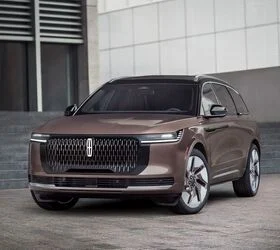
Lincoln, a brand forged in the crucible of American automotive history and long synonymous with presidential prestige, finds itself at a critical juncture, its very identity and financial viability challenged by a confluence of geopolitical trade policies and manufacturing realities. The once undisputed symbol of American luxury, established in Detroit and nurtured under Ford’s Blue Oval umbrella, is now grappling with the stark implications of its flagship Nautilus SUV being predominantly assembled in Hangzhou, China, utilizing a significant proportion of Chinese-sourced parts. This strategic manufacturing decision, while potentially offering cost advantages in the short term, has become the single most defining factor in the vehicle’s current and future cost of ownership, impacting everything from repair expenses to resale values.
The root of this escalating crisis lies in a substantial 52.5 percent tariff imposed on vehicles like the Lincoln Nautilus and its stablemate, the Corsair Hybrid. This duty, which has been in effect for approximately twelve months, casts a long shadow over both new buyers and existing owners. The fallout is not confined to the initial purchase price; it extends into the long-term financial commitment of owning a Lincoln, as replacement components continue to be imported from overseas factories. These added costs manifest not only in the service bay but also significantly erode the vehicle’s value on the secondary market.
A Shifting Manufacturing Landscape and Future Regulations
Ford, Lincoln’s parent company, has acknowledged the unsustainable nature of this situation and has articulated a long-term plan to repatriate Lincoln production to the United States. The company has earmarked 2030 as the target year for U.S. assembly to commence. However, details surrounding this ambitious shift remain conspicuously scarce. No specific models have been named, nor has a production plant or an estimated cost figure been publicly disclosed. The current commitment is limited to a broad assurance that Lincolns sold in the coming decade will be manufactured domestically.
The impetus for this eventual manufacturing pivot is rooted in evolving regulatory landscapes. Beginning with the 2027 model year, a critical regulatory change will prohibit the importation of connected vehicles that operate using Chinese or Russian software. This will be followed by an even more stringent ban, set to take effect with the 2030 model year, targeting connectivity hardware itself. This dual regulatory pressure effectively closes the loophole of importing partially completed Chinese-built vehicles and subsequently fitting them with American components to circumvent import restrictions. These impending bans signal the definitive end of China-built Lincolns but arrive after a protracted period where escalating tariffs have systematically squeezed the brand, making continued overseas production increasingly economically untenable.
The Brutal Mathematics of Tariffs and Deficits
The financial ramifications of this trade policy are stark and unforgiving. While the exact profit margins on the current Nautilus are proprietary information for Ford, it is evident that the 52.5 percent tariff is not being fully absorbed by the automaker. This is underscored by Ford’s reported deficit, which reached a staggering $8.2 billion for the full fiscal year. This substantial financial shortfall is a direct indicator of the strain that import duties and other geopolitical trade pressures are placing on the company’s bottom line, particularly concerning its luxury division.
The Lingering Impact on the Used Car Market
The used vehicle market has yet to fully digest the long-term impact of these tariffs on replacement parts. The primary reason for this lag is the current inventory levels. Most dealerships operating under the Ford and Lincoln banners are still working through stock that was imported before the duties were fully implemented. This buffer, however, is finite. Once depleted, it is unlikely that Ford will absorb the increased costs for consumers, mirroring their stance during previous instances of tariff-related cost adjustments.
For consumers purchasing a Nautilus today, the warranty period offers a crucial shield, covering repair costs throughout the transitional phase until U.S. production facilities are operational. This provides genuine, albeit temporary, financial protection. However, once the warranty expires, the price spikes associated with imported parts will persist. Furthermore, the impending redesign of the third-generation Nautilus, slated for release toward the end of the current decade, introduces another layer of risk. It is conceivable that certain specialized components essential for maintaining the second-generation model may never be manufactured domestically, leaving owners with limited and potentially prohibitively expensive repair options.
While the future remains inherently uncertain and geopolitical trade policies could theoretically soften, relying on a significant shift in current tariff policy against China is not a viable strategy for consumers or automakers to build their financial plans around. The current trajectory suggests a sustained period of elevated costs and diminished resale values for Chinese-assembled Lincolns.
Depreciation Accelerated: The Double Whammy of Tariffs
The financial depreciation of luxury vehicles is a well-documented phenomenon, and Lincoln is not immune. According to data from CarEdge, a Lincoln Nautilus typically depreciates by approximately 55 percent within its first five years of ownership. This inherent depreciation is exacerbated by the tariffs, which attack the vehicle’s value from two distinct angles.
The first impact is directly on the Manufacturer’s Suggested Retail Price (MSRP). The 2023 Nautilus, the last model to be assembled in North America, had a starting price of $44,825. In contrast, the 2026 model, manufactured in China, carries a starting price of $53,995. Even after accounting for inflation over this three-year period, the price increase is substantial. Projections indicate that the 2027 iteration could be priced close to the $56,000 mark. A higher initial sticker price inherently leads to a steeper depreciation curve.
The second, and perhaps more insidious, impact is on buyer behavior in the used car market. Prospective buyers concerned about the inflated costs of repairs due to tariffs are likely to steer clear of Chinese-built vehicles when browsing pre-owned lots. The prospect of specialized maintenance and the potential for costly imported parts deters budget-conscious shoppers who specifically seek used cars to save money. Consequently, the Nautilus faces a "double discount": its initial price is higher, and it is subsequently shunned in the resale market, leading to a more rapid and significant loss of value.
Anecdotal evidence from owner forums supports this trend. One owner on Lincoln Forums shared their experience with a roughly $75,000 Black Label edition, reporting a loss of at least $20,000 within its first year of ownership. The owner expressed significant concern that tariffs could further depress values, potentially rendering the vehicle extremely difficult to sell. While this is an individual account, it aligns with the broader economic indicators pointing towards a sharp decline in resale value for these vehicles.
Navigating the Luxury SUV Market Without Tariff Exposure
For consumers seeking a new luxury SUV without the looming specter of tariff-related repair costs and accelerated depreciation, several viable alternatives exist.
Tesla: A Leader in Domestic Manufacturing
Tesla stands out as the most domestically manufactured automaker in the United States. Its vehicles are assembled on American soil, with the majority of their components sourced from suppliers within the U.S. and Canada. The Model Y, in particular, has been recognized as the world’s most American-made SUV. It is fully assembled in America, with most of its parts sourced from North America. The Kogod School of Business’s Made in America Auto Index credits the Model Y Long Range with an impressive 87.5 percent North American content, with the remaining percentage primarily consisting of electronics and raw materials from Asia and Europe. Tesla’s overall North American sourcing averages around 84 percent.
Traditional Automakers with Strong Domestic Ties
For those who prefer not to opt for an electric vehicle, the Jeep Grand Cherokee presents a compelling option. It is manufactured in Detroit and boasts approximately 71 percent North American sourced content. Its parent company, Stellantis, averages around 60 percent North American content across its entire vehicle lineup.
Cadillac offers a more varied landscape. While most Cadillacs sold to American consumers are built in the U.S., the Optiq model is imported from Mexico.
Lexus also presents a prudent choice for depreciation-conscious buyers. While imported vehicles generally face a flat 15 percent tariff, key Lexus models like the TX and ES are built domestically in the United States, mitigating this concern.
Staying Within the Lincoln Family: A Partial Solution
Even within the Lincoln showroom, there are models that offer a stronger domestic connection. The Aviator is assembled in Chicago, and the Navigator is manufactured in Kentucky. However, these are not entirely immune to tariff exposure. Both models still incorporate Chinese-sourced parts, which carry the risk of elevated repair costs. Furthermore, as three-row luxury SUVs with high starting prices, they are subject to significant depreciation regardless of their final assembly location. While they offer a better domestic content proposition than the Nautilus, they do not represent a complete escape from the complexities of global supply chains and their associated trade policies.
Conclusion: Informed Choices in a Shifting Market
For current owners of a Lincoln Nautilus, the manufacturer’s warranty serves as a crucial financial buffer. However, prudent budgeting for the period after the warranty expires is essential, as repair costs are likely to align with the elevated prices of imported parts. Owners should not assume that current resale values represent a market bottom; further depreciation is a distinct possibility.
Prospective buyers considering a new luxury SUV are strongly advised to weigh the significantly higher sticker price and the steeper expected depreciation of Chinese-assembled models against the offerings of U.S.-built rivals. The choice between a Lincoln Nautilus and a domestic competitor like the Tesla Model Y, Jeep Grand Cherokee, or U.S.-built Lexus and Cadillac models hinges on a careful evaluation of long-term ownership costs, including the direct and indirect impacts of trade tariffs. By prioritizing American sourcing, consumers can acquire a luxury vehicle without inadvertently becoming a de facto co-owner of a 52.5 percent tariff.