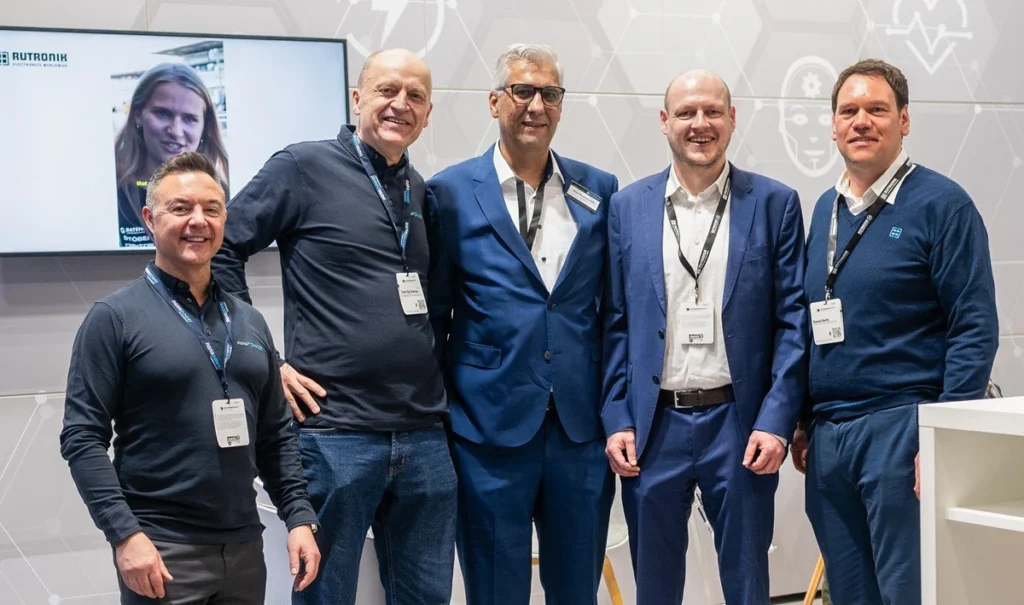
Rutronik Elektronische Bauelemente GmbH, a leading global broadline distributor of electronic components, has significantly expanded its semiconductor portfolio through a new worldwide franchise agreement with Nanopower Semiconductor. This strategic partnership introduces the Norwegian company’s innovative ultra-low-power Power Saving ICs (PSICs) to Rutronik’s extensive offering, marking a pivotal step towards a new generation of battery-free and energy-autonomous Internet of Things (IoT) applications. The agreement, which is effective immediately and applies globally, covers Nanopower Semiconductor’s complete standard product portfolio. Beyond distribution, Rutronik will also provide comprehensive design-in and technical support, empowering customers to develop cutting-edge, low-power IoT, sensing, and truly energy-autonomous systems.
The collaboration addresses a critical bottleneck in the burgeoning IoT landscape: power consumption. As the world becomes increasingly connected, the demand for devices that can operate reliably for extended periods with minimal or no maintenance is skyrocketing. Traditional battery-powered solutions often fall short in terms of longevity, cost, and environmental impact, particularly in remote, harsh, or inaccessible environments. Nanopower Semiconductor’s patented nPZero subthreshold technology directly tackles these challenges, offering a paradigm shift in how embedded systems manage power.
The Core of Innovation: Power Saving ICs Target Nanoampere Operation
At the heart of Nanopower Semiconductor’s offering are its integrated circuits specifically designed for battery-powered and energy-autonomous applications. These Power Saving ICs (PSICs) leverage the company’s proprietary nPZero subthreshold technology, which enables autonomous sensor operation while consuming current in the incredibly low nanoampere range. To put this into perspective, a nanoampere (nA) is one-billionth of an ampere, representing an unprecedented level of power efficiency for active components. This dramatic reduction in energy consumption fundamentally alters the design possibilities for connected systems.
By drastically cutting the energy required for operation, these devices can achieve two primary, transformative outcomes. Firstly, they can extend the operating life of batteries from months to years, or even decades, depending on the application and duty cycle. This significantly reduces the total cost of ownership for IoT deployments by minimizing the need for costly and labor-intensive battery replacements. Secondly, and perhaps more revolutionary, PSICs facilitate designs that eliminate batteries altogether through efficient energy harvesting. This means devices can be powered entirely by ambient energy sources such as solar, thermal, kinetic, or radio frequency energy, leading to truly "fit-and-forget" solutions.
Unlike conventional power management ICs (PMICs) or general-purpose microcontrollers, Nanopower’s PSICs are not designed for broad computational tasks or complex power regulation across multiple voltage rails. Instead, they provide dedicated, ultra-low-power functionality meticulously crafted to reduce the overall energy requirements of connected sensor systems. This specialized approach ensures that the most power-hungry aspects of a sensor node – typically the sensing, data acquisition, and short-burst transmission – are managed with unparalleled efficiency. The PSICs often act as intelligent "sleep managers" or "wake-up controllers," allowing the main microcontroller or system-on-chip to remain in a deep sleep state for the vast majority of its operational life, only waking up when absolutely necessary to perform a task, and then quickly returning to its nanoampere-level slumber.
Addressing Critical Market Needs: IoT and Energy-Autonomous Devices
The implications of such ultra-low-power technology are far-reaching, particularly across the rapidly expanding sectors of industrial IoT (IIoT), smart buildings, healthcare, and smart city infrastructure. These applications are increasingly characterized by a need for distributed sensors and connected devices that must operate for extended periods with little to no human intervention or maintenance.
Consider the industrial sector, where sensors might monitor critical machinery in remote factories, pipelines in isolated locations, or environmental conditions in hazardous environments. Replacing batteries in such settings can be incredibly difficult, expensive, and often impractical due to accessibility issues, safety regulations, or the sheer number of deployed devices. A device that can operate for decades on a single small battery, or entirely from harvested energy, offers immense operational advantages and cost savings. The global industrial IoT market, projected to reach hundreds of billions of dollars in the coming years, is ripe for such innovation, with energy autonomy being a key driver for scalability and sustainability.
Similarly, in smart buildings, hundreds or thousands of sensors monitor temperature, humidity, occupancy, and air quality. Traditional battery life cycles often dictate frequent maintenance schedules, creating logistical challenges and ongoing costs. With Nanopower’s PSICs, these sensors can achieve multi-decade lifespans, aligning perfectly with building infrastructure lifecycles and contributing to truly smart, maintenance-light environments. The global smart building market is experiencing robust growth, driven by energy efficiency mandates and occupant comfort, both of which benefit from reliable, long-life sensor networks.
The healthcare sector also stands to benefit profoundly. Wearable medical devices, remote patient monitoring systems, and asset tracking in hospitals require discreet, long-lasting power solutions. Miniaturization and extended operational periods are paramount, and the ability to eliminate batteries entirely opens up possibilities for new, less intrusive, and more reliable medical devices. Imagine a continuous glucose monitor or a vital sign tracker that never needs a battery change, drawing power solely from ambient light or body heat.
For smart cities, where vast networks of sensors manage traffic flow, waste collection, public safety, and environmental monitoring, the logistical burden of powering and maintaining countless devices is immense. Lowering standby and operating power allows for the use of smaller, less expensive batteries, extends the period between replacements, or, ideally, enables devices to operate entirely using harvested energy from streetlights, vibrations, or solar panels. This not only reduces operational costs but also contributes to the environmental sustainability goals of urban development.
Rutronik’s Strategic Vision and Portfolio Enhancement
Rutronik’s decision to integrate Nanopower Semiconductor’s technology into its portfolio underscores its commitment to staying at the forefront of technological advancements and providing its global customer base with access to cutting-edge solutions. As a broadline distributor, Rutronik plays a crucial role in the electronics supply chain, bridging the gap between innovative component manufacturers and a diverse range of design engineers and system integrators.

Rutronik’s established reputation for technical expertise and extensive support infrastructure makes it an ideal partner for a specialized technology like Nanopower’s PSICs. The company’s global network of field application engineers (FAEs) and product specialists will be instrumental in guiding customers through the design-in process, helping them leverage the full potential of nanoampere technology for their specific applications. This level of support is critical for emerging technologies, as it helps engineers understand complex new paradigms and integrate them effectively into their product designs.
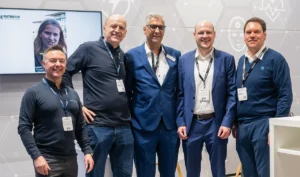
Reza Armin Maghdounieh, Vice President of Semiconductor Product Marketing at Rutronik, articulated the strategic importance of this partnership. He emphasized that Nanopower’s nPZero technology is a game-changer, enabling IoT devices to operate in the nanoampere range while maintaining full functionality. Maghdounieh highlighted the vast potential applications across industrial IoT, healthcare, and smart buildings, underscoring Rutronik’s belief that this technology will drive significant innovation in these sectors. For Rutronik, this addition is not merely about expanding a product list; it’s about enriching its offering with foundational technology that will shape the next generation of connected devices.
Anthony Carter, Global Sales Director at Nanopower Semiconductor, echoed this sentiment, noting that Rutronik’s international reach and robust technical support would be invaluable in bringing Nanopower’s groundbreaking technology to a wider range of design projects globally. This partnership provides Nanopower Semiconductor with immediate access to Rutronik’s extensive customer base and sophisticated distribution network, accelerating the adoption of their PSICs and solidifying their position as a key enabler of ultra-low-power IoT.
Chronology and Industry Context
The development and widespread adoption of ultra-low-power technologies like Nanopower’s PSICs represent the culmination of years of research and development in semiconductor physics and energy management. For decades, the electronics industry has been striving for greater efficiency, initially driven by mobile computing and now by the explosion of IoT. The journey from milliwatt to microwatt, and now to nanoampere operation, reflects a relentless pursuit of miniaturization and extended autonomy.
Early IoT deployments often struggled with battery life, leading to high maintenance costs and environmental concerns regarding battery disposal. This spurred a significant focus on improving power management techniques, including advanced sleep modes, duty cycling, and more efficient power converters. However, these incremental improvements often reached their limits, especially for applications requiring years of operation without intervention or those dependent on meager harvested energy.
Nanopower Semiconductor’s nPZero subthreshold technology emerges at a critical juncture, representing a step-function improvement rather than an incremental gain. By fundamentally rethinking how transistors operate at extremely low voltages, the company has unlocked efficiencies previously considered unattainable in practical ICs. This agreement with Rutronik, a distributor with a strong market presence since its founding in 1973, signifies a critical milestone in the commercialization and widespread accessibility of this advanced technology. It moves nanoampere operation from the realm of academic research into mainstream product development, enabling engineers worldwide to design truly autonomous solutions.
Broader Impact and Implications
The collaboration between Rutronik and Nanopower Semiconductor carries significant implications across technological, economic, and environmental fronts.
Technological Impact: This partnership will accelerate the adoption of truly energy-autonomous IoT devices. It lowers the barrier for entry for many developers who previously found battery life or power budget to be insurmountable obstacles. New applications previously deemed unfeasible due to power constraints, such as ubiquitous environmental monitoring in remote areas, long-term structural health monitoring, or tiny, self-powered medical implants, become realistic possibilities. It also encourages further innovation in energy harvesting technologies, as more devices become capable of operating on minuscule power inputs. The development of specialized ultra-low-power ICs, as opposed to generic power management solutions, signals a maturing IoT ecosystem that demands highly optimized, purpose-built components.
Economic Impact: The economic benefits are substantial. For end-users and integrators, reduced battery replacement cycles translate directly into lower operational expenditures (OpEx) and improved return on investment (ROI) for IoT deployments. The ability to deploy "set-and-forget" sensors significantly cuts down on labor costs associated with maintenance and troubleshooting. For device manufacturers, Nanopower’s PSICs enable the creation of more competitive, reliable, and differentiated products. The reduced need for large batteries can also lead to smaller form factors and lower material costs. Furthermore, by facilitating new applications, this technology opens up entirely new market segments and revenue streams for companies willing to innovate in the energy-autonomous space.
Environmental Impact: From an environmental perspective, the widespread adoption of nanoampere technology can lead to a significant reduction in battery waste. The disposal of billions of batteries from IoT devices poses a growing environmental challenge, with concerns about hazardous materials and resource depletion. By extending battery life by orders of magnitude or eliminating batteries entirely through energy harvesting, this technology contributes directly to a more sustainable and circular economy for electronics. It aligns with global efforts to reduce electronic waste and promote greener technological solutions, enhancing the environmental footprint of connected devices.
In conclusion, the global franchise agreement between Rutronik Elektronische Bauelemente and Nanopower Semiconductor represents more than just an expansion of a product portfolio; it signifies a strategic alignment aimed at overcoming one of the most persistent challenges in the Internet of Things – power autonomy. By making Nanopower’s ultra-low-power PSICs widely accessible, Rutronik is empowering engineers worldwide to design the next generation of maintenance-free, environmentally friendly, and truly intelligent connected devices, ushering in an era of ubiquitous and sustainable IoT.