MUNICH – A new era in material science and sustainable manufacturing is dawning, as researchers at the Technical University of Munich (TUM) have engineered a high-performance adhesive primarily extracted from mistletoe berries. This innovative, fully bio-based adhesive not only demonstrates exceptional bonding capabilities across a diverse range of materials, from wood and metal to glass and even the notoriously non-stick Teflon, but also introduces a pivotal feature: the ability to be repeatedly reactivated by heat. This breakthrough promises to significantly simplify repairs and enhance recycling processes across numerous industries, offering a tangible step towards a more circular economy.
The adhesive’s development marks a significant advancement in the quest for environmentally friendly alternatives to conventional synthetic glues, which often rely on petrochemical components and present considerable challenges for end-of-life product management. Led by Oliver Lieleg, Ph.D., Professor of Biopolymer Materials at TUM, the research team successfully formulated an adhesive primarily from a natural sugar mixture found in mistletoe berries, supplemented with tannic acid and malic acid. Critically, this formulation circumvents the need for petrochemical derivatives and complex synthetic pretreatments of raw materials, addressing a long-standing hurdle in bio-based adhesive development.
The Mistletoe Breakthrough: A Deep Dive into the Adhesive’s Properties
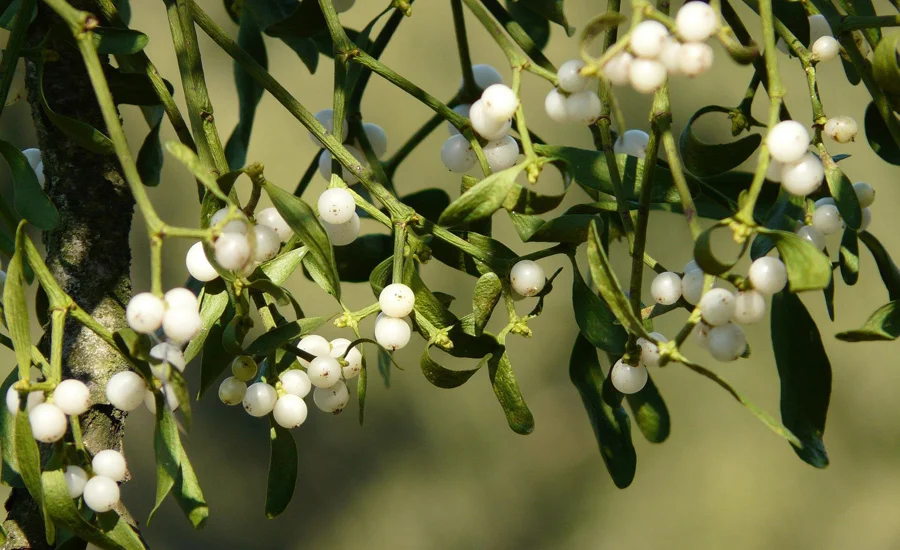
Mistletoe, traditionally recognized as a symbol of luck and affection during winter holidays, possesses a remarkable biological characteristic that inspired this scientific endeavor. Its seeds naturally adhere to host tree branches using a sticky, viscous substance, facilitating the plant’s colonization of new trees. This natural mechanism provided the blueprint for the TUM researchers, who sought to harness this inherent adhesive quality for industrial applications.
"Many bio-based adhesives are either not strong enough or require elaborate chemical processing," noted Ufuk Gürer, Ph.D., first author of the study. "Our approach uses a natural raw material with exceptional adhesive properties and works with comparatively simple ingredients." This simplicity in formulation, coupled with high performance, distinguishes the mistletoe-derived adhesive from many existing bio-alternatives. The research team meticulously isolated and optimized the adhesive components, ensuring that the final product not only retained the natural sticking power but also met stringent industrial performance standards.
In rigorous testing, the adhesive demonstrated impressive strength on a wide array of substrates, including birch wood, stainless steel, aluminum, and glass. Even polytetrafluoroethylene (PTFE), commonly known as Teflon, which is notoriously difficult to bond due to its extremely low surface energy and inert chemical structure, yielded to the new formulation, forming robust, load-bearing joints. This capability is particularly noteworthy, as Teflon’s non-stick properties make it a persistent challenge for adhesive technology, often requiring complex surface treatments or specialized primers. The bio-based adhesive achieved shear strengths exceeding 10 megapascals (MPa) in some tests. To put this in context, many common household adhesives offer shear strengths in the range of 1-5 MPa, while specialized structural adhesives, often used in demanding applications like automotive or aerospace, can reach 10-40 MPa or more depending on the substrate and application. The TUM adhesive’s performance places it firmly within the category of technical structural adhesives, signifying its potential for high-demand engineering applications.
Beyond its impressive bonding strength, the adhesive exhibits remarkable temperature resilience. It maintains its bonding performance under extremely cold conditions, down to -150°C, opening doors for applications in environments previously considered challenging for adhesives. Furthermore, the adhesive’s unique capacity to be detached and reactivated by heating to approximately 90°C represents a paradigm shift. This thermal reversibility allows for the controlled separation of bonded components without damaging the parts, facilitating repair, refurbishment, and comprehensive material recycling.
The Imperative for Bio-Based Solutions: Contextualizing the Innovation
The development of the mistletoe adhesive arrives at a critical juncture, as global industries grapple with the environmental consequences of conventional materials and manufacturing processes. The global adhesive and sealants market, valued at approximately $60 billion in 2022 and projected to reach over $80 billion by 2030, is heavily reliant on synthetic polymers derived from fossil fuels. These traditional adhesives, while effective, often pose significant challenges. Many contain volatile organic compounds (VOCs) that contribute to air pollution and health concerns. More importantly, their permanent bonding nature makes the disassembly and recycling of composite products incredibly difficult and costly, contributing to massive waste streams.
The electronics industry, in particular, faces an escalating e-waste crisis. The United Nations estimates that a record 62 million tonnes of e-waste was generated globally in 2022, with only 22% formally collected and recycled. Adhesives are a major culprit, often making the separation of valuable components and hazardous materials from electronic devices economically unfeasible. Similarly, in sectors like automotive and aerospace, where lightweighting and advanced material composites are prevalent, the inability to easily debond components complicates repair and end-of-life recycling, hindering the transition to a circular economy.
The push for sustainable materials has intensified, driven by regulatory pressures, corporate sustainability goals, and growing consumer demand for eco-friendly products. This has spurred extensive research into bio-based adhesives derived from natural sources such as starches, proteins, and cellulose. While many promising bio-adhesives have emerged, they often struggle with a trade-off between strength, water resistance, and processability, or require complex chemical modifications that diminish their "green" credentials. The TUM mistletoe adhesive appears to bridge this gap, offering a high-performance solution with a relatively simple, bio-based formulation.
Beyond Bonding: Repairability and Recycling as Key Advantages
The most transformative aspect of the TUM adhesive is its thermal reactivability. This feature directly addresses one of the most significant barriers to achieving true circularity in manufacturing: the inability to easily disassemble products. For electronic devices, this means displays, housings, or other bonded components could be replaced or repaired with unprecedented ease, reducing the need to discard an entire device due to a single faulty part. This capability directly extends the lifespan of products, minimizes resource consumption, and drastically cuts down on e-waste.
Consider a smartphone with a cracked screen. Currently, replacing such a component often involves heat guns, specialized tools, and considerable risk of damaging other parts due to the strength and permanence of existing adhesives. With the mistletoe adhesive, a localized application of heat could allow for the clean separation of the screen assembly, enabling a simpler, less destructive replacement process. Beyond repair, this also streamlines recycling. Instead of shredding or chemically treating complex electronic assemblies, components could be selectively debonded and sorted for material recovery, preserving the purity and value of recycled materials.
This principle extends beyond electronics. In industries like automotive, where lightweight multi-material structures are becoming standard, the ability to debond and rebond components could facilitate more efficient repairs and enable the recovery of valuable metals, plastics, and composites at the end of a vehicle’s life. For furniture or other consumer goods, it could enable modular designs that are easy to repair, upgrade, or repurpose, moving away from the linear "take-make-dispose" model.
Diverse Applications: From Electronics to Extreme Environments
The broad applicability and unique characteristics of the mistletoe adhesive make it relevant for a wide spectrum of industries:
- Electronics: As mentioned, its thermal reactivability is a game-changer for repair, refurbishment, and recycling of smartphones, tablets, laptops, and other electronic gadgets. The ability to bond challenging materials like Teflon also suggests potential for specialized electronic components or coatings.
- Cryogenic Temperatures and Space Technology: The adhesive’s performance at -150°C is particularly significant. In cryogenic applications, such as those found in scientific research, medical storage, or certain industrial processes, current adhesives often struggle, requiring additional mechanical fasteners to secure bonded joints. The TUM adhesive offers a reliable bonding solution in these extreme cold environments, potentially reducing complexity and weight in critical systems. For space technology, where materials must withstand vast temperature fluctuations and vacuum conditions, a robust, reliable adhesive that performs at cryogenic temperatures could lead to more resilient spacecraft components, scientific instruments, and propulsion systems, potentially reducing the reliance on cumbersome mechanical fasteners and enabling more compact designs.
- Automotive and Aerospace: Lightweighting is a perpetual goal in these sectors to improve fuel efficiency and performance. The use of advanced composites and dissimilar materials often requires sophisticated bonding solutions. A strong, bio-based adhesive that can also facilitate repair and end-of-life recycling aligns perfectly with sustainability goals and evolving manufacturing paradigms in these industries.
- Construction and Woodworking: For timber structures, furniture, and other wood products, a high-strength, bio-based adhesive offers a sustainable alternative to formaldehyde-based glues, which have environmental and health concerns. Its debonding capability could also enable modular construction or easier repair of wooden elements.
- Biomedical (Potential Future): While not explicitly mentioned in the original research, the bio-based nature and non-toxic formulation could potentially open avenues for future exploration in biomedical applications, particularly for temporary medical devices or drug delivery systems where biocompatibility and controlled degradation or debonding are desirable. However, this would require extensive further research and regulatory approval.
Overcoming Production Hurdles: The Path to Scalability
Despite its groundbreaking potential, the immediate large-scale production of the mistletoe-derived adhesive faces a notable limitation: its reliance on mistletoe berries as the primary source of the key adhesive components. Mistletoe, while widespread, is a parasitic plant that grows relatively slowly, and harvesting its berries on an industrial scale could be challenging and potentially unsustainable if not managed carefully. This presents a classic dilemma for many nature-inspired innovations – bridging the gap between discovery and scalable production.
Professor Lieleg acknowledged this challenge, stating, "We are exploring ways to produce the key adhesive components independently of the plant and make the process scalable." This statement indicates a clear strategic direction for future research: identifying the specific molecular structures responsible for the adhesive properties and then developing synthetic or biotechnological methods to produce these compounds without direct reliance on the plant itself. This could involve fermentation processes using genetically engineered microorganisms, or purely chemical synthesis pathways, similar to how many pharmaceuticals or industrial enzymes are produced. Success in this endeavor would unlock the full potential of the mistletoe adhesive, allowing it to be manufactured economically and sustainably at volumes required by global industries.
The Future of Adhesion: A Paradigm Shift in Materials Science
The development of the TUM mistletoe-derived adhesive represents more than just a new product; it signals a potential paradigm shift in materials science and engineering. It underscores the immense untapped potential of biomimicry – drawing inspiration from nature to solve complex human challenges. By demonstrating that high performance, sustainability, and functionality like thermal reversibility can coexist in a single adhesive, the TUM team has set a new benchmark for future material innovations.
This research will undoubtedly inspire further exploration into other natural adhesive mechanisms and accelerate the development of a new generation of smart, sustainable materials. As industries worldwide increasingly prioritize environmental responsibility and circular economy principles, innovations like the mistletoe adhesive are not merely desirable; they are becoming essential. The ability to bond diverse materials strongly, yet allow for easy disassembly and recycling, is a cornerstone of future sustainable manufacturing. With continued research into scalable production methods, the mistletoe adhesive stands poised to play a significant role in shaping a more resilient, resource-efficient, and environmentally conscious industrial landscape.