Washington State University researchers have leveraged artificial intelligence to identify a significantly faster and less costly methodology for 3D printing a high-performance metal alloy, effectively bypassing the arduous and impractical need to manually test more than 100 million potential printing configurations. This groundbreaking advance not only promises to make a critical aerospace alloy more accessible but also pioneers a new paradigm for scientific discovery across various complex fields.
The innovation is poised to democratize the production of GRCop-42, an alloy extensively utilized in demanding aerospace applications, by enabling its printability on more ubiquitous commercial 3D printing equipment. Beyond its immediate impact on additive manufacturing, the sophisticated AI strategy developed by the WSU team offers a powerful framework for tackling other scientific problems characterized by an overwhelming number of possible experiments, including the intricate process of drug discovery and the optimization of new materials.
The seminal work, a collaborative effort between WSU’s School of Electrical Engineering and Computer Science and the School of Mechanical and Materials Engineering, was published in the Proceedings of the AAAI Conference on Artificial Intelligence. The project’s profound implications and innovative deployment were further recognized with the prestigious Innovative Deployed Application Award at the organization’s annual conference, underscoring its real-world applicability and scientific merit.
"Ninety percent of commercial printers cannot print this metal alloy, so given that we were able to find these feasible process parameters, it allows us to use those commercial printers, and we are essentially democratizing the printing of this alloy," stated Jana Doppa, Huie-Rogers Endowed Chair Professor of Computer Science and Berry Distinguished Professor in Engineering, who spearheaded the research. Her remarks highlight the transformative potential of this methodology in broadening access to advanced materials and accelerating technological development.
GRCop-42: A NASA Innovation for Extreme Environments
At the heart of this research lies GRCop-42, a specialized metal alloy composed of copper, chromium, and niobium. Developed by NASA, GRCop-42 was specifically engineered to withstand the most demanding operational environments where an exceptional balance of heat resistance and efficient thermal transfer is paramount. Its unique properties make it indispensable in critical aerospace systems, most notably within the combustion chambers of liquid rocket engines, where temperatures can soar to extreme levels while requiring robust structural integrity and efficient heat dissipation.
The material’s high thermal conductivity, coupled with its ability to maintain strength even at scorching temperatures, positions it as a vital component for next-generation propulsion systems, hypersonic vehicles, and other advanced thermal management applications. However, despite its highly desirable characteristics and vast potential across various industrial sectors, GRCop-42 has historically presented significant challenges for 3D printing. The traditional additive manufacturing process for this alloy typically necessitates substantial laser power and energy, limiting its production to highly specialized and expensive equipment. This bottleneck has constrained its widespread adoption and the exploration of its full application spectrum.
The Prohibitive Cost and Complexity of Traditional Optimization
Prior to the WSU team’s breakthrough, attempts to 3D print GRCop-42 using the lower wattages available on more common commercial machines had largely proved unsuccessful. The intricate interplay of numerous printing parameters—such as laser power, scan speed, layer thickness, and hatch spacing—creates a vast, multi-dimensional search space for optimal configurations. Manually testing these possible printing settings one by one is not only incredibly time-consuming but also economically prohibitive. Each experimental print consumes expensive raw material, requires access to specialized and costly equipment, and demands considerable human effort for setup, execution, and subsequent material analysis. A single print can incur costs reaching into the hundreds of dollars, and the thorough metallurgical analysis required to evaluate the finished sample’s integrity and properties can take several days.
"Sometimes they printed a certain configuration, and the product just melted," explained Azza Fadhel, the first author of the paper and a PhD student in computer science. She further elaborated on the scale of the challenge: "It wasn’t really printable, and even with time and money, they wouldn’t be able to try all 100 million options. What we were doing in our collaboration is to apply the AI so that we efficiently choose candidates from this very large search space." This encapsulates the core dilemma: a material with immense potential, locked behind an intractable optimization problem for conventional experimental methods. The sheer number of variables and their continuous nature meant that an exhaustive search was, quite simply, an impossibility. The industry’s reliance on empirical trial-and-error, often guided by expert intuition, proved inadequate for a challenge of this magnitude, resulting in protracted development cycles and inflated costs.
AI’s Intelligent Navigation of a Vast Search Space
The WSU researchers approached this colossal problem by strategically employing artificial intelligence, moving beyond brute-force experimentation. Their methodology began with a foundational dataset: information gleaned from 37 printing configurations that had previously failed in earlier experiments conducted within the School of Mechanical and Materials Engineering. These "failures" were not setbacks but rather invaluable data points, providing the AI with initial negative examples to learn from.
Utilizing these results, the team developed a sophisticated AI model capable of estimating the likelihood of success for an untested combination of printing settings. This predictive capability allowed the AI to intelligently recommend small groups of new configurations for physical testing. The model’s selection process was meticulously balanced between two critical priorities: exploration and exploitation. Some recommended experiments focused on configurations that appeared especially promising based on the current model, aiming to "exploit" the knowledge gained thus far. Simultaneously, other recommendations strategically explored less certain, uncharted parts of the search space. This "exploration" was crucial for acquiring new information, refining the AI model’s understanding of the parameter landscape, and avoiding local optima. This iterative, active learning approach is a hallmark of efficient experimental design, enabling rapid convergence on optimal solutions without exhaustive searching.
Nathaniel Zuckschwerdt, Susmita Bose, and Amit Bandyopadhyay from the School of Mechanical and Materials Engineering played a pivotal role, collaborating with the AI team to physically print GRCop-42 using the configurations precisely chosen by the AI. Subsequently, they meticulously evaluated the finished samples for structural integrity, density, and other critical material properties. Aryan Deshwal from the University of Minnesota also contributed to the collaborative project, bringing additional expertise to the interdisciplinary effort.
The iterative feedback loop was fundamental to the project’s success. "They would give me back the results, and I liked all of them – even if they failed — because every result improved our AI model," Fadhel noted, underscoring the intrinsic value of every experiment, whether successful or not, in enhancing the AI’s learning capabilities and predictive accuracy. This symbiotic relationship between computational intelligence and physical experimentation represents a significant evolution in materials science research.
Breakthrough Results: Lower Power, Broader Access
The success of printing GRCop-42 with significantly less laser power carries profound implications and offers several distinct advantages. From an operational standpoint, it directly translates to reduced energy consumption, contributing to more sustainable manufacturing processes. Furthermore, it decreases the wear and tear on expensive printing equipment, extending the lifespan of machinery and reducing maintenance costs. Lower power also mitigates the intensity of post-processing requirements, which can often be a costly and time-consuming step in additive manufacturing.
Crucially, this breakthrough has the potential to make GRCop-42 accessible to a much broader community. Universities, smaller research laboratories, and burgeoning companies that previously lacked the financial capital or infrastructure for specialized high-power printing systems can now explore and utilize this advanced alloy. This "democratization" is not merely about access; it’s about fostering innovation. By lowering the barriers to entry, the WSU research enables a wider range of scientists and engineers to experiment with GRCop-42, potentially leading to novel applications and technological advancements that were previously unattainable.
The challenge presented to the AI was formidable, as researchers already knew that successful settings would be exceptionally rare among the more than 100 million possible configurations. "It’s a very challenging case for AI," Doppa acknowledged. "Every time you try, you basically get a binary success or failure signal, and you are trying to minimize the number of tries that you have so that you get to those successful needles very quickly." The analogy of finding a needle in a colossal haystack accurately describes the problem space.
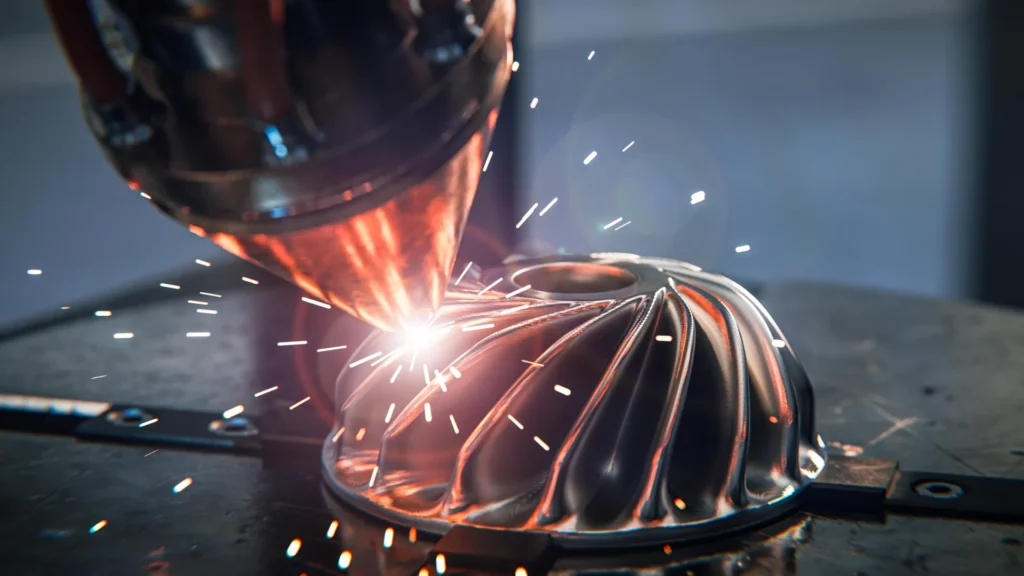
Despite these daunting odds, the interdisciplinary team achieved remarkable success. Over a period of just three months, and by limiting the project to a total of only 40 experiments, they successfully identified six viable printing configurations at different laser power levels. Most notably, for the first time in documented research, they successfully 3D printed GRCop-42 using a mere 500 watts of laser power – a dramatic reduction from the thousands of watts typically required, marking a significant milestone in additive manufacturing.
A Broader Tool for Scientific Discovery and Innovation
The implications of the WSU team’s AI-guided approach extend far beyond the realm of GRCop-42 and additive manufacturing. The researchers firmly believe that the same methodology can be readily adapted to identify workable processing conditions for a myriad of other challenging metal alloys and complex additive manufacturing systems. This opens doors for accelerating the development and optimization of new materials across industries.
More broadly, this AI-driven method offers a transformative tool for scientists grappling with problems where successful outcomes are exceedingly rare, the number of possible experiments is astronomical, and the cost (material, financial, or temporal) of testing every option is prohibitively expensive. The researchers envision potential applications reaching far beyond manufacturing, impacting other critical areas of scientific discovery. For instance, in drug discovery, where the number of potential molecular candidates runs into the billions and each synthesis and test is incredibly costly and time-consuming, an AI-guided exploration could dramatically accelerate the identification of promising compounds. Similarly, in catalyst design, battery material development, or even agricultural science for optimizing crop conditions, this methodology could prove invaluable.
"There’s always uncertainty when you are deploying something where real people, materials, and physical costs are involved," Doppa reflected on the project’s inherent risks. "We didn’t know whether we would succeed or not, and there is always that risk. There are real stakes. I was very surprised that we were able to do this so well." This sentiment underscores the pioneering spirit and the significant validation that this successful deployment represents for the future of AI in scientific research.
The Evolution of Materials Science and Engineering
The WSU breakthrough is a testament to the accelerating convergence of computer science and materials engineering, marking a significant step in the broader "Materials Genome Initiative" – a global effort to discover, develop, and deploy advanced materials twice as fast, at a fraction of the cost. Traditional materials discovery often follows a lengthy, iterative process of synthesis, characterization, and testing. This process, spanning decades for some materials, is now being supercharged by computational methods and artificial intelligence.
Industry experts anticipate that such advancements will significantly impact the global additive manufacturing market, which is projected to reach hundreds of billions of dollars in the coming years. By making high-performance alloys like GRCop-42 more accessible and cost-effective to produce, WSU’s work could stimulate new product development cycles and foster greater innovation in sectors ranging from aerospace and defense to energy and medical devices. NASA, as a primary developer and key user of GRCop-42, stands to benefit immensely from more efficient and accessible production methods, potentially enabling faster iteration and deployment of advanced propulsion systems.
In essence, the WSU team has not merely optimized a printing process; they have refined a methodology for scientific discovery itself. Their work paves the way for a future where AI routinely guides complex experimental processes, efficiently navigating vast data landscapes to uncover novel solutions, thereby accelerating innovation and solving some of humanity’s most pressing technological challenges. This intelligent marriage of computational power and material science promises to reshape the landscape of scientific research for decades to come.