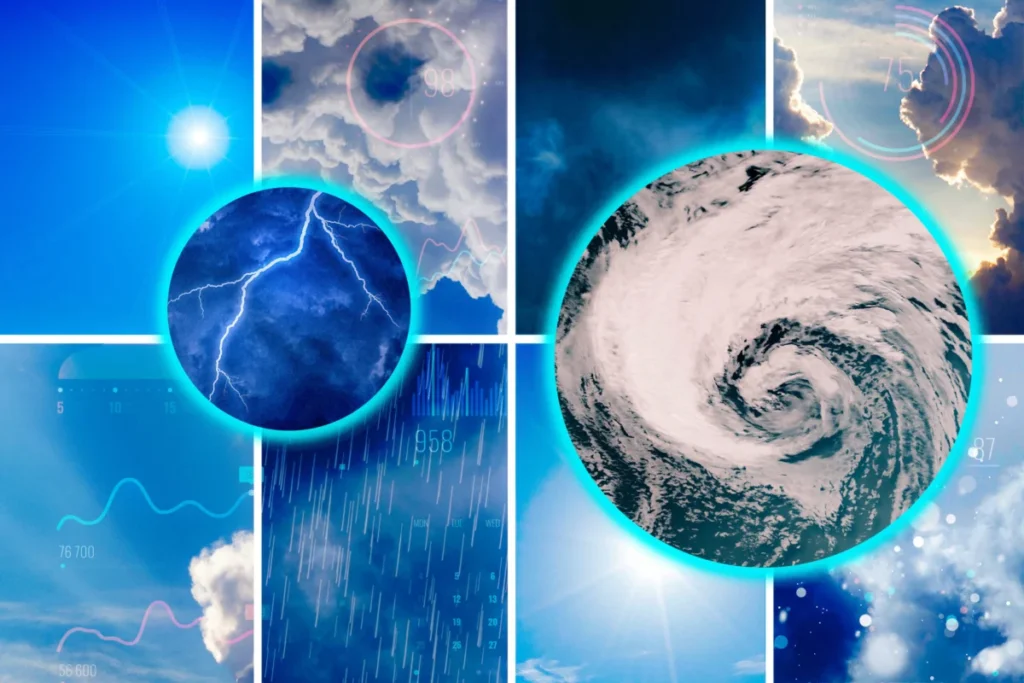
The looming questions that plague communities worldwide—can a city’s seawall withstand a blockbuster storm? Will a region’s power grid hold against record-breaking heat? Can a town’s firefighting resources contain a major wildfire?—are becoming increasingly urgent. To adequately answer these critical inquiries, communities first require a profound understanding of how such extreme events might realistically unfold. This necessitates predicting the likely spread of a wildfire, the potential impact area of a storm, and the projected duration of a heatwave. Yet, anticipating extreme events has historically been notoriously difficult. By their very nature, these phenomena are outliers, sporadic and rare in the annals of record-keeping. Compounding this challenge, most traditional methods for assessing a region’s risk rely heavily on past extreme events to characterize even more severe, worst-case scenarios in the future. This reliance on historical data inherently limits their ability to project truly unprecedented occurrences.
The Escalating Challenge of Extremes
The past few decades have witnessed a dramatic increase in the frequency and intensity of extreme weather events globally, a trend largely attributed to climate change. From devastating hurricanes to prolonged heatwaves and rampant wildfires, these events are pushing the boundaries of what societies have previously experienced and are capable of withstanding. The economic toll is staggering; according to the National Oceanic and Atmospheric Administration (NOAA), the United States alone experienced 28 separate billion-dollar weather and climate disasters in 2023, surpassing the previous record of 22 events in 2020. These events collectively caused over $92.9 billion in damages, underscoring the urgent need for more robust predictive models.
Hurricane Katrina in 2005, for example, stands as a stark reminder of the devastating consequences when communities are unprepared for an event of immense scale. While models existed, the sheer magnitude and cascading failures it triggered in New Orleans were, for many, beyond previous expectations. More recently, the record-breaking heatwaves that gripped Europe, North America, and Asia in successive summers have strained power grids, threatened public health, and highlighted the vulnerability of infrastructure not designed for such sustained, intense conditions. Similarly, the rapid escalation of wildfire seasons, particularly in regions like California, Australia, and parts of Canada, demonstrates how even historical "worst-case" scenarios are being outstripped by current realities. The 2023 Canadian wildfire season, for instance, burned over 18 million hectares, an area larger than Greece, creating widespread smoke that impacted air quality across North America for weeks. These events are not merely statistical anomalies but harbingers of a future demanding a new paradigm in risk assessment and preparedness.
The Flaw in Historical Data: Why Past Isn’t Always Prologue
The conventional approach to risk assessment often involves analyzing historical datasets to identify patterns and probabilities of extreme events. This method works reasonably well for events that have occurred with some regularity in the past. For instance, actuaries and urban planners might define a "100-year flood" based on historical flood levels over a century or more, assuming that future events will broadly conform to past statistical distributions. However, this methodology encounters severe limitations when confronted with truly unprecedented events—those that have never been recorded or exceed all prior benchmarks.
As Kai Chang SM ’25, a PhD student in the MIT Center for Computational Science and Engineering, explains, "We are trying to model extreme, unprecedented events that no one has seen before, that are not in the dataset." The inherent problem is that by their very definition, these events are outliers. They are the "black swans" of disaster prediction, rare occurrences with severe consequences that are difficult to predict because they fall outside the realm of normal expectations based on historical data. If the most extreme rainfall measurement ever recorded in a city is 200 millimeters, traditional models struggle to accurately simulate the characteristics of a plausible 300-millimeter event, as there is no historical precedent to learn from. Yet, city planners desperately need to understand where such a storm might hit, its potential coverage area, and its intensity to assess existing infrastructure and plan necessary reinforcements.
Themis Sapsis, the William I. Koch Professor of Mechanical and Ocean Engineering at MIT and a core member of the Center for Computational Science and Engineering, emphasizes this point: "An event like Hurricane Katrina is something that happens every 30 to 40 years. What will be the Katrina that happens every 100 years? How bad will it be? That’s exactly what we’re trying to quantify, to help planners prepare for plausible extreme scenarios." The challenge isn’t just predicting the recurrence of known extremes, but envisioning the characteristics of events that are "riskier than everything that has happened before and yet are still plausible."
Introducing η-learning: A Paradigm Shift in Prediction
In a groundbreaking development detailed in an open-access paper published on August 20 in the journal Nature Communications, MIT engineers Kai Chang and Themis Sapsis have unveiled a revolutionary tool designed to overcome these predictive limitations. Their method, dubbed Extreme Event Aware, or "η-learning," represents a significant paradigm shift because it does not require knowledge of previous extreme events to generate plausible future extreme scenarios.
Instead of relying on historical records of extreme deviations, the η-learning algorithm learns from a comprehensive dataset, such as a region’s daily weather records and maps. Crucially, this record may or may not contain past extreme deviations like record-setting heat or rain. The team’s algorithm employs a sophisticated statistical approach to learn from the available data, meticulously excluding implausible weather scenarios. This allows it to generate plausible extreme events that are likely to occur in a given region with a specified frequency (e.g., once every 100 years), projecting how those extreme events might manifest in terms of their size, intensity, and duration.
The core innovation lies in the algorithm’s ability to combine and learn statistics about the relationships between two distinct types of data: point statistics and spatial maps. To demonstrate its efficacy, the researchers applied the method to generate maps of future extreme precipitation events across the continental United States. They began by analyzing 25 years of hourly precipitation maps, which were then aggregated into daily maps. From this extensive record, they computed point statistics detailing how often the maximum rainfall across a map reached a specific level.
Crucially, the algorithm was then trained on paired low- and high-resolution spatial maps derived from only the first six months of the record—a period that contained few, if any, examples of the most extreme rainfall levels. From this limited, non-extreme data, the algorithm learned the intricate correspondence between patterns observed in low-resolution maps and the detailed characteristics captured in high-resolution precipitation maps. It then utilized the previously computed point statistics to constrain the rainfall extremes represented in those maps. This ingenious combination empowers the algorithm to generate plausible spatial patterns for events far more extreme than those present in its training data—for instance, mapping the possible locations, sizes, and intensities of a once-in-a-century rainfall event with a maximum of 300 millimeters.
Beyond the Known: Generating Plausible Worst-Case Scenarios
The practical application of η-learning is transformative. A user can prompt the trained algorithm with a specific query, such as, "What could a once-in-a-century storm look like in New York City?" In response, the algorithm generates thousands of statistically plausible maps depicting storms likely to occur with that rare frequency. These maps include critical characteristics such as the storm’s size, its geographical area of coverage, and the intensity of its rainfall. This capability allows planners to move beyond simply reacting to past disasters and instead proactively visualize and prepare for future, potentially unprecedented, threats.
"Someone can say, ‘I’m interested in building things to withstand the risk of an event that happens every 100 years,’" Chang explains. "What we can do then is produce thousands of possible realizations that will happen with this sort of rare frequency." This wealth of plausible scenarios provides an invaluable resource for stress-testing infrastructure, refining emergency protocols, and informing long-term strategic investments.
From Hurricanes to Market Crashes: Broad Applications of η-learning
The versatility of the η-learning approach extends far beyond meteorological events. As Sapsis and Chang highlight, the method can be applied to other complex fields where extreme, rare events pose significant challenges. One compelling area is financial markets. "Financial market crashes are extreme events that are a complicated combination of things, involving many different sectors," Chang observes. "What is the interaction that leads to a market crash? That is something that this method could explore." By analyzing historical market data—even periods without major crashes—the algorithm could potentially identify statistical precursors and plausible scenarios for future market disruptions, offering a novel tool for risk management in financial institutions.
Another intriguing application lies in robotic navigation. In autonomous systems, unforeseen extreme situations (e.g., sudden sensor failure, unexpected obstacles, or rapidly changing environments) can lead to critical failures. By learning from routine operational data, η-learning could help predict plausible extreme scenarios that a robot might encounter, enabling developers to design more robust and resilient AI systems capable of navigating unexpected challenges. The underlying principle remains the same: identifying statistical relationships within "normal" data to project plausible "abnormal" events, thereby enhancing foresight and preparedness across diverse domains.
A New Era for Resilience and Planning
The implications of the η-learning tool are profound and far-reaching, heralding a new era for resilience and strategic planning across multiple sectors:
- Urban Planning and Infrastructure: For city planners, this tool is a game-changer. It allows them to proactively design and reinforce critical infrastructure—from flood barriers and seawalls to bridges and power grids—against specific, plausible extreme events that have never occurred. Instead of retrofitting after a disaster, cities can build with future worst-case scenarios in mind, significantly reducing vulnerabilities and potential damage. For example, knowing the likely path and intensity of a 300-millimeter rainfall event enables engineers to model drainage system capacity and identify areas prone to catastrophic flooding, informing targeted upgrades.
- Insurance Industry: The insurance sector stands to benefit immensely. By providing more accurate and detailed projections of rare, high-impact events, η-learning can help insurers better assess risk, price premiums, and manage their exposure to catastrophic losses. This could lead to more stable insurance markets and more equitable coverage, particularly in regions increasingly affected by climate-related disasters. It moves beyond historical loss data to future potential, offering a more robust basis for underwriting.
- Government and Emergency Services: For agencies like FEMA, NOAA, and local emergency management teams, the ability to generate thousands of plausible extreme event scenarios is invaluable for preparedness. It enables more effective resource allocation, development of evacuation plans, and training exercises tailored to specific, projected threats. This proactive planning can save lives, minimize property damage, and accelerate recovery efforts.
- Economic Stability: As Sapsis highlights, "Extreme events have become a strategic concern, not just an environmental one — we’ve optimized global systems for efficiency, and the price of that efficiency is that there’s very little slack left anywhere. A single extreme event propagates through supply chains, energy markets, and food systems in weeks." By predicting potential disruptions, η-learning can help governments and corporations build more resilient supply chains, hedge against energy market volatility, and safeguard food security, thereby enhancing national and global economic resilience.
- National Security: The ripple effects of extreme events—from mass displacement to resource scarcity—can have significant national security implications. The tool’s ability to project these scenarios offers policymakers a clearer picture of potential future challenges, allowing for strategic planning to mitigate risks related to stability and international relations.
Expert Perspectives and the Road Ahead
Experts across various fields are likely to greet this development with considerable interest and optimism. Climate scientists, while continuing to refine their models, would see η-learning as a complementary tool that bridges a crucial gap in predicting the localized impacts of global climate trends. Urban resilience specialists would likely advocate for its rapid integration into municipal planning processes, seeing it as a vital step towards creating "future-proof" cities.
For infrastructure engineers, the ability to "put a probability on an event that hasn’t happened yet" is not merely academic; it translates directly into design parameters and safety margins. Rather than over-engineering for every conceivable extreme or under-engineering based on insufficient historical data, they can now build with a more informed and nuanced understanding of plausible worst-case scenarios.
The U.S. Air Force Office of Scientific Research and a Vannevar Bush Faculty Fellowship supported this groundbreaking research, underscoring its strategic importance beyond academic curiosity. The potential for future development includes refining the algorithm’s ability to incorporate real-time data feeds, expanding its application to a wider array of interconnected systems (e.g., simultaneously modeling extreme heat impacting power grids and water resources), and developing user-friendly interfaces to make this powerful tool accessible to decision-makers worldwide.
In an increasingly unpredictable world defined by rapidly changing environmental conditions and complex interconnected systems, the MIT engineers’ η-learning algorithm offers a beacon of hope. It provides a means to peer into the statistical abyss of the unknown, transforming our capacity to anticipate, prepare for, and ultimately mitigate the impacts of the extreme events that lie ahead. This represents a critical step forward in safeguarding communities, economies, and indeed, the very fabric of global resilience.