The future of regional air travel may soon take flight from Springfield, Ohio, thanks to Electra, a pioneering aerospace company with deep roots in the innovative environment of the Massachusetts Institute of Technology (MIT). Electra is poised to redefine travel within a crucial range of 50 to 250 miles, offering a compelling alternative to the often time-consuming and friction-filled experiences of driving and commercial aviation. Chris Courtin, Electra’s Director of Technology Development, emphasizes the significant potential of their hybrid aircraft, stating, "Helping people travel between 50 and 250 miles is the sweet spot for this technology. This can be a better option than driving or commercial airlines for many kinds of trips. There’s a lot of people traveling in that range and a huge amount of friction in existing ground and air transport systems. This could be a big benefit to those people."
The genesis of Electra is intrinsically linked to MIT, a renowned hub for technological advancement and entrepreneurial spirit. Courtin himself has been instrumental in the development of the hybrid plane concept since its earliest stages. His journey began as part of a class project at MIT, evolved through his role as a teaching assistant, and culminated in his doctoral research. The company’s founder, John Langford, an alumnus with multiple degrees from MIT, recognized the transformative potential of this innovative approach. The technical advisory board is equally impressive, featuring MIT professors Mark Drela and John Hansman, lending substantial academic credibility and engineering expertise to the venture. This strong academic foundation underscores Electra’s commitment to merging theoretical innovation with practical application, a philosophy Courtin believes is a hallmark of MIT’s approach: "The company has really benefited from a strong collaboration with MIT. One of the compelling things about MIT is it gives people space to marry the theoretical side with the practical side – to actually go build the airplane and see if people will buy it."
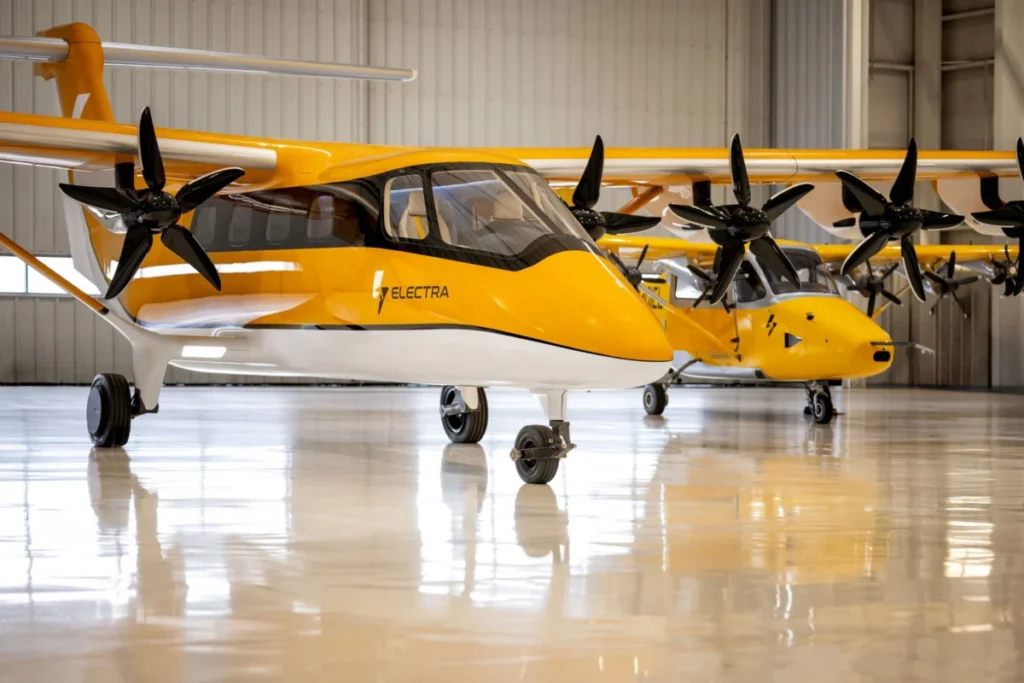
Electra has already demonstrated the viability of its concept with a successful two-seated prototype, the EL2, which has completed over 200 test flights since its initial flights in 2023. This tangible progress has culminated in a significant financial endorsement: an $850 million investment aimed at scaling production of its nine-passenger aircraft. This substantial funding will fuel the establishment of a new manufacturing facility in Springfield and Clark County, Ohio, a region steeped in aviation history, having been the birthplace of engine-powered human flight. The ambitious expansion is projected to generate 1,975 new jobs, marking a significant economic boost for the state and solidifying Ohio’s role in the next chapter of aviation innovation.
From Classroom Concept to Aviation Reality
The seeds of Electra were sown in 2017 within the innovative environment of MIT’s Air Transportation Systems Architecting course (16.886). At a time when electric vertical takeoff and landing (eVTOL) aircraft were capturing significant attention, Courtin’s graduate student group sought to explore alternative solutions for short-haul air mobility. Their research led them to a different, yet equally promising, pathway.
"It was an open-ended, project-based class where you look at developments in aerospace," Courtin explained. "My group realized short takeoff and landing (STOL) aircraft had a lot of advantages over eVTOL for getting people where they wanted to go. We started exploring using the same technology – lightweight, electric motors suitable for aviation – to make a new aircraft, which we now call the ultra-short takeoff and landing aircraft."
The core innovation lies in a hybrid propulsion system designed to overcome the limitations of purely electric aircraft for longer ranges and the runway requirements of conventional fixed-wing planes. The concept leverages batteries and small, efficient electric motors in conjunction with a unique blown lift system. This system utilizes distributed electric propulsion along the wings to generate a powerful "blown wind" effect, significantly increasing lift. This allows the aircraft to achieve a remarkable capability for ultra-short takeoffs and landings, requiring only a fraction of the runway space of traditional aircraft – roughly the length of a soccer field.
The theoretical framework and initial design were further refined through several senior design classes, co-taught by MIT professors Drela and Hansman. During this phase, Courtin served as a teaching assistant, guiding student teams in the creation and testing of a subscale model. This crucial validation phase involved rigorous testing in MIT’s renowned Wright Brothers Wind Tunnel and subsequent flight tests, confirming the fundamental aerodynamic principles and propulsion concepts. Courtin then integrated these findings into his doctoral dissertation, further solidifying the technical underpinnings of the Electra aircraft.
The transition from an academic project to a viable commercial enterprise gained momentum in 2019 when John Langford, a seasoned aerospace entrepreneur who had previously led Aurora Flight Sciences before its acquisition by Boeing, became involved. Electra was officially established that year, with Langford at the helm, bringing a wealth of industry experience and a clear vision for commercializing the innovative technology.
The Hybrid Propulsion System: Efficiency and Versatility
The operational heart of Electra’s aircraft is its sophisticated hybrid propulsion system. This system is designed to optimize performance across the entire flight envelope, from the power-intensive phases of takeoff and landing to efficient cruising. The system comprises a gas-powered generator, strategically positioned in the aircraft’s nose, and two batteries located beneath the floor. During takeoff and landing, both the generator and the batteries supply power to the aircraft’s eight electric motors, which are distributed along the wings.
"The gas generator is like a traditional turbine engine used in a conventional aircraft, only instead of driving a propeller or fan it drives an electric generator," Courtin elaborated. "That feeds power to the eight motors on the wing. It allows you to have a smaller and more efficient engine because you can size it for cruising, not takeoff and landing conditions."
This intelligent design approach offers significant advantages. By sizing the gas generator for the more moderate power demands of cruising flight, it can operate at its peak efficiency. The batteries, meanwhile, provide the substantial surge of power needed for takeoff and landing, where the aircraft’s unique blown lift system is most critical. Furthermore, the generator can also recharge the batteries during cruise, ensuring sustained power availability and extending the aircraft’s range. This hybrid architecture addresses one of the primary limitations of purely electric aircraft for regional travel: battery weight and energy density for sustained flight.
The eight electric motors, working in concert with the wing’s design, create the crucial blown lift effect. This phenomenon allows air to be pushed downwards over the wings, dramatically increasing the lift coefficient. The result is the ability to achieve vertical or near-vertical takeoffs and landings from remarkably short distances, making the aircraft exceptionally versatile in terms of operational sites.
Transforming the Passenger Experience
The implications of Electra’s technology for the average traveler are substantial, primarily centered on time savings and convenience. "For travelers, the big benefit is you can save a lot of time," Courtin stated. "You don’t need to go to an airport, and you don’t have to go to a train station."
This ability to operate from much smaller, potentially decentralized locations eliminates the considerable time commitment associated with traveling to and from major airports, navigating security, and enduring lengthy boarding processes. For those living or working in areas underserved by major transportation hubs, this technology could be a game-changer.
"If you’re three hours away from the nearest major airport, there’s a lot of friction in that," Courtin noted. "With Electra, we could fly you to the nearest major airport, and you don’t need to use a runway, so it doesn’t add to congestion at these very low-capacity places." This ability to connect regional communities to larger airport networks without adding to runway congestion offers a solution to a persistent problem in air travel infrastructure.
Beyond convenience, Electra’s aircraft are also designed to be more affordable and significantly quieter than traditional aircraft. The distributed nature of the eight propellers contributes to a lower noise footprint compared to the larger, fewer engines found on conventional planes. "The large number of propellers means you can make them much quieter than if you only had one or two," Courtin explained. "That’s important because helicopters are restricted from operating in places they otherwise could because of the noise." This reduction in noise pollution could open up operational possibilities in urban and environmentally sensitive areas where conventional rotorcraft are prohibited.
Scaling for the Future: Manufacturing and Market Expansion
The substantial $850 million investment marks a critical inflection point for Electra, enabling the company to move from prototype development to full-scale production. Construction of a new 96-acre manufacturing facility in Springfield, Ohio, is slated to begin next year. The initial phase of this facility will be capable of producing approximately 400 of the nine-seat aircraft annually. A subsequent expansion phase aims to increase this capacity to around 800 aircraft per year, positioning Electra to meet anticipated market demand.
The company envisions its aircraft playing a dual role in the future of transportation. Initially, they could serve as vital connectors, shuttling passengers to major airports for longer intercontinental journeys, thereby optimizing the use of existing air travel infrastructure. However, the long-term vision extends to potentially bypassing the need for conventional airports altogether.
"If you don’t have an existing airport, that’s a very difficult thing to build these days," Courtin observed. "But finding a soccer field-sized area is not hard, especially with our noise reductions." This adaptability in landing and takeoff requirements opens up a vast array of potential operational sites, from remote communities to industrial parks and even temporary event locations.
Electra’s strategic planning also encompasses a broader range of applications beyond passenger transport. The company is actively exploring opportunities in military logistics, where the ability to deliver supplies to austere or forward operating bases with minimal infrastructure is crucial. Cargo transport and humanitarian missions are also key areas of focus, leveraging the aircraft’s unique capabilities for rapid and flexible deployment in critical situations.
For the passenger aircraft segment, Electra’s team is confident that as production scales, the cost per seat will become increasingly accessible. "If we can keep the fixed-wing design simplicity and make this large enough, then the per-seat cost could get to a range where a lot of people would have access to this," Courtin stated. "It wouldn’t just be a luxury product, so it could help a lot of people." This focus on affordability suggests a commitment to democratizing air travel for shorter routes, moving beyond niche markets to serve a broader demographic of travelers.
The convergence of advanced engineering, strategic investment, and a clear market need positions Electra at the forefront of a new era in aviation. The company’s journey from an MIT academic exercise to a significant manufacturing venture in Ohio signifies a tangible step towards a more efficient, accessible, and potentially transformative future for regional travel. The success of this initiative could not only reshape how people travel between cities but also redefine the economic and logistical landscapes of communities across the nation and beyond.