The European Space Agency (ESA), in a strategic partnership with the Raspberry Pi Foundation, officially announced the commencement of the 2026/27 European Astro Pi Challenge on September 14, 2026. This annual educational initiative offers students across ESA member states and Canada the unique opportunity to write computer programs that are executed on specialized Raspberry Pi hardware stationed aboard the International Space Station (ISS). By integrating computer science with space exploration, the program aims to bolster STEM (Science, Technology, Engineering, and Mathematics) literacy among the next generation of innovators.
The challenge is structured into two distinct tiers—Mission Zero and Mission Space Lab—tailored to different age groups and skill levels. Both pathways provide young participants with a tangible connection to orbital mechanics and space-based research, moving beyond theoretical classroom learning into practical, high-stakes application. Successful participants do not merely receive a certificate of completion; they are provided with the specific orbital coordinates and timestamp of when their code was active, alongside the raw data or imagery captured by their software during its flight time.
A Legacy of Orbital Computing: The Evolution of Astro Pi
The Astro Pi program began in 2015 as part of British ESA astronaut Tim Peake’s "Principia" mission. Originally featuring two Raspberry Pi Model B+ computers housed in aerospace-grade aluminum flight cases, the program was designed to demonstrate that consumer-grade technology could survive and function in the rigorous environment of low Earth orbit (LEO).
In 2021, the hardware underwent a significant upgrade. The current units, affectionately named "Ed" and "Izzy," are based on the Raspberry Pi 4 Model B with 8GB of RAM. These units are equipped with a suite of sensors known as the Sense HAT, which measures temperature, humidity, pressure, and orientation via a gyroscope, accelerometer, and magnetometer. Furthermore, they feature high-quality 12.3-megapixel cameras, including a standard visible light camera and a NoIR (No Infrared) camera capable of monitoring plant health through infrared analysis. The 2026/27 cycle continues to leverage this advanced hardware, allowing for more complex data processing and higher-resolution Earth observation than in the project’s early years.
Mission Zero: Democratizing Code Through Orbital Art
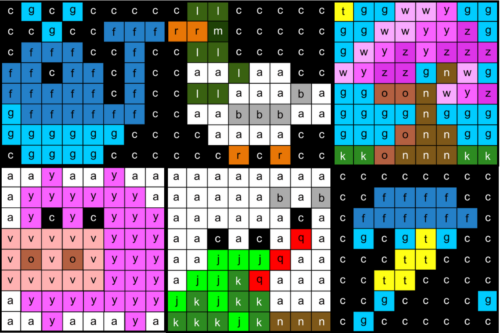
Mission Zero serves as the entry point for the challenge, specifically designed for participants aged 9 to 16. The primary objective is to introduce the fundamentals of the Python programming language through a creative lens. Participants are tasked with creating a piece of pixel art or a short animation to be displayed on the Astro Pi’s 8×8 LED matrix for the astronauts on board to see.
This year’s iteration of Mission Zero includes enhanced features. For the first time, the program guide offers expanded step-by-step worked examples based on successful entries from the 2025/26 season. Students can now more easily implement live light readings from the ISS environment to influence the colors or behavior of their digital art. This creates a feedback loop between the physical environment of the space station and the student’s code.
One of the most significant aspects of Mission Zero is its accessibility. No prior coding experience is required, and the activity can be completed in approximately 60 minutes using a web-based emulator. This low barrier to entry is a deliberate pedagogical strategy by the Raspberry Pi Foundation and ESA to ensure that students from underrepresented backgrounds in technology feel empowered to participate in space science.
Mission Space Lab: Professional-Grade Scientific Inquiry
For older students and those with more advanced technical skills (ages 12 to 19), Mission Space Lab offers a more rigorous scientific experience. Working in teams of two to six, participants design an original experiment that utilizes the Astro Pi’s sensors or cameras to investigate life on Earth or the physics of space flight.
The 2026/27 Mission Space Lab focus remains on two primary categories:
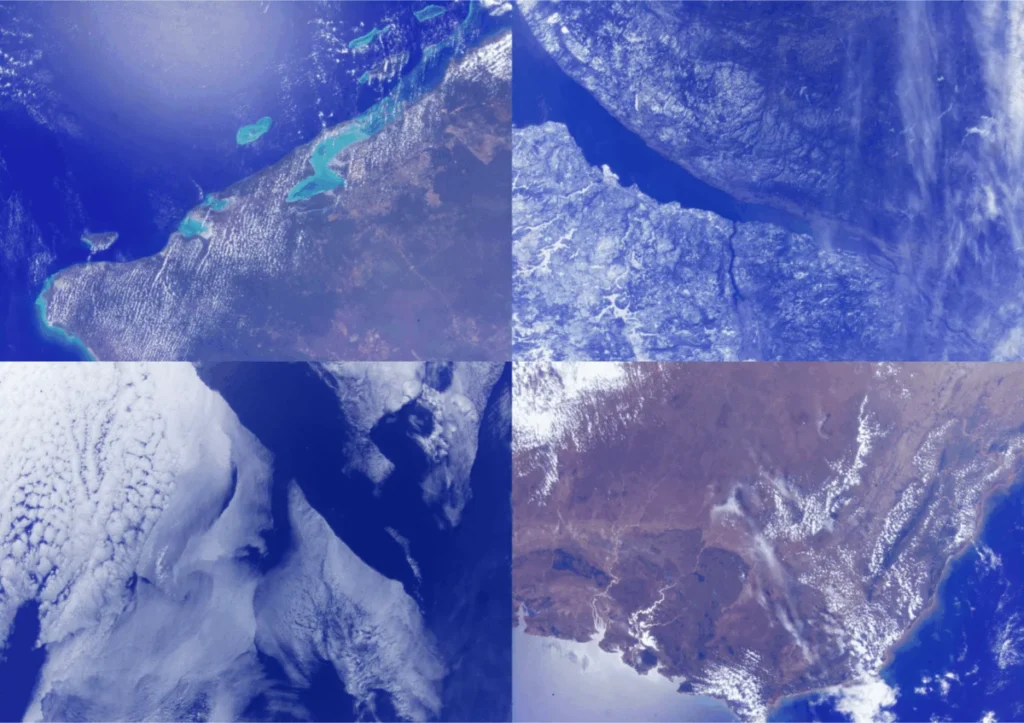
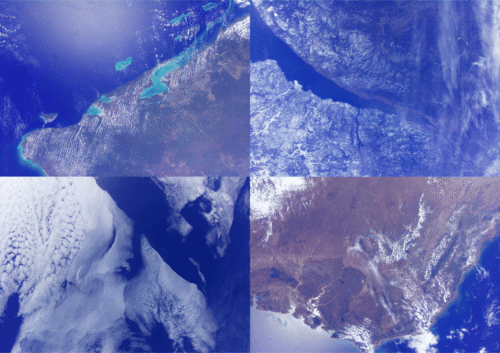
- Earth Observation: Utilizing the Raspberry Pi High Quality Camera to capture images of the Earth’s surface. Teams often use these images to calculate the Normalized Difference Vegetation Index (NDVI), which helps scientists monitor the health of forests and agricultural land.
- Life in Space: Using the Sense HAT sensors to monitor the internal environment of the ISS or calculating the station’s orbital velocity through image processing and metadata analysis.
A key update for the 2026/27 cycle is the introduction of a new "Data Capture Submission" template in the Creator Guide. This tool allows teams to predict the output of their programs more accurately and provides a standardized logic framework, reducing the likelihood of runtime errors that could disqualify a program from execution. Every eligible team that passes the initial "Flight Status" review is guaranteed a ten-minute window of execution time on the ISS.
Chronology and Key Milestones for the 2026/27 Cycle
The Astro Pi Challenge follows a structured timeline designed to align with the academic year across Europe and North America.
- September 14, 2026: Official launch and opening of registrations for both Mission Zero and Mission Space Lab.
- Late 2026: Deadline for Mission Space Lab experiment proposals. Teams must submit a detailed plan outlining their scientific goals and the logic of their Python scripts.
- January – February 2027: The "Flight Status" review phase. ESA and Raspberry Pi Foundation engineers test the submitted code on "ground models" that replicate the ISS hardware to ensure the code will not crash or interfere with station systems.
- April – May 2027: Deployment of the code to the International Space Station. The programs are uploaded to the ISS via NASA’s communication network and executed on Ed or Izzy.
- June 2027: Data return and certificate distribution. Teams receive their captured images and sensor logs, along with a certificate signed by the mission ambassador.
The Role of Ambassadorship: Thomas Pesquet’s Continued Involvement
ESA astronaut Thomas Pesquet has been named the official ambassador for the 2026/27 Astro Pi Challenge. Pesquet, a veteran of two long-duration missions to the ISS (Proxima and Alpha), has a long-standing history with the program, having served as an ambassador during the 2016/17 and 2020/21 cycles.
Pesquet’s involvement is particularly poignant this year as he prepares for his third mission—a private astronaut mission scheduled for 2027, during which he is slated to serve as commander. His endorsement highlights the practical utility of coding in modern astronautics. "In the modern era of space exploration, being able to understand and write code is as essential as any other technical skill," Pesquet remarked in a statement related to the launch. "The Astro Pi Challenge shows young people that the tools they use in their classrooms are the same tools we use to maintain and conduct science on the International Space Station."
Supporting Infrastructure: ESERO and Mission Control
The implementation of the Astro Pi Challenge relies heavily on the European Space Education Resource Office (ESERO) network. These national offices provide localized support, translating materials and offering teacher training sessions to ensure the challenge reaches as many schools as possible.
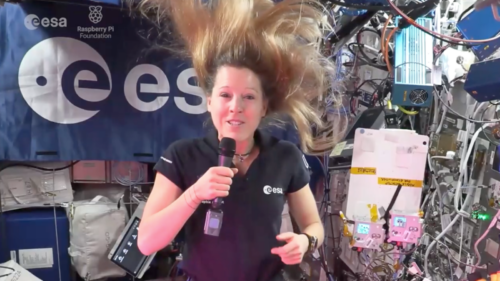
To further support participants, "Mission Control"—the joint technical team from the Raspberry Pi Foundation and ESA—will host a series of interactive livestreams and support calls throughout the 2026/27 season. These sessions are designed to troubleshoot common coding hurdles, such as library dependencies in Python or optimizing image capture settings for the high-velocity transit of the ISS (which travels at approximately 7.6 km/s).
Broader Impact and Educational Implications
The European Astro Pi Challenge is more than a competition; it is a vital component of Europe’s digital strategy. As the global space economy continues to expand—with projections suggesting a trillion-dollar industry by 2040—the demand for workers with both software engineering and aerospace knowledge is skyrocketing.
By providing a platform where a 10-year-old’s code can actually leave the planet, ESA and the Raspberry Pi Foundation are fostering a sense of "science capital." This concept refers to a person’s relationship with science, and studies have shown that hands-on, high-impact projects like Astro Pi significantly increase the likelihood of students pursuing STEM careers.
Furthermore, the challenge promotes international collaboration. While teams are formed locally, they are part of a massive, multi-national cohort. The 2025/26 season saw participation from over 30,000 young people across 25 countries. The 2026/27 cycle aims to exceed these numbers, with a particular focus on expanding participation in rural and underserved educational districts.
As the ISS nears its eventual decommissioning in the early 2030s, the Astro Pi program represents one of the most successful examples of using the station as a laboratory for public engagement. The 2026/27 challenge ensures that even as the station enters its final years of operation, it remains a beacon of inspiration and a classroom for the world.