BMW has officially pulled the wraps off the eighth generation of its iconic 3 Series, a pivotal model that signifies a significant shift in the brand’s design philosophy, embracing the forward-thinking "Neue Klasse" ethos. Revealed on October 2nd, 2026, this latest iteration of the compact executive sedan represents not just an update, but a reimagining of BMW’s core identity, blending historical reverence with a distinctly futuristic vision.
A Nod to Heritage, A Leap into the Future: The Neue Klasse Reimagined
The term "Neue Klasse," meaning "New Class," carries a profound historical weight for BMW. Originally coined in the 1960s, it denoted a series of innovative vehicles that were instrumental in saving the company from financial peril. These models were not merely new; they were groundbreaking, setting a precedent for forward-thinking design and engineering that would define BMW for decades to come. The 1962 BMW 1500, a cornerstone of this original Neue Klasse, is now a direct source of inspiration for the 2027 3 Series.
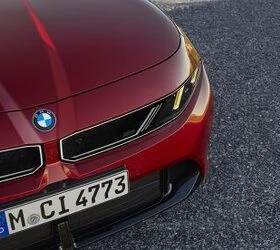
This modern interpretation of Neue Klasse aims to achieve a similar feat: looking decisively toward the future while consciously incorporating stylistic elements from BMW’s rich past. The most striking example of this duality is the integration of the headlamps directly into the grille. This design choice is a direct echo of the BMW 1500, where lighting elements were seamlessly incorporated into the fascia. However, the overall execution in the 2027 3 Series eschews chrome in favor of a more minimalist, modern aesthetic. This approach aligns with the cleaner design language seen in BMW models from the 1970s and 1980s, where headlamps often appeared to emerge from a dark, unadorned surface.
The effect is so profound that BMW’s signature kidney grille, a design element that has evolved over nearly a century, is rendered almost unrecognizable. This deliberate fusion of historical cues and contemporary minimalism creates a vehicle that feels both intriguingly alien and comfortingly familiar, a testament to BMW’s ambition to forge a new identity without severing its roots.
Addressing Past Criticisms: A More Harmonious Aesthetic
BMW’s previous design language, particularly the often-polarizing oversized kidney grilles, had drawn considerable criticism. Recognizing this, the automaker’s design team appears to have taken a deliberate turn in the opposite direction. The sharper, more aggressive angles of previous generations have been softened, with a greater emphasis on rounded forms. Furthermore, the overhangs have been noticeably shortened, a design characteristic that harks back to the more compact and balanced proportions of early models like the iconic BMW 2002.
This intentional blending of old and new was not a clandestine operation. BMW’s Head of Design, Adrian van Hooydonk, has openly stated that his primary objective with the updated 3 Series and the broader Neue Klasse lineup was to achieve this harmonious synthesis of past and future design elements. This philosophy is not merely cosmetic; it underpins the entire approach to the new generation.
The Digital Frontier: An Interior Reimagined for the 21st Century
While the exterior successfully navigates the delicate balance between heritage and modernity, the interior of the 2027 BMW 3 Series represents a more radical departure, embracing a fully digital and haptic-feedback driven experience. The cabin is a testament to BMW’s commitment to forward-thinking technology, but it raises questions about user intuitiveness and the traditional driving experience.
The absence of traditional physical buttons is striking. Instead, the interior is dominated by screens and haptic feedback interfaces. Traditional instrumentation has been replaced by a digital information bar that spans the entire width of the dashboard, a concept seen in other vehicles like the Toyota Prius, though BMW’s implementation appears more integrated and expansive. The central focus is a massive 17.9-inch touchscreen, which controls nearly all vehicle functions.
Even the gear selector has been re-envagined. In a move that further blurs the lines between automotive and luxury object, BMW has opted for an optional "crystal" flap that serves as the drive, reverse, and park selector. This departure from conventional controls, while undeniably futuristic, prompts a critical examination of usability.
The Haptic Dilemma: Innovation vs. Intuition
BMW asserts that its Android-based user interface has undergone extensive development to ensure intuitive operation. However, the reliance on haptic feedback and touchscreen menus for virtually every function presents a significant challenge. Numerous studies have indicated that systems requiring a greater degree of visual and manual attention can detract from a driver’s primary focus: the act of driving. Many motorists have also voiced frustration with such systems, perceiving them as a step backward in terms of practical functionality and immediate control.
This design choice, while aligning with a broader trend towards minimalist interiors and advanced digital integration, could alienate drivers accustomed to tactile feedback and readily accessible physical controls. The long-term implications for driver engagement and safety remain a subject of considerable debate within the automotive community.
Further design choices, such as the flush exterior door handles, while contributing to a sleeker profile, could face scrutiny in certain markets. Reports suggest that new safety regulations in China, for instance, might necessitate adjustments to such features, highlighting the complexities of global design implementation.
A Unified Vision: The i3 and 3 Series Convergence
A key factor driving the new design language appears to be BMW’s desire to create visual parity between its electric and internal combustion engine (ICE) models. The 2027 3 Series is designed to be visually almost indistinguishable from the all-electric i3, despite their mechanical differences. While subtle variations in exterior dimensions, ground clearance, and the presence of exhaust pipes will differentiate them upon close inspection, the intention is to present a cohesive brand identity across different powertrains. This approach aims to streamline production and marketing, presenting a unified "Neue Klasse" family to consumers.
Powertrain Innovations: Efficiency and Performance
For those opting for traditional combustion, the new 3 Series boasts updated engines with a significant focus on enhanced efficiency. The 330 model features a 2.0-liter turbocharged four-cylinder engine augmented by a 48-volt mild-hybrid system. This combination delivers a respectable 255 horsepower and 295 lb-ft of torque. For buyers seeking enhanced traction, the 330 is also available as an xDrive all-wheel-drive model.
The performance variant, the M350 xDrive, promises a more exhilarating experience. Powered by a 3.0-liter turbocharged inline-six engine, also incorporating 48-volt mild-hybrid technology, it produces a formidable 437 horsepower and 428 lb-ft of torque. BMW estimates this potent powertrain can propel the M350 xDrive from 0 to 60 mph in approximately 3.9 seconds, placing it firmly in the performance sedan category. The full M3 variant, a highly anticipated model, remains under development and is expected to be unveiled at a later date.
Dynamic Prowess: A Refined Driving Experience
BMW has consistently emphasized its commitment to exceptional handling, and the eighth-generation 3 Series is no exception. The manufacturer promises a near-perfect 50/50 weight distribution across all trims, a hallmark of sporty driving dynamics. To further enhance stability and reduce body roll, the new generation features revised mounting points. A longer wheelbase and wider tracks compared to the previous generation contribute to improved grip and a more planted feel.
The gasoline-powered 3 Series models will be equipped with a choice of 245mm or 255mm wide front and rear tires. Select models will offer an option to upgrade the rear tires to a wider 275mm specification. Wheel sizes will be available in 19-inch or 20-inch diameters, catering to different aesthetic preferences and performance requirements.
Electric Ambitions: The i3’s Standout Performance and Range
The all-electric i3 50 xDrive, while sharing visual cues with its ICE counterparts, offers a distinct driving profile. Despite its immense battery weight, which contributes to a slightly slower 0-60 mph time of an estimated 4.5 seconds compared to the M350 xDrive, the i3 boasts impressive performance figures and groundbreaking range.
BMW has equipped the i3 with a substantial 112.2-kilowatt-hour battery pack, which is projected to deliver an impressive range of 446 to 468 miles on a single charge. This places the i3 among the leaders in its segment for long-distance capability.
Furthermore, the i3 benefits from an 800-volt architecture, enabling exceptionally rapid charging. BMW claims that the i3 can gain approximately 200 miles of range in just 10 minutes when connected to a DC fast charger capable of up to 400 kW. This rapid charging capability, coupled with BMW’s adoption of the Tesla-standard NACS charging port, significantly enhances the practicality and convenience of electric vehicle ownership. While real-world charging speeds can vary, and overnight home charging remains the primary method for many EV owners, the advancements in public charging infrastructure are a crucial factor in the widespread adoption of electric mobility.
Software Defined: The Connected and Evolving Vehicle
All variants of the 2027 3 Series will come equipped with BMW’s latest operating system, OS X. This advanced system is designed for extreme user customization and features an AI personal assistant capable of responding to voice commands and adapting to individual driver preferences. As "software-defined vehicles," these Neue Klasse models are poised to receive regular over-the-air (OTA) updates, ensuring continuous improvement and the potential for new features and functionalities to be added throughout the vehicle’s lifecycle. This also opens avenues for subscription-based services and app-based enhancements, a growing trend in the automotive industry.
Production of the 3 Series is slated to commence in early 2027 at BMW’s Munich facility. The manufacturer has indicated that further details, including specific fuel economy figures for ICE models and precise interior dimensions, will be released closer to the official launch.
Pricing and Market Positioning
The introduction of the eighth-generation 3 Series also signals a notable increase in pricing compared to its predecessor. The gasoline-powered 330 will have a starting MSRP of $51,250, with the xDrive all-wheel-drive option adding an additional $2,000. The performance-oriented M350 xDrive will debut with a starting price of $67,250, while the electrified i3 50 xDrive will be priced at $62,850.
Evaluating the value proposition at these price points requires a comprehensive assessment of the standard features and a hands-on driving experience. However, it is clear that the base 2.0-liter turbo model will face stiff competition from vehicles offering comparable power outputs. To justify its pricing, the 2027 BMW 330 will need to deliver exceptional handling, superior comfort, or a combination of both. Nevertheless, the enduring appeal of the BMW brand, coupled with strong leasing options, suggests that demand will likely remain robust, driven by brand loyalty and aspirational purchasing.
The release of the eighth-generation BMW 3 Series marks a significant moment in the company’s history. It is a bold statement of intent, signaling a deliberate pivot towards a future where design heritage and cutting-edge technology converge, redefining what it means to be a BMW driver in the 21st century. The success of this ambitious Neue Klasse strategy will undoubtedly be a closely watched development in the automotive world.