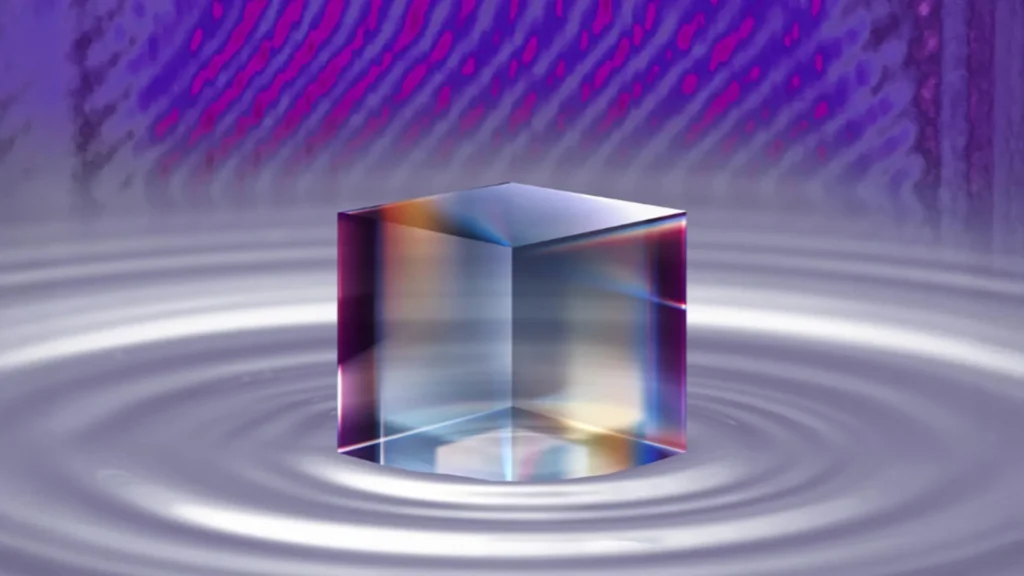
Diamond, long celebrated for its unparalleled brilliance and symbolic value in jewelry, holds a far more profound significance in the realms of advanced science and astrophysics. This exceptionally hard allotrope of carbon is not merely a gemstone but a material of critical importance in cutting-edge research, from containing fuel in inertial confinement fusion experiments to potentially forming and precipitating as "diamond rain" deep within ice giant planets like Neptune and Uranus. However, understanding the precise behavior of diamond under the extreme conditions prevalent in these environments – conditions of immense pressure and temperature – has long presented a formidable scientific challenge, with conflicting data from laboratory measurements and sophisticated computer simulations creating a persistent enigma for researchers.
The Enduring Mystery of Diamond Under Extreme Pressure
For decades, scientists have grappled with the fundamental question of how diamond responds when subjected to pressures millions of times greater than Earth’s atmospheric pressure and temperatures soaring beyond the surface of the Sun. Such conditions are not only crucial for comprehending planetary interiors but also for optimizing high-energy-density physics experiments aimed at harnessing fusion power. The difficulty lies in accurately replicating and then precisely measuring material properties within these fleeting, intense states.
A pivotal new study, recently published in the prestigious journal Nature Physics, appears to have finally resolved these long-standing discrepancies. Researchers at Lawrence Livermore National Laboratory (LLNL), leveraging state-of-the-art experimental techniques, have meticulously measured how diamond melts at pressures reaching an astounding three times greater than those found at the Earth’s core. This breakthrough not only reconciles a two-decade-old conflict between experimental observations and theoretical predictions but also provides invaluable insights with far-reaching implications for both the quest for clean fusion energy and our understanding of distant cosmic bodies.
Marius Millot, a lead author and LLNL scientist, articulated the monumental achievement: "We were able to take tiny diamond samples and shock compress them to temperatures hotter than the surface of the sun and to pressures higher than the center of Neptune and Uranus — and still measure atomic structure, temperature, density and optical reflectivity." This capability represents a significant leap forward in high-energy-density science, allowing for an unprecedented level of diagnostic precision under conditions previously thought intractable.
The findings are poised to have substantial practical consequences. Applied to inertial confinement fusion (ICF), the insights could potentially lead to a threefold increase in energy gain, bringing humanity closer to a sustainable energy future. Concurrently, a clearer picture of diamond’s behavior at extreme pressures promises to dramatically improve computational models of planetary interiors, refining our understanding of how gas giants form and evolve.
A Twenty-Year Diamond Melting Conundrum
The journey to this resolution began nearly two decades ago, rooted in pioneering experiments conducted by LLNL laboratory scientist Jon Eggert and his colleagues. Their early investigations into diamond melting at high pressure yielded a peculiar and counter-intuitive observation: diamond appeared to become denser when it melted into a liquid carbon phase. This phenomenon is unusual for most materials, which typically expand upon melting. However, as Millot noted, a familiar analogy exists in our everyday lives: "Liquid water is denser than ice, which makes ice cubes float. Jon’s finding means that diamond would float in liquid carbon at high pressures." This initial discovery, while a significant advance, simultaneously created a major scientific puzzle.
The melting temperatures measured in Eggert’s groundbreaking laboratory experiments diverged by approximately 20% from the temperatures predicted by the most sophisticated theoretical models available at the time. This discrepancy, roughly a difference of more than 1,000 degrees Celsius (or Kelvin, given the high temperatures involved), proved stubbornly resistant to resolution. Millot recounted the frustration: "No matter what the theorists did — even with the most advanced computer simulation techniques — they could not reproduce the experiments." This persistent mismatch between theory and experiment underscored a fundamental gap in the scientific community’s understanding of carbon’s phase diagram under extreme conditions.
Adding another layer to the mystery were experiments conducted at Sandia National Laboratories using the powerful Z machine. The Z machine, a pulsed power facility capable of generating immense magnetic fields, was used to shock compress tiny diamond samples. Measurements from these experiments suggested that diamond might undergo an intermediate crystalline structural transformation before fully melting into liquid carbon. Computer simulations, based on complex quantum mechanical calculations, seemed to support this interpretation, proposing the existence of a new, transient solid phase. However, without direct observation of the atomic structure of the compressed material, this proposed intermediate phase remained unconfirmed, leaving another critical question unanswered.
Unveiling Diamond’s Secrets: Laser-Driven Dynamic Compression
To address both the melting temperature discrepancy and the question of an intermediate phase, the LLNL team embarked on a series of highly challenging laser-driven dynamic compression experiments. These experiments were conducted at the University of Rochester’s Laboratory for Laser Energetics (LLE), specifically utilizing the Omega Laser Facility. The Omega facility is renowned for its ability to deliver intense laser energy to small targets, creating conditions of extreme pressure and temperature that mimic those found deep within planets or during fusion reactions.
The experimental setup involved directing powerful laser beams onto the outer layer of a minute diamond sample. The intense energy from the lasers rapidly vaporized this outer layer, generating a powerful shockwave that propagated inwards through the diamond. This shockwave compressed and heated the diamond to the desired extreme conditions. The primary challenge, however, lay not just in creating these conditions but in accurately measuring the material’s properties during the fleeting instant they existed – typically for only about a billionth of a second.
During this incredibly brief interval, the researchers needed to capture several crucial properties of the material, including X-ray diffraction measurements. X-ray diffraction is a powerful technique that allows scientists to determine the atomic arrangement and crystalline structure of a material by analyzing how X-rays are scattered. Obtaining such measurements from shock-compressed diamond proved exceptionally difficult, as Millot explained: "This was the first time that shock-compressed diamond was probed with X-ray diffraction all the way up to melting. These measurements are extremely difficult because carbon is a small and lightweight atom. It scatters very few X-rays, so the signal we needed to measure was quite faint."
The success of these experiments was critically dependent on significant advancements in diagnostic equipment, developed and maintained with the invaluable assistance of researchers at LLE. These improved tools enabled the team to obtain an updated melting temperature for diamond that aligned almost perfectly with the predictions from quantum mechanical computer simulations. This momentous agreement finally resolved the long-standing discrepancy that had plagued diamond research for roughly two decades.
Jon Eggert, reflecting on the arduous journey, expressed a mix of past frustration and present triumph: "While it was frustrating to discover that our original temperature measurements were off by more than 1,000 degrees, it is exciting to see such a dramatic improvement in data quality with our new diagnostics. Even better, our original inference of melting has now been confirmed directly with X-ray diffraction." This direct experimental confirmation, backed by enhanced diagnostic capabilities, not only validated previous inferences but also set a new benchmark for precision in high-pressure material science.
Diamond Stays Diamond Until It Melts
While the experiments definitively resolved the melting temperature discrepancy, they provided a different answer to the question raised by the Sandia results regarding an intermediate crystalline phase. The LLNL team’s X-ray diffraction data indicated that, under the single-shock compression conditions used, carbon retained its diamond structure all the way to the liquid state. No intermediate phase, such as the proposed "bc8" structure, was observed during the experiment.
Millot offered an explanation for this finding: "We think that is because the sample does not have time to change when it only experiences a single shock. It remains ‘trapped’ in the diamond structure." This suggests that the kinetics of the transformation, or the rate at which the material can reorganize its atomic structure, plays a crucial role. In a rapid, single-shock compression, the material might not have sufficient time to transition through an intermediate phase, effectively bypassing it and proceeding directly from the diamond lattice to a disordered liquid state.
This distinction holds significant implications for future experiments and simulations involving materials at extremely high energy densities. It highlights that the specific method and temporal profile of shock delivery can influence how a material responds, rather than just the final pressure and temperature alone determining the adopted structure. This insight refines our understanding of material phase transitions under dynamic compression and underscores the complexity of predicting material behavior in such extreme, non-equilibrium conditions.
Transformative Impact on Fusion Energy Research
The newfound agreement between theoretical models and experimental measurements has immediate and profound relevance for inertial confinement fusion (ICF) research. In ICF experiments, powerful lasers are used to create shock waves that rapidly compress and heat a tiny spherical capsule, typically made of diamond, containing fusion fuel (isotopes of hydrogen, deuterium, and tritium). The goal is to implode this capsule to extraordinary pressures and temperatures—hundreds of billions of atmospheres and tens of millions of degrees Celsius—sufficient to initiate fusion reactions, much like those powering the Sun.
A critical requirement during the initial stages of an ICF implosion is to melt the diamond capsule into a smooth, uniform fluid. Any irregularities or inhomogeneities in the implosion process can interfere with the subsequent compression of the fusion fuel, leading to a weaker fusion reaction and reduced energy output. To ensure that the diamond capsule melts completely and smoothly, scientists at LLNL’s National Ignition Facility (NIF), the world’s largest and most energetic laser, typically employ a relatively strong initial shock wave.
The new measurements from the LLNL study indicate that this initial shock wave may not need to be as strong as previously believed. "Our work indicates that we could use slightly slower initial shocks and still achieve full melting of the diamond in our NIF implosions," Millot explained. This seemingly subtle adjustment has potentially revolutionary consequences for fusion energy gain. A slower initial shock makes the fusion fuel more compressible because it minimizes preheating of the fuel, which can hinder subsequent compression. Greater compressibility, in turn, allows for a more efficient and powerful implosion, increasing the maximum energy yield obtainable with the same laser energy input.
Models predict that by implementing these optimized, slower initial shocks, researchers could potentially triple fusion energy gain. This prospect is immensely exciting for the global effort to achieve sustainable, clean fusion energy, provided that other processes that can reduce performance, such as hydrodynamic instabilities, can be effectively controlled and mitigated. The ability to increase energy output without requiring more laser energy represents a significant step towards achieving net energy gain—where the fusion reaction produces more energy than is required to initiate it—a crucial milestone for practical fusion power.
Shedding Light on "Diamond Rain" Inside Ice Giants
Beyond terrestrial energy applications, the findings from this diamond research also offer invaluable clues about the mysterious interiors of ice giant planets such as Neptune and Uranus. These distant worlds, located billions of kilometers from Earth, cannot be directly observed beneath their thick atmospheres. Consequently, planetary scientists rely heavily on a combination of laboratory experiments and sophisticated computer models to reconstruct the extreme conditions and dynamic processes occurring deep beneath their surfaces.
For years, some studies have theorized that carbon, abundant in the hydrocarbon-rich atmospheres and mantles of these planets, may crystallize into solid diamonds under the immense pressures and temperatures within their deep interiors. These diamonds, being denser than the surrounding fluid layers, would then slowly sink through the planetary mantle, much like raindrops falling through Earth’s atmosphere—a phenomenon dramatically dubbed "diamond rain." This process could significantly influence the planets’ internal structure, thermal evolution, and magnetic field generation.
Because the new experiments examined diamond at pressures even greater than those expected inside ice giants, the improved and now theoretically validated melting measurements provide planetary scientists with a significantly stronger foundation for modeling these planetary processes. By understanding the precise melting curve of diamond under such extreme conditions, researchers can refine models of how Neptune and Uranus formed, how their interiors have evolved over billions of years, and how they continue to operate today. This enhanced understanding could lead to breakthroughs in planetary science, offering new insights into the diversity of planetary systems observed across the galaxy, including the growing number of exoplanets discovered with characteristics similar to our own ice giants.
The Path Forward: Pushing Diamond to Even Greater Extremes
The successful resolution of these long-standing diamond mysteries marks a significant achievement, but the LLNL team’s ambitions do not end here. They now plan to utilize the advanced experimental capabilities of the National Ignition Facility (NIF) to explore diamond under conditions that are even more challenging to reproduce and diagnose.
Future research will delve into how diamond capsules behave during later stages of a fusion implosion, where pressures and temperatures become even more extreme and complex. Furthermore, the team intends to investigate how long the diamond crystal structure can remain stable when the material is subjected not just to a single shock wave, but to a sequence of multiple shock waves. This line of inquiry is crucial for understanding the full dynamic response of materials under the intricate compression profiles employed in advanced ICF designs.
This groundbreaking study, supported by LLNL’s Laboratory Directed Research and Development program, involved a collaborative effort among numerous scientists. Key LLNL authors included Federica Coppari, Amy Lazicki, Yong-Jae Kim, Otto Landen, Vladimir Smalyuk, and Peter Celliers. Contributions also came from LLNL’s target fabrication specialist Renee Posadas and Eric Folsom at the HED Science Center Technology Facility. The synergistic effort across disciplines and institutions underscores the complexity and collaborative nature of modern scientific discovery, paving the way for a deeper understanding of matter at its most extreme.