The landscape of industrial automation is undergoing a profound transformation, driven by the imperative for greater efficiency, resilience, and adaptability. At the forefront of this evolution is edge computing, a paradigm shift that moves data processing and decision-making closer to the source of data generation, directly onto the factory floor. This decentralization strategy is increasingly redefining how machines are controlled, monitored, and maintained, particularly through the integration of intelligence directly into industrial components like servo drives. While traditional multicore industrial PCs (IPCs) have long served as the backbone for machine control, a new era is emerging where localized processing power in "smart" edge devices, including advanced servo amplifiers, is fundamentally reshaping industrial operations.
The Evolution of Industrial Control: From Centralized to Decentralized Intelligence
For decades, industrial control systems have primarily relied on centralized architectures. Early programmable logic controllers (PLCs) revolutionized manufacturing by offering programmable, rather than hardwired, control. The subsequent advent of industrial PCs (IPCs), typically built around robust x86 and ARM system-on-chip processors, represented a significant leap. These IPCs became the dominant form of machine control for discrete automation, capable of running both deterministic control tasks on real-time kernels (often demanding jitter within microseconds for high-precision motion) and general-purpose operating systems on the same silicon. Such advanced machines integrate sophisticated industrial networking protocols like SERCOS III, EtherCAT, PROFINET, or EtherNet/IP to manage deterministic traffic, ensuring precise and synchronized operations across complex systems.
However, the demands of Industry 4.0 – characterized by hyper-connectivity, vast data volumes, and the need for real-time analytics – have pushed the limits of centralized processing. As machines become more instrumented with an ever-increasing array of sensors, the sheer volume of data generated can overwhelm central controllers and strain network bandwidth. Data sources on these machines are diverse, encompassing multi-axis servodrives, IO-Link primaries, and countless sensors sampling the physics of mechanical components interacting with workpieces or other parts of the workcell. Each piece of data, from motor current and positioning error to torque, temperature, and vibration, is meticulously timestamped to a distributed clock, enabling the edge platform to correlate information with the exact machine state at any given moment. This granular insight is critical for diagnostics and optimization. To manage this deluge, data filtering at the edge components became crucial, ensuring that processing cores are not overloaded with extraneous communications, thereby boosting the efficiency of communications regardless of the industrial protocol or its speeds.
The Paradigm Shift: Edge Computing at the Drive Level
A significant recent development has seen some motion-component suppliers introduce new servo amplifiers specifically designed for edge-computing functions and so-called "cabinet-free" arrangements. This trend marks a pivotal shift from relying solely on a central controller to distribute intelligence throughout the machine. The rationale behind this migration is compelling: drives are inherently among the best-instrumented components on any machine. They are responsible for closing control loops on current, velocity, and position at high-frequency intervals, making them privy to a wealth of operational data. Historically, valuable data such as phase current, rotor position, bus voltage, and winding temperature, collected at the drive level, often went unused or was simply discarded between fieldbus cycles due to the limitations of centralized processing and network capacity.
Now, certain drives with integrated logic are eschewing reliance on a central controller, instead processing this data themselves. This local processing capability yields instantaneous communications regarding machine status, often within microseconds. While specifics can vary based on the industrial-Ethernet protocol implemented, the overarching result is motion systems that can rapidly act on real-time data to prevent critical operational failures such as crashes, jams, and misfeeds. Concurrently, these smart drives can inform overarching operational systems about machine status in near-realtime, providing an unprecedented level of situational awareness.
Enhanced Safety and Robustness through Decentralization
Beyond operational efficiency, the migration of functions to the edge also encompasses critical safety protocols. In many modern industrial setups, safety functions have been decentralized to edge-computing arrangements. Capabilities such as safe torque off (STO), safe stops (SS), and various motion limits now run as certified functions directly on the drive. This allows drives to assume tasks traditionally handled by safety relays, contactors, and hardwired stop circuits, simplifying machine architecture and reducing the complexity of safety wiring. According to industry analyses, the integration of safety directly into drive systems can streamline compliance processes and enhance overall system reliability by reducing potential points of failure associated with external safety components. A report by MarketsandMarkets in 2023 projected the industrial safety market, heavily influenced by integrated solutions, to grow significantly, underscoring the importance of these decentralized safety functions.
Tangible Advantages of Drive-Integrated Edge Computing
The benefits of integrating edge computing into servo amplifiers are multifaceted and impactful. Amplifiers capable of executing both logic and safety functions can often be positioned directly on the machine, at a considerable distance from the main machine controller and any control cabinetry. This flexibility in placement, however, necessitates ruggedized housings (often IP-rated to withstand challenging environmental conditions) and specialized hybrid cabling that can carry both power and communication signals efficiently.
Despite these requirements, the advantages are substantial:
- Reduced Wiring: Significantly fewer cables are needed, leading to simpler installation, lower material costs, and reduced potential for wiring errors.
- Regenerative Energy Functions: Drives can efficiently manage and regenerate energy, contributing to overall energy savings and sustainability.
- Simplified Diagnostics and Machine Monitoring: With intelligence embedded, drives can perform self-diagnostics and offer more granular machine monitoring, especially powerful if the hardware is addressable over the network.
- Quick Control Response: Perhaps most significantly, the proximity of processing to the point of action ensures an extremely fast control response, critical for high-precision and high-speed applications. This reduced latency is a cornerstone of advanced automation, enabling proactive intervention rather than reactive correction.
"The shift to drive-integrated edge computing is not merely an incremental improvement; it’s a fundamental architectural change that unlocks unprecedented levels of performance and flexibility," notes Dr. Anya Sharma, a principal engineer at a leading global automation technology provider. "We’re seeing manufacturers achieve significant gains in OEE by reducing downtime, optimizing processes, and making their systems inherently more robust and responsive."
Case Study: Edge Computing for Advanced Conveyance Systems
Consider the industrial conveyor, a ubiquitous component in manufacturing and logistics, as a prime application example for edge computing. While many conveyors remain relatively simple single-speed systems, a significant number have evolved into sophisticated networked systems. These advanced conveyors are meticulously tracked by a myriad of sensors and encoders, with servodrives and motors precisely coordinated with complementary workcell functions to manipulate, inspect, and transport workpieces.
A vast array of sensor subtypes are deployed to track critical workpiece attributes, including orientation, surface quality, weight, and lot number – all data that can enrich database records for quality control and traceability. Concurrently, other sensors monitor machine-assembly conditions, such as belt tensions, bearing temperatures, and frame vibrations, populating machine-health records with vital data for predictive maintenance. With a synchronized fieldbus clock, all these conveyor events are timestamped with sufficient accuracy to reconstruct the plant condition for any event of interest, providing a detailed operational history.
For daily operations, such edge computing capabilities impart advanced functions to conveyor systems, including zero-pressure accumulation (preventing product damage), gapping, merging, and diverting functions. This localized intelligence also critically supports the coordination of machine-tending tasks, especially when multiple robotic arms interface with a single conveyor line. Controls leverage real-time workpiece positions and other contextual information to dynamically command picking, sorting, labeling, or ejecting functions on the fly, optimizing throughput and minimizing errors.
For condition monitoring of conveyors, edge computing leverages sophisticated techniques like motor-torque signature analysis to identify developing issues such as mistracking belt sections or accumulation pressures indicative of an impending workpiece jam. In contrast, subtle but sustained increases in motor-current draw can signal seal or bearing wear, particularly when accompanied by a gradual upward creep in a mechanical component’s operating temperature. These early warning signs, detected at the edge, allow for proactive maintenance, preventing catastrophic failures and minimizing costly downtime. A 2022 study by Accenture indicated that predictive maintenance strategies, largely enabled by edge analytics, can reduce maintenance costs by 10-40% and increase equipment uptime by 10-20%.
Furthermore, edge computing brings enhanced traceability to conveyor-based installations – a particularly critical feature in facilities processing medical, pharmaceutical, and food products where strict regulatory compliance and product integrity are paramount. The ability to precisely track each item’s journey, along with associated environmental and process data, provides an invaluable audit trail.
Bringing Intelligence to Simpler Motion Systems
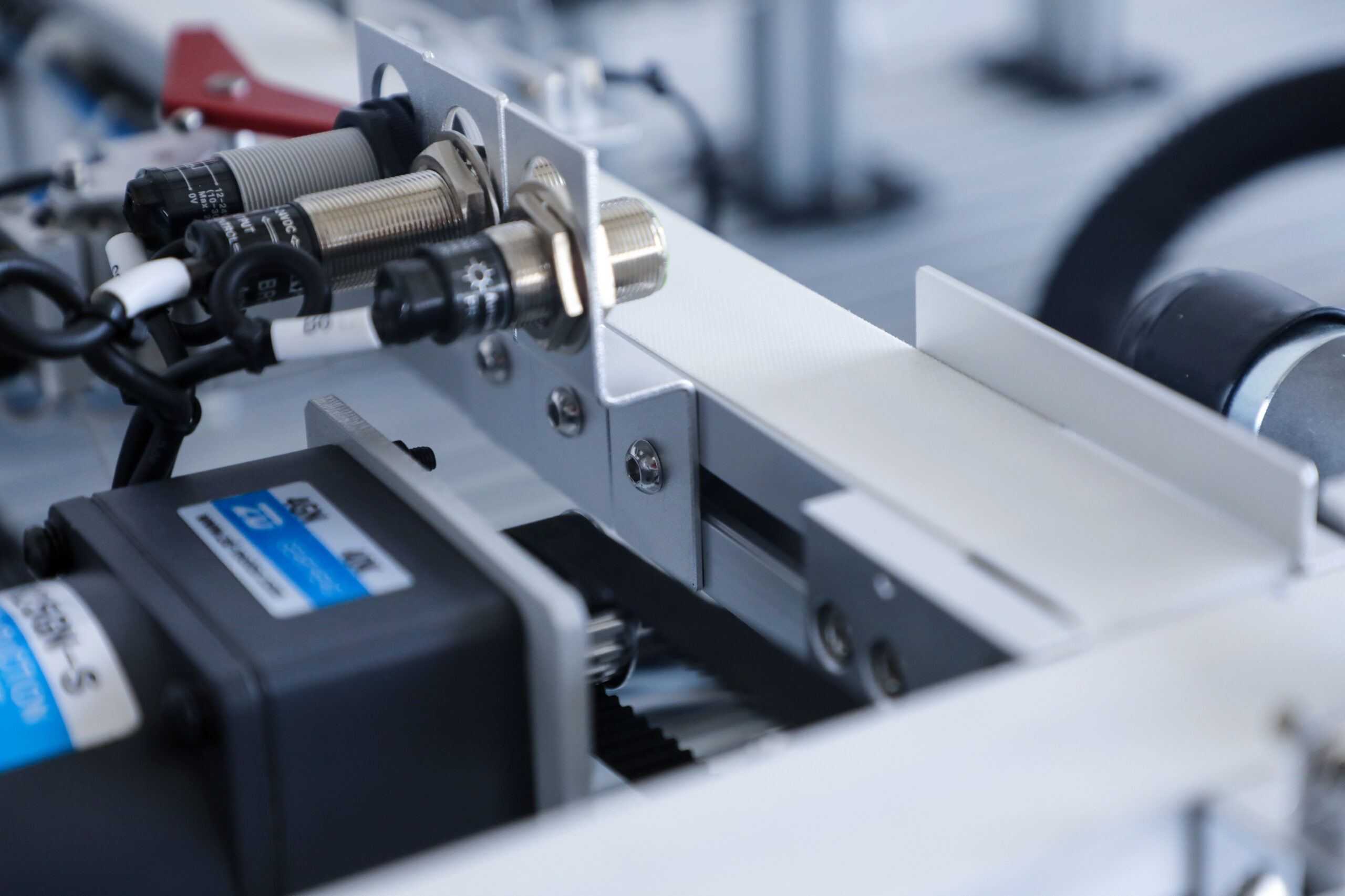
The benefits of edge computing are not limited to advanced machine designs employing fieldbuses and networked servocontrols. Even many single-axis and other classic machines, which traditionally rely on simpler mechanisms like relay contacts, limit and proximity switches, and 4-20 mA control loops without deterministic Ethernet-based protocols, can significantly benefit. In these scenarios, "smart" edge devices can serve as intelligent interfaces, terminating binary and analog signals. These devices perform local interpretation functions such as debounce, scale, thresholding, timestamping, and feature extraction. This means that only pre-summarized data and immediately meaningful events are sent onward, which is especially helpful when that data must travel over modest Ethernet or wireless connections, where bandwidth may be limited.
Motion axes in such arrangements might include indexers based on pneumatic cylinders, VFD-driven conveyors, gearmotor-driven rollers, and various cam-actuated mechanisms. While controls for such axes may not employ sophisticated closed-loop servocontrol, they still generate signals worth monitoring, particularly by edge I/O. Even simple limit, home, and proximity switches can yield valuable data about strokes, cycles, and dwells. This information, when processed at the edge, can inform monitoring systems to prompt the repair of worn components long before a machine actually jams, turning simple binary signals into powerful predictive indicators.
Similarly, current transducers can, via their 4-20 mA output, inform simple motor-current signature analyses to detect the aforementioned issues. Accelerometers placed on or near couplings, gearboxes, and other mechanical components can detect when peak vibration values exceed a defined threshold, yielding early wear trending without the need for full spectral condition monitoring. Variable Frequency Drives (VFDs), through their speed reference or internal diagnostics, can also directly serve as data-generating edge devices. The machine diagnostics communicated by these signals can then travel with simple open-loop control systems, enhancing their capabilities without requiring a complete system overhaul.
Commercially available hardware with these capabilities includes certain manufacturers’ programmable edge controllers that feature built-in digital and analog I/O terminals. These devices possess the ability to locally run code and then publish processed data via standard industrial protocols like MQTT/OPC UA, making them highly versatile. Furthermore, other motion suppliers offer controllers that wirelessly pair with sensor nodes or discrete/analog inputs that are themselves hardwired to the machine, offering flexible deployment options. The global industrial edge computing market, valued at approximately $4.3 billion in 2022, is projected to reach over $15 billion by 2030, reflecting the accelerating adoption of these technologies across diverse industrial sectors.
In conclusion, the ongoing shift towards distributed intelligence, particularly through integrated edge computing at the drive level and in smart I/O devices, is fundamentally reshaping industrial automation. This paradigm offers a compelling pathway to more resilient, efficient, and adaptable manufacturing operations by empowering machines to make faster, more informed decisions, enhancing safety, and providing unprecedented insights into operational health. The future of industrial control is undeniably at the edge, promising a new era of productivity and innovation.