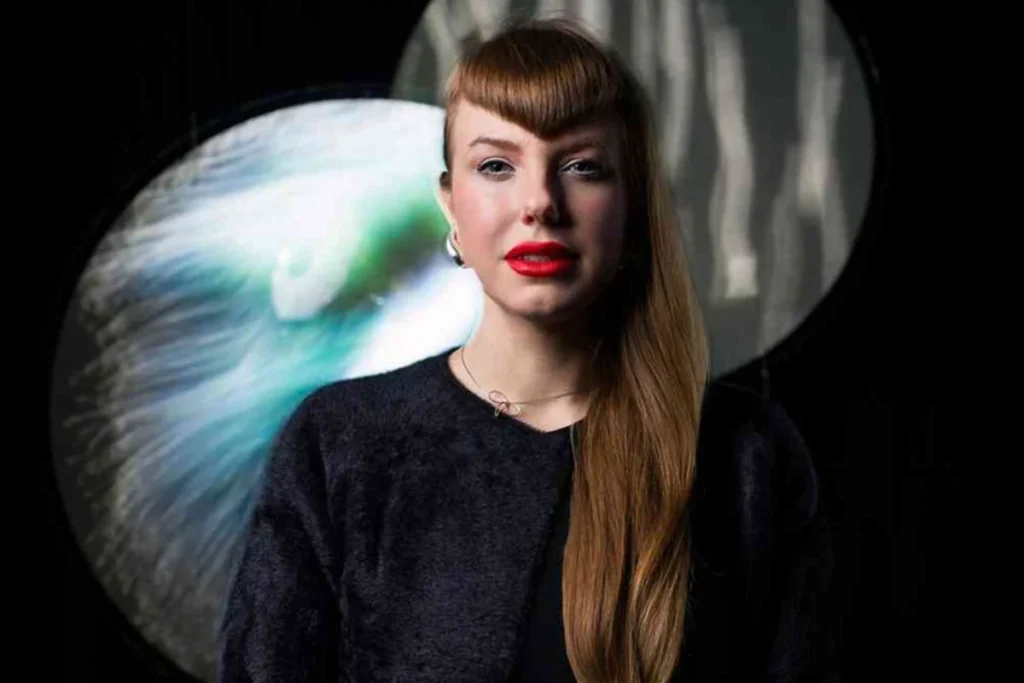
The MIT Kavli Institute for Astrophysics and Space Research (MKI) has officially announced the launch of a pioneering pilot artist-in-residence program designed to bridge the gap between complex astrophysical research and public perception. This initiative marks a significant step for MKI, a world-leading center for space exploration and instrumentation, as it seeks to foster a cross-disciplinary dialogue between the realms of hard science and contemporary art. For the 2026-27 academic year, the institute has selected internationally acclaimed ultra-contemporary artist Amy Karle as its inaugural resident. Karle, whose work frequently interrogates the relationship between technology and the human condition, will collaborate directly with MKI’s scientists and engineers to translate the data and abstract concepts of modern astrophysics into a large-scale, immersive multimedia installation slated for public debut in early 2028.
The Convergence of Art and Astrophysics at MIT
The MIT Kavli Institute has long been at the forefront of human understanding of the cosmos. With over six decades of expertise in developing both space-based and ground-based instrumentation, the institute serves as a nexus for faculty, researchers, and students from MIT’s departments of Physics; Earth, Atmospheric and Planetary Sciences; and Aeronautical and Astronautical Engineering. MKI’s contributions to the field include critical work on major missions such as the Chandra X-ray Observatory, the Transiting Exoplanet Survey Satellite (TESS), and the Laser Interferometer Gravitational-Wave Observatory (LIGO).
The introduction of an artist-in-residence program represents a strategic effort to move beyond traditional methods of science communication. While scientific papers and technical data provide the foundation of knowledge, the pilot program aims to utilize art as a medium for "embodied understanding." By integrating an artist into the research environment, MKI hopes to challenge its own internal perspectives on scientific inquiry while simultaneously creating new avenues for the public to connect with the "wonder of the universe."
Amy Karle: A Visionary for the Ultra-Contemporary Era
The selection of Amy Karle as the inaugural resident was the result of a rigorous process conducted by an interdisciplinary committee comprising astronomers, museum curators, and art-science practitioners. Karle is recognized globally for a practice that spans biology, digital technology, and physical sculpture. Her work often explores how science and technology shape evolution and humanity’s future, ranging from cellular engineering to cosmic systems.
Karle’s portfolio includes high-profile collaborations with institutions such as the Copernicus Science Centre, the Interstellar Foundation, and Studio Quantum. Her work has been exhibited at the Centre Pompidou, the Mori Art Museum, and the Smithsonian Institution. Notably, Karle’s work has even transcended Earth’s atmosphere, with projects included in lunar and space-bound payloads. Her proposal for the MKI residency focuses on the themes of scientific observation, signal processing, and inference—the core components of how humans interpret the universe from "faint signals" captured by sensitive instrumentation.
Reflecting on the partnership, Karle noted that her fascination with space began during her first job at a public observatory. This early experience of witnessing the "awe and understanding" of the public while viewing Saturn’s rings through a telescope remains a foundational element of her artistic philosophy. She views the work at MKI—translating invisible signals into knowledge through computation and judgment—as a profound extension of that same human drive to know the unknown.
Chronology and Program Structure
The residency is structured as a multi-year project, moving from initial conceptualization to final public presentation. This timeline ensures that the resulting artwork is deeply rooted in the scientific reality of MKI’s research.
- Fall 2026: The Exploratory Phase: The residency begins with a one-month intensive period in Cambridge, Massachusetts. Karle will be embedded within the MKI community, attending seminars, visiting laboratories, and engaging in one-on-one dialogues with researchers. This phase concludes with a public presentation where Karle will share her initial findings and artistic directions with the MIT community.
- 2027: Development and Studio Work: Following the exploratory phase, the project moves into active development. Karle will work from her studio in California while maintaining a continuous exchange with MKI scientists. This period is dedicated to the technical and conceptual construction of the installation, utilizing the data and insights gathered during her time at MIT.
- March 2027: The MASS MoCA Residency: A critical component of the development phase is a specialized residency at the Studios at MASS MoCA (Massachusetts Museum of Contemporary Art). Karle and selected scientific collaborators from MIT will spend time at the North Adams campus, one of the largest centers for contemporary visual and performing arts in the world. Here, they will engage with a multidisciplinary cohort of 16 other international artists, testing ideas and refining the installation’s interactive elements.
- Early 2028: Public Launch: The residency culminates in the unveiling of a multimedia installation. The MKI is currently seeking museum and festival partners to host this immersive experience, which is intended to tour internationally, bringing MIT’s research to a global audience through the lens of Karle’s artistic vision.
Institutional Perspectives and Strategic Goals
The program is spearheaded by MKI Director Robert Simcoe, the Bruno B. Rossi Professor of Experimental Physics at MIT. Simcoe emphasizes that the collaboration is not merely about creating an aesthetic representation of data, but about challenging the cognitive frameworks of the scientists themselves. "Her approach is unlike anything we have previously experienced at MKI," Simcoe stated. "It presents many opportunities to challenge the way we, as scientists and engineers, think about our study of the universe."
The initiative is supported by the Kavli Foundation’s Kavli Innovation Fund. The foundation, which supports a global network of research institutes, has increasingly focused on the "Kavli Frontiers of Science," emphasizing the importance of public engagement. By funding this pilot program, the Kavli Foundation aims to deepen the emotional and intellectual connection between the public and astrophysical discovery.
Susan Cross, Director of Curatorial Affairs at MASS MoCA, echoed this sentiment, highlighting the museum’s commitment to the intersection of art and science. The collaboration between a technical powerhouse like MIT and a cultural heavyweight like MASS MoCA underscores the growing trend of "STEAM" (Science, Technology, Engineering, Art, and Mathematics) initiatives in higher education and the arts.
Analysis: The Role of Art in the Scientific Process
The launch of this residency program reflects a broader shift in how scientific institutions perceive their role in society. In an era where scientific misinformation is prevalent and funding for basic research requires strong public support, the ability to communicate the "value" of astrophysics is paramount.
Astrophysics, by its nature, deals with scales and phenomena that are often beyond human sensory perception—dark matter, gravitational waves, and the birth of the first stars. These concepts are usually conveyed through mathematical models or highly processed false-color imagery. By involving an artist like Amy Karle, MKI is attempting to provide a "felt experience" of these phenomena. Karle’s work often uses 3D printing, AI, and bio-feedback, technologies that parallel the computational methods used in modern astronomy.
Furthermore, the "interdisciplinary committee" that selected Karle indicates a desire for academic rigor even in the artistic selection process. The committee’s praise for her "ambitious-yet-grounded approach" suggests that the residency is not interested in superficial decoration, but in a substantive integration of artistic inquiry and scientific methodology.
Implications for Future Engagement
As the residency progresses toward its 2028 debut, it serves as a model for other scientific departments within MIT and beyond. If successful, the pilot program could lead to a permanent residency at MKI, potentially expanding to include other artistic disciplines such as music, literature, or performance art.
The choice of Amy Karle—a woman recognized by the BBC as one of the 100 Most Inspiring and Influential Women—also signals a commitment to diversity and the inclusion of multifaceted voices in the scientific narrative. As a "diplomat" for the American Arts Incubator and a pioneer in design, Karle brings a global perspective that aligns with the international nature of space exploration.
The final installation will likely serve as a bridge, allowing the public to stand at the "threshold where our ways of knowing the universe reshape how we understand ourselves," as Karle described. By focusing on the "faint signals" that define the frontier of astrophysics, the program seeks to prove that the search for knowledge is not just a technical endeavor, but a deeply human one.
As MKI looks toward the 2028 exhibition, the institute continues its primary mission of unraveling the mysteries of the cosmos, now with the added dimension of an artistic partner to help tell that story. The upcoming years of collaboration between Karle and the researchers at MIT promise to yield a unique synthesis of data and emotion, providing a new lens through which the world can view the stars.