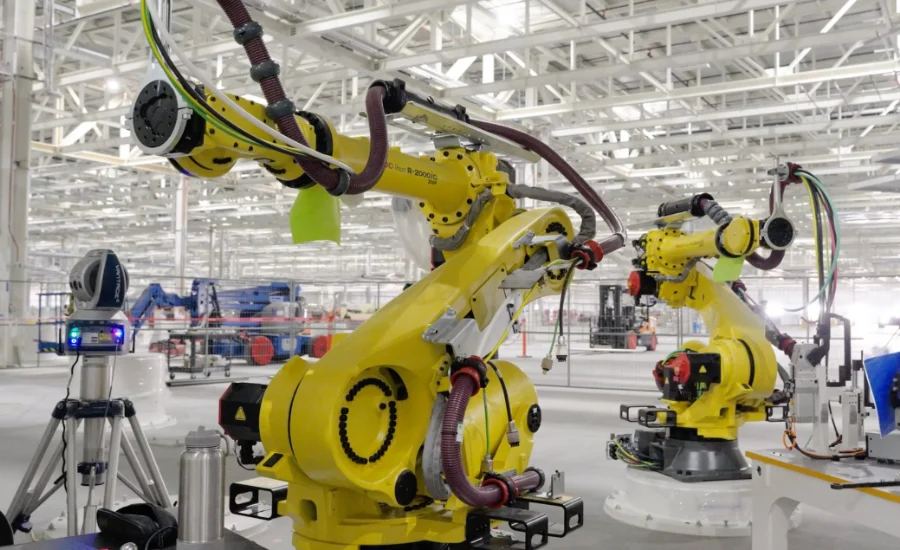
When Scout Motors, the reborn off-road vehicle brand under Volkswagen Group, announced its ambitious plans to construct a cutting-edge electric vehicle (EV) manufacturing facility in Blythewood, South Carolina, the reverberations of this decision extended far beyond the immediate footprint of the future assembly plant. This monumental investment, slated to bring a new generation of electric trucks and SUVs to market, has already begun to reshape the economic landscape of the Palmetto State, particularly by triggering an unprecedented surge in supplier interest and activity. The project, which represents a capital investment of approximately $2 billion, is poised to create 4,000 direct jobs and commence initial vehicle production by 2027, marking a pivotal moment in South Carolina’s already robust automotive manufacturing history.
Annie Caggiano, Senior Vice President of Business Recruitment for the Central South Carolina Alliance, a key economic development entity, observed that the announcement served as an immediate catalyst for a significant uptick in supplier engagement. Companies across the automotive supply chain, both domestic and international, swiftly began evaluating the myriad opportunities to support the new Original Equipment Manufacturer (OEM). This proactive response underscores the strategic importance of locating near major automotive assembly operations, a principle that has long guided the industry’s intricate logistics and supply chain management.
A New Era for South Carolina’s Automotive Sector
The decision by Volkswagen to revive the iconic Scout brand as an all-electric entity and choose South Carolina for its primary manufacturing hub was not made in isolation. It reflects a confluence of factors, including the state’s proven track record in attracting foreign direct investment, its established automotive ecosystem, and its commitment to workforce development. The 1,600-acre site in Blythewood, Richland County, offers ample space for the sprawling manufacturing complex, which will feature a state-of-the-art production line designed for flexibility and efficiency in EV assembly. This facility is not merely a factory; it is envisioned as a central node in Scout’s global manufacturing strategy, playing a crucial role in its ambition to produce 200,000 vehicles annually.
The context of this investment is critical. The global automotive industry is undergoing a monumental transformation, with a rapid pivot towards electrification. Countries and regions are fiercely competing to attract EV manufacturing and its associated supply chain, recognizing the long-term economic benefits. South Carolina, already home to major operations for BMW, Mercedes-Benz Vans, Volvo Cars, Hyundai, and Kia, has strategically positioned itself as a leading automotive manufacturing state. The addition of Scout Motors further solidifies this reputation, signaling the state’s adaptability and readiness to embrace the future of mobility. The announcement of the Scout plant, made in March 2023, was met with widespread enthusiasm from state officials, local communities, and industry stakeholders, all eager to harness the profound economic potential. Governor Henry McMaster lauded the investment as a testament to South Carolina’s pro-business environment and skilled workforce, emphasizing its role in driving innovation and creating high-quality jobs for generations to come.
The Supplier Ecosystem Responds: A Case Study in Strategic Location
The allure of a new OEM, particularly one with the backing of a global automotive giant like Volkswagen and a clear vision for electric vehicle production, creates a powerful gravitational pull for suppliers. Caggiano highlighted that this interest often manifests almost immediately, as companies understand the critical window of opportunity to integrate into a new supply chain from its inception. The project’s projected initial vehicle production in 2027 provides a clear timeline for suppliers to establish their operations, secure contracts, and ramp up their capabilities.
A prime illustration of this phenomenon is SODECIA AAPICO, a joint venture between a Portuguese automotive components manufacturer (Sodecia) and a Thai automotive parts company (AAPICO Hitech PCL). This international partnership recently announced its plans to build a new facility in Orangeburg County, South Carolina, specifically to manufacture ladder frames for Scout vehicles. Ladder frames, critical structural components for trucks and SUVs, represent a foundational element of the vehicle’s chassis, underscoring the strategic importance of this supplier.
Caggiano recounted the initial contact: "We were contacted by a Portuguese company not operating in the Southeast. They were interested in learning more about the market." This initial inquiry set in motion a meticulous evaluation process that spanned approximately a year. During this period, SODECIA AAPICO delved deep into assessing various critical factors for site selection. These included the availability and quality of the local workforce, the efficiency and cost-effectiveness of logistics networks, and the suitability and scalability of real estate options. The ultimate selection of a site in Orangeburg County speaks volumes about South Carolina’s competitive advantages, including its robust infrastructure, access to major transportation arteries, and a supportive business climate.
The attraction of suppliers, as Caggiano points out, frequently extends beyond the immediate needs of a single OEM. South Carolina’s existing automotive cluster, which includes BMW’s largest global manufacturing plant in Spartanburg, Mercedes-Benz Vans in Charleston, Volvo Cars in Ridgeville, and suppliers to Hyundai and Kia operations in neighboring states, creates a dynamic and interconnected ecosystem. This concentration of automotive manufacturing provides a compelling argument for suppliers to locate within the state, offering opportunities for diversification and resilience in their client portfolios. "If they’re not looking here, they’re missing a massive opportunity," Caggiano asserts, emphasizing the strategic advantage of being situated amidst such a high density of major automotive players. This established network provides a ready-made market for components, materials, and services, fostering a synergistic environment where suppliers can thrive by serving multiple customers.

Cultivating the Workforce of Tomorrow: South Carolina’s "Secret Sauce"
Central to any major industrial investment, particularly in advanced manufacturing, is the availability of a skilled and adaptable workforce. Workforce development consistently ranks as one of the most important factors in site selection decisions for companies worldwide. Caggiano unequivocally states, "Typically, outside of real estate, workforce is the number one reason why a company selects a community or a site." Recognizing this imperative, South Carolina has long invested heavily in its workforce development infrastructure, primarily through its acclaimed technical college system.
A cornerstone of this effort is the state’s ReadySC program, an initiative that Caggiano proudly refers to as "our secret sauce." ReadySC, a division of the South Carolina Technical College System, offers customized pre-employment training solutions to companies creating qualifying jobs in the state, all at no cost to the employer or the trainee. This program is designed to deliver a pipeline of highly skilled workers tailored precisely to the specific needs of new and expanding industries. ReadySC’s methodology involves working closely with companies to understand their technological requirements, production processes, and corporate culture, then developing bespoke training curricula. These programs can range from basic manufacturing skills to advanced robotics, automation, and specialized EV component assembly.
The efficacy of ReadySC lies in its ability to bridge the gap between educational institutions and industry demands. Trainees often receive hands-on instruction using equipment similar to what they will encounter on the job, ensuring they are job-ready from day one. For a company like Scout Motors, with its cutting-edge EV technology and unique manufacturing processes, the ability to access custom-trained employees before the plant even begins production is an invaluable asset. Indeed, the ReadySC program is already actively engaged in training future Scout employees, ensuring that a skilled labor force will be ready to power the assembly lines when the facility opens in 2027. This proactive approach minimizes hiring risks for companies and accelerates their operational ramp-up, making South Carolina an even more attractive destination for advanced manufacturing. Leaders from the state’s technical colleges, such as Dr. Tim Hardee, President of the SC Technical College System, have often highlighted the program’s success, citing its contribution to thousands of successful company launches and expansions over the decades, underscoring its pivotal role in the state’s economic development strategy.
Economic Transformation and Long-Term Projections
The economic impact of a major OEM like Scout Motors extends far beyond the direct jobs created within its own facility. Economic models often estimate a significant multiplier effect, where each manufacturing job supports several additional jobs in related industries, such as logistics, services, construction, and retail. Caggiano anticipates that Scout’s long-term impact on South Carolina will mirror the profound economic influence that BMW has had on the state’s Upstate region over the past three decades.
BMW Manufacturing Co., which opened its Spartanburg plant in 1994, has grown to become the largest BMW plant in the world by volume, employing over 11,000 people directly and supporting tens of thousands more across the state. Its presence has attracted hundreds of suppliers, spurred significant infrastructure development, and transformed the Upstate into a global automotive research and manufacturing hub. The region has seen a dramatic increase in per capita income, educational attainment, and overall quality of life directly attributable to BMW’s sustained investment. The establishment of BMW’s International Center of Competence for X models not only generates substantial tax revenues but also cultivates a highly skilled engineering and technical workforce, fostering a culture of innovation.
Caggiano’s comparison is not merely aspirational; it is grounded in the understanding of how a single, foundational OEM can act as an anchor, drawing in a constellation of supporting industries and fostering a self-sustaining economic ecosystem. "An OEM can really grow a community beyond your wildest dreams," she notes, emphasizing the transformative power. The influx of supplier investments, coupled with proactive workforce initiatives and the broader economic activity already underway, serves as concrete evidence of how a single automotive project can indeed reshape and elevate an entire manufacturing landscape. This transformation includes not only direct job creation but also indirect benefits such as increased tax revenues for local and state governments, which can then be reinvested in public services, education, and further infrastructure improvements. Moreover, the presence of a leading-edge EV manufacturer like Scout Motors elevates South Carolina’s profile as a hub for sustainable technologies, attracting further green industry investments and fostering a more environmentally conscious manufacturing sector.
South Carolina’s Strategic Advantage in the Global Automotive Race
South Carolina’s success in attracting Scout Motors and its burgeoning supply chain is a testament to a well-orchestrated economic development strategy built on several pillars. The state offers a competitive business climate, characterized by lower operating costs, favorable tax policies, and a commitment to regulatory predictability. Its strategic location, with access to the Port of Charleston – one of the busiest and most efficient deep-water ports on the East Coast – provides crucial logistical advantages for importing raw materials and exporting finished vehicles and components. Furthermore, the state boasts a robust transportation network, including major interstate highways and freight rail lines, ensuring efficient movement of goods.
The combination of an existing, thriving automotive cluster, a proactive and highly effective workforce development system like ReadySC, and a supportive governmental framework creates a powerful magnet for advanced manufacturing. The Scout Motors project not only adds another prestigious brand to South Carolina’s automotive portfolio but also positions the state at the forefront of the electric vehicle revolution. This signifies a forward-looking approach, ensuring that South Carolina remains relevant and competitive in an rapidly evolving global industrial landscape.
Looking ahead, the long-term implications are profound. The establishment of Scout Motors is expected to catalyze further research and development in EV technology, potentially attracting academic partnerships and fostering a culture of innovation within the state. It will also likely stimulate growth in related sectors, such as renewable energy infrastructure, battery technology, and advanced materials. The ongoing investments by suppliers, the continuous development of a specialized workforce, and the ripple effects throughout the economy demonstrate unequivocally how a single, strategic automotive project can be the linchpin for transforming an entire manufacturing ecosystem, setting the stage for decades of sustained growth and prosperity in South Carolina. The journey from announcement to full-scale production in 2027 will be closely watched, as it represents a blueprint for how states can successfully navigate the transition to an electrified automotive future.