LEHI, Utah – A comprehensive new study from maintenance software provider Limble reveals a critical and costly challenge facing American manufacturing and operations: pervasive unplanned downtime, significant financial losses, and persistent safety risks. The company’s State of Maintenance Report, drawing insights from nearly 700 U.S. maintenance and operations professionals, paints a stark picture of an industry struggling to move beyond reactive approaches, with profound implications for efficiency, profitability, and workforce well-being. The findings underscore a pressing need for strategic shifts towards more proactive and predictive maintenance paradigms to mitigate these widespread issues.
The Pervasive Problem of Unplanned Downtime
The core revelation of the Limble report is the staggering prevalence of unplanned downtime across U.S. industrial facilities. Nearly half, specifically 47%, of maintenance leaders surveyed admitted to experiencing more than 10 hours of unplanned downtime in a typical month. Even more concerning, almost one in four respondents reported grappling with over 20 hours of unexpected operational stoppages within the same timeframe. These figures are not mere statistics; they represent production lines halted, machinery idle, and revenue streams interrupted, pointing to a systemic vulnerability within current operational strategies.

Unplanned downtime, by its very nature, is disruptive and costly. It refers to any period when equipment or an entire production line is not operating due to an unexpected failure or malfunction. Unlike planned downtime for scheduled maintenance, these incidents occur without warning, triggering a cascade of negative effects. Common causes range from sudden mechanical failures, electrical faults, and software glitches to human error, material defects, and even environmental factors. In complex manufacturing environments, where processes are often interdependent, a single component failure can bring an entire assembly line to a standstill, magnifying the impact exponentially. The frequency and duration reported by maintenance leaders suggest that many organizations are operating on the brink, constantly reacting to crises rather than strategically preventing them. This reactive posture, while sometimes unavoidable, has been shown to be far less efficient and significantly more expensive than planned interventions.
The Staggering Financial Impact on Manufacturers
The financial ramifications of this pervasive downtime are substantial, bordering on catastrophic for many organizations. The report indicates that 40% of maintenance leaders estimate their companies incur at least $100,000 in annual downtime costs. While this figure is a conservative estimate, it highlights a significant drain on resources that could otherwise be invested in innovation, expansion, or workforce development. Industry experts often cite figures far exceeding this, with some sectors reporting costs upwards of $10,000 to $20,000 per hour for line stoppages, especially in high-volume, capital-intensive industries like automotive, aerospace, and semiconductor manufacturing. For a facility experiencing 20 hours of unplanned downtime per month, or 240 hours annually, these costs can quickly escalate into millions of dollars, dwarfing the reported $100,000 minimum.
These costs are multifaceted, extending beyond immediate repair expenses. They include lost production capacity, scrapped materials, delayed shipments leading to penalties, increased labor costs due to overtime for emergency repairs, and diminished product quality. Furthermore, repeated downtime can damage a company’s reputation, erode customer trust, and lead to a loss of market share. In a highly competitive global economy, where margins are often thin, such avoidable expenditures can severely impact a company’s bottom line and long-term viability. The cumulative effect of these financial losses poses a significant threat to operational sustainability and competitiveness, urging a critical re-evaluation of current maintenance strategies.

Safety Concerns and the Risks of Reactive Maintenance
Beyond the financial toll, the Limble report sheds light on a critical human element: safety. A staggering 65% of respondents confirmed that reactive maintenance situations place technicians in higher-risk scenarios at least monthly. This statistic is a stark reminder that maintenance is not merely about machinery; it involves human lives and well-being. Reactive maintenance, by its nature, often involves technicians working under immense pressure to restore operations quickly. This urgency can lead to shortcuts, bypassing established safety protocols, or working with equipment that has failed unpredictably and may be unstable or dangerous.
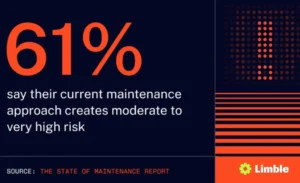
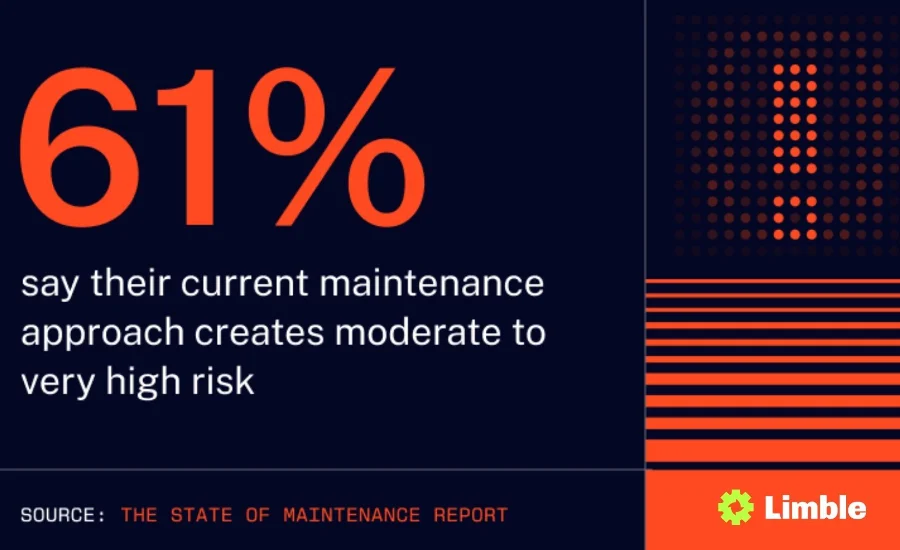
Moreover, 61% of those surveyed expressed that their current maintenance approach creates moderate to very high risk across the board, encompassing not just safety but also unplanned downtime and cost. This reinforces the idea that a reactive maintenance culture fosters an environment where risk is inherent and pervasive. Technicians may be called upon to troubleshoot live electrical systems, deal with hydraulic leaks, or work on heavy machinery that has failed unexpectedly, often without the benefit of thorough planning, proper lockout/tagout procedures being meticulously followed due to time constraints, or the availability of specialized tools or PPE. The constant firefighting mode not only increases the likelihood of accidents, injuries, or even fatalities but also contributes to technician burnout, reduced morale, and a higher turnover rate within maintenance departments. Ensuring technician safety is not just a moral imperative but also a crucial factor in maintaining a skilled and experienced workforce.
The Inefficiency of Current Maintenance Practices: A Struggle with Prevention
The report’s findings suggest a profound struggle within maintenance departments to shift from a reactive mindset to a proactive one. Leaders estimate their teams complete a mere 54% of scheduled preventive maintenance (PM). This low completion rate is a critical indicator of underlying issues, as preventive maintenance is widely recognized as the cornerstone of effective asset management. PM involves routinely inspecting, servicing, and replacing components to prevent failures before they occur, thereby extending asset life, improving reliability, and reducing the likelihood of costly unplanned downtime.

The inability to consistently execute scheduled PM tasks can be attributed to several factors. Often, maintenance teams are caught in a vicious cycle: too much unplanned downtime forces them into reactive mode, consuming resources and time that should be allocated to preventive tasks. This creates a backlog of PM work, further increasing the risk of future failures and perpetuating the cycle. Other contributing factors include inadequate staffing, lack of proper tools or spare parts availability, poor planning and scheduling systems, and a culture that prioritizes immediate repairs over long-term asset health. Without a robust PM program, organizations remain vulnerable to chronic equipment failures, higher operational costs, and persistent safety hazards. The low adherence to PM schedules reflects a fundamental gap in maintenance strategy execution, hindering organizations from achieving optimal operational performance and asset longevity.
The Beacon of Predictive Maintenance: A Glimpse into the Future
Amidst these challenges, the Limble report offers a glimmer of hope by highlighting the tangible benefits of more advanced maintenance strategies. Teams further along in adopting predictive maintenance (PdM) reported significantly better results. Specifically, leaders on these teams were 46% more likely than the average to report fewer than five hours of unplanned downtime per month. This finding strongly advocates for the strategic adoption of PdM technologies and methodologies.
Predictive maintenance represents a paradigm shift from time-based or reactive maintenance to condition-based maintenance. Leveraging technologies such as vibration analysis, thermal imaging, acoustic monitoring, oil analysis, and machine learning algorithms, PdM continuously monitors the condition of equipment. This allows maintenance teams to detect potential failures early, often weeks or months before they manifest as critical issues. By predicting when a component is likely to fail, organizations can schedule maintenance precisely when needed, minimizing disruption, optimizing resource allocation, and extending the operational life of assets. The significant reduction in unplanned downtime reported by PdM adopters underscores its potential to transform operational efficiency, reduce costs, and enhance safety across industrial sectors. While the initial investment in PdM technologies and expertise can be substantial, the return on investment through reduced downtime, increased asset reliability, and optimized maintenance costs is proving to be a compelling case for its widespread adoption.

Operational Inefficiencies Beyond the Wrench: Lost Productivity
The report also uncovers significant inefficiencies that plague maintenance operations even before technicians begin hands-on work. More than 60% of leaders and technicians estimate that technicians spend three hours or less performing hands-on maintenance during a typical shift. This statistic is alarming, suggesting that a significant portion of a technician’s valuable time is consumed by non-wrench-turning activities. Furthermore, 48% of technicians reported losing at least an hour waiting for approvals or site access. These figures point to systemic bottlenecks and administrative hurdles that severely impede productivity.
The reasons for this lost productive time are manifold. They can include excessive travel time between work sites, searching for tools or spare parts due to disorganized inventory, lengthy administrative tasks like filling out paperwork, waiting for safety permits or lockout/tagout procedures to be completed, or delays in receiving necessary approvals from supervisors or other departments. Poor communication, lack of real-time information, and inadequate planning can also contribute to technicians standing idle. Such inefficiencies not only reduce the effective working hours of highly skilled personnel but also contribute to frustration, lower morale, and a perception of wasted effort. Streamlining these ancillary processes is just as crucial as optimizing the actual maintenance tasks themselves, as improving workflow and reducing non-value-added activities can significantly boost overall maintenance effectiveness and output.
The Crucial Role of Modern Maintenance Software
Given the widespread challenges identified in the Limble report, the imperative for robust maintenance management solutions becomes strikingly clear. Modern Computerized Maintenance Management Systems (CMMS) and Enterprise Asset Management (EAM) software are designed to address precisely the issues highlighted: reducing unplanned downtime, improving safety, enhancing PM completion rates, and boosting technician productivity.

A well-implemented CMMS/EAM system can centralize all maintenance data, from asset history and spare parts inventory to work order management and scheduling. This digital transformation enables organizations to:
- Streamline PM Scheduling: Automate the creation and assignment of preventive maintenance tasks, ensuring higher completion rates and reducing manual errors.
- Optimize Work Order Management: Digitize work requests, approvals, and assignments, drastically reducing the "waiting for approvals or site access" time. Technicians can receive work orders on mobile devices, update status in real-time, and access critical asset information on the go.
- Improve Spare Parts Inventory: Track inventory levels, automate reordering, and ensure parts are available when needed, eliminating delays caused by searching for or waiting for components.
- Facilitate Data Collection for PdM: Serve as a hub for sensor data and analytics, providing insights that enable predictive maintenance strategies.
- Enhance Communication: Foster seamless communication between maintenance teams, operations, and management, ensuring everyone is aware of asset status and planned interventions.
- Boost Safety Compliance: Integrate safety checklists, lockout/tagout procedures, and permit-to-work systems directly into work orders, ensuring protocols are followed rigorously.
By providing real-time visibility, automated workflows, and data-driven insights, these software solutions empower maintenance teams to transition from a reactive, firefighting mode to a proactive, strategic approach. This shift is not merely an upgrade; it is a fundamental transformation that is becoming indispensable for maintaining competitiveness and operational resilience in the modern industrial landscape.
Broader Industry Implications and the Path Forward
The findings of Limble’s State of Maintenance Report resonate deeply within the broader context of Industry 4.0 and the accelerating digital transformation of manufacturing. In an era where smart factories and interconnected systems are becoming the norm, relying on outdated, reactive maintenance practices is a significant impediment to progress. Manufacturers are under constant pressure to optimize production, reduce costs, and enhance product quality while simultaneously navigating complex supply chains and a competitive global market. The report vividly illustrates how neglecting maintenance strategy can undermine all these objectives.
Industry analysts and manufacturing experts consistently emphasize that operational excellence is inextricably linked to maintenance effectiveness. Companies that fail to address persistent unplanned downtime and operational inefficiencies risk falling behind competitors who embrace data-driven, proactive strategies. The urgency for change is further amplified by the ongoing skills gap in the maintenance workforce. Attracting and retaining skilled technicians becomes even more challenging when their work environment is characterized by constant crises, frustration over inefficiencies, and elevated safety risks. Investing in modern tools and processes, including advanced CMMS/EAM and PdM technologies, not only improves operational outcomes but also makes maintenance roles more appealing and productive.
The path forward for manufacturers involves a multifaceted approach:
- Strategic Investment in Technology: Adopting and fully leveraging CMMS/EAM and PdM solutions is no longer optional but a strategic imperative.
- Cultural Shift: Fostering a culture that prioritizes proactive maintenance, safety, and continuous improvement from the top down.
- Workforce Development: Providing training for technicians to adapt to new technologies and empowering them with the tools and autonomy to perform effectively.
- Process Optimization: Critically evaluating and streamlining maintenance workflows, approvals, and communication channels to eliminate bottlenecks.
- Data-Driven Decision Making: Utilizing the wealth of data generated by modern systems to identify trends, optimize schedules, and make informed decisions about asset management.
In conclusion, the Limble State of Maintenance Report serves as a critical call to action for the manufacturing sector. The prevailing levels of unplanned downtime, the associated financial burdens, and the persistent safety risks are unsustainable. By embracing strategic planning, modern software solutions, and advanced maintenance methodologies, organizations can transform their maintenance operations from a cost center into a strategic asset, driving efficiency, profitability, and a safer working environment for all. The future of manufacturing depends not just on what is produced, but on how reliably and safely it is produced.