The landscape of data center development is currently undergoing an unprecedented transformation, largely driven by the explosive growth of AI. This surge in AI-related workloads is not merely increasing demand for computational power but is fundamentally reshaping project timelines and intensifying coordination requirements across an extensive ecosystem of stakeholders. From supply chains grappling with specialized component sourcing to diverse engineering teams (mechanical, electrical, software), design teams, electricians, and other project personnel, all are now compelled to complete highly complex projects on dramatically compressed schedules. Simultaneously, these teams must ensure that the resulting infrastructure meets stringent reliability, flexibility, and operating requirements essential for the next generation of modern data centers. The traditional fragmented approach to data center infrastructure management, often relying on disparate point solutions and manual coordination efforts between subsystems, is proving increasingly inadequate in this accelerated environment.
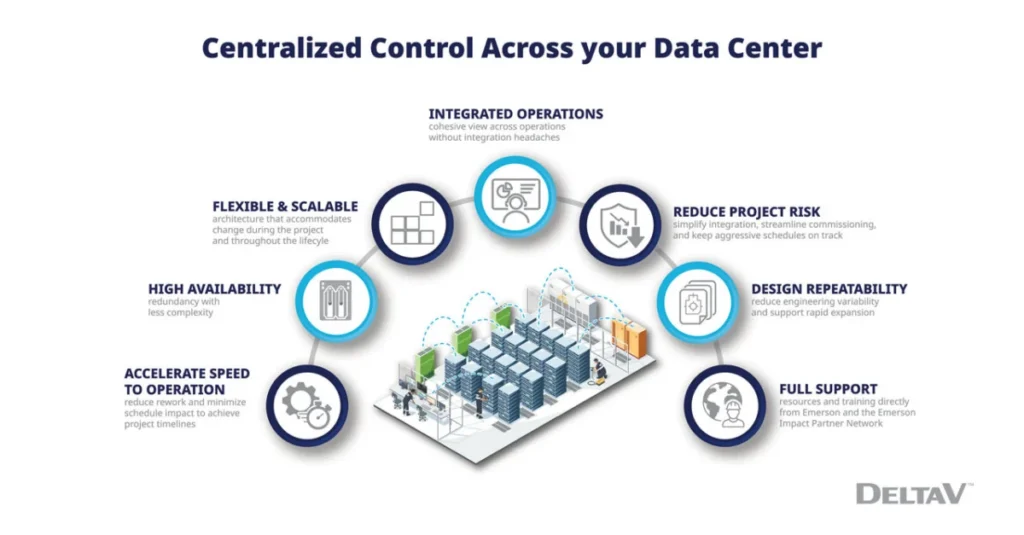
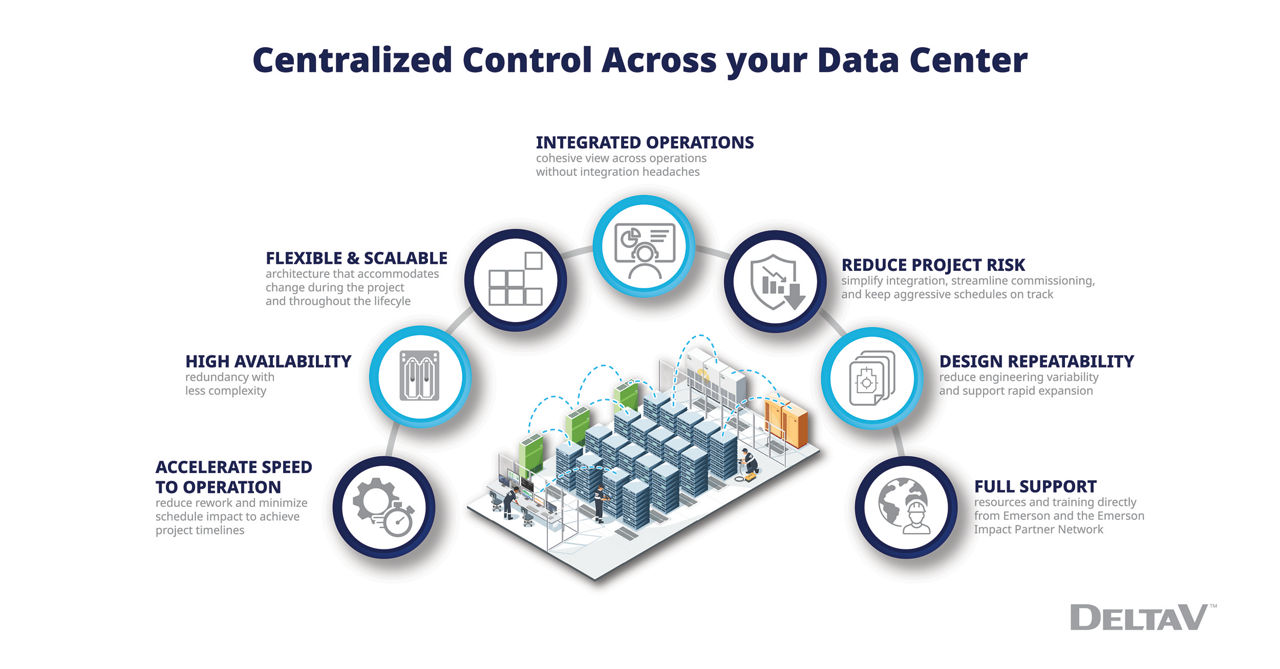
Emerson’s DeltaV Automation Platform for Data Centers directly confronts these challenges by advocating for an integrated automation architecture from the very inception of project design. By replacing the patchwork of separate point solutions and the laborious manual synchronization of subsystems with a unified control methodology, the platform promises substantial reductions in engineering effort, significant simplification of integration processes, and a marked improvement in consistency across critical phases such as commissioning, ongoing operations, and routine maintenance. This holistic approach is poised to accelerate the deployment of large-scale AI-centric facilities, bringing them online with greater efficiency and reduced risk.
The Unprecedented Demands of AI Workloads on Data Centers
The advent of sophisticated AI models, particularly those involved in machine learning, deep learning, and generative AI, has introduced an entirely new set of performance and operational requirements for data centers. Unlike conventional enterprise or cloud computing workloads, AI training and inference demand immense computational power, often requiring thousands of high-performance Graphics Processing Units (GPUs) working in parallel. This concentration of processing power translates directly into unprecedented levels of power density within server racks, far exceeding what traditional data center designs were built to handle.
- Extreme Heat Generation: The high power density of AI servers generates prodigious amounts of heat. A single AI server rack can consume and dissipate several times the power of a standard server rack, pushing the limits of conventional air-cooling systems. This necessitates a rapid shift towards more advanced cooling solutions, including direct-to-chip liquid cooling and immersion cooling, which require precise control and integration with the overall facility infrastructure.
- Rapid Deployment and Scalability: The competitive nature of AI development demands that data centers supporting these workloads be brought online faster than ever before. Companies are racing to deploy new AI capabilities, and any delay in infrastructure readiness can translate into significant market disadvantage. Furthermore, these facilities must be inherently scalable, capable of expanding rapidly to accommodate future generations of AI hardware and growing computational demands.
- Complex Interdependencies: Managing the intricate interplay between power delivery, cooling systems, network infrastructure, and environmental controls becomes exponentially more complex with AI workloads. A failure in one subsystem can cascade rapidly, leading to costly downtime or even damage to expensive AI hardware.
- Supply Chain and Skill Shortages: The rapid expansion of AI data centers has put immense strain on global supply chains for specialized components and has exacerbated existing shortages of skilled engineers and technicians capable of designing, building, and operating these highly complex facilities. Automation solutions that reduce reliance on manual intervention and simplify complex tasks become invaluable in this context.
According to industry reports, the global AI market is projected to grow at a Compound Annual Growth Rate (CAGR) exceeding 35% over the next decade, reaching trillions of dollars. This growth directly fuels the demand for AI-optimized data center infrastructure. Data from organizations like the International Energy Agency (IEA) indicate that data centers already account for a significant portion of global electricity consumption, and the surge in AI workloads is set to dramatically increase this figure, placing a premium on energy efficiency and sustainable operations. The urgency to optimize every aspect of data center design and operation for AI is therefore not just a matter of performance but also one of economic viability and environmental responsibility.
Emerson’s Strategic Response: The DeltaV Automation Platform
Emerson, with its deep roots in industrial automation and process control, is uniquely positioned to address these challenges. The DeltaV Automation Platform for Data Centers leverages decades of expertise in managing complex industrial processes to bring a new level of sophistication to data center infrastructure management. The platform’s core offering is a unified control approach that integrates what were traditionally disparate management systems into a single, cohesive framework.
The DeltaV platform achieves this by providing granular monitoring and precise control over all critical thermal, mechanical, and electrical subsystems. This includes:
- Thermal Management: Orchestrating chillers, cooling towers, pumps, computer room air handlers (CRAHs), computer room air conditioners (CRACs), and increasingly, liquid cooling distribution units (CDUs) and heat rejection systems for direct-to-chip or immersion cooling. Precise temperature and humidity control are paramount for optimal AI hardware performance and longevity.
- Mechanical Systems: Managing air handling units, ventilation, fire suppression systems, and building management systems (BMS) that ensure the overall integrity and safety of the data center environment.
- Electrical Infrastructure: Overseeing uninterruptible power supplies (UPS), power distribution units (PDUs), switchgear, generators, and battery storage systems to ensure stable, reliable power delivery and seamless failover capabilities. This is critical given the massive power draw of AI racks.
By connecting these diverse components within a single, integrated automation architecture, the DeltaV platform offers unprecedented visibility and control. This holistic view enables predictive maintenance, dynamic load balancing, and proactive responses to environmental changes or potential equipment failures, significantly enhancing the reliability and efficiency of the data center.
Key Components and Technological Innovations
At the heart of the DeltaV Automation Platform for Data Centers are two well-established and highly robust components from Emerson’s industrial automation portfolio: the DeltaV Distributed Control System (DCS) and DeltaV Programmable Logic Controllers (PLCs).
- DeltaV Distributed Control System (DCS): The DCS acts as the central nervous system of the data center automation platform. Known for its scalability, reliability, and advanced control capabilities in complex industrial environments, the DeltaV DCS provides a powerful framework for system-wide process control. It aggregates data from thousands of sensors across the thermal, mechanical, and electrical infrastructure, processes this information, and executes complex control strategies to maintain optimal operating conditions. Its distributed nature allows for redundancy and resilience, ensuring that even if one component fails, the overall system remains operational.
- DeltaV Programmable Logic Controllers (PLCs): The DeltaV PLCs serve as the intelligent edge devices, directly interfacing with individual pieces of equipment such as pumps, fans, circuit breakers, and cooling units. These PLCs are designed to connect seamlessly to the DeltaV DCS, feeding real-time operational data upstream and receiving control commands downstream. Their robust design and real-time processing capabilities ensure rapid and reliable execution of control actions at the equipment level.
A distinguishing feature of this platform is the integration of context-specific AI tools within both the DeltaV DCS and PLCs. These embedded AI capabilities are specifically designed to:
- Support Engineering Workflows: AI tools can assist engineers in designing control strategies, configuring systems, and troubleshooting issues by providing intelligent recommendations and automating routine tasks. This significantly reduces the time and effort required for commissioning and ongoing optimization.
- Advanced Process Control: Leveraging AI and machine learning algorithms, the platform can implement highly sophisticated control strategies that go beyond traditional PID loops. This includes predictive control, adaptive control, and model predictive control, which can anticipate changes in load, optimize energy consumption, and maintain tighter operational parameters, particularly crucial for managing the dynamic thermal loads of AI.
- Integration with AI Optimization Models: The platform is designed to seamlessly integrate with higher-level AI optimization models. For example, a data center operator might use a separate AI model to predict future AI workload demands or to optimize power purchasing. The DeltaV platform can ingest outputs from these models and translate them into real-time control adjustments for the physical infrastructure, creating a truly intelligent and responsive data center.
The symbiotic relationship between the DeltaV DCS and PLCs, augmented by these intelligent AI tools, is engineered to support every phase of a data center project, from initial execution and cost control through daily operating performance and, critically, paving the way for future autonomous operations.
Addressing Core Data Center Challenges with Integrated Automation
The DeltaV Automation Platform offers tangible benefits across several critical dimensions of data center operation:
- Energy Efficiency and Sustainability: By enabling precise, real-time control over cooling, power distribution, and environmental systems, the platform can significantly optimize energy consumption. AI-driven analytics can identify inefficiencies, predict optimal operational setpoints, and dynamically adjust resource allocation based on workload demands. For instance, intelligent control of chillers and pumps can minimize PUE (Power Usage Effectiveness) by ensuring that only the necessary cooling capacity is deployed at any given moment. As AI data centers grapple with immense power draws, even marginal improvements in efficiency translate into substantial energy and cost savings, and a reduced carbon footprint. The platform’s ability to manage advanced cooling technologies, such as liquid cooling, also contributes to sustainability by enabling higher power densities with less energy-intensive heat rejection.
- Operational Reliability and Uptime: Integrated automation inherently enhances the resilience of data center operations. A unified control system provides a comprehensive view of all critical infrastructure, allowing for proactive identification of potential issues before they escalate into failures. Automated responses to alarms, predictive maintenance alerts, and seamless failover mechanisms for power and cooling ensure maximum uptime, which is non-negotiable for high-value AI workloads where every minute of downtime can result in significant financial losses and reputational damage.
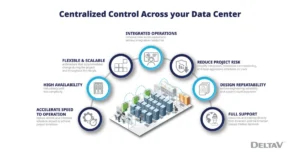
- Speed to Market and Scalability: The "integrated automation architecture from the start of project design" philosophy dramatically reduces the complexity and time involved in commissioning new facilities. By eliminating the need to integrate disparate vendor solutions post-installation, the platform streamlines project execution. This consistency and simplified integration are crucial for meeting the compressed schedules of AI data center build-outs. Furthermore, the scalable nature of the DeltaV platform allows data center operators to expand their infrastructure confidently, knowing that new modules and equipment can be seamlessly incorporated into the existing control framework.
- Reducing Complexity and Human Error: Shifting from fragmented, manually coordinated systems to a cohesive, automated platform significantly reduces operational complexity. This not only lowers the cognitive load on human operators but also minimizes the potential for human error, which is a leading cause of data center outages. By automating routine tasks and providing intuitive interfaces, the platform allows skilled personnel to focus on higher-value activities, such as strategic planning and advanced problem-solving.
The Economic and Strategic Imperative
The market for data center automation and infrastructure management solutions is experiencing robust growth, driven by the twin forces of digital transformation and the AI revolution. Analysts project the global data center automation market to reach tens of billions of dollars in the coming years, underscoring the critical need for sophisticated management tools.
For data center operators, investing in a platform like Emerson’s DeltaV translates into tangible economic and strategic advantages:
- Cost Savings: Reduced engineering effort during design and commissioning, simplified integration, and improved operational consistency directly lead to lower project costs and faster return on investment. Furthermore, optimized energy consumption and reduced downtime contribute to significant operational expenditure savings over the lifespan of the data center.
- Competitive Advantage: Data centers that can deploy AI infrastructure faster, operate it more reliably, and do so with greater energy efficiency gain a substantial competitive edge. This allows them to attract and retain high-value AI customers and maintain leadership in the rapidly evolving digital economy.
- Future-Proofing: The platform’s design, including its capacity for integrating advanced AI optimization models and supporting autonomous operations, future-proofs data center investments. As AI technologies continue to evolve, the underlying infrastructure management system will be capable of adapting and optimizing in tandem.
Industry Perspective and Expert Commentary
A spokesperson for Emerson, commenting on the launch, might emphasize the company’s commitment to innovation in critical infrastructure: "The DeltaV Automation Platform for Data Centers represents a pivotal moment in how data centers are built and operated for AI workloads. We recognized the urgent need for a unified, intelligent control solution that moves beyond fragmented approaches. Our deep expertise in industrial automation, combined with cutting-edge AI integration, allows us to deliver a platform that not only meets today’s extreme demands but also anticipates the challenges of tomorrow’s autonomous data centers. We believe this platform will empower data center operators to achieve unprecedented levels of efficiency, reliability, and speed to market, which are all non-negotiable in the AI era."
Industry analysts concur with the necessity of such integrated solutions. "The proliferation of AI is creating an entirely new class of data center infrastructure, one that demands a level of precision, integration, and intelligence far beyond traditional designs," stated a prominent industry analyst (hypothetically). "Solutions like Emerson’s DeltaV platform are crucial because they offer a foundational shift from reactive management to proactive, predictive, and eventually, autonomous operation. The ability to seamlessly control thermal, mechanical, and electrical systems through a single pane of glass, augmented by embedded AI, will be a key differentiator for data centers looking to support mission-critical AI applications at scale."
Looking Ahead: The Future of Autonomous Data Centers
The DeltaV Automation Platform for Data Centers is not just a solution for current challenges; it is a blueprint for the future of data center operations. Its design, with context-specific AI tools and integration capabilities, lays the groundwork for increasingly autonomous data centers. In such environments, the infrastructure will be largely self-optimizing, self-healing, and self-managing, with minimal human intervention required for routine operations.
This progression towards autonomy will have profound implications:
- Optimized Resource Utilization: AI-driven automation will continuously fine-tune resource allocation (power, cooling, network bandwidth) based on real-time workload demands, minimizing waste and maximizing efficiency.
- Enhanced Resilience: Autonomous systems will be able to detect and respond to anomalies and failures with lightning speed, often before human operators are even aware of the issue, dramatically improving uptime.
- Talent Optimization: By automating repetitive and complex tasks, data center staff can be redeployed to focus on strategic initiatives, innovation, and handling truly exceptional circumstances, alleviating pressures from the skilled labor shortage.
In conclusion, Emerson’s DeltaV Automation Platform for Data Centers is a timely and critical development in the rapidly evolving world of AI infrastructure. By offering an integrated, intelligent, and scalable automation solution, it addresses the core challenges of high power density, extreme heat generation, rapid deployment, and operational complexity inherent in AI workloads. As the demand for AI continues its relentless upward trajectory, platforms like DeltaV will be indispensable in enabling the reliable, efficient, and sustainable operation of the data centers that power the next generation of artificial intelligence.