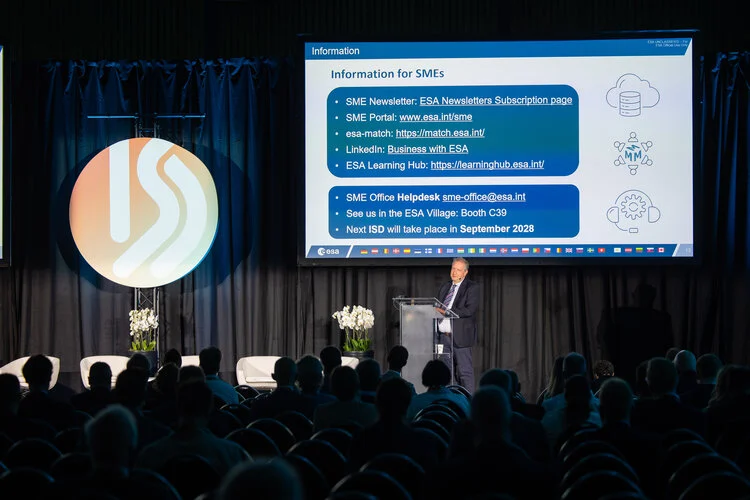
The European Space Summit convened on September 16th and 17th, 2026, bringing together key stakeholders from the European space sector to foster innovation, enhance competitiveness, and drive sustainable growth. Hosted by the European Space Agency (ESA), the two-day event, held at a prominent venue, served as a crucial platform for dialogue, collaboration, and the unveiling of new initiatives aimed at strengthening Europe’s position in the global space economy. The summit’s agenda was meticulously crafted to address critical areas such as the role of Small and Medium-sized Enterprises (SMEs), investment strategies, technological advancements, and the integration of space solutions into broader industrial and societal challenges.
Day 1: Laying the Foundation for Growth and Innovation
The inaugural day of the European Space Summit set a robust tone, commencing with an opening message from Josef Aschbacher, Director General of ESA, who underscored the agency’s commitment to a dynamic and thriving European space ecosystem. The morning’s proceedings in Conference Hall A were dedicated to the vital contributions of European Space SMEs. A pivotal session, "European Space SMEs: Powering Innovation, Competitiveness and Growth," featured insights from Jens Kauffmann, Head of ESA’s SME Section, alongside industry leaders such as Hans Bracquen, Chairman of SME4SPACE, Linn Friis-Liby of AAC Clyde Space, Fabiana Milza of T4i, and Ernst K. Pfeiffer of HPS GmbH. This discussion highlighted the indispensable role of SMEs in driving technological advancements and fostering economic development within the space sector, emphasizing the need for continued support and tailored programs.
Later in the afternoon, Conference Hall A hosted a significant session titled "European Joint Commercialisation Initiative, followed by Panel on Raising Growth Capital in the Space Sector." Stella Strataki from the European Commission’s DEFIS, and Fiammetta Diani from EUSPA, provided an overview of the European Joint Commercialisation Initiative, a strategic effort to bridge the gap between space technology development and market deployment. The subsequent panel discussion, featuring venture capital experts Wojtek Walniczek of OTB Ventures and Sebastian Bélanger Villanueva of NewSpace Capital, alongside Gianluigi Baldesi, Head of Ventures and Financing Office at ESA, offered a deep dive into the complexities of raising growth capital within the space sector. Kais Barmawi, a Commercial Expert at ESA, moderated this crucial dialogue, which provided valuable perspectives for businesses seeking to scale their operations. A presentation PDF on the "European Joint Commercialisation Initiative" was made available, signifying the tangible outcomes of this session.
The day concluded with the prestigious ESA Supplier Awards Ceremony, recognizing outstanding contributions from industrial partners. Dietmar Pilz, Director of Technology, Engineering & Quality at ESA, and Christine Klein, Director of Contracts, Finance and Operational Procurement at ESA, along with Michael Griffith, Senior Industrial Policy Officer, acknowledged the awardees for their excellence in supporting ESA’s missions and programs. The ceremony underscored ESA’s dedication to fostering strong relationships with its industrial base and celebrating innovation and reliability. The day’s formal proceedings were followed by a highly anticipated ISD Networking Drinks & Canapés event, providing an informal setting for participants to connect and discuss potential collaborations.
Concurrent sessions in Conference Hall B addressed financial mechanisms, including a session on the "EIB Lending Facility" with speakers from ESA and the European Investment Bank (EIB), indicating a focus on accessible financing for space-related ventures. The Technology Tent offered a deep dive into ESA’s technological development projects, featuring sessions on Cybersecurity, Innovative Propulsion, and Electrical, Electronic, and Electro-mechanical (EEE) components. These sessions provided detailed insights into cutting-edge research and development, showcasing ESA’s commitment to pushing the boundaries of space technology and encouraging industrial engagement in these critical areas. The day’s activities in the Technology Tent included introductions and Q&A sessions led by ESA engineers and heads of departments such as Leopold Summerer, Head of the Technology Department, and Jamila Mansouri, Head of Propulsion, Aerothermodynamics & Flight Vehicles Engineering Division, highlighting specific technology areas like cybersecurity and propulsion systems.
The "Newton" room hosted the "Powering a Sustainable Future: Energy, Space & Innovation" session from 10:00 to 13:00, and "Unlocking Space Innovation for Sustainable Industry and Business Transformation" from 15:00 to 18:15. These sessions, led by Davide Coppola, Rita Rinaldo, and Asimina Syriou from ESA’s Commercialisation, Industrialisation and Innovation Promotion (CIP) division, emphasized the critical role of space technologies in addressing global sustainability challenges and fostering business transformation. Participants were encouraged to sign up for events in the "Newton" room via a B2B platform, suggesting a structured approach to industry engagement.
Day 2: Deepening Technological Exploration and Sustainability
The second day of the European Space Summit broadened its scope, focusing on specific scientific domains and the practical implementation of sustainable practices. In Conference Hall A, Angelique Van Ombergen, Chief Exploration Scientist at ESA, presented on "Exploration Science and Industrial Opportunities," highlighting potential avenues for industrial involvement in future space exploration missions.
Conference Hall B featured discussions on the environmental impact of space activities. A session on "Implementing Life Cycle Thinking and Ecodesign in ESA Space Projects Q&A" involved Andrea Vena, ESA’s Chief Sustainability Officer, and Tiago Soares, Head of the Clean Space & Circular Economy Office. This session signaled ESA’s proactive approach to integrating sustainability principles throughout the lifecycle of space projects, a critical development given the increasing global focus on environmental responsibility. The "BASS Enabling Applications Call" was also addressed, with Rita Rinaldo of ESA providing insights into opportunities within this program.
The Technology Tent continued its comprehensive exploration of ESA’s technological endeavors. Day 2 began with an introduction to Earth Observation by Michele Castorina, Head of Phi-Lab Invest Office, followed by sessions on Artificial Intelligence and Digitalisation, led by Nicoletta Wagner, Head of the Future Engineering Division. Later sessions focused on Sustainable Space, guided by Tiago Soares and Ross Findlay, Head of Sustainability Engineering & Standard Section, and Optical Communications and 5G/6G Non-Terrestrial Networks, with contributions from Kasia Balakier and Maria Guta. The day concluded with sessions on Industrialisation & Serialisation, featuring Michael Mallon. These sessions offered detailed technical discussions and Q&A opportunities, fostering a deeper understanding of ESA’s technological roadmap and potential collaboration areas. A significant session on "Q&A Opportunities under Calls for Proposals for GSTP and ARTES Programmes: Contracts and Cooperative Agreements" was led by Guiomar Perez and Giusy Menghini from ESA’s Contracts department, providing crucial guidance for industry partners navigating ESA’s procurement processes.
The "Einstein" room hosted a unique session titled "From Space to Textile and Back: Opportunities For Technology Transfer," from 9:55 to 15:45. This session, involving STAM srl (ESA Technology Broker Italy) and astronaut Matthias Maurer, explored the innovative applications of space technologies in the textile industry and vice versa, demonstrating the cross-sectoral potential of space innovation.
Key Themes and Implications
The European Space Summit 2026 clearly articulated a multi-faceted strategy for the future of European space endeavors. A central theme was the empowerment of SMEs, recognizing their agility and innovative capacity as crucial drivers of the sector’s growth. The emphasis on "Powering Innovation, Competitiveness and Growth" for SMEs, as highlighted on Day 1, reflects a strategic imperative to cultivate a vibrant and diverse industrial landscape.
The summit also placed a strong emphasis on financial mechanisms and investment, particularly evident in the sessions concerning the "European Joint Commercialisation Initiative" and "Raising Growth Capital." This indicates a concerted effort to facilitate the transition of innovative space technologies from research and development to market-ready products and services. The involvement of venture capital firms and financial institutions signals a maturing space economy where private investment plays an increasingly vital role.
Technological advancement was another dominant theme, with extensive discussions dedicated to areas such as Cybersecurity, Innovative Propulsion, Earth Observation, Artificial Intelligence, and Optical Communications. These sessions underscored ESA’s commitment to staying at the forefront of technological innovation, while also inviting industry collaboration to co-develop and implement these advancements. The detailed exploration of results from ESA technology development projects suggests a robust pipeline of future capabilities.
Furthermore, the significant focus on sustainability, particularly in the "Newton" room sessions and the dedicated "Sustainable Space" tracks, reflects a global shift towards environmentally conscious practices. ESA’s proactive engagement in "Implementing Life Cycle Thinking and Ecodesign" and its commitment to a "Clean Space & Circular Economy" signal a forward-looking approach to ensuring the long-term viability and responsible development of the space sector. The integration of space solutions for sustainable industry and business transformation highlights the sector’s potential to contribute to broader societal goals.
The summit served as a vital nexus for networking and partnership building. The inclusion of dedicated "ISD Networking Drinks & Canapés" events at the end of each day provided invaluable opportunities for informal discussions, fostering serendipitous collaborations and strengthening the European space community. The presence of ESA Directors and senior management throughout the event demonstrated a strong commitment to engaging directly with industry partners and stakeholders.
In conclusion, the European Space Summit 2026 successfully convened key actors from across the space ecosystem, setting a clear agenda for innovation, investment, and sustainable growth. The discussions and presentations highlighted ESA’s strategic direction and its dedication to fostering a competitive, resilient, and environmentally responsible European space sector poised to address the challenges and opportunities of the 21st century. The collaborative spirit and the tangible initiatives discussed are expected to have a significant impact on the trajectory of Europe’s space ambitions in the coming years.