The Gazometro Ostiense in Rome is set to transform into a global hub of technological advancement and creative ingenuity from October 23 to 25, 2026, as it hosts the 14th edition of Maker Faire Rome – The European Edition. Organized by the Rome Chamber of Commerce through its special agency Innova Camera, the event has solidified its reputation as the largest innovation exhibition in Europe, bridging the gap between grassroots "makers" and industrial-scale research and development. This year’s iteration features over 400 exhibition stands, showcasing the work of 26 secondary schools, 27 universities and research centers, and a diverse array of 145 collaborative projects that span the realms of robotics, digital manufacturing, sustainable agriculture, and aerospace.

The 2026 edition is built upon three pillars: Innovation, Creativity, and Discovery. However, the overarching theme remains the democratization of technology—the idea that complex research should move out of the laboratory and into the public sphere. By providing a platform where visitors can interact with working prototypes and speak directly with the engineers and artisans who built them, Maker Faire Rome serves as a vital catalyst for the regional and continental innovation ecosystem.
The Gazometro Ostiense: A Symbolic Venue for Transformation
The choice of the Gazometro Ostiense as the primary venue is deeply symbolic. Once a major hub for Rome’s industrial energy production, the site is undergoing a multi-year regeneration process to become the "Rome Advanced District" (ROAD). This transition from a fossil-fuel-dependent past to a future focused on green energy and digital innovation mirrors the broader economic shifts occurring across Italy and the European Union.

Part of the 2026 program will also extend to the nearby Istituto Superiore Antincendi, ensuring that the fair integrates with the local urban fabric of the Ostiense district. This neighborhood, historically associated with manual labor and industry, is now the epicenter of the city’s "Maker" movement, reflecting a global trend where old industrial zones are repurposed as incubators for high-tech startups and creative studios.
Autonomous Robotics and the International Italian Open RoboCup
A significant highlight of the 2026 edition is the debut of Italy’s first International Italian Open RoboCup Humanoid Soccer tournament. This competition represents a pinnacle of autonomous systems engineering, where teams from global universities field five humanoid robots per side. Unlike remote-controlled drones, these machines operate entirely autonomously once the whistle blows, using onboard sensors and artificial intelligence to interpret the pitch, track the ball, and coordinate strategy with teammates.

Representing the host city is the SPQR team from the Sapienza University of Rome’s Department of Computer, Control and Management Engineering. The SPQR team enters the 2026 tournament following a historic performance at the World Humanoid Robot Games in Beijing, where they were the only non-Chinese team to reach the final stages. Led by engineer and researcher Vincenzo Suriani, the team’s presence underscores the high level of Italian expertise in robotics.
Complementing the competitive matches is the I-RIM 3D 2026 conference, organized by the Institute of Robotics and Intelligent Machines. This eighth edition of the conference focuses on "Embodied Intelligence" and "Physical AI"—the integration of advanced software into physical robotic agents. The new I-RIM 3D DEMO program allows the public to witness these research systems in action, moving beyond theoretical discussions to practical applications in medical assistance, collaborative industrial work, and logistics.

AvantCraft: The Intersection of Heritage and High-Tech
One of the most anticipated new additions for 2026 is "AvantCraft," an exhibition curated by Stefano Micelli, Professor of Business and Management at Ca’ Foscari University of Venice. This initiative examines the evolution of "Made in Italy" craftsmanship in the age of Industry 4.0. As digital fabrication, 3D printing, and robotics enter traditional workshops, the definition of the "artisan" is being rewritten.
The AvantCraft exhibition is categorized into three distinct sectors:

- Mobility and Precision Engineering: Featuring high-performance vehicles like the Dallara Stradale, which combines advanced composite engineering with meticulous manual assembly.
- Contemporary Craft: Showcasing how ceramics, glass, and inlay work are being revolutionized by 3D printing and algorithmic design.
- Fashion and Biomaterials: Exploring the use of waste-derived materials and large-scale digital embroidery in luxury goods.
By highlighting projects such as hand-set titanium jewelry and titanium bicycles, AvantCraft argues that technology does not replace the human touch but rather enhances the precision and possibilities available to the modern craftsman.
Human-Centric Technology and Workplace Safety
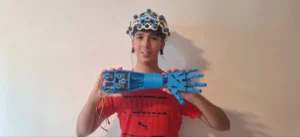
A recurring theme in the 2026 program is the application of technology to solve tangible human problems, particularly in the field of labor and safety. Inail (the Italian National Institute for Insurance against Accidents at Work) and the Italian Institute of Technology (IIT) are presenting a suite of projects aimed at reducing workplace injuries through wearable tech.

Key prototypes include:
- The SIDE Haptic Exoskeleton: Developed with Sapienza University, this device recreates physical interactions in virtual or augmented reality, allowing workers to train for dangerous environments—such as contaminated spaces—without physical risk.
- XoTrunk and FleXoTrunk: Wearable robotic supports designed to alleviate the strain on the lower back during heavy lifting, a leading cause of long-term occupational disability.
- Smart Airbag Systems: A wearable safety device equipped with fall-detection algorithms that can distinguish between normal movement and a genuine fall, deploying a protective cushion around the torso and neck in milliseconds.
These projects demonstrate a shift in the robotics industry toward "assistive" technology, where machines work in tandem with human operators to improve health and productivity.

Agrifood Innovation: From Soil to Space
The agrifood sector is represented by a coalition of Italy’s leading research bodies, including CREA, ENEA, CNR, and several university spin-offs. The research on display addresses the dual challenges of climate change and food security.
ENEA is showcasing "Space Farming" technologies—closed-loop agricultural systems designed for extreme environments, which have applications both for future lunar colonies and for drought-stricken regions on Earth. Meanwhile, the National Research Council (CNR) is presenting "FoodEye," a spectroscopic tool that analyzes food for nutritional content and authenticity, providing a high-tech defense against food counterfeiting.

Sustainability is further highlighted by startups like "Yeastime," which uses proprietary ultrasound technology to accelerate fermentation processes, significantly reducing energy consumption in the production of bread, beer, and pharmaceuticals. In the realm of urban forestry, the startup "Terravionics" is demonstrating how IoT sensors and satellite data can be used for the proactive management of city trees, helping to mitigate the "urban heat island" effect.
Education, Gaming, and the Digital Skills Gap
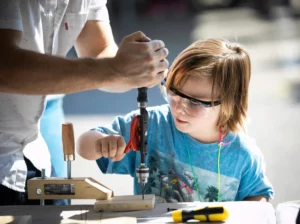
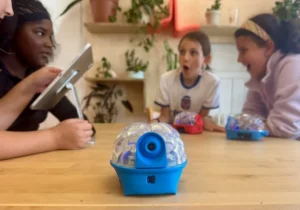
Maker Faire Rome has always prioritized the involvement of younger generations. The Educational and Gaming area is designed to move students from being passive consumers of technology to active creators. This year, MakerCamp—Italy’s official Minecraft Education partner—is leading coding and problem-solving workshops within the Minecraft environment. The "STEAM in Minecraft 2026" contest has already seen participation from over 400 classes across Italy.

Beyond gaming, the fair addresses the "skills gap" in the energy transition. Fondazione MAIRE and the Green Innovation ITS Academy are presenting new vocational training models designed to prepare specialist technicians for the burgeoning green economy. As Italy moves toward its 2050 carbon neutrality goals, the need for a workforce skilled in hydrogen technology, carbon capture, and renewable energy storage has become a national priority.
Cultural and Media Impact: Books and Iconic Machines
The 2026 edition introduces "Books@MFR26," a new editorial strand that explores the social and ethical implications of technology. Authors and scientists will lead discussions on everything from quantum research to the sociology of space settlements. A unique "BiblioMaker" initiative invites visitors to donate their favorite science books, creating a community-sourced library for future innovators.

Adding a touch of cultural nostalgia and engineering curiosity, the fair will feature:
- The DeLorean DMC-12: On loan from the Enter Technikwelt Solothurn museum in Switzerland, the iconic car serves as a bridge between the futuristic dreams of the 1980s and the real-world engineering of today.
- Gajarda AWD Hybrid Driverless: A Formula Student racing car developed by Sapienza Corse that uses computer vision to navigate tracks autonomously.
- Robby Minichef: A kitchen robot capable of reproducing the complex timings and movements required to cook a perfect plate of spaghetti cacio e pepe, demonstrating the precision of modern robotic learning.
Conclusion and Broader Implications
Maker Faire Rome 2026 is more than a simple exhibition; it is a barometer for the technological health of Europe. By bringing together the "Triple Helix" of innovation—academia, industry, and government—the event fosters an environment where cross-disciplinary collaboration can flourish. The involvement of institutional partners like the Italian Trade Agency and the Ministry of Labour ensures that the innovations seen at the Gazometro have a path toward international markets and regulatory support.

As the event concludes on October 25, the impact is expected to resonate throughout the regional economy of Lazio and the broader European maker community. The fair reinforces Italy’s position not just as a land of historical art, but as a leading force in the "New Industrial Revolution," where creativity and code are the new tools of the trade. For the 14th year running, Maker Faire Rome proves that the future is not something that happens to us, but something we build—one prototype at a time.