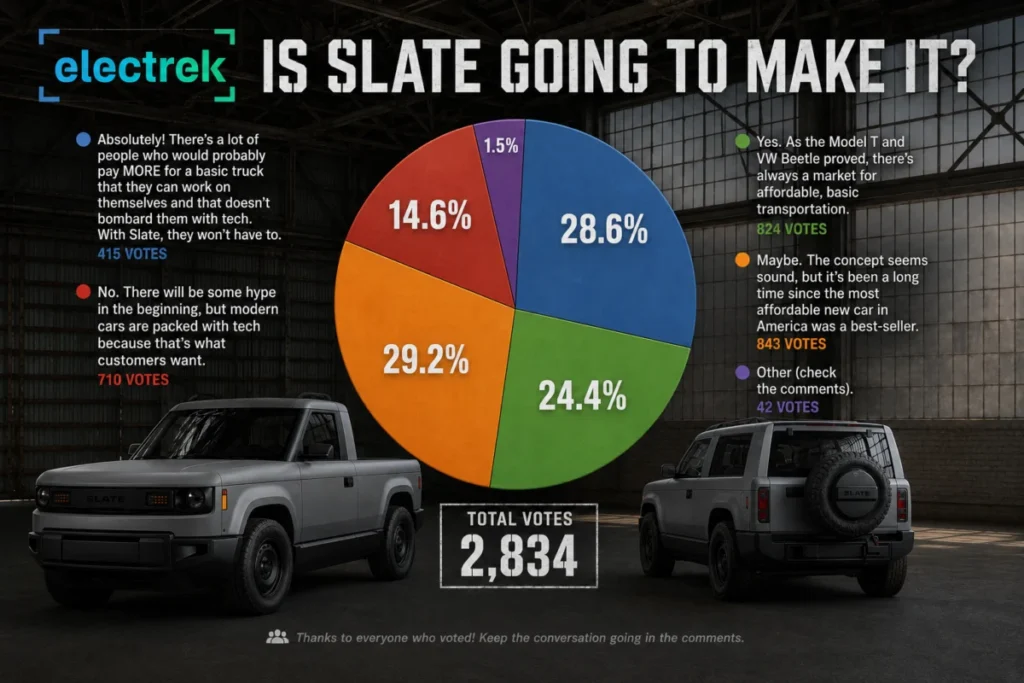
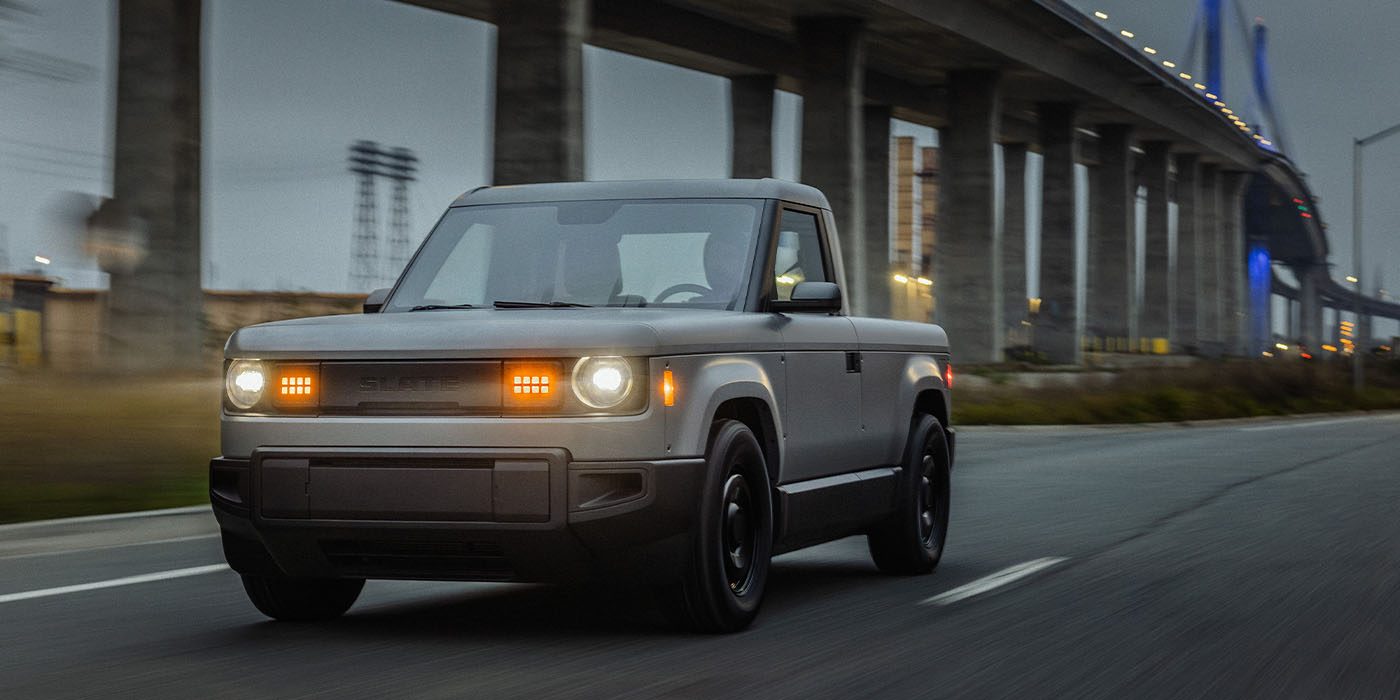
For weeks, Electrek has engaged its readership in a critical discussion surrounding the potential success of Slate Auto’s newly unveiled, budget-friendly electric truck in the highly competitive U.S. automotive landscape. The survey, which garnered nearly 3,000 responses, has illuminated a complex and divided opinion among electric vehicle enthusiasts and potential buyers, revealing significant apprehension about the vehicle’s market viability when juxtaposed against established players like Ford. The core question posed to readers was direct: "With Slate Auto’s pricing finally revealed, the back-to-basics truck is OFFICIALLY one of the most affordable new vehicles you can buy — but will that low price drive demand? In other words: is Slate going to make it?"
The launch of the Slate EV has been accompanied by considerable anticipation, partly fueled by its association with billionaire Jeff Bezos and its aggressive pricing strategy, aiming to undercut many existing electric vehicle options. However, the survey results suggest that this low price point, while a significant draw, may not be sufficient to guarantee widespread adoption, especially when considering the nuanced competitive environment. The primary challenger identified by respondents is not another nascent EV startup, but rather the venerable Ford Motor Company, specifically its Maverick compact pickup truck, a vehicle that has carved out a significant niche in the market despite being an internal combustion engine (ICE) offering. The concern is not about Ford’s upcoming, yet-to-be-detailed $30,000 electric pickup, but rather the current offerings and pricing structures that make the Slate’s value proposition a subject of debate.
The Price-to-Value Conundrum: Slate vs. Ford Maverick

The fundamental tension arises from the Slate EV’s advertised base price of $25,000, before destination fees. This figure places it in direct contention with the Ford Maverick, particularly when factoring in Ford’s customer-centric "A plan for everyone" pricing strategy, which offers significant discounts to employees and often extends to the general public during promotional periods.
Mark Horning, a contributor to Electrek’s survey commentary, articulated this concern succinctly: "At $25k, plus destination, these are basically the same price as a Maverick with Ford’s current ‘A plan for everyone’ pricing. By the time I add a spare tire to the Slate, the Mav is cheaper." This statement highlights a crucial point: the Slate’s bare-bones approach, while contributing to its low entry price, necessitates additional purchases for even basic functionality, thereby eroding its cost advantage.
Erik, another respondent, echoed this sentiment, drawing a direct comparison to the Maverick’s initial market entry: "It is also a lot smaller than a Maverick. Compared to what a Maverick offered when it launched for $20k, this is not a good deal yet. This is probably more for former Scion buyers." The reference to Scion, Toyota’s defunct youth-oriented brand, suggests a perception that the Slate might appeal to a specific demographic seeking quirky customization rather than a mainstream, practical truck.
The comparison with the Ford Maverick is particularly telling. While the Maverick is an ICE vehicle, it offers a compelling package of features that have resonated with consumers. These include OEM-level technology integration, a fully developed infotainment system, four doors for practical passenger access, and, critically, access to Ford’s extensive and well-established nationwide dealer network. This network provides a crucial safety net in terms of maintenance, repair, and after-sales support, provided by factory-trained technicians. For many consumers, these tangible benefits, often taken for granted in traditional automotive purchases, represent significant value that can outweigh a slightly lower sticker price, especially when considering the long-term ownership experience.
Market Sentiment: A Divided Opinion on Slate’s Future
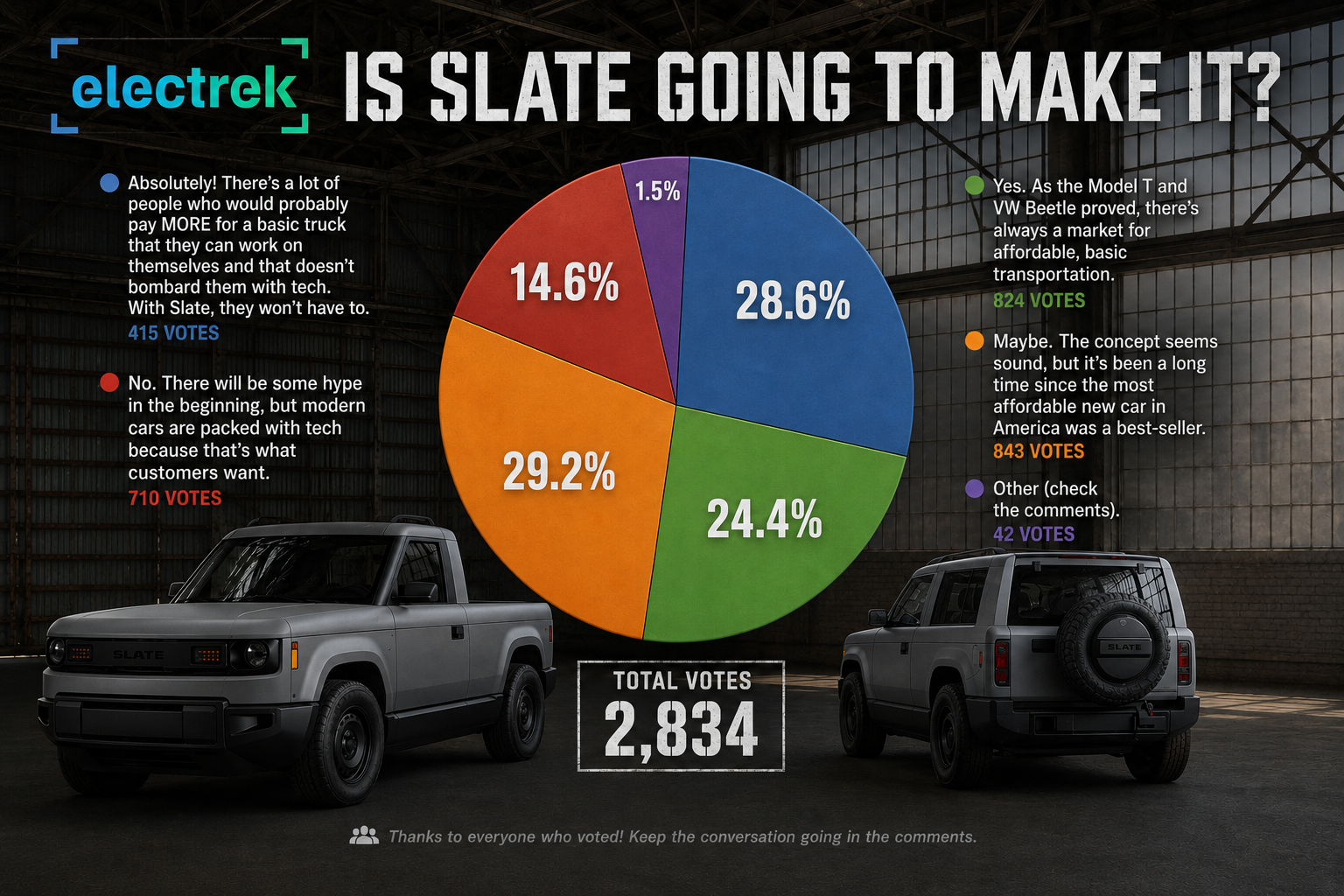
The results of Electrek’s survey reveal a clear division in opinion regarding Slate Auto’s prospects. Out of nearly 3,000 responses, 1,553 respondents indicated a "maybe" or "no" regarding the truck’s success, while 1,239 expressed "absolutely" or "yes." This near-even split underscores the considerable uncertainty surrounding the company and its innovative, yet potentially niche, product.
Several commenters pointed to the inherent challenges of entering the truck market, a segment traditionally dominated by vehicles built for utility and perceived ruggedness. S25510, a survey participant, elaborated on this challenge: "The problem is that most people who want a truck either desire a land yacht so that they can feel bigger and more capable than others, or need something that they can trust to be reliable and that they can be confident will have after market support long term. The Slate could handle a lot of urban work truck jobs but will enough commercial buyers trust that the company will be around and/or have service options close enough? It’s going to be a hard sale unless they can secure some high profile contracts like Rivian did." This perspective highlights two key market drivers for truck buyers: perceived capability and long-term reliability coupled with robust support infrastructure. The Slate, with its focus on affordability and modularity, may struggle to meet these deeply ingrained expectations.
The concern about long-term support and the company’s longevity is a recurring theme. The history of the automotive industry is replete with startups that failed to gain traction, leaving early adopters with unsupported vehicles. For commercial buyers, this risk is amplified, as vehicle downtime and maintenance costs can significantly impact profitability. Securing large fleet contracts, similar to the deals Rivian has established with Amazon for its electric delivery vans, could provide Slate with crucial validation and a stable revenue stream, alleviating some of these concerns.
Another respondent, REDRAINDROP, shared their personal decision to cancel a pre-order, citing the cost of optional accessories: "I canceled my pre order. The hatchback conversion kit was the reason for me. It was too expensive, considering, I can get a lot more for my money elsewhere. I understand I will lose my modularity but I just couldn’t stomach it. I still want it. But I will wait for real world reviews first." This feedback indicates that while the concept of modularity is appealing, its execution and pricing must align with consumer expectations to be a genuine selling point. The desire for real-world reviews before committing further suggests a cautious approach from potential buyers who are not yet convinced by the pre-launch marketing and specifications.
A Glimmer of Hope: Fleets and the "Blank Slate" Appeal
Despite the prevailing skepticism, a significant portion of respondents remain optimistic about Slate Auto’s potential. The "yes" and "maybe" voters often emphasized the vehicle’s appeal to specific market segments, particularly businesses and younger entrepreneurs.
MRVC, a proponent of the Slate, articulated this optimistic outlook: "I think it will be huge for business and fleets. Plus younger people starting or taking over businesses and older people that just want a small truck. That 35 to 55 demo I’m not sure. I’m not sure that many people will switch the styles often. But jeeps still sometime have doors taken off. Along with roof sections and covers. People that have hard roofs roadsters and t-tops sometimes take them off. So I suppose people are already doing that sort of thing. The ability to change it will help sell it. But it’s possible that people will feel nickle and dimed for a higher spec SUV and go elsewhere. I think they will sell tons of the blank slate. Plus roof options that make sense for fleets and commercial activities. Beyond that Im not sure. The open source nature I believe will help it. And could even help sell it. It will probably only take a few creative skilled people showing off what they have done for people that were skeptical to see an accessory and use case they could use."

This perspective highlights the "blank slate" nature of the Slate EV as a potential strength. The emphasis on customization and open-source potential could foster a vibrant aftermarket community, similar to what has been seen with vehicles like the Jeep Wrangler or various off-road trucks. For fleet operators and small business owners, the ability to tailor the vehicle to specific needs, from cargo configurations to specialized equipment mounts, could be a significant advantage. Furthermore, the appeal to younger demographics and older individuals seeking a simple, functional truck aligns with a potential market gap.
The comparison to the Jeep Wrangler’s modularity is apt. Consumers who embrace the concept of configurable vehicles, where doors can be removed, roofs altered, and interiors customized, may find the Slate’s adaptable platform highly attractive. This approach could appeal to individuals who view their vehicle as a tool for personal expression or a work platform that can evolve with their needs. The success of this strategy, however, hinges on Slate Auto’s ability to cultivate this ecosystem and demonstrate the practical benefits of its modular design to a broader audience.
Implications for the Broader Automotive Industry
The significant engagement with Electrek’s survey, generating nearly 3,000 responses, underscores the intense scrutiny and widespread interest surrounding Slate Auto. Regardless of the ultimate outcome of its market entry, the company’s endeavor to offer an affordable, back-to-basics electric truck is already sending ripples through the industry.

Slate Auto’s strategy, focused on stripping away non-essential features and offering extensive customization at a low price, presents a potential counterpoint to the trend of increasingly complex and expensive vehicles. Many manufacturers are embedding ever-more advanced technology and luxury features into their vehicles, driving up costs and potentially alienating a segment of the market seeking simpler, more functional transportation.
If Slate Auto manages to carve out a sustainable niche, it could serve as a wake-up call to established automakers. It may demonstrate that there is a viable market for vehicles that prioritize essential functionality, durability, and affordability over cutting-edge infotainment systems and autonomous driving capabilities. This could encourage other manufacturers to explore more stripped-down, cost-effective EV offerings, potentially making electric mobility more accessible to a wider range of consumers. The success of such a strategy would depend on Slate Auto’s ability to navigate the challenges of production, distribution, and long-term support, but the conversation it has already ignited is a testament to its disruptive potential. The automotive world is watching closely to see if this "blank slate" can indeed be filled with widespread success.