The city of Bradford became a focal point for the next generation of technological pioneers this May as Coolest Projects UK 2026 welcomed more than 200 young creators to showcase their original digital designs. The event, which highlights the intersection of computer science, engineering, and artistic expression, featured an array of projects ranging from foundational block-based coding to advanced artificial intelligence and hardware integration. As an initiative designed to transition young people from being passive consumers of technology to active creators, the showcase provided a platform for students to present their work to industry professionals, peers, and the general public.
The 2026 edition of Coolest Projects UK underscored a significant trend in the democratization of technology education. Participants represented a diverse spectrum of learning environments, including formal school settings, community-led Code Clubs, CoderDojos, and Scout groups. This variety highlights the growing infrastructure of extracurricular STEM (Science, Technology, Engineering, and Mathematics) support across the United Kingdom, particularly in the North of England, where Bradford has emerged as a key hub for digital skills development.
A Chronology of Digital Discovery and Preparation
The success of the May showcase was the result of months of preparation and community engagement. Leading up to the main event, a series of local workshops were held across Bradford and the surrounding Yorkshire region. These sessions were designed to lower the barrier to entry for first-time coders, providing them with the necessary tools and mentorship to transform an initial idea into a functional prototype. For many participants, these workshops served as a critical introduction to the "design thinking" process—identifying a problem, iterating on a solution, and refining the user experience.
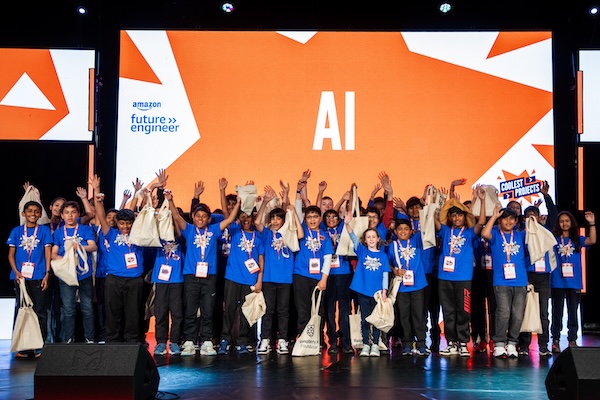
On the day of the event, the atmosphere was one of collaborative energy. The schedule was meticulously organized to balance formal judging sessions with informal peer-to-peer networking. Throughout the morning and afternoon, participants engaged in hands-on digital activities that moved beyond their individual booths. These collaborative exercises were engineered to foster soft skills such as teamwork and communication, which are increasingly cited by UK tech employers as being as vital as technical proficiency.
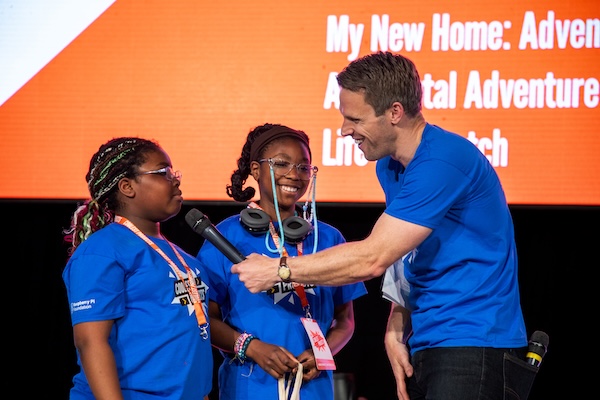
The event reached its climax with a celebration ceremony hosted by BBC science presenter Greg Foot. Known for his ability to make complex scientific concepts accessible to the public, Foot interviewed several creators on stage, providing them with a high-profile platform to explain their technical logic and creative inspirations. Every participant was recognized with a certificate of achievement, while specific projects that demonstrated exceptional innovation, technical complexity, or social impact received additional accolades from the panel of judges.
Strategic Integration: The Role of the Scouts and Digital Badging
A notable development in this year’s showcase was the strategic involvement of the Scouts. Fifty-seven Scouts from six different Yorkshire-based groups participated in dedicated digital making workshops as part of the event’s curriculum. This collaboration aimed to align traditional scouting values—such as resourcefulness and community service—with modern digital literacy.
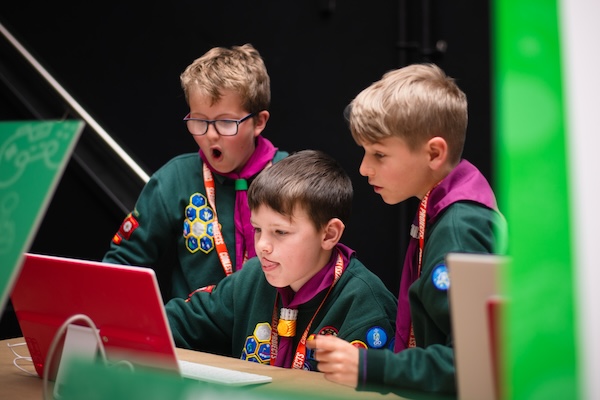
During these specialized sessions, the Scouts utilized Scratch’s AI-facial recognition extensions to develop custom "selfie filters." This project-based approach allowed them to earn their DM1 Digital Maker badges, a credential that validates their ability to use technology creatively. By exhibiting their work at Coolest Projects, the Scouts were able to bridge the gap between earning a badge in a club setting and presenting a finished product to a professional audience. For many, this represented their first public speaking engagement regarding a technical subject, a milestone that organizers noted as being essential for building long-term confidence in STEM fields.
Profiles in Innovation: From Robotics to Educational Gaming
The diversity of the projects on display reflected the broad interests of the participants. Three projects, in particular, illustrated the sophisticated ways in which young people are currently utilizing technology to solve problems or explain complex concepts.
Seth and the "Pop Bot"
Seth, a hardware enthusiast, presented "Pop Bot," a robotic reminder system designed to assist users through facial recognition. The project utilized a combination of physical hardware—including sensors, lights, and moving parts housed in a chassis made of recycled materials—and sophisticated software. Using AI-driven facial recognition, the robot identifies specific individuals and plays personalized audio reminders.
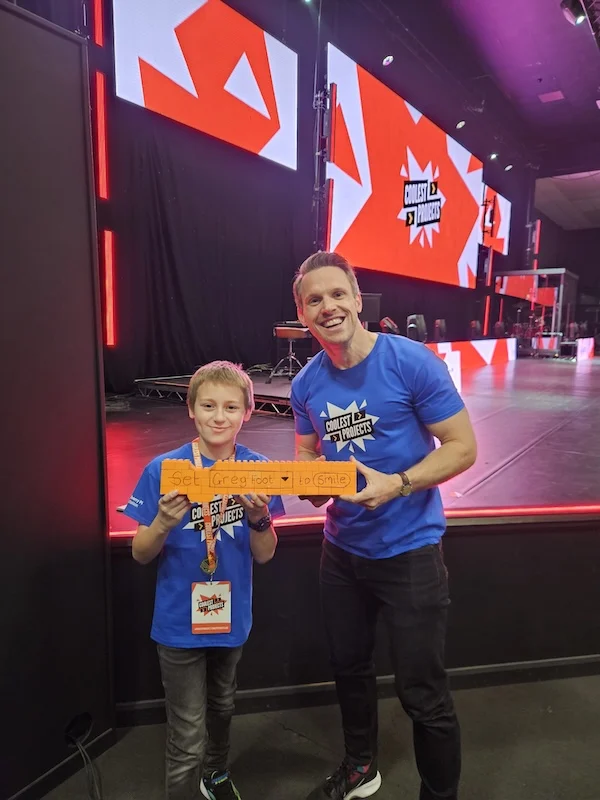
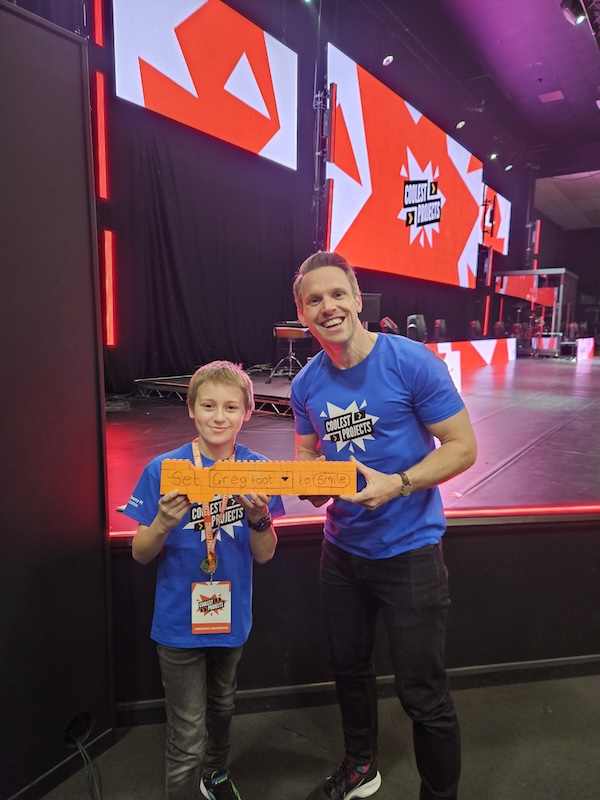
Seth’s development process highlighted the iterative nature of engineering. He noted that the facial recognition system initially struggled with accuracy, prompting him to expand his dataset by taking photos in various lighting conditions and against different backgrounds. Beyond the technical aspects, Seth demonstrated a unique sense of community by creating a custom "Scratch block" made of Duplo and Lego to present to Greg Foot. This gesture underscored the "maker" spirit that defines the event: using available materials to create something meaningful.
Chinemerem and "Immune System Defence"
In the gaming category, Chinemerem showcased "Immune System Defence," a title developed within the Roblox ecosystem. Unlike many commercial games, this project was rooted in the school science curriculum. The game functions as a "tower defense" experience where players deploy white blood cells and vitamin boosts to protect a virtual heart from viral waves.
By translating biological processes into game mechanics, Chinemerem demonstrated the potential of "gamification" in education. The project allowed players to learn about the functions of the heart and the circulatory system while engaging in strategic gameplay. During the event, Chinemerem utilized QR codes to allow visitors to play the game in real-time, providing an immediate feedback loop between the developer and the user.
Gabriel and "Fossil Roulette"
Gabriel utilized the Scratch platform to create "Fossil Roulette," a game inspired by a visit to the Fossil Festival in Lyme Regis. The game aims to teach players about the rarity of the fossilization process. Players select a prehistoric organism and spin three wheels that represent different geological and environmental stages required for a fossil to form.
From a technical standpoint, Gabriel’s project focused on the physics of motion within code. He explained that the most challenging aspect was programming the roulette wheels to simulate realistic friction—starting at high velocity and gradually slowing to a stop. This attention to detail demonstrated a high level of computational thinking and an understanding of how to translate physical laws into a digital environment.
Supporting Data and the UK STEM Landscape
The importance of events like Coolest Projects UK is supported by broader economic and educational data. According to recent reports from the UK Department for Education and industry bodies like TechUK, the "digital skills gap" costs the UK economy an estimated £63 billion a year in lost potential GDP. Furthermore, while the demand for AI and data science roles has increased by over 400% in the last decade, the number of students pursuing computer science at the secondary level has not kept pace.
Coolest Projects addresses this disparity by providing an "entry point" that is non-competitive and focused on "creative computing." Research suggests that young people are more likely to pursue STEM careers if they engage in informal, project-based learning before the age of 14. By hosting the event in Bradford, the Raspberry Pi Foundation and its partners are targeting regions that have historically been underserved by the technology sector, aiming to create a more geographically balanced "tech talent pipeline."
Analysis of Implications and Future Outlook
The 2026 showcase in Bradford serves as a microcosm of the evolving relationship between youth and technology. Several key implications can be drawn from the success of the event:
- The Normalization of AI: The frequent use of AI and machine learning tools by participants like Seth indicates that AI is no longer a "niche" interest but a standard tool in the young creator’s toolkit. This suggests that future computer science curricula will need to integrate AI ethics and logic earlier than previously anticipated.
- Soft Skills as a Technical Asset: The emphasis on presenting to judges and the public highlights a shift in technical education. Being able to "pitch" an idea and explain the "why" behind the code is becoming as important as the code itself.
- Community-Driven Education: The heavy involvement of Code Clubs and Scouts suggests that the future of STEM education may lie in a hybrid model where formal schooling is supplemented by robust, community-led extracurricular programs.
While the UK event for 2026 has concluded, the global Coolest Projects circuit continues, with upcoming showcases scheduled in various international territories. For those inspired by the Bradford event, the Raspberry Pi Foundation encourages continued engagement through its network of over 10,000 Code Clubs worldwide. These clubs provide a permanent, year-round infrastructure where the momentum generated at Coolest Projects can be sustained, ensuring that the digital creators of today become the technological leaders of tomorrow.