Researchers at the U.S. Department of Energy’s Oak Ridge National Laboratory (ORNL) have achieved a significant breakthrough in additive manufacturing, developing an innovative automated system capable of detecting and correcting errors in real-time during the production of large-scale composite parts. This groundbreaking technology promises to revolutionize how complex, custom components are manufactured, potentially leading to reduced waste, lower production costs, and a substantial boost in domestic competitiveness within the additive manufacturing sector. The system’s ability to autonomously monitor and adjust printing parameters as materials are deposited marks a pivotal step towards fully automated and highly reliable large-format 3D printing.
The Challenge of Large-Scale Additive Manufacturing
Large-scale 3D printing, often referred to as Large Format Additive Manufacturing (LFAM), involves extruding heated thermoplastic materials, frequently reinforced with continuous or discontinuous fibers, through a robotic nozzle. This process meticulously builds up layers to construct substantial components, ranging from structural elements for the construction industry to complex aerodynamic surfaces like aircraft wings and automotive parts such as bumpers. The inherent complexity of LFAM lies in the delicate balance of numerous printing variables. These include ensuring that each deposited layer is sufficiently hot to bond effectively with the preceding layer, yet also cool enough to maintain its structural integrity and prevent deformation. This intricate manufacturing tightrope requires constant and precise control, often necessitating vigilant human oversight. Traditional methods often rely on post-processing inspections, which can be time-consuming and lead to significant material waste if defects are discovered late in the fabrication process.
The economic implications of these challenges are substantial. For instance, the aerospace and automotive industries, which are prime candidates for adopting LFAM for large, complex parts, face stringent quality control requirements. A single printing error in a large component can render the entire part unusable, resulting in the loss of valuable materials, significant labor costs, and extended production timelines. This new system from ORNL directly addresses these critical pain points by introducing a proactive and intelligent approach to quality assurance.
ORNL’s Intelligent Monitoring and Correction System
The core of ORNL’s innovation is a sophisticated controller designed to autonomously supervise the printing process. This intelligent system liberates human operators from the tedious task of constant monitoring, allowing them to focus on higher-level aspects of production, such as design optimization and quality assessment. The controller is equipped with a comprehensive suite of sensors that meticulously track key printing parameters, including the precise position of the robotic nozzle, the printing speed, and the temperature of the dispensed composite material.
A crucial enhancement to this sensor array is the integration of low-cost thermal cameras. These cameras are strategically mounted around the printing nozzle, forming a critical observation ring. Their primary function is to continuously monitor the temperature of the deposited plastic as it cools, providing real-time thermal data. This data is then fed into a computer vision system, a branch of artificial intelligence that empowers machines to interpret visual information.
The ORNL-developed controller leverages this computer vision capability to analyze live-streamed thermal images. It can accurately identify the location and temperature of the molten material being laid down. If the system detects any deviation from the predetermined target temperature, it automatically intervenes. The controller precisely adjusts the speed of the 3D printing process, ensuring that each layer reaches the optimal cooling temperature before the subsequent layer is applied. This dynamic adjustment is critical for achieving consistent layer adhesion, maintaining the intended shape of the part, and ultimately minimizing the occurrence of failed prints and material wastage.

A Glimpse into the Technology: Thermal Cameras in Action
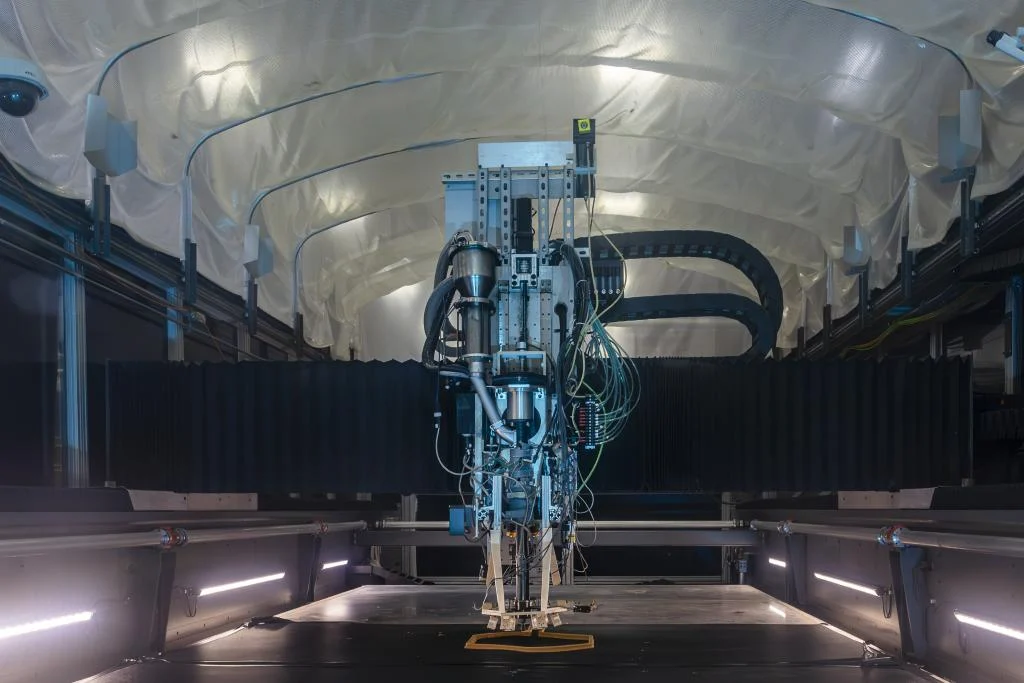
The visual representation of this technology is striking. A ring of compact thermal cameras encircles the robotic nozzle, creating an almost futuristic halo. As the nozzle deposits the plastic composite, these cameras capture a constant stream of thermal data, painting a detailed picture of the cooling process. This visual feedback loop is the cornerstone of the system’s ability to make informed, real-time adjustments.
The "Human Touch" of Automation
Kris Villez, the lead researcher on the project, draws an insightful analogy to describe the system’s operation. "It controls the process almost like a human would: by observing and nudging the setting until it reaches the desired outcome," Villez explained. This comparison highlights the intuitive and adaptive nature of the controller, which mimics the careful adjustments a skilled human operator might make. He further elaborated on the potential, envisioning a future where large-scale 3D printing operates with the same ease as baking bread: "In the end, we’d love this to work like baking bread: You set the oven temperature, put in your dough, and return when the timer goes off to see if it’s done. You don’t have to monitor the oven temperature in real-time throughout the baking." This aspiration underscores the project’s goal of achieving a truly hands-off, reliable manufacturing process.
Rigorous Testing and Demonstrated Success
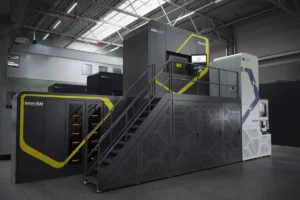
The research team conducted extensive testing to validate the efficacy of their new system. The initial phase involved calibrating the control system and meticulously adjusting the configuration of the six thermal cameras surrounding the robotic nozzle. The physical setup itself is impressive, resembling a column of metallic tubes interlaced with vibrant wires, suspended within a printer large enough to house a boxcar.
During one key test, researchers deliberately challenged the controller by initiating the printing process at a low speed. This scenario was designed to exacerbate potential cooling issues. As expected, the initial layers were approximately 30% cooler than the target temperature by the time the next layer was to be deposited. This presented a critical juncture for the system. The controller, detecting this significant temperature deviation, responded by automatically increasing the print speed. This adjustment ensured that the layers maintained the optimal temperature for proper fusion, effectively demonstrating the real-time correction capability in action.
To showcase the controller’s performance on a full-scale component, the machine was tasked with printing a hexagon larger than a truck tire. This substantial print served as a robust testbed for the system’s ability to manage thermal variations across a significant manufacturing volume.
Precision in Correction
Chris O’Brien, a graduate student at the University of Tennessee who collaborated on the project, emphasized the system’s precision. He stated that the tool can detect and correct temperature differences as minute as a few degrees. This level of accuracy is paramount, as even minor temperature variations are a frequent culprit behind manufacturing defects in large-format 3D printing.
Furthermore, O’Brien highlighted a key advantage of ORNL’s controller over some existing monitoring systems: it does not require re-training for every new design. This flexibility significantly reduces the time and computational resources needed for implementation, enhancing the overall efficiency and adaptability of the technology. The system is engineered to be universally compatible, working seamlessly with any large-area composite printer, any type of plastic material, and any design shape.

Leveraging Digital Twins for Risk-Free Innovation
An additional sophisticated element of this project is the utilization of machine learning to create a "digital twin" of the physical printing process. This virtual replica allows researchers to conduct risk-free experiments with novel shapes and materials within a simulated environment before committing to physical production. This approach accelerates the design and development cycle and mitigates the potential for costly failures during the exploration of new manufacturing possibilities.
Building on a Legacy of Innovation
This latest advancement is not an isolated event but rather a logical progression built upon previous research conducted at ORNL. A prior study, a collaboration with Purdue University and the University of Maine, demonstrated the efficacy of integrating thermal imaging with statistical models to enhance fault detection in large-scale 3D printing. More recently, researchers from the University of Tennessee-Knoxville and ORNL further validated this approach, proving its capability to reliably detect print speed discrepancies as small as 15% from the programmed settings. While the earlier projects focused on automated fault recognition, the new system takes a significant leap forward by implementing instant error correction, transforming detection into a proactive resolution.
Broader Implications and Future Outlook
The implications of ORNL’s real-time error detection and correction system are far-reaching, extending beyond individual manufacturing processes to impact entire industries.
Economic Impact and Competitiveness
By reducing material waste and the likelihood of failed prints, the system directly contributes to cost savings for manufacturers. This increased efficiency and reliability can make large-scale 3D printing a more economically viable option for a wider range of applications. For U.S. manufacturers, this technology represents a significant opportunity to enhance their global competitiveness by offering higher quality, more customized, and more cost-effective large-format printed components. The ability to produce complex parts domestically with reduced reliance on foreign supply chains is a strategic advantage.
Advancements in Key Sectors
- Aerospace: The development of lighter, stronger, and more complex aircraft components could be accelerated. The system’s precision is vital for parts where even minor flaws can have critical safety implications.
- Automotive: The creation of customized car parts, lightweight structural components, and intricate interior elements can be achieved more efficiently and with greater reliability.
- Construction: The potential to print large structural elements for buildings, such as walls or custom architectural features, could be enhanced, leading to faster and more cost-effective construction methods.
- Defense: The ability to rapidly produce critical components for military equipment, potentially even in remote locations, offers significant logistical and strategic benefits.
Environmental Benefits
Reduced material waste is not only an economic advantage but also an environmental one. By minimizing the number of failed prints and the need for material reprocessing or disposal, the technology contributes to more sustainable manufacturing practices.
The Path Forward
The ongoing research at ORNL, supported by funding from the DOE’s Advanced Materials and Manufacturing Technologies Office, signifies a commitment to pushing the boundaries of additive manufacturing. The project’s contributors include ORNL’s Katie Copenhaver and Alex Roschli, whose expertise has been instrumental in bringing this innovative system to fruition. The continuous refinement of AI-driven manufacturing processes like this one will undoubtedly shape the future of how we design, produce, and utilize complex physical objects. The vision of a fully automated, intelligent, and responsive additive manufacturing ecosystem is moving closer to reality, promising a future where complex production challenges are met with sophisticated, self-correcting technological solutions.