A groundbreaking scientific discovery has unveiled the intricate molecular interactions underpinning the extraordinary strength and flexibility of spider silk, a natural material long coveted for its superior properties. This revelation, published in the esteemed journal Proceedings of the National Academy of Sciences, not only paves the way for the creation of a new generation of high-performance, environmentally friendly materials for diverse applications ranging from aerospace components to medical implants, but also offers an unexpected and profound insight into the mechanisms behind neurological disorders like Alzheimer’s disease. The interdisciplinary research, spearheaded by scientists from King’s College London and San Diego State University (SDSU), marks a significant milestone in biomaterials science, moving closer to deciphering nature’s most sophisticated engineering blueprints.
The Enigma of Spider Silk: A Natural Marvel
For centuries, humanity has been captivated by the humble spider and its remarkable ability to produce silk – a fiber that defies conventional material science. Spider dragline silk, in particular, stands out for its unparalleled mechanical properties. On a pound-for-pound basis, it consistently outperforms high-grade steel in tensile strength and exhibits toughness superior to Kevlar, the synthetic aramid fiber synonymous with bulletproof vests and high-strength composites. To put this into perspective, a strand of dragline silk, if scaled up to the thickness of a pencil, could reportedly stop a jumbo jet in flight. Spiders ingeniously utilize this extraordinary material for critical functions: constructing the robust structural framework of their elaborate webs, safely suspending themselves from towering heights, and even creating protective egg sacs. Scientists have long harbored an intense fascination with how nature achieves such an exceptional fiber from simple protein precursors, a challenge that has spurred decades of research and countless attempts at artificial replication.
The quest to understand and replicate spider silk has been a holy grail in biomaterials research. Early attempts to "farm" spiders for silk proved largely impractical due to their territorial and cannibalistic nature. Subsequent efforts focused on genetically engineering other organisms, such as bacteria, yeast, and even goats, to produce spider silk proteins. While these methods have yielded promising results in producing recombinant silk proteins, effectively spinning these proteins into fibers with properties comparable to natural silk has remained a formidable hurdle. The intricate self-assembly and spinning process within the spider’s silk gland, a biological marvel of microfluidics and molecular precision, has largely eluded complete replication outside the spider itself. This new research provides a critical missing piece of the puzzle, offering fundamental design principles that could finally bridge the gap between protein production and high-performance fiber fabrication.
Unpacking the Molecular Mechanism: The "Sticker" Hypothesis
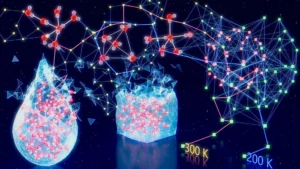
The latest study delves into the fundamental design principles that govern the formation of spider silk, focusing on the earliest stages of its creation. Inside a spider’s silk gland, silk proteins are stored as a viscous, liquid-like substance known as "silk dope." When the spider needs to produce silk, this liquid is extruded through a specialized spinning duct, undergoing a rapid transformation into a solid fiber with astonishing mechanical attributes. Previous research had established that the silk proteins initially coalesce into liquid-like droplets before being subjected to mechanical forces that pull them into fibers. However, the precise molecular steps that connect this initial clustering to the ultimate strength and flexibility of the mature silk fiber had remained an enduring scientific mystery.
To unravel this complex process, an interdisciplinary team comprising chemists, biophysicists, and engineers employed a sophisticated arsenal of advanced computational and laboratory techniques. These included state-of-the-art molecular dynamics simulations, which allow researchers to observe the intricate movements and interactions of atoms and molecules over time; AlphaFold3 structural modeling, an artificial intelligence-driven tool that accurately predicts protein structures; and nuclear magnetic resonance (NMR) spectroscopy, a powerful analytical technique used to determine the structure and dynamics of molecules.
Their meticulous analysis yielded a pivotal discovery: two specific amino acids, arginine and tyrosine, play a crucial role in initiating and sustaining the self-assembly of silk proteins. These amino acids engage in unique interactions that cause the silk proteins to cluster together during the nascent stages of fiber formation. Critically, these molecular interactions are not ephemeral; they persist and remain active as the silk dope solidifies into a fiber, orchestrating the formation of the intricate nanostructure that imbues spider silk with its exceptional strength and characteristic elasticity.
Chris Lorenz, Professor of Computational Materials Science at King’s College London and leader of the UK research team, articulated the significance of this atomistic-level understanding. "This study provides an atomistic-level explanation of how disordered proteins assemble into highly ordered, high-performance structures," Lorenz explained. He further elaborated on the crucial role of the arginine and tyrosine interactions, likening them to molecular "stickers" that precisely guide the self-assembly process. These interactions involve a combination of hydrogen bonding, pi-stacking (a type of non-covalent interaction between aromatic rings), and hydrophobic forces, all working in concert to create a robust and dynamic network that holds the material together as it forms its intricate, semi-crystalline structure. This molecular blueprint, once fully understood, could be mimicked in synthetic systems, offering unprecedented control over the assembly of novel materials.
From Nature’s Blueprint to Next-Generation Materials
The implications of this discovery for materials science are profound and far-reaching. By deciphering the fundamental molecular design principles, scientists are now better equipped to engineer synthetic fibers that emulate or even surpass the performance of natural spider silk. The potential applications span numerous industries, promising a paradigm shift in how high-performance materials are conceived and manufactured.
- Aerospace Industry: The demand for lightweight, yet incredibly strong and resilient materials is paramount in aerospace. Spider-silk-inspired composites could replace heavier metallic alloys in aircraft components, leading to substantial reductions in fuel consumption and carbon emissions. From fuselage sections to wing structures and interior components, the integration of such materials could revolutionize aircraft design and operational efficiency.
- Protective Gear: The superior toughness and energy-absorbing capabilities of spider silk make it an ideal candidate for next-generation protective clothing and equipment. This includes enhanced ballistic vests, helmets, and sportswear that offer superior impact resistance and flexibility without compromising on wearer comfort or mobility. Imagine protective gear that is lighter, more durable, and more effective at dissipating kinetic energy than current materials.
- Medical Implants and Devices: The biocompatibility and biodegradability of silk proteins open avenues for revolutionary medical applications. Spider-silk-inspired materials could be utilized in dissolvable sutures that eliminate the need for removal, advanced tissue scaffolds that promote natural healing and regeneration of damaged organs or tissues, and sophisticated drug delivery systems capable of controlled release. Their inherent biological compatibility minimizes adverse reactions, a critical factor in implantable devices.
- Soft Robotics: The unique combination of strength and flexibility is perfectly suited for the burgeoning field of soft robotics. Fibers engineered with these natural principles could enable the creation of more agile, adaptable, and robust soft robots, capable of intricate movements and interactions in delicate environments, such as medical procedures or exploration in hazardous terrains.
- Sustainable Textiles: Beyond high-tech applications, the ability to create environmentally friendly fibers holds significant promise for the textile industry. Such fibers could offer a sustainable alternative to petroleum-based synthetics, providing high-performance fabrics that are both durable and biodegradable, addressing pressing environmental concerns related to plastic pollution.
Experts in biomaterials engineering and polymer science view this breakthrough as a critical advancement towards achieving true biomimicry. Dr. Sarah Chen, a leading biomaterials researcher not affiliated with the study, commented on the findings: "For decades, the promise of bio-inspired materials has been tempered by the immense complexity of natural systems. This research provides a crucial Rosetta Stone, offering the precise molecular language needed to translate nature’s designs into scalable, engineered solutions. It’s a game-changer for anyone working on advanced fibers." The capacity to design materials from the atomistic level up, guided by nature’s optimized strategies, represents a powerful new paradigm in materials science.
An Unexpected Bridge: Spider Silk and Neurodegenerative Diseases
Perhaps one of the most unexpected and compelling revelations of the study lies in its potential implications for understanding and treating neurodegenerative diseases, particularly Alzheimer’s. Gregory Holland, an SDSU professor of physical and analytical chemistry who spearheaded the US side of the collaborative research, expressed his surprise at this unforeseen connection.
"What surprised us was that silk – something we usually think of as a beautifully simple natural fiber – actually relies on a very sophisticated molecular trick," Holland remarked. He elaborated that the very same types of molecular interactions discovered in spider silk proteins are mirrored in critical biological processes within the human body, such as those involved in neurotransmitter receptors and hormone signaling. This striking overlap suggests a fundamental molecular principle at play across diverse biological systems.
The profound link to neurological research stems from the way silk proteins undergo phase separation and subsequently form β-sheet-rich structures. Phase separation is a fundamental biological process where proteins spontaneously separate from a homogeneous solution into distinct liquid phases, similar to oil and water. This process is crucial for forming membrane-less organelles within cells, which regulate various cellular functions. However, dysregulation of phase separation and the subsequent formation of abnormal β-sheet-rich protein aggregates are hallmarks of several neurodegenerative diseases.
In Alzheimer’s disease, for instance, the accumulation of misfolded proteins, specifically amyloid-beta and tau, leads to the formation of insoluble β-sheet-rich plaques and tangles in the brain. These aggregates disrupt neuronal function and ultimately lead to cell death. Similar protein misfolding and aggregation mechanisms are implicated in other devastating conditions like Parkinson’s disease and Huntington’s disease.
Holland highlighted the unique opportunity presented by studying spider silk: "The way silk proteins undergo phase separation and then form β-sheet-rich structures mirrors mechanisms we see in neurodegenerative diseases such as Alzheimer’s. Studying silk gives us a clean, evolutionarily-optimized system to understand how phase separation and β-sheet formation can be controlled." Because spider silk proteins have evolved over millions of years to precisely control these processes to create a functional material, they offer a highly optimized and accessible model system. Researchers can manipulate and observe these interactions in a controlled environment, potentially uncovering fundamental principles that could lead to new therapeutic strategies for preventing or reversing the pathological protein aggregation seen in neurodegenerative disorders. This unexpected connection underscores the interconnectedness of biological research and the potential for breakthroughs in one field to illuminate complex problems in another.
Challenges and Future Directions
While this discovery represents a monumental leap forward, the journey from laboratory insight to widespread application is often fraught with challenges. Replicating nature’s efficiency and complexity on an industrial scale remains a significant hurdle. The precise control over protein expression, assembly, and spinning exhibited by a spider is incredibly difficult to mimic synthetically. Future research will need to focus on several key areas:
- Scaling Up Production: Developing cost-effective and efficient methods to produce the specific arginine and tyrosine-rich silk proteins identified in the study in large quantities.
- Optimizing Spinning Processes: Translating the molecular understanding into scalable and precise artificial spinning techniques that can replicate the spider’s ability to transform liquid dope into high-performance fibers. This may involve advanced microfluidics, electrospinning, or other novel biomimetic approaches.
- Exploring Other Silk Varieties: Investigating the molecular interactions within other types of spider silks (e.g., capture silk, egg sac silk) or silks from other organisms, which possess distinct properties, could reveal additional design principles.
- Fine-Tuning Amino Acid Sequences: Using the newfound knowledge to rationally design and engineer novel protein sequences with tailored properties, potentially creating "super-silks" that exceed even natural silk in specific attributes.
- Translational Research in Medicine: Dedicated efforts will be required to explore the therapeutic potential of these findings in neurodegenerative disease models, moving from fundamental understanding to preclinical and potentially clinical applications.
The success of this research highlights the power of interdisciplinary collaboration, bringing together chemists, biophysicists, and engineers. This synergistic approach will undoubtedly be crucial for overcoming the remaining challenges and fully realizing the transformative potential of spider silk research. The elegant simplicity and profound implications of this discovery reaffirm nature as the ultimate engineer, continuously inspiring scientific innovation and offering solutions to some of humanity’s most pressing challenges.